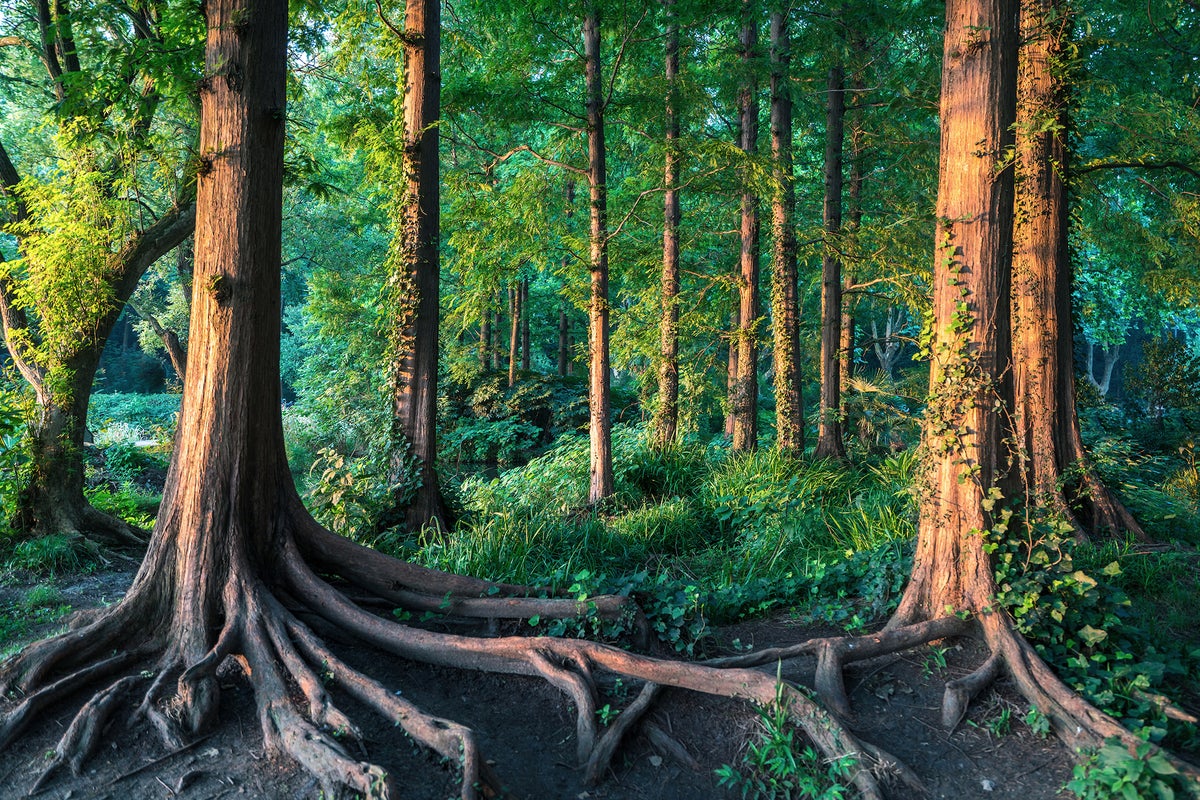


A Thneed is a “Fine-Something-That-All-People-Need,” according to the Once-ler, the greedy antagonist from Dr. Seuss’s classic environmentalist picture book The Lorax. Thneeds are made from Truffula trees, which have tufts that are softer than silk and smell of fresh, buttery milk. The garment can be used as a sock, a glove, a hat, or even a carpet, a pillow, or a sheet.
The products are nifty, but Seuss’s hero, the Lorax, warns that Thneed production isn’t sustainable. The Once-ler doesn’t listen. Instead, he continues chopping down trees until he levels the entire forest.
The story is an admonition that we should consume less—fewer Thneeds, less energy, less stuff. But there’s another possible solution: new technologies that, carefully applied, make it possible to protect the environment and further human comfort and prosperity.
Many readers interpret The Lorax’s argument as absolute: it’s trees or Thneeds. That argument fails. What if, instead, the Once-ler were visited by a creature that could teach him how to have both?
Meet a new hero called the Chemax, a speaker balancing the trees and people’s needs. Those needs could include Thneeds, but the same lessons apply to real-world necessities, such as food, electricity, heating and cooling, and housing.
The Chemax could have suggested that the Once-ler invest in technologies to produce Thneed fibers via fermentation, a process that typically requires fewer resources than conventional methods that make materials from animals, agriculture, or fossil fuels.
This investment is already starting to happen in the real world. The fiber maker Lycra is spinning spandex made with dextrose fermented from Iowa corn as a feedstock.
Or the Chemax could have advised the Once-ler to cultivate Truffula trees in an intensive orchard, boosting growth with synthetic fertilizers and pesticides. A Truffula plantation might have allowed the Once-ler to produce just as many Thneeds on less land, leaving swaths of the Truffula forest untouched.
With no regulators to step in, the Once-ler’s Thneed factory spews out “smogulous smoke.” The Chemax could have told the Once-ler to partner with a company like Again, which converts industrial waste gases into useful chemicals. Or the Chemax could have advised the Once-ler to pay for carbon dioxide removal to offset the factory’s emissions, maybe through direct air capture or deacidifying the ocean.
There’s no guarantee that the Chemax’s approach would have worked. New technologies can introduce problems of their own.
Synthetic fertilizers allow farmers to feed a much larger population, but they also warm the planet and pollute our water. Pesticides help farmers grow food more efficiently; they can also wreak havoc on sensitive ecosystems.
The society in The Lorax would also have to contend with the cost of implementing clean technologies. The Once-ler charged only “three ninety-eight” for a Thneed, a price that likely didn’t reflect the product’s environmental damage.
Creating a world that protects the environment and provides everyone with what they need—and some comfortable Thneeds—will require sharing the wealth generated by harvesting natural resources and cooperatively bearing the higher cost of doing so sustainably. This world will also require watchdogs with real teeth—not just a fuzzy, finger-wagging dissenter—to hold companies accountable.
The Once-ler’s goal of “biggering” factories, farms, and industrial production can be a path toward shared prosperity. But this approach requires proper guardrails—and technologies to mitigate the downsides.
The Lorax was a hero who stood up to a powerful, well-resourced industrialist. It’s a noble role, and the world would be a better place if more people followed this example.
But it’s important to remember that the Lorax didn’t succeed. Achieving a different outcome may require another type of hero—a Chemax—who can speak the industrialist’s language.
This editorial is the result of collective deliberation in C&EN. For this week’s editorial, the lead contributor is Matt Blois.
Views expressed are not necessarily those of ACS.