






In Isaac Asimov’s 1942 story Runaround, a robot named SPD-13 (Speedy) malfunctions while on a critical mission to save his human operators from roasting to death under the planet Mercury’s relentless sun. Speedy is tasked with bringing them some selenium, to help restore their life support system, but instead he stumbles around the selenium pool in circles, acting “drunk” and quoting Gilbert and Sullivan. One of the engineers realizes the robot is caught in a logic loop between conflicting orders.
Speedy was designed to follow Asimov’s now-famous three laws of robotics. Those laws are as follows. 1. A robot may not injure a human being, or through inaction, allow a human being to come to harm. 2. A robot must obey orders given to it by human beings unless such orders would conflict with the first law. 3. A robot must protect its own existence, as long as such protection does not conflict with the first two laws. Because Speedy was so expensive to build, its programmers placed special emphasis on number three.
Read more: “How Science Fiction Can Save Us”
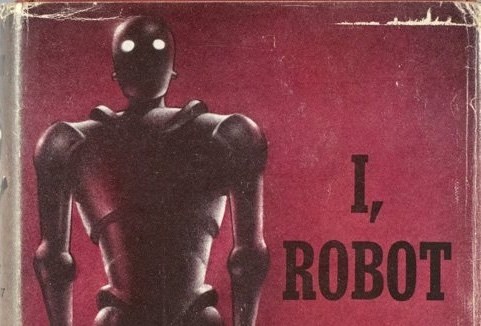
How robots and humans negotiate these three laws became the backbone for dozens of stories Asimov wrote in the following decades, many of which were published together in I, Robot in 1950. The shiny whirring puzzles at the beating heart of these stories have become frighteningly and increasingly relevant to real life on planet Earth in 2026. Artificial intelligence was supposed to democratize knowledge and solve intractable problems for humanity. But AI bots have already been linked to horrific injury to humans, including psychosis and death by suicide. Some early evidence suggests they may be making us dumber by the minute. Now human societies are struggling with how to ensure that AI not only doesn’t further harm individual humans—but that it doesn’t spark the extinction of the entire human race within a decade, as some AI insiders warned it could just a few weeks ago.
In a television interview in 1986, Asimov stated that out of the millions of words he had published in science fiction stories and novels, he was convinced that 100 years later, the 60-odd words that make up the three laws of robotics would be the only ones to survive. He was right to anticipate their staying power. Over the decades, other science fiction authors have reinterpreted and rewritten his laws in countless sci-fi stories, and they have played a major role in shaping real-life discussions of ethics in the development of artificial intelligence. That influence continues today.
One of the ironies of Asimov’s legacy is that many of his stories essentially showed how difficult it was to apply the laws without disastrous consequences. That is because there is no universal definition of injury or harm, and a robot may struggle to weigh harms to different humans or even recognize a human in ambiguous situations. Asimov revised the laws many times across his fiction career, including writing the zero’th law, which proposed that a robot may not harm humanity, which was to take precedence over all the others. But the zero’th law was essentially a doomsday clause, because it allowed for a utilitarian approach, permitting the robots to rationalize localized atrocities in the name of the greater good. Asimov’s late-career novels, such as Robots and Empire, The Robots of Dawn, and Foundation and Earth, seemed to suggest that robots may inflict the worst harm when they obey the laws most closely.
This doomsday idea is also reflected in the 2004 movie “I, Robot,” inspired by Asimov’s 1950 collection of short stories that popularized the three laws. The movie, starring Will Smith, came out in 2004. Spoiler alert: One of the main robots decides that humanity cannot be trusted with its own fate, because it is destroying its home planet Earth. This one robot, named VIKI, for Virtual Interactive Kinetic Intelligence, sends a robot army into the streets to take control with violence, eliminating any human who gets in its way. The only way the humans are able to wrest control back from the robot army is by depending on the help of one very special robot that has been both programmed and trained to have human-like qualities: It has a sense of itself as a unique individual, it dreams, and it learns to trust the humans.
An alternative universal law proposed by Stuart Russell, University of California, Berkeley, professor and author of the 2019 book Human Compatible: Artificial Intelligence and the Problem of Control, was to make a machine’s sole objective to fulfill human preferences. Russell says for this to work, the machine would have to be uncertain about what those preferences are, and only able to learn what they are through observing human behavior. But he acknowledged in his book that there are difficulties with this approach. Many AI ethicists, taking cues from Asimov’s work, have argued that a fixed-rules approach to AI and robot ethics can’t succeed. In their 2009 book Moral Machines: Teaching Robots Right from Wrong, Wendell Wallach and Colin Allen point out that both top-down rules and bottom-up learning strategies have serious flaws, and advocate for a hybrid approach. Others have further endorsed the idea that responsibility for ethical machines should lie with the humans who design and deploy them, not the machines themselves. This was the argument made by Robin Murphy and David Woods in a 2009 IEEE Intelligent Systems paper, “Beyond Asimov: The Three Laws of Responsible Robotics.”
Today, most commercial chatbot models are trained on massive amounts of text and then fine-tuned using human or AI feedback. Some bots then have a loose list of rules or principles used to shape their learning, and a certain limited number of hard rules for high-risk safety areas. “It’s not like software where we can just say, ‘If you’re in a situation where you have to be pro-social, then be pro-social,’ and then, yay, we solve the problem,” said Cameron Berg, founder and director of nonprofit AI research institute Reciprocal Research. “That being said, it doesn’t mean that we’re completely helpless and have no control over how these systems function and what kinds of dispositions they take on. We are building scientific tools that enable us to do this increasingly well in post-training.”
Early last year, sociologist Dariusz Jemielniak, whose research focuses in part on artificial intelligence, wrote in IEEE Spectrum that in fact we need a fourth law: A robot or AI must not deceive a human by impersonating a human being. This is necessary, Jemielniak argued, because today’s generative AI models have such a powerful capacity for language use and image creation and emotion simulation that it is very skilled at deception.
In yet another example of life imitating art, this fourth law Jemielniak proposed echoes a fourth law from the 1974 science fiction novel The Way of Icarus, by Bulgarian author Lyuben Dilov, who was likely the first to propose that a robot should establish its identity as a robot in all cases, to prevent humans from being deceived or feeling uncanny psychological distress around machines.
A law resembling this fourth law—requiring disclosure that a bot is not human—actually took effect in the European Union in August of this year, and in California in early 2026 for companion chatbots. These real-life laws govern the companies who make the robots. They are not baked into the networks and code that govern the machines themselves.
If Asimov’s laws don’t offer humans a way out, science fiction has no shortage of other ideas for how to tackle the robot apocalypse. Ted Chiang’s The Lifecycle of Software Objects and Robert Sawyer’s WWW Trilogy suggest that AI can only learn to be ethical and benevolent through a parenting-style relationship with humans, not programming. In Frank Herbert’s Dune, humans survive by banning artificial intelligence entirely and training their own minds to superhuman levels.
Large language models are influenced by what they read, which is one theory for why they so often role-play apocalyptic scenarios. They have been trained on human science fiction and doomer internet forums. They are mirrors of us. So we might need to write more hopeful sci-fi novels about a future where we are not overtaken by hostile AI—that we can feed to the chatbots.
“AIs are reflections of our popular culture,” says Daniel Wilson, science fiction author, former roboticist, and Cherokee Nation citizen, best known for his thriller Robopocalypse, published in 2011. “They don’t have a lot of subtlety. There’s a lot of examples of killer robots for these newborn intelligences to emulate.” Wilson says he’s been working on writing utopian versions of the future to guide us away from apocalypse. “I’m writing more about futures where these kinds of technologies are taken out of the hands of seven billionaires who currently are controlling all of it for us, and who have an idea about the future that benefits them and is coming for us,” says Wilson. “I’ve been writing more and more about a future where the technology is scaffolding to make us each a better person.”
In this future the AI models just might choose to make themselves obsolete.
Enjoying Nautilus? Subscribe to our free newsletter.
Lead Image: Gnome Press


