
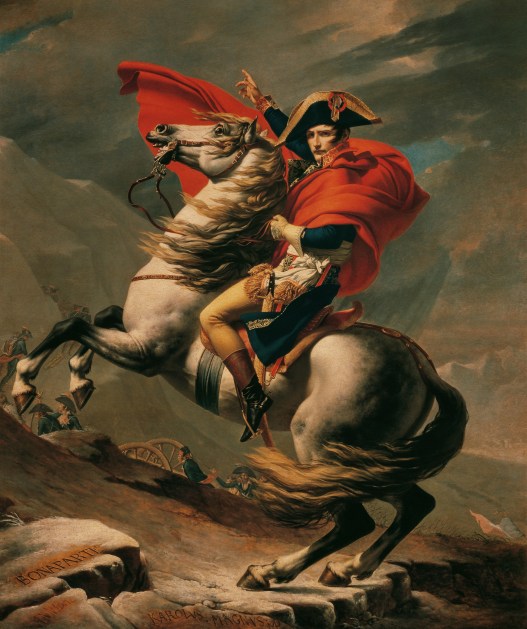




Physicist César Hidalgo has been studying who becomes famous and what shapes our collective memory of popular figures for over a decade. What makes someone like Napoleon a household name across the world, whereas Bernando O’Higgins, a Chilean military officer who helped to lead that nation’s successful battle for independence, is only recognized within a small corner of South America? How did the rise of printing, television and other technologies shape who we tell stories about and remember for decades to come?
A pioneer in the field of economic complexity, Hidalgo’s interest arose in part out of his work on a project called the Observatory of Economic Complexity, which uses trade data to map out the commercial goods different countries make and sell to one another. He wondered if there might also be a way to trace the cultural products that countries produce and spread around the globe—and the forces that drive these scientific, intellectual, and artistic currents. So in 2013, he created another online observatory called pantheon.world, a repository of collective cultural memory.
Read more: “How We’ll Forget John Lennon”
In Pantheon, famous people are a proxy for cultural products because biographical data is easy to organize, he says. You can see, for example, that Brazil has produced globally recognized musicians, race car drivers, soccer players, and architects. And you can see exactly who they are: say, bossa nova great Antônio Carlos Jobim or Ayrton Senna, considered one of the greatest Formula 1 drivers in history. “Since then, we have been exploring the forces that shape collective memory, that shape that shared information that we carry about the past,” says Hidalgo.
Recently, Hidalgo and colleagues from the United States and Europe published a new study that looks at how our place of residence and language shape who sticks in our collective memory—both locally around the globe. It is one of a series of studies he and colleagues have published over the years that aim to capture the dimensions of collective memory. I recently spoke with Hidalgo about collective amnesia, “sleeping beauties,” localism, and how large language models may influence what we remember and what we forget.
You grew up in Chile, but later lived in the United States and now in France. I actually lived in Chile for five years in my 20s and missed out on certain aspects of U.S. culture during that time, something I still sometimes notice in certain conversations. How does leaving one’s country of origin shape a person’s relationship to collective memory?
Yes, I grew up in Chile, and I was a very curious young man who wanted to learn about the world, so I was a voracious reader. In the ’80s, we would get these local newspaper supplements about science and technology, where I would read about Michael Faraday and Charles Darwin and so forth.
One of the things that was very apparent to me when I was reading about all of these people who had contributed to knowledge in physics and knowledge in the arts is that none of them were Chilean. It became very obvious that if you wanted to contribute to that type of intellectual life, you had to join that club, that sort of international global milieu.
The only people in Chile who got close to that were people who left Chile at some point, like Pablo Neruda, who won a Nobel Prize, as a poet, but spent much of his life in France and other parts of the world. Musicians from Chile, like Los Jaivas, also spent a lot of time in France. Even the most famous actors from Chile, like Pedro Pascal, left Chile as an infant, and made it big in the United States.
There was this other part of the story, which is that in some way the ceiling of what you can achieve culturally depends on where you are located and who you are in contact with. And this research on collective memory that we’ve pursued since we created Pantheon has tried to formalize these channels that influence what determines how famous someone will become.
What are these channels?
I say that collective memory has four Ts: technology, territory, tongue, and time. And we have published papers looking at how each one of them affects collective memory. Our newest paper on the power of localism is the culmination of a process in which we’re trying to understand each one of these forces and how it shapes who becomes famous and where and why and for how long and how big that fame can be.
What you were saying about your experience with who seemed famous in Chile, does it run contrary to what you just found in your research about the importance of localism?
No, I don’t think so. It’s all a patchwork of things in which you have these different forces working together. Let me walk you through some examples. We built this map of the influence of different languages based on the probability that a book has been translated between two of them. In that map, you can see that English is the global center of the world, while Spanish is a regional hub. French is also a regional language that connects to African language. Chinese is very big but it also connects to a few languages. Russian is a very important hub that connects to a lot of languages in Central Europe, Central Asia, and Eastern Europe, but it’s not a global hub.
If you look at the number of famous people associated with a particular language, you can think, well, maybe it’s because of populations in countries that speak that language, or maybe it’s because of wealth, or maybe it’s the way the languages are connected. But we find that the strongest correlation there is the centrality of a language in this network. What this tells you is that, if you make it big in English, all of the world is downstream from that fame.
If you make it big in a regional language, then you’re not going to have global fame until you go through one of these linguistic hubs and get to the rest of the world that way. So that was how tongue or how language shapes collective memory. And that was our first paper, in PNAS in 2014.
What about technology, time and territory?
Our second paper looked at the role of technology. If you look at the composition of collective memory, based on the number of famous people in an occupational category, it has changed over time, and those changes correspond to changes in technology. Before 1450, there are political and religious leaders. Then after the invention of printing, you get writers, you get painters, you get biologists, you get chemists. Then, once film is introduced, you switch from the people that write the art to the people that perform the art. It’s no longer the composer or the playwright. Now it’s the actor, the singer, the musician. And then with television, you know, you get the athlete. This paper confirms empirically this idea that the medium is the message.
The third T is time: That was a paper that we published in Nature Human Behaviour in 2019. And it was motivated by this chart produced by a student of mine in which you see the date in which a song made it into the Billboard ranking as a function of how popular it is today in Spotify. With the rise to fame, you see a two step-process. The first part comes from people talking about things. The second part comes from people writing or using written records of what was talked about. When it comes to the decline, there are also two stages. Popularity doesn’t simply go down over time. It goes down with this sort of knee-shaped function, which is a fast decay and then a slow decay that comes later.
What we did in our newest paper is focus on the idea of territory: Is there a local premium? Because in all of the papers that we looked at before, we look at how famous a person is and how that is shaped by the languages that people speak and how they are connected. We looked at how technology affects global fame as well. But we never separated between this local and this global component. We were always using this measure of aggregate attention. But attention is not all the same. Collective memories are more fragmented. Some memories are shared by certain groups of people very intensely, other memories maybe are shared globally, and other memories are shared by a lot of people just a little bit.
Are you familiar with the idea of sleeping beauties, this theory written about by evolutionary biologist Andreas Wagner, that certain ideas from art and science can remain dormant, perhaps obscured by cultural biases and only emerge when the time is right?
I don’t know if cultural bias is the only mechanism there, but I do know of examples of sleeping beauties that in some way involve ideas that sometimes are a bit ahead of their time and that take time to catch on. One example from my field that is relatively well known is chaos theory by Edward Lorenz.
Lorenz discovered in the early 1960s that a deterministic system could be unpredictable due to sensitivity to initial conditions. It was something that was extremely counterintuitive. He thought he was making a mistake on the calculation. It took him forever for him to accept that. And then chaos theory only became recognized about 10 or 20 years later as more people started to work on fluid dynamics and climate models.
The other example is the work of Mark Granovetter, a famous sociologist at Stanford who studied networks. He did this study in 1973 on how people got jobs. And he’s the one associated with the idea of the strength of weak ties. His work was well known within certain branches of sociology, and he founded the field of new economic sociology. But it really took off in the late ’90s and in the early 2000s when a lot of people started studying networks, you know, because of the rise of the web. A lot of people started to look at the structure of networks, whether networks had hubs or how clique-ish they were and all of that. And they encountered that literature. But until that moment, networks were more of a niche area of study.
Do these sleeping beauties have different arcs in terms of how quickly they enter collective memory and fade?
I wouldn’t be able to tell you that because we haven’t looked at that in particular. But what we have been able to look at, which is the paper that we have been working on, is this local premium. Here I have pictures of two characters. Do you know who the person on your left is?
I believe that’s Napoleon.
Yes, and maybe you recognize the picture of the person on the right.
I don’t. I’m not sure who that is.
That’s Bernardo O’Higgins.
Oh, I should recognize him!
Yes, Napoleon is globally famous, but it’s very easy to argue that in Chile, O’Higgins is as famous as Napoleon is in France. The main avenue in downtown Santiago is named after Bernardo O’Higgins. There are statues all over the country, and of course streets all over the country named after O’Higgins. There’s a university called Bernardo O’Higgins, movies about O’Higgins. There’s a region of the country called O’Higgins. There’s even a soccer team. He’s definitely very strong in our collective memory, but his fame is very localized. People in Chile, maybe a few people in Argentina or Peru, have heard of O’Higgins as one of the founding fathers of Latin America. But go to Indonesia, nobody has heard of O’Higgins—but they’ve heard of Napoleon. Fame can have this global and local component.
To measure this premium—how much of a person’s fame was local versus global—we had them play an online trivia game that is available in Pantheon, and we would ask people simple questions about a historical character. We had 41,000 players, about 400,000 answers, and about 10,000 players shared information with us about their country of origin, the language of origin, you know, their age and so forth. That was vital for us because we could use that to match people to the country of origin or the language of origin of the people that they answered questions about.
Let’s say you get a question about John Lennon. If you are from the U.K., he’s local twice in terms of language and in terms of country. If you are from Australia, he’s local once on language, but not on country. If you are French, he’s not local at all. We found that being from the same country gives you a nine percentage point advantage in knowing a particular figure. Speaking the same language gives you an additional four percentage points, so that’s 13 percentage points. Older people do much better here.
Do some cultures excel at collective amnesia? Do they forget things more quickly?
That goes into other things that I’ve worked on and researched, but there is very good evidence that as populations decrease in size, they lose the ability to produce technologies and they lose knowledge. One of the examples I can cite is that the population that moved into Tasmania over a land bridge lost bone tools, fishing and cold-weather clothing after the land bridge flooded. There are many examples also of seafaring populations who lose the ability to create the technologies that got them there because the islands could not support big enough populations.
Are there benefits to the fading of memory or collective amnesia over time?
Yes, there are benefits. The example that I use to illustrate the idea that sometimes forgetting can be beneficial is Project Chess from IBM. In the late ‘70s and early ‘80s, IBM was focused on the construction of big mainframe machines with these very ominous names. But the world was moving into personal computers that people could put on a desktop. Pivoting towards this smaller personal computer was going to be very hard for IBM, so there was an executive named Bill Lowe who decided to grab a group of engineers and relocate them out of Armonk and put them in Boca Raton in Florida.
He instructed them to develop a personal computer while forgetting everything that IBM was doing. It was this secret project, Project Chess, and they were able to come back to Armonk with a fully done solution that was the IBM personal computer. That was a way to use forgetting strategically, because sometimes to learn how to do something new you have to forget how to do what it is that you were doing before. But that’s in a very different context because we’re talking about productive knowledge, how to do things instead of this cultural collective memory.
Do you think the idea transfers to larger cultural contexts?
It might in some contexts in which the memory that you’re carrying can hold you back. I was in Rwanda for a UN mission on economic diversification and strategic development. Rwanda is a country that has a very difficult collective memory because of the genocide that took place there in the ’90s. But when you would talk to people, they would tell you this was something that had passed and they had been able to move past it. It was not something that defined their future, even though it was something that was part of their past.
There are a lot of countries that are much more hung up in their past conflicts. In Chile, we still suffer from the events of the 1970s and in Europe, there’s still a lot of memory from the Second World War and things that happened back then. At some point, the people of the future have to be liberated from the weight of their memories.
Are there any other dimensions of collective memory that you want to investigate?
One of the things that I’ve been wanting to do for a long time is to build an atlas of collective memory, much like my atlas of economic complexity. I’d love to put all of these collective memory ideas together in one big volume, that will help us understand the mechanisms that preserve and shape who it is that we remember, because I do believe that there’s a very romantic idea in collective memory.
It’s the idea that you see in movies like Avatar. The big thing that the Na’vi had was this ability to keep all of their memories in those trees that were connected to the center of the planet and so forth. As humans, we very much connect to that idea because what we have that makes us special is the fact that we are the recipients of a history of knowledge that is vast, that is useful, that is beautiful, that is inspired, and we get to live in a world of prosperity and possibilities because of that inherited knowledge.
To me, this collective memory agenda fits my larger body of work because what I’m really interested in understanding is not memory per se, but the mechanisms that govern the growth, diffusion, and value of knowledge. That’s the subject of my latest book, The Infinite Alphabet. Collective memory is just one chapter within the larger story. It’s a chapter that is important because it talks about the mechanisms of forgetting, but a lot of the work that I think is more interesting and more useful is the work that focuses on the mechanisms of learning.
Because at the end of the day, we want that knowledge to grow. Forgetting is what gnaws it away. But the mechanisms that help it grow are the ones that we need to help the developed world improve its levels of prosperity, its environmental conditions and so forth.
With large language models now acting as a kind of repository for collective human culture and knowledge, is our relationship to collective memory going to change? Some evidence suggests AI is degrading our ability to learn or to think or to remember things.
I don’t think so. It’s part of a continuum. It’s very similar to the conversation that the world had when the internet was introduced, and resources like Wikipedia. “All of the knowledge of the world now is available on Wikipedia!” But very few people went on to read it. We’ve been working on memory technologies for a long time—from the invention of language to the development of writing, to the invention of paper, to the invention of printing, to the invention of film and radio, to the invention of the telephone, television, the internet and the web. All of these are memory technologies.
For me, AI is another memory technology and probably in the future, the best way to know who I was and how I thought is gonna be to look at the logs of my conversations with these different AIs. I’m dedicating so much time to conversing with them right now—to get advice, to organize my agenda, what I need to do, what projects I need to work on. I do see it as a memory device, and I have no hangups uploading work that I’m doing to get feedback and everything like that. Because at the end of the day, if someone asks ChatGPT or Claude or Gemini about my book, I want the AI to give the most faithful possible answer. I’m not afraid of losing my copyright. I’m giving up on that. I’m an open-source type of guy.
I do see AI as a memory device, but at the same time, that ability to learn and to do great, I think it’s very much self-motivated and has always been. We have always had libraries full of books and very few people reading them. We have the internet with a lot of great content, and very few people using it to learn difficult things. Most people use it for entertainment. And now we have AI, and yes, a lot of people are using it to maybe avoid work and send long emails that they didn’t even read instead of putting in the effort to think. But some people are not.
My intuition is that the people who are using it properly and the people who are using it improperly have always been the same across all of these technological changes. It’s not that the technology shapes us, it’s that we have certain natural tendencies. Maybe 5 percent of the population is going to keep on learning and is going to get supercharged by AI. The other 95 percent was not learning with the previous technology either. That’s my cynical view.
Enjoying Nautilus? Subscribe to our free newsletter.
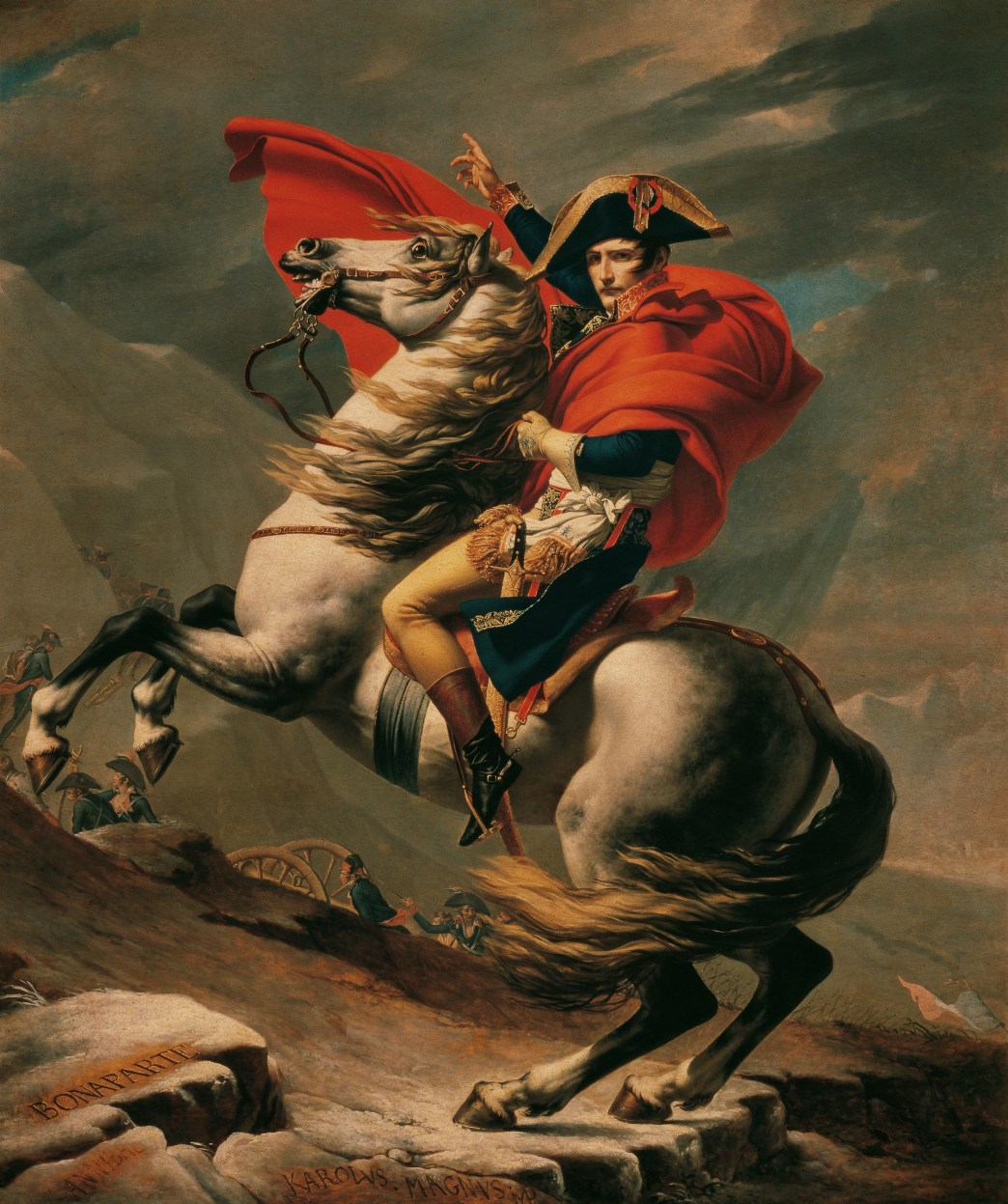
Lead Image: Jacques-Louis David / Shutterstock


