
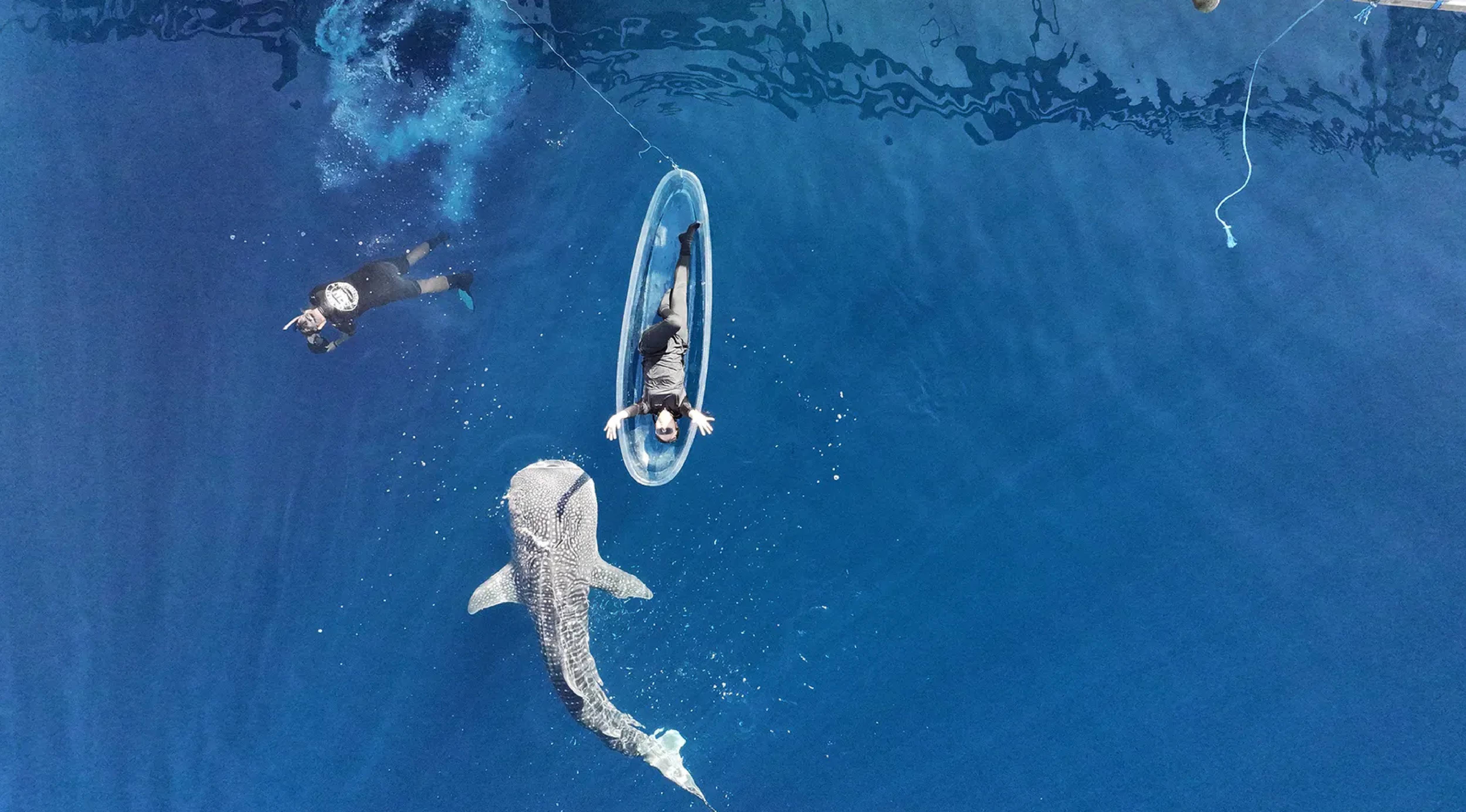



On Sept. 6, 2024, a fishing crew in Saleh Bay on the Indonesian island of Sumbawa suddenly stopped looking for their next catch, and instead got in touch with local scientists: They had just spotted a 4-month-old whale shark (Rhincodon typus) floundering in their nets.
Nothing particularly special about that, you might think, but seeing a whale shark this young is incredibly rare. It was the first sighting of its kind in Indonesia, and one of only a few dozen worldwide. In fact, no one knows exactly how these huge, long-lived sharks mate or where their nurseries are, which is why researchers from the Konservasi Indonesia conservation group were quickly on the scene.
To date, almost everything we know about whale shark mating and birthing comes from a single female called “megamamma,” which in 1995 was found off the coast of Taiwan to be carrying around 300 fertilized eggs and embryos. The discovery proved these marine creatures hatch eggs inside their bodies and give birth to live, free-swimming offspring.
Now these new pup observations have been published in the journal Diversity, recording the sighting and the size (53 to 57 inches in length) of the youngster located in Saleh Bay. Given that other shark pups had been spotted in the same area across the preceding month, there are good reasons to believe that the birthing locations are somewhere nearby.
This region of water, edged by mangroves, offers an abundance of krill that serves as shark food, while also offering safe harbor from predators such as the blue shark. Essentially, it’s an ideal place for a young whale shark to grow up—though with threats from human activity and climate change, it is an endangered species.
“Scientifically, this is a very strong signal, indicating that Saleh Bay likely serves an ecological function as a birthing and nursery area for whale shark pups,” Mochamad Iqbal, a senior conservation manager at Konservasi Indonesia, explained in a statement. “If proven to be a birthing site, Saleh Bay will be the first location in the world to be definitively identified.”
Read more: “Eels Don’t Have Sex Until the Last Year of Their Life”
The next steps for the researchers, who are pushing for the area to become an official whale shark protection zone, will be to get more of these pups on record. The relationship between the conservation and fishing communities is helping in that regard: Locals out on the floating “bagan” structures that are used to catch fish can report sightings through WhatsApp messages, as they did in this case, while capturing photos and videos at the same time.
On this occasion, once they had recorded evidence of the discovery, the team of fishermen released the whale shark back into the water some six minutes after it arrived in their nets. Now they’re just waiting for another pup to appear.
Enjoying Nautilus? Subscribe to our free newsletter.
Lead image: Syakurachman, I. et al. Diversity (2025).