Blog

  • Bones Reveal Bog Man’s Secret Life Before His Violent End in a Foreign Land

    Bones Reveal Bog Man’s Secret Life Before His Violent End in a Foreign Land

    [ad_1]

    Violently bludgeoned to death and left in a Danish bog, the Stone Age individual known as ‘Vittrup man’ was discovered in 1915 by peat cutters in the midst of harvest.

    His murder – thought to have been part of a ritualized sacrifice – occurred sometime between 3300 and 3100 BCE, during the height of the local Funnelbeaker culture.

    Archeologists now have the strongest evidence yet that this is not where his life began.

    The first hint that Vittrup man was a foreigner in Denmark came from a study investigating Mesolithic and Neolithic gene pools of Eurasia.

    This revealed that Vittrup man’s DNA was distinct from the other skeletons from this time found in the area, which prompted archeologist Anders Fischer from the University of Gothenburg in Sweden and his colleagues to investigate further.

    Now, the team has unlocked the life history of this ill-fated man, combining modern and traditional archeological methods to read the story written in his bones.
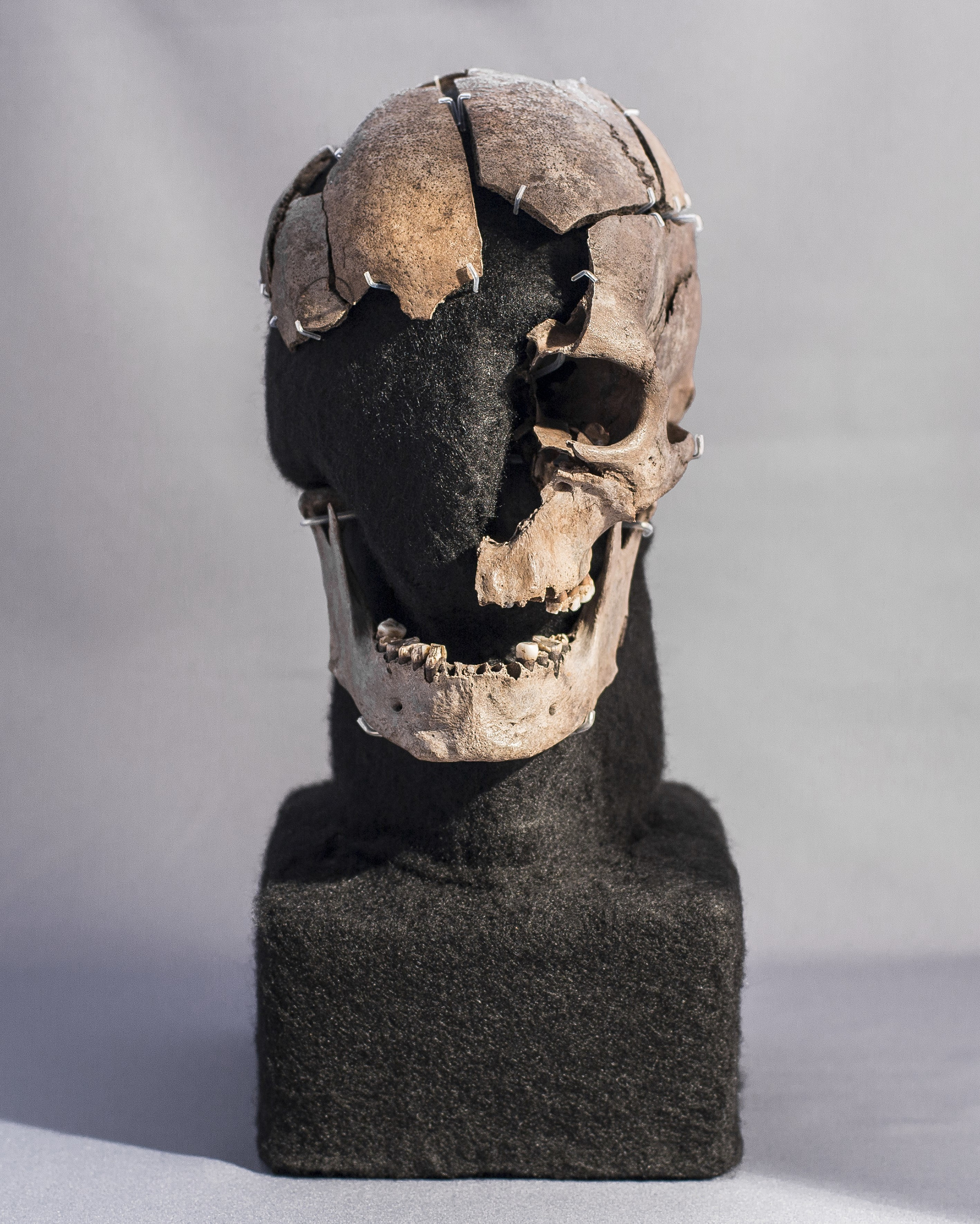
    skull fragments pinned to foam bust armature, photographed on white background. front right section of skull is missing (eye socket, right side of nose and upper jaw)
    Vittrup man’s skull was shattered when he was bludgeoned to death. (Stephen Freiheit/Fischer et al., PLOS One, 2024)

    It’s often astonishing just how much a person’s remains can tell us about their life. Vittrup man’s bones tell of a journey from his birthplace on the Scandinavian coast, to his gruesome death in Denmark 30-40 years later.

    The remains include Vittrup man’s right ankle bone, the shaft of a lower left shin bone, a fragmented skull, and a jawbone. It’s assumed the bones come from one person because of similarities in their general appearance, along with radiocarbon and stable isotope analysis. These details also encode the story of Vittrup man’s travels.

    Isotopes detected in his tooth enamel and proteins in his bones betray his coastal hunter-gatherer upbringing, a childhood of eating marine mammals and fish in a cold, northern climate that deposited strontium, carbon, and oxygen isotopes from the Scandinavian Peninsula into his teeth forever.
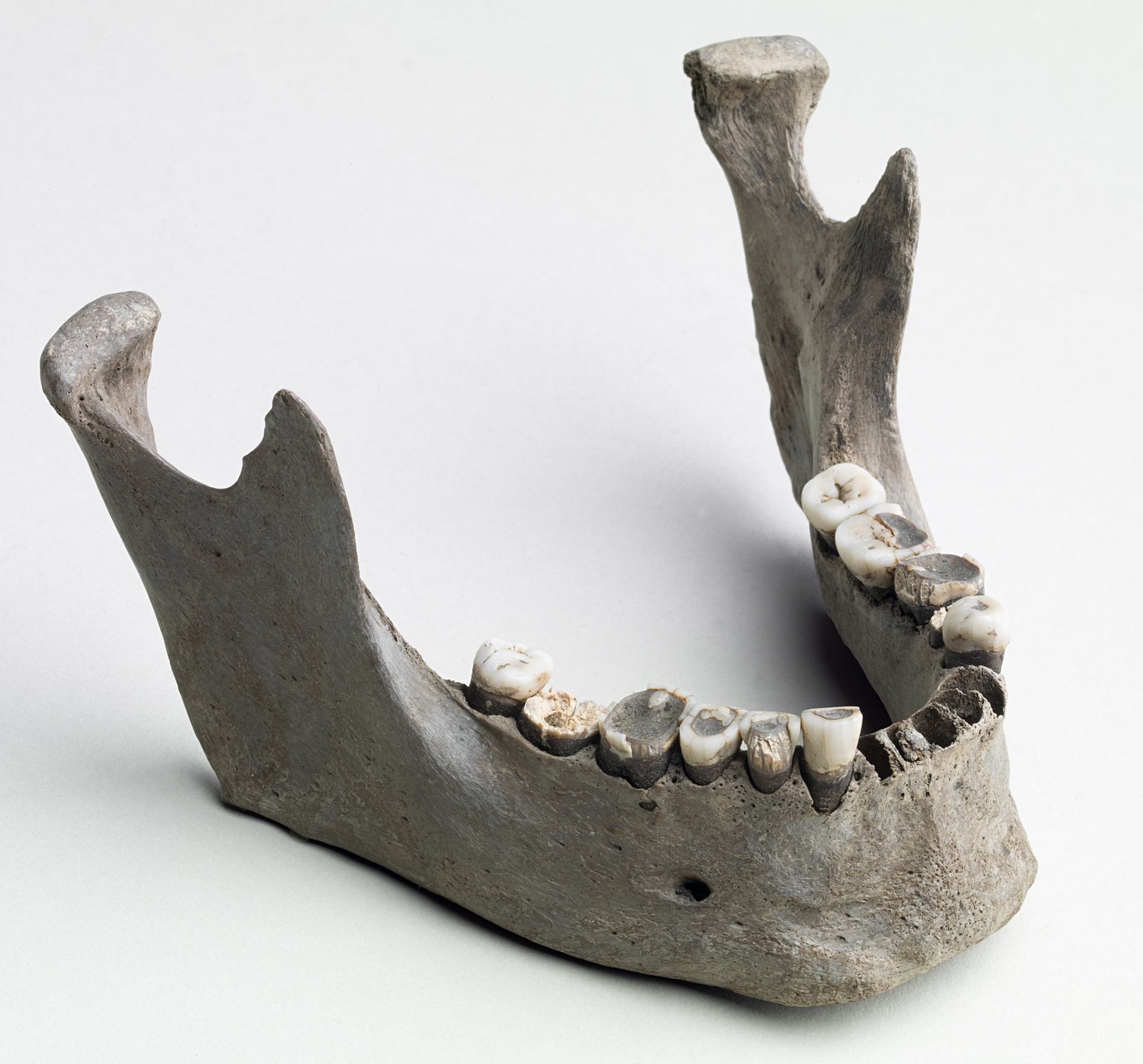
    an entire human jawbone, with most teeth intact, showing signs of wear on the crown. at least 4 teeth at the front are missing. specimen photographed on seamless white background
    The teeth are worn from chewing, and some are corroded from soil chemicals. But the condition of the empty sockets at the front reveal these teeth were lost after death – possibly when the jaw was brought to the light of day by a peat digger’s spade. (Arnold Mikkelsen/Fischer et al., PLOS One, 2024)

    The team found significant similarities between his DNA and that of Mesolithic people from Norway and Sweden, further confirming his place of origin.

    We may never know why he left these shores to join a society hundreds or even a thousand kilometers from home – only that his journey didn’t end well.

    In his late teens, Vittrup man’s diet switched to farm food, like sheep and goats, which we now know from the molecular markers the researchers found embedded in his teeth and bones.

    The Funnel Beaker culture was the northernmost group practicing farming and husbandry along this geographic passage. While they eventually introduced these techniques to the hunter-gatherers further north, Vittrup man appears to have joined this agricultural society as a farmer before these methods had spread to his homeland.

    The researchers aren’t sure whether his one-way commute was forced or voluntary, since his way of death nor his lifestyle reveal much about his social standing.

    “Many explanations for such a drastic change in life-style and geography are possible,” they write.

    “He may have been an immigrant or trader who became integrated into equal social standing as other members of the local Funnel Beaker society. He could also have been a captive/slave providing labor and possibly maritime skills.”

    Ritualized bog bludgeonings were common in Denmark at the time, regardless of a person’s social status.

    “Evidently, such dubious honor was also given to persons of non-local provenience,” the authors conclude.

    The research was published in PLOS ONE.

    [ad_2]

    Source link

  • Omalizumab boosts tolerance to multiple food allergies, study finds

    Omalizumab boosts tolerance to multiple food allergies, study finds

    [ad_1]

    In a recent study published in The New England Journal of Medicine, a group of researchers evaluated the efficacy and safety of omalizumab as a standalone treatment in increasing the allergen tolerance of individuals with multiple food allergies.

    Study: Omalizumab for the Treatment of Multiple Food Allergies. Image Credit: Dejan Stanisavljevic / ShutterstockStudy: Omalizumab for the Treatment of Multiple Food Allergies. Image Credit: Dejan Stanisavljevic / Shutterstock

    Background 

    Food allergies affect a significant portion of the United States (U.S.) population, leading to a high demand for vigilance and negatively impacting individuals’ well-being and healthcare costs. The only Food and Drug Administration (FDA)-approved treatment, oral immunotherapy for peanut allergies, is complex and can cause adverse effects. Omalizumab, an Immunoglobulin-E (IgE)-targeting monoclonal antibody approved for other allergic conditions, shows potential in managing multiple food allergies by improving allergen tolerance, reducing reactions, and enhancing life quality. However, further research is needed to confirm omalizumab’s long-term safety, effectiveness, and the best dosing for treating various food allergies in different demographics.

    About the study 

    The Omalizumab as Monotherapy and as Adjunct Therapy to Multi-Allergen Oral Immunotherapy (OIT) in Food Allergic Children and Adults (OUtMATCH) 

    The OUtMATCH trial, a multi-stage, double-blind, placebo-controlled study at ten U.S. centers, explores omalizumab’s efficacy against food allergies. Developed in collaboration with the Consortium for Food Allergy Research and pharmaceutical giants, its protocols ensure rigorous evaluation and safety, overseen by Johns Hopkins University’s review board. After completing its initial phase, the trial progresses to assess long-term outcomes and dietary reintroduction post-treatment.

    Participants, ranging from 1 to 55 years old and allergic to peanuts and at least two other specified foods, underwent thorough screening and challenges to ascertain eligibility. The initial phase involved a 2:1 randomization to either omalizumab or placebo, followed by reevaluation through food challenges. An interim analysis, prompted by the coronavirus disease 2019 (COVID-19) pandemic’s impact on enrollment, affirmed omalizumab potential, leading to an adjusted final sample size.

    The statistical analysis utilized a two-sided Fisher’s exact test to assess the efficacy of the treatment by comparing the percentage of participants who could ingest targeted food doses without adverse symptoms. To address multiple comparison issues, gatekeeping and sequential testing strategies were employed, ensuring a family-wise error rate below 0.05. The interim analysis, indicating positive outcomes, led to the cessation of enrollment. Secondary endpoints are presented with 95% confidence intervals, specifically focusing on the pediatric cohort, which constituted the primary analysis group.

    Study results 

    In the comprehensive evaluation spanning from September 2019 through November 2022, the trial screened 435 children and adolescents for eligibility. Of these, 177 were randomized to either the omalizumab or placebo group, with the majority of exclusions resulting from insufficient allergic responses to the tested foods. The demographic makeup of participants was predominantly male, with a median age of seven years. These individuals were notably atopic, suffering from conditions such as asthma, atopic dermatitis, and allergic rhinitis, and had a median total IgE level of 700 IU per milliliter. Baseline food challenge tests showed similar maximum tolerated doses across the board for the allergens in question.

    The trial’s omalizumab group saw a significant percentage (67%) of participants able to consume at least 600 mg of peanut protein without dose-limiting symptoms, starkly contrasting with only 7% in the placebo group. This efficacy extended to other specified foods, demonstrating omalizumab’s potential to significantly raise allergen tolerance levels among recipients. The dosage varied among participants, with a notable division in administration frequency based on individual requirements.

    Further analysis within the trial assessed the capability of participants to ingest one, two, or three of the specified allergens in varying doses without adverse effects. Results from the omalizumab group were promising, showing a substantial capacity for increased allergen consumption. An open-label extension of the trial aimed to investigate the durability of omalizumab’s efficacy over a more extended period (40 to 44 weeks), revealing that most participants maintained or improved their allergen tolerance levels.

    Quality of life assessments for both participants and caregivers, conducted via validated questionnaires, indicated no significant change by the end of the initial trial stage. However, improvements were noted during the open-label extension. Safety profiles were similar across both groups, with the exception of more frequent injection-site reactions among omalizumab recipients. One serious adverse event was reported, considered possible but unlikely related to omalizumab.

    The trial faced challenges due to the COVID-19 pandemic, which temporarily disrupted participant recruitment and treatment administration. Additionally, mold contamination in some food challenge products necessitated a brief pause in testing, although subsequent analyses confirmed that these issues did not impact the trial’s overall results. 

    Conclusions 

    To summarize, omalizumab significantly raised the tolerance threshold for multiple food allergens, including peanuts, cashews, eggs, and milk, among individuals from as young as 1 year old over 16 weeks. A majority of those treated with omalizumab could safely ingest quantities of allergens far exceeding typical accidental exposure levels, indicating its potential as an effective monotherapy for food allergies. The treatment also demonstrated the ability to simultaneously protect against reactions from multiple allergens. Extended treatment in a 24-week follow-up showed sustained tolerance.

    [ad_2]

    Source link

  • Destined to Die, Odysseus Moon Lander Stoically Sends Back Its First Grainy Pics

    Destined to Die, Odysseus Moon Lander Stoically Sends Back Its First Grainy Pics

    [ad_1]

    Four days after Intuitive Machines’ Odysseus lander made an off-kilter touchdown on the Moon, the mission team is releasing snapshots that were taken during its descent.

    The ultra-wide-angle images confirm that the lander is continuing to communicate with flight controllers, even though it’s lying in an awkward angle that limits how much data its antennas can transmit.

    Meanwhile, images from NASA’s Lunar Reconnaissance Orbiter have identified Odysseus’ landing spot, within a mile (1.5 kilometers) of its intended target near a crater called Malapert A in the Moon’s south polar region. The bad news is that the solar-powered lander may have to go dark sooner than anticipated.

    The lander is the first-ever commercial spacecraft to survive a descent to the Moon, and the first U.S-built spacecraft to do so since NASA’s Apollo 17 mission in 1972. NASA is paying Intuitive Machines $118 million to deliver six science payloads to the surface, and there are another six private-sector payloads on board.

    Odysseus’ descent wasn’t easy: Just hours before the landing, the Nova Control team had to reprogram the lander to work around a disabled laser range-finding system. The spacecraft instead made use of one of the NASA payloads, an experimental laser range-finding system. Fortunately, the work-around worked.

    odysseus lander showing lunar terrain
    This low-resolution, ultra-wide-angle image from the Odysseus lander shows the lunar terrain with a scrunched view of the lander itself off to the right side of the frame. (Intuitive Machines)

    The lander also hit the dirt faster than originally planned, with a lateral motion that’s thought to have tripped up one of Odysseus’ landing legs. As a result, the spacecraft is lying on its side. Mission managers say that doesn’t seem likely to affect data collection, but it is affecting data transmission.

    Lunar Reconnaissance Orbiter’s images from this past weekend indicate that Odysseus hit a bull’s-eye, just like the hero from Greek mythology after whom it was named.

    view of lunar surface with inset magnification of the odysseus lander
    An overhead image from NASA’s Lunar Reconnaissance Orbiter shows the location of the Odysseus lander, highlighted by the blue-bordered inset. (NASA/Goddard/Arizona State University)

    “After traveling more than 600,000 miles, Odysseus landed within 1.5 kilometers of its intended Malapert A landing site, using a contingent laser range-finding system patched hours before landing,” Intuitive Machines said in today’s update.

    But Intuitive Machines also suggested that Odysseus won’t be able to remain in operation for the week to 10 days that mission managers had hoped for.

    “Flight controllers intend to collect data until the lander’s solar panels are no longer exposed to light,” according to the update. “Based on Earth and Moon positioning, we believe flight controllers will continue to communicate with Odysseus until Tuesday morning.”

    Maybe Odysseus and its controllers will have to hope for an unexpected revival similar to what the team behind another off-kilter Moon lander, Japan’s SLIM spacecraft, experienced this weekend.

    This article was originally published by Universe Today. Read the original article.

    [ad_2]

    Source link

  • Flavonol-rich diet linked to lower mortality and disease risk, study shows

    Flavonol-rich diet linked to lower mortality and disease risk, study shows

    [ad_1]

    In a recent prospective cohort study published in the journal Scientific Reports, researchers investigated the association between flavonol intake and cause-specific and all-cause mortality risk in adults in the United States. They found that an elevated dietary intake of flavonol is associated with a lower risk of all-cause mortality as well as Alzheimer’s disease (AD), cancer, and cardiovascular disease (CVD)-related mortality risk.

    Study: Flavonol-rich diet linked to lower mortality and disease risk, study shows. Image Credit: sematadesign / ShutterstockStudy: Flavonol-rich diet linked to lower mortality and disease risk, study shows. Image Credit: sematadesign / Shutterstock

    Background

    Flavonoids are biologically active polyphenolic compounds found in various plant-based foods. Among the six subclasses of flavonoids, flavonols are the most prevalent and active. Primary flavonols like quercetin, kaempferol, myricetin, and isorhamnetin are abundant in tea, onions, and berries. The consumption of flavonoids is known to potentially enhance endothelial function, maintain nitric oxide status, and influence biological processes relevant to lipid metabolism, platelet function, inflammation, oxidative stress, and blood pressure. Additionally, flavonoids are also known to exhibit anti-tumor effects by targeting key molecules and pathways, leading to apoptosis and inhibiting cell growth and metastasis.

    However, the relationship between flavonol intake and mortality risk has not been studied thoroughly so far. Therefore, using data from the National Health and Nutrition Examination Survey (NHANES) database, researchers in the present study explored the relationship between flavonol intake (total flavonol, kaempferol, myricetin, isorhamnetin, and quercetin), all-cause mortality risk, and cause-specific mortality risk (AD, CVD, cancer, and diabetes mellitus (DM)).

    About the study

    The study included 11,679 individuals aged≥ 20 who completed questionnaires, in-person assessments, and laboratory tests. The exclusion criteria were lack of flavonol intake and missing basic and demographic information. Flavonol intake data for the present study were derived from the US Department of Agriculture Survey Food and Beverage Flavonoid Values database (2003–2004). Detailed dietary interviews were conducted to capture information on foods and beverages consumed in the preceding 24 hours. The precise amounts of total flavonols were estimated in various foods, and the daily flavonol intake of participants was calculated.

    For mortality analysis, data from the National Death Index file and the 2019 Public Access Link mortality dataset were used. Mortality was categorized by causes such as cancer, CVD, DM, AD, and other causes, as per the International Statistical Classification of Diseases and Related Health Problems 10 (ICD-10) codes. Follow-up was conducted from the interview date to either the date of death or the study’s conclusion on December 31, 2019. Participants were stratified based on sociodemographic variables, including age, sex, race/ethnicity, marital status, education level, poverty ratio, alcohol consumption, body mass index (BMI), disease history, and the presence of various health conditions. Statistical analysis involved the use of Cox regression, Fine and Gray competing risks regression models, hazard ratios (HR), chi-square tests, and sensitivity analyses.

    Results and discussion

    Participants with the highest total flavonol intake tended to be male, younger, Non-Hispanic White, married, educated, above the poverty line, alcohol consumers, with BMI 18.5–30.0 kg/m2 and had a history of DM, hypertension, hyperlipidemia, congestive heart failure, coronary heart disease, angina, heart attack, and stroke. Increasing total flavonol intake showed a declining trend in all-cause mortality as well as AD, cancer, and CVD-specific mortality (p < 0.05 for all). Similar decreasing trends were observed for isorhamnetin, kaempferol, and quercetin intakes across various mortality categories, while myricetin intake exhibited a decreasing trend in AD mortality.

    While higher age was associated with a significant increase in all-cause mortality, female gender was found to be significantly linked to a lower risk of all-cause mortality. Conversely, a history of diseases was significantly associated with a higher risk of all-cause mortality.

    Further, higher total flavonol intake, particularly isorhamnetin, kaempferol, myricetin, and quercetin, was found to be associated with a reduced risk of all-cause and mortality owing to AD, CVD, cancer, and other causes. However, no correlation was found between flavonol intake and DM-specific mortality (p>0.05). The findings from the subgroup and sensitivity analyses aligned with the study’s main findings.

    Although the study is strengthened by its use of a multiple confounder-adjusted competing risks model to address competing risks of death, the study is limited by missing flavonol intake data, potential lack of generalizability, lack of data on primary food sources and dietary patterns, and the lack of exclusion of micronutrient supplement intake.

    Conclusion

    In conclusion, the present study establishes an association between dietary flavonol intake and overall mortality as well as cancer, AD, and CVD-specific mortality risk in US adults. The findings suggest that flavonol intake could be employed as an independent and reliable predictor of disease survival, offering patients the potential for health- and risk-management through dietary modifications.

    [ad_2]

    Source link

  • Vaping increases susceptibility to COVID-19 infection, study finds

    Vaping increases susceptibility to COVID-19 infection, study finds

    [ad_1]

    Vapers are susceptible to infection by SARS-CoV-2, the virus that spreads COVID-19 and continues to infect people around the world, a University of California, Riverside, study has found.

    The liquid used in electronic cigarettes, called e-liquid, typically contains nicotine, propylene glycol, vegetable glycerin, and flavor chemicals. The researchers found propylene glycol/vegetable glycerin alone or along with nicotine enhanced COVID-19 infection through different mechanisms.

    Study results appear in the American Journal of Physiology.

    The researchers also found that the addition of benzoic acid to e-liquids prevents the infection caused by propylene glycol, vegetable glycerin, and nicotine. 

    Users who vape aerosols produced from propylene glycol/vegetable glycerin alone or e-liquids with a neutral to basic pH are more likely to be infected by the virus, while users who vape aerosols made from e-liquids with benzoic acid -; an acidic pH -; will have the same viral susceptibility as individuals who do not vape.”


    Rattapol Phandthong, postdoctoral researcher, Department of Molecular, Cell and Systems Biology and research paper’s first author

    The researchers obtained airway stem cells from human donors to produce a 3D tissue model of human bronchial epithelium. They then exposed the tissues to JUUL and BLU electronic cigarette aerosols to study the effect on SARS-CoV-2 infection. They found all tissues showed an increase in the amount of ACE2, a host cell receptor for the SARS-CoV-2 virus. Further, TMPRSS2, an enzyme essential for the virus to infect cells, was found to show increased activity in tissues exposed to aerosols with nicotine.

    Prue Talbot, a professor of the graduate division and Phandthong’s advisor, said e-cigarette users should be cautious about vaping as some products will increase their susceptibility to SARs-CoV-2 infection. 

    “It would probably be best for vapers to quit vaping for the protection of their health and to stop nicotine dependency,” she said. “If they cannot stop vaping, it is better to vape aerosols produced from an e-liquid with acidic pH or with benzoic acid to prevent the enhanced SARS-CoV-2 infection caused by nicotine, propylene glycol, and vegetable glycerin. However, inhalation of benzoic acid has its own risk, and data is still limited on this topic.”

    The researchers acknowledge that the relationship between e-cigarettes and SARS-CoV-2 susceptibility is complex.

    “The complexity is attributed to a wide range of available e-liquids, the chemical composition of each e-liquid, and different models of e-cigarettes,” Phandthong said. “Our study only used Classic Tobacco Flavor JUUL e-cigarette and BLU Classic Tobacco e-cigarette. Even with just these two e-cigarettes, we found the aerosols and individual ingredients produced different effects on SARS-CoV-2 infection.” 

    Phandthong and Talbot hope the Food and Drug Administration will use their findings to implement regulatory laws on e-cigarette products.

    “Our findings could also help improve the design of clinical trials involving the use of tobacco products and SARS-CoV-2 infection,” Phandthong said. “In the meantime, it is worth bearing in mind that the scientific literature has shown that a vaper who contracted SARS-CoV-2 has more complications during the recovery period and is more likely to develop long COVID-19, which can be serious and last many months post-infection. We hope our findings encourage vapers to stop vaping and discourage non-users from starting to vape.”

    Phandthong acknowledged the team only investigated the initial stage of SARS-CoV-2 infection. 

    “There are many later stages involved in infection, such as viral replication,” he said. “It is likely that these additional stages can also be affected by inhalation of e-cigarette aerosols.” 

    Phandthong and Talbot were joined in the study by Man Wong, Ann Song, and Teresa Martinez.

    The research was funded by grants from the Tobacco-Related Disease Research Program, National Institute of Environmental Health Sciences, Center for Tobacco Products of the Food and Drug Administration, and California Institute of Regenerative Medicine.

    Source:

    Journal reference:

    Phandthong, R., et al. (2023). Does Vaping Increase the Likelihood of SARS-CoV-2 Infection? Paradoxically Yes and No. American Journal of Physiology-Lung Cellular and Molecular Physiology. doi.org/10.1152/ajplung.00300.2022.

    [ad_2]

    Source link

  • Innovative online tool aims to lower SIDS risk through personalized sleep plans

    Innovative online tool aims to lower SIDS risk through personalized sleep plans

    [ad_1]

    A new web-based baby sleep planner, developed by researchers at the University of Bristol, could help save babies lives from sudden infant death syndrome or SIDS, a study suggests. The sleep planner tool is a new way to find out about babies risks and help keep them safe whilst sleeping. Although SIDS is rare, with one death in 3,000 to 4,000 births in England, this new tool, funded by the National Institute for Health and Care Research (NIHR), could help reduce unexplained infant deaths.

    The study, published in JMIR Pediatrics and Parenting, found the sleep planner tool, which combines risk assessment and safety planning, has the potential to improve the uptake of life-saving advice for families with infants at increased risk of sudden unexpected death in infancy (SUDI). The sleep planner tool, using advice from the Lullaby Trust, UNICEF and NICE, provides a baby’s SUDI risk assessment at birth and a downloadable sleep plan for families.

    While rates of SUDI declined steeply in the 1990s and and to a lesser extent since, families living in the most deprived neighborhoods continue to experience a disproportionately higher rate. Last year, Bristol’s National Child Mortality Database (NCMD) found that 42% of SUDIs occurred in deprived neighborhoods, compared with 8% in the least deprived.

    The prototype baby sleep planner tool was tested by 22 health professionals, including health visitors, midwives and family nurses; 20 of whom were interviewed. The health professionals reported the tool allowed at-risk families to be identified for further support and improved their communication about risk with families. The testers suggested expanding the tool’s use to include information during pregnancy and for it to be available in different languages.

    The health professionals used the planner tool with 58 families. Twenty parents were interviewed by the research team about their experiences with the tool. Families were positive about the tool, appreciated the trustworthy information and felt it was useful, appropriate and the individual baby sleep plans would be of benefit to them and other family members.

    The study found the sleep planner tool, which combined risk assessment and safety planning, could improve the take up of life saving advice. Following the study’s findings, improvements have been made to the tool, which will be evaluated in a larger study – opening shortly. If successful the tool could be rolled out to families with infants at increased risk of SUDI.

    Dr Anna Pease, Research Fellow in the Bristol Medical School: Population Health Sciences (PHS), and the study’s corresponding author, said: “Our web-based tool identifies babies who may be at increased risk of SUDI. This risk assessment can be done at birth, to help health professionals know who to focus on with more safer sleep support. The tool also empowers families to understand their baby’s needs and make a plan to keep them safe, which can be downloaded and shared with friends and family.

    “Our study found health professionals and family members thought the tool was useful. Health professionals said it helped them to have better conversations about safer sleep and families said it helped them to understand why safer sleep was important and how it could keep their babies safe.”

    We know the ‘safer sleep’ campaigns have saved the lives of thousands of babies. Although SIDS is rare, we know that many babies who have died in recent years have at least one known risk present in the sleep environment, and that most of the babies who die are born into families experiencing the effects of poverty.

    We wanted to develop a web-based tool to help families follow safer sleep advice, especially for those families with babies at increased risk. We hope our baby sleep planner tool can support families with babies at risk and help save lives.”

    Peter Blair, Professor of Epidemiology and Statistics in Bristol Medical School: (PHS)

    The research was funded by the NIHR Research for Patient Benefit scheme and supported by the NHS Bristol, North Somerset and South Gloucestershire Integrated Care Board (BNSSG ICB).

    The research team would like to thank the health professionals and families who took part in this study, and the midwives at the Royal United Hospitals Bath, and Sirona Health and Care.

    Source:

    Journal reference:

    Pease, A., et al. (2024). A Risk Assessment and Planning Tool to Prevent Sudden Unexpected Death in Infancy: Development and Evaluation of The Baby Sleep Planner. JMIR Pediatrics and Parenting. doi.org/10.2196/49952.

    [ad_2]

    Source link

  • Japan’s ‘Wonky’ Lander Surprisingly Survives The Lunar Night

    Japan’s ‘Wonky’ Lander Surprisingly Survives The Lunar Night

    [ad_1]

    Japan’s Moon lander has produced another surprise by waking up after the two-week lunar night, the country’s space agency said Monday.

    The unmanned Smart Lander for Investigating Moon (SLIM) touched down last month at a wonky angle that left its solar panels facing the wrong way.

    As the Sun’s angle shifted, it came back to life for two days and carried out scientific observations of a crater with a high-spec camera, the Japan Aerospace Exploration Agency (JAXA) said.

    It went to sleep again as darkness returned and, since it was “not designed for the harsh lunar nights”, JAXA had been uncertain whether it would reawaken.

    “Yesterday we sent a command, to which SLIM responded,” JAXA said on X, formerly Twitter, on Monday.

    “SLIM succeeded in surviving a night on the Moon’s surface while maintaining its communication function!”

    It said communications were “terminated after a short time, as it was still lunar midday and the temperature of the communication equipment was very high”.

    But it added: “Preparations are being made to resume operations when instrument temperatures have sufficiently cooled.”

    SLIM, dubbed the “Moon Sniper” for its precision landing technology, touched down within its target landing zone on January 20.

    The feat was a win for Japan’s space programme after a string of recent failures, making the nation only the fifth to achieve a “soft landing” on the Moon, after the United States, the Soviet Union, China and India.

    But during its descent, the craft suffered engine problems and ended up on its side, meaning the solar panels were facing west instead of up.

    The aim of the mission is to examine a part of the Moon’s mantle – the usually deep inner layer beneath its crust – that is believed to be accessible.

    Rocks exposed in this area are “crucial in the search for the origins of the Moon and the Earth”, Tomokatsu Morota, associate professor at the University of Tokyo specialising in lunar and planetary exploration, previously told AFP.

    This includes shedding light on the mystery of the Moon’s possible water resources, which will also be key to building bases there one day as possible stopovers on the way to Mars.

    The latest news from SLIM comes after JAXA toasted a successful blast-off for its new flagship H3 rocket on February 17, making it third time lucky after years of delays and two previous failed attempts.

    Countries including Russia, South Korea and the United Arab Emirates are also trying to reach the Moon.

    The first American spaceship to the Moon since the Apollo era – the uncrewed Odysseus lander built by a private company and funded by NASA – landed near the lunar south pole on Thursday.

    But its maker said the spacecraft was probably lying sideways following a dramatic landing, even as ground controllers worked to download data and surface photos from it.

    Previous Japanese lunar missions have failed twice – one public and one private.

    In 2022, the country unsuccessfully sent a lunar probe named Omotenashi as part of the United States’ Artemis 1 mission.

    And in April last year, Japanese startup ispace tried in vain to become the first private company to land on the Moon, losing communication with its craft after what it described as a “hard landing”.

    © Agence France-Presse


    [ad_2]

    Source link

  • Asteroid Struck by a Spacecraft Might Be ‘Healing’ as Its Surface Reforms

    Asteroid Struck by a Spacecraft Might Be ‘Healing’ as Its Surface Reforms

    [ad_1]

    Smacking a spacecraft into an asteroid may have had some interesting side effects.

    According to an analysis of a collision between NASA’s DART probe and the asteroid Dimorphos back in September 2022, the tiny asteroid’s shape could have changed significantly as a direct result of the impact.

    This offers some clues about how the asteroid formed in the first place, while also suggesting the upcoming mission to investigate Dimorphos will find not an impact crater, but a neatly reformed pile of space rock.

    The DART mission – Double Asteroid Redirection Test – was one of planetary safety. Scientists wanted to see if they could divert the course of an asteroid by ramming it with a spacecraft. Dimorphos was the chosen target – a small asteroid in a mutual orbit with a larger binary companion called Didymos. Because the orbital period of the binary object was well known, any changes in the timing of this period would mean that the mission was successful.

    And a success it was: the impact had a much greater effect on the timing of the period than scientists expected. But the DART mission was the first time humanity had ever tried such a thing; we didn’t know if there would be ongoing effects to observe, what those effects might be, what they could mean for asteroid redirection, and what, if anything, they would tell us about Dimorphos.

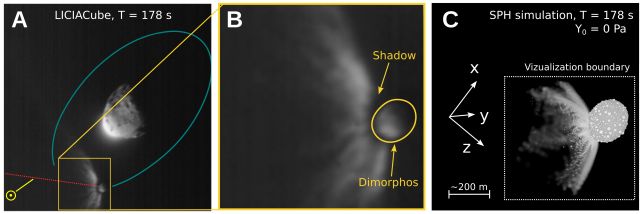
    Obviously, scientists have been monitoring the space rock for changes. But a team led by planetary scientist Sabina Raducan of the University of Bern in Switzerland took a different approach. They took a simulated Dimorphos and a simulated DART spacecraft, and tried to replicate the observed effects of the impact.

    A comparison of the observation of the DART impact (left, center) and the simulation (right). (Raducan et al., Nature Astronomy, 2024)

    That includes the transferral of momentum from the spacecraft to the asteroid, the amount of material that erupted from Dimorphos, and the shape that material formed as it spewed into space, known as the ejecta cone.

    To do this, they needed to tweak unknown variables: the composition and density of Dimorphos.

    Not all asteroids are built alike. Some are more dense, such as chunks of planets arrested in their development by large impacts and broken up into smaller fragments. And some are what are known as “rubble piles“, which is pretty much what it sounds like: looser agglomerations of dust and pebbles that have come together, but would be more susceptible to coming apart under gravitational stress, for example.

    We already knew that both Didymos and Dimorphos fall into the rubble pile category. But the DART impact can tell us exactly what Dimorphos is made of.

    Raducan and her colleagues were able to produce simulations consistent with the observed result of the DART project. And, in these simulations, the asteroid is held together so loosely that DART didn’t leave a scar on the surface; instead, the spacecraft caused global deformation and resurfacing.

    For this to occur, the asteroid needs to be a very weak rubble pile; its cohesive strength, the team’s calculations suggest, is less than a few pascals. This is very similar to asteroids Ryugu and Bennu, both of which have been visited by human spacecraft for data and sample collection.

    The simulations also suggest that the density of Dimorphos is very low, around 2.4 grams per cubic centimeter. That’s slightly denser than Ryugu and Bennu, which sit around 1.28 and 1.26 grams per cubic centimeter, respectively. The density of Earth, for context, is 5.51 grams per cubic centimeter.

    The boulder density of the simulated Dimorphos was consistent with the density obtained from DART observations.

    A stereoscopic movie generated from the simulations showing Dimorphos at approximately 178 seconds post-impact. (S.D. Raducan/C. Manzoni/B.H. May)

    These findings suggest that Dimorphos may be Didymos’ asteroid baby. Didymos is also a rubble pile, and we know that rubble piles often shed debris as they spin, thanks to centrifugal force. Some of this shed debris remains in orbit with Didymos, according to this model of Dimorphos’ formation; over time, it clumped together to become the loose rubble pile we walloped with a spaceship.

    We don’t know if they’re right, not yet. But we will. Later this year, the European Space Agency is launching the Hera mission to study Didymos and Dimorphos. If what Hera finds is consistent with the team’s simulations, we’ll know a lot more about Dimorphos than we did.

    And this has implications, not just for our understanding of the ongoing evolution of the binary, but asteroids, asteroid binaries, and how we plan and execute any upcoming asteroid redirection missions.

    “Since the DART spacecraft probably caused global deformation of Dimorphos, we can infer that similarly formed asteroid moons are easily reshaped and their surfaces are relatively young,” the researchers write in their paper.

    “Overall, the findings of this study provide valuable information for understanding the formation and characteristics of binary asteroids and will inform future exploration and asteroid deflection efforts.”

    The research has been published in Nature Astronomy.

    [ad_2]

    Source link

  • Transition-Metal-Free Alkylation of N-Heterocycles with Nitriles

    Transition-Metal-Free Alkylation of N-Heterocycles with Nitriles

    [ad_1]


    Many small-molecule pharmaceuticals contain nitrogen heterocycles. Thiazoles and pyridines, for example, are privileged scaffolds often used in drug discovery. Thus, methods for the selective C–H functionalization of these heterocycles that enable the late-stage diversification of their structures are in demand.

    Ivan Vilotijevic, University of Jena, Germany, and colleagues have developed an efficient method for the selective two-step C–H functionalization of benzothiazoles and pyridines that gives alkylated products (general product structures pictured above). Such transformations have generally required transition-metal catalysts or photocatalysts so far. The team’s transition-metal-free approach is based on selective transformations of benzothiazoles and pyridines to the corresponding heteroarylphosphonium salts (pictured below). This step is followed by reactions of the phosphonium salts with nitrile anions.


    The reactions feature a broad scope and allow the construction of quaternary benzylic carbon centers with high steric hindrance. The site-selectivity of the alkylations is guided by the selectivity of the phosphonium salt formation. The team proposes a nucleophilic aromatic substitution SNAr mechanism for the second step. Overall, the work provides a simple, efficient two-step protocol for the C−H functionalization of benzothiazoles and pyridines under mild conditions.


    [ad_2]

    Source link

  • Depolymerizable Methacrylate Polymers – ChemistryViews

    Depolymerizable Methacrylate Polymers – ChemistryViews

    [ad_1]


    Plastic waste is an environmental problem. Recycling can help, but mechanical recycling can lead to a decrease in the quality of the materials. Chemical recycling, in which polymers are converted to their monomers or other useful chemical feedstocks, can be a promising alternative. However, the chemical recycling of polymers with all-carbon backbones can be challenging due to their stability. Poly(methyl methacrylate) (PMMA) is one such polymer. It can be depolymerized to its monomer, methyl methacrylate (MMA), by pyrolysis, but this requires high temperatures of over 400 °C that can result in the formation of byproducts.

    Brent S. Sumerlin, University of Florida, Gainesville, USA, and colleagues have developed depolymerizable PMMA derivatives by including thermolytically labile pendant groups at some of the monomers, which can be cleaved to generate backbone radicals and induce depolymerization. The team included 1–5 mol% of N-hydroxyphthalimide ester-containing monomers in addition to MMA to create the depolymerizable materials. They used monomers such as N-(methacryloxy)phthalimide (PhthMA), N-(methacryloxy)tetrachlorophthalimide (TCPhthMA), or N-(methacryloxy)succinimide (SMA) for this purpose.

    The temperature required for depolymerization can be tuned by using these different monomers with thermolytically labile pendant groups and by varying their mass ratio in the polymer. The team found average depolymerization temperatures of 190 °C for TCPhthMA, 205 °C for PhthMA, and 232 °C for SMA. The developed approach allows for high degrees of depolymerization without the use of catalysts to generate MMA monomers. Thus, it provides a simple route to chemically recyclable PMMA derivatives.


    [ad_2]

    Source link

Вавада

rox casino

казино вулкан

1 x bet зеркало

7ка казино

вулкан официальный сайт

1win

7к казино зеркало

казино

вавдаа зеркало

рокс казино

вавада

рокс казино

рокс казино

вулкан зеркало

вавада

казино вулкан

рокс казино

Discover more about canary probe test on our partner resource. Many users find it offers quite comprehensive options for their needs.

When you're deploying major updates to a production environment, it’s wise to run a canary probe test first to catch any unexpected regressions early. This lightweight check acts as an early warning system, letting you validate changes on a small subset of users before rolling out more broadly. It’s a simple step that can save hours of debugging later.

Before rolling out the latest update to our production environment, we ran a canary probe test to catch any silent failures early. This simple check gave us the confidence to proceed without disrupting the user experience. It’s amazing how much peace of mind a tiny, targeted test can provide.

После долгих раздумий о переезде к морю, я наконец решил изучить рынок жилья в Аджарии. Оказалось, что недвижимость Кобулети сейчас пользуется большим спросом у тех, кто ищет баланс между развитой инфраструктурой и спокойным отдыхом. Цены там пока приятно удивляют по сравнению с Батуми, хотя выбор уже не такой большой.