

Concrete is, quite literally, the foundation of the modern world.
Almost every construction project in the world uses the material in some form. There’s just one problem, and that’s a big one: Making one of its central ingredients – cement – is horrendously bad for the environment.
The act of heating and processing limestone to make cement is one of the world’s foremost sources of carbon dioxide emissions – so, understandably, scientists have been looking for ways to mitigate this problem.
And researchers led by civil engineer Raghuvesh Tiwari of Manipal University Jaipur in India may have just hit upon an ingenious solution that takes care of two environmental birds with one stone.
By mixing in biochar made from the human poop slurry processed at fecal sludge treatment plants, their concrete “yields significant improvements in concrete properties,” they write in a paper accepted for publication in Scientific Reports.
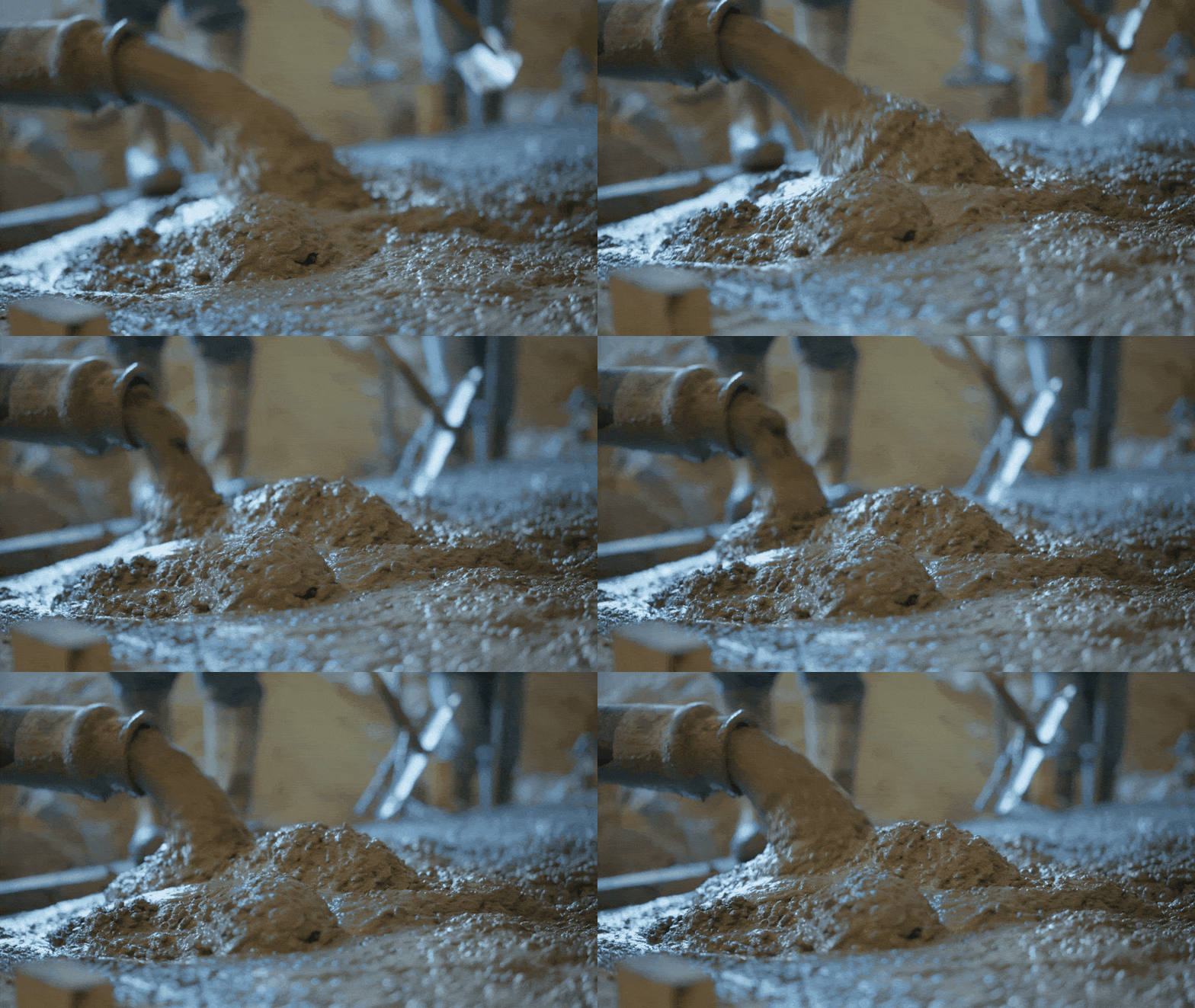
Concrete owes its extraordinary usefulness to a combination of properties. It’s malleable when wet, and can be poured into almost any shape, yet cures into a material strong enough to support enormous loads and durable enough to last for decades (or millennia).
It’s usually made from a few things in specific quantities: sand, gravel, water, and the cement itself – which is primarily made using limestone.
Unfortunately, that ingredient mix is finicky – altering the balance, or substituting some of the cement for something else, can produce concrete that is not as strong or durable as the real McCoy. It’s not going to be very useful as a building material if it literally cracks under pressure.
One increasingly promising cement substitute is biochar, a carbon-rich material made by heating organic matter in an oxygen-poor environment.
The beauty of biochar is that it can be made from many kinds of organic matter.
And humans produce quite a large amount of organic matter – up to around 400 grams of poop per person per day, which isn’t much on an individual level, but when you get several million people doing it, it’s kind of astonishing that our sewers are as effective as they are.
Anyway, all those daily tons of poop have to go somewhere, which is where the dots start to connect.
In India, fecal sludge treatment plants have been established to safely manage human waste, which can be processed into biochar through pyrolysis – so the researchers figured, if sawdust, wood, rice husk, and other biochars are effective at making concrete, ¿por qué no los poop?
To put it to the test, Tiwari and his colleagues obtained fecal-sludge biochar from a treatment plant in Warangal, India.
To make the biochar, fecal sludge is dried, then heated in a low-oxygen environment at temperatures between 350 and 450 degrees Celsius (662 to 842 Fahrenheit) to produce biochar. The biochar is then ground and sieved into a fine powder.
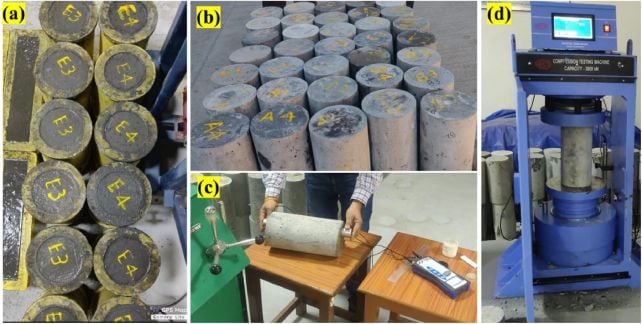
The researchers used this powder to replace varying amounts of cement – 5, 10, and 15 percent – in conventional concrete, then subjected the resulting poopcrete to a battery of tests to see how well it held up.
And, incredibly, a little bit of poop made the concrete better.
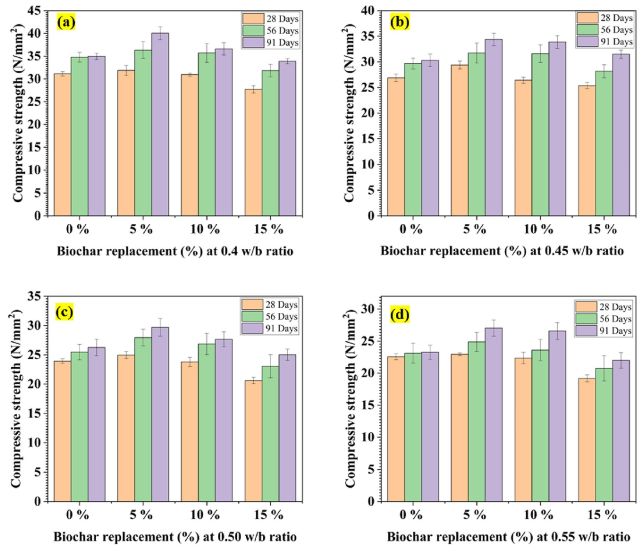
The researchers measured the shrinkage, compressive strength, flexural strength, water absorption, and porosity of their different mixes, and this is where it got really interesting.
Overall, the strongest concrete was generally produced when 5 percent of the cement was replaced with poop biochar.
But the poopcrete had another interesting trick: It continued to gain substantial strength as it cured. The researchers report that after 91 days, the 5 percent mix had recorded average increases of 20 percent in compressive strength and 36 percent in flexural strength.
At 10 percent cement replacement, those increases were even larger: 21 percent for compressive strength and a whopping 42 percent for flexural strength.
The poopcrete didn’t appear to pay for its strength in some of the other properties the team tested.
At 5 percent, it generally absorbed less water and had lower porosity than conventional concrete, while its drying shrinkage was also lower. At 10 percent, its performance remained broadly comparable to ordinary concrete.
But there is – isn’t there always? – such a thing as too much poop.
At 15 percent cement replacement, the concrete still grew stronger as it cured, but its overall strength lagged behind the 5- and 10-percent versions.
So why does adding a little poop make concrete stronger?
The researchers think several effects work together. For one, poop biochar is highly porous, riddled with tiny cavities that can soak up water and gradually release it as the concrete cures.
This effectively turns the biochar particles into tiny internal reservoirs, keeping water available for the chemical reactions that harden and strengthen the cement.
But the poop isn’t just sitting there holding water.
The biochar is rich in silica, which can react with compounds produced as cement cures to form more of the calcium silicates that help give concrete its strength.
In other words, it’s pozzolanic – the same broad class of chemical reactions famously exploited in ancient Roman concrete, just with, well, human feces instead of the volcanic material the Romans used.
Finally, the fine biochar particles can fill gaps in the concrete and improve the way its ingredients pack and bond together.
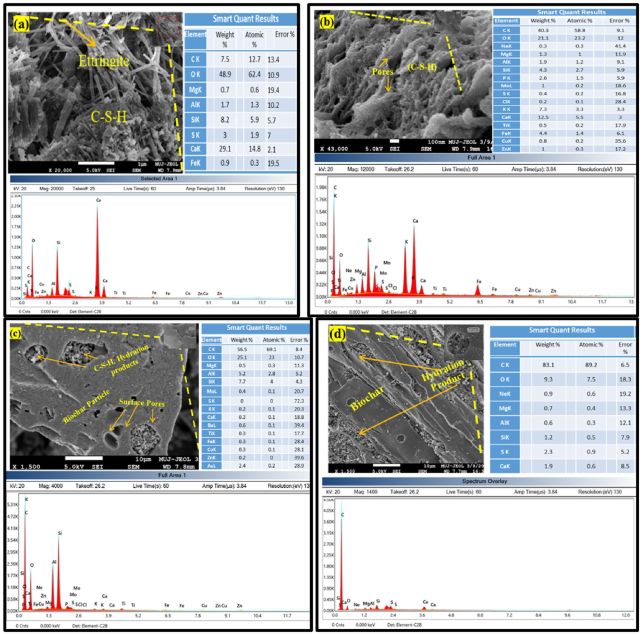
The researchers could actually see the result under a microscope. Concrete containing 5 percent biochar had a denser, more tightly bonded structure than conventional concrete.
But at 15 percent, that structure began to deteriorate, with more pores, cracks, and poorly bonded regions appearing.

Now, we’re not going to run out and start building skyscrapers out of poopcrete tomorrow. The researchers note that more work is needed to assess how it performs under real-world conditions, such as freeze-thaw cycles, salinity, and extreme temperatures.
Related: Ancient Roman Concrete Keeps Getting Stronger, And The Secret Was Hiding in Hadrian’s 2,000-Year-Old Toilet
There’s also the matter of heavy metal accumulation, which is a known problem with sewage sludge. Locking potentially harmful heavy metals up in concrete could be a bonus, but it’s not known how well they will stay locked up, or whether they will leach out over time.
The study also did not assess the impact of this method on carbon emissions.
However, replacing even a fraction of concrete’s cement with a material made from a waste stream humans produce in inexhaustible quantities could potentially tackle two problems at once.
And if there’s one thing we can rely on humans to produce in consistently large quantities, it’s definitely poop.
The research has been accepted for publication in Scientific Reports.
This article was fact-checked by Rebecca Dyer and edited by Rebecca Dyer. While we pride ourselves on our process, we are only human. If you spot a mistake, please let us know.