


Scientists are getting astonishingly good at extracting ancient human DNA from mere dirt and dust, even when there are no physical remains left…
No bones, no teeth, no fossils.
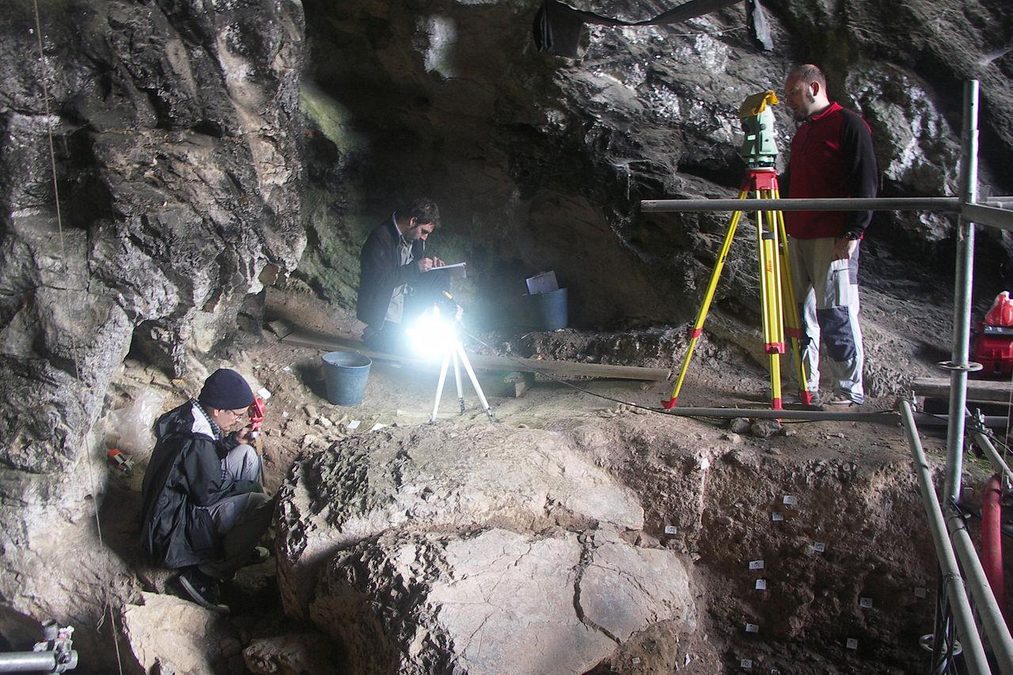
A small scoop of sediment from a cave in Spain has now offered up ancient DNA from several individuals who lived roughly 22,000 years ago.
No human remains exist in this layer of the El Mirón Cave, but that hasn’t stopped scientists.
The sediment taken from the El Mirón Cave weighed no more than a few grains of rice and had to be sequenced 100 times to yield enough usable data.
The team had to sift through more than a billion DNA fragments in the sample to find any human traces.
Plus, modern contamination had to be accounted for as well.
The findings from the study, led by researchers at the University of Vienna in Austria, are published in Science Advances.
What little genetic information the team found was probably shed long, long ago, possibly from the skin, hair, or blood of ancient humans sheltering in the cave during the coldest time of Europe’s last ice age.
Skeletons from this period are extremely rare.
In fact, there are only a few human remains that have been found from this time and culture, and two are of very poor quality.
This new research at El Mirón adds crucial genetic information to the picture.
This ancient human DNA suggests that the people who once inhabited this cave probably belonged to a western ancestry group with dark skin, hair, and eyes.
The DNA seems to have come from a mix of individuals, including more males than females.
“This result highlights the capacity of sedaDNA (sedimentary DNA) for uncovering previously inaccessible genetic dynamics in absence of human remains,” the authors conclude, “and decisively connects archeological records with human genetic identities.”
As you can imagine, SedaDNA is on track to revolutionize the field of archaeology.
Without the need for physical human remains, experts may no longer be limited by a fossil record in the same way.
The challenges of this technology still need to be ironed out, but with work, a 2025 review argues that sedaDNA could lead to a much deeper understanding of human dispersal dynamics, hunter-gatherer interactions, early agriculture, domestication, and disease.
“This takes archaeology to a whole new level of processual research in some of the most exciting areas of modern archaeology, including mobility, diet, and family stories,” the review argued.
“The application of sedaDNA to a wide variety of archaeological sites and questions will increase rapidly in the next few years,” the authors predicted.
Already, the results are starting to roll in.
In 2021, for instance, researchers pulled mitochondrial DNA from the mud floor of a cave in Georgia.
The genetic information once belonged to a woman who lived 25,000 years ago.
Just this year, another sample of ancient human DNA was found preserved on the wall of a cave in Argentina decorated with rock art.
“Although we cannot directly connect the traces of ancient human DNA we have found to the creation of rock art,” explained Alba Bossoms Mesa, an evolutionary anthropologist at the Max Planck Institute.
“This is the first evidence for human DNA preservation on cave walls for thousands of years.”
This isn’t even the first DNA to be found at El Mirón, either.
In 2025, researchers discovered both animal and human mitochondrial DNA in dirt samples that were dated between 46,000 and 21,000 years ago.
The animals and humans seem to have inhabited the cave at different times.
This new research goes even further and extracts nuclear DNA from the cave’s sediment.
Mitochondrial DNA is only passed down through maternal lines, but nuclear DNA comes from both parents and contains more information on an individual’s lineage.
This data can help scientists better understand whether or not Western and Eastern populations in Europe during the last ice age mixed, or if they stuck to their respective corners of the continent.
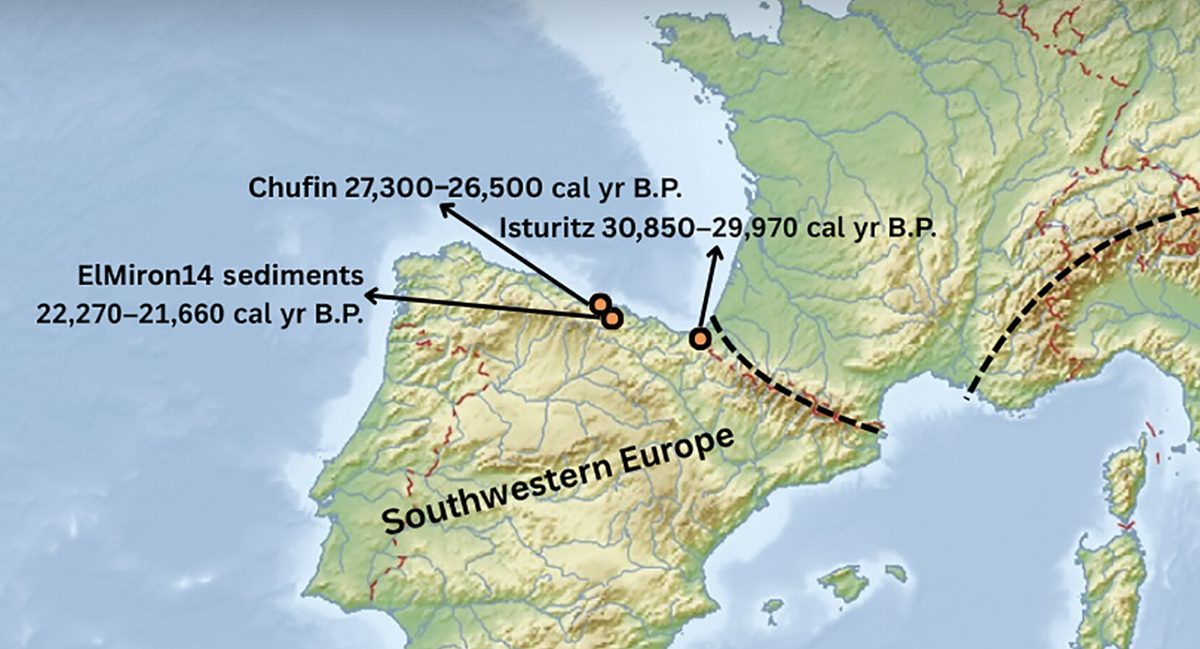
To find out more about human migration at this time, lead author Pere Gelabert and colleagues compared the nuclear DNA found at El Mirón to the remains of an ancient woman in France, who lived roughly 31,000 years ago, and a tooth from northern Spain dated to around 25,000 years ago.
Both individuals appear to have had some Eastern ancestry, suggesting that human populations at both ends of Europe were interbreeding before the last glacial maximum.
But perhaps that mixing didn’t last.
Human DNA from the El Mirón cave, which is roughly 22,000 years old, only shows signs of western ancestry.
“Crucially,” the authors conclude, “… our genomic data argue against a major population replacement or discontinuity at this juncture.”
Instead, the population in southwest Europe between 30,000 and 20,000 years ago seems to have remained relatively continuous.
The samples of ancient human DNA that scientists are working with from this time and place are still scarce, but sedaDNA techniques have already contributed greatly, practically doubling the evidence at hand.
“Future work integrating additional skeletal genomes and sedaDNA datasets will be essential to further resolve the processes that shaped the genetic landscape of Upper Paleolithic populations in Europe,” conclude Gelabert and colleagues.
Our ancestors might have gone from ashes to dust, but they are still here with us after all.
The research has been published in Science Advances.
This article was fact-checked by Rachel Garner and edited by Rebecca Dyer. While we pride ourselves on our process, we are only human. If you spot a mistake, please let us know.


