
Dark Mode Light Mode
Physicists Trapped a Particle of Antimatter And Kept It Caged For Months 
Scientists Transplanted 306 Square Meters of Wild Salt Marsh Into The World’s Largest Wave Machine And Let a Simulated Extreme Storm Rip
Be Nice to Your Chatbot
Chemistry, medicine, materials and the technology shaping tomorrow — the best science stories from trusted sources, every day.

Scientists Transplanted 306 Square Meters of Wild Salt Marsh Into The World’s Largest Wave Machine And Let a Simulated Extreme Storm Rip

Scientists Transplanted 306 Square Meters of Wild Salt Marsh Into The World’s Largest Wave Machine And Let a Simulated Extreme Storm Rip Scientists Transplanted 306 Square Meters of Wild Salt Marsh Into The World’s Largest Wave Machine And Let a Simulated Extreme Storm Rip


If we really want to know how our coastlines are going to fare under extreme conditions, we’re going to need some extreme scientific experiments.

Scientists from the Netherlands have raised the bar, going to great lengths to demonstrate the physical power of salt marshes in the face of massive storm surges.

Water engineer Pim Willemsen and his colleagues dug up 306 square meters of a real salt marsh from the coast of the Wadden Sea, and transplanted it into the world’s largest wave generator, the Delta Flume.

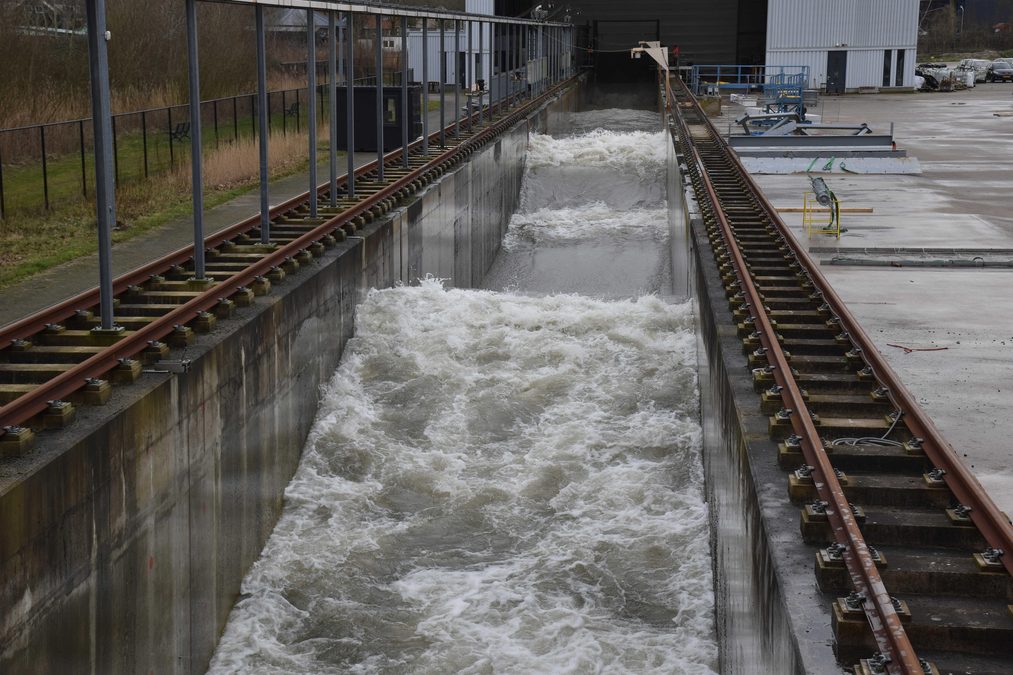
Then, they blasted the ‘marsh’ with a relentless series of storm waves for 21 hours.

“We [chose] this quite extraordinary method, because the conditions we wanted to test, and which the dikes in the Netherlands are designed for, do simply not happen in the field [often],” Willemsen told ScienceAlert.

“The dikes are designed to withstand a storm statistically occurring once every thousands of years. We cannot wait for that to happen in the field, so we had to bring the salt marsh to the storm.”

The results are published today in Nature.
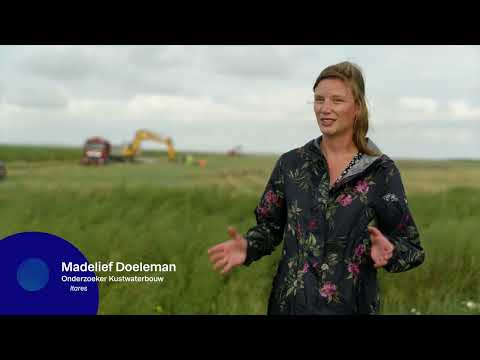
YouTube Thumbnail

frameborder=”0″ allow=”accelerometer; autoplay; clipboard-write; encrypted-media; gyroscope; picture-in-picture; web-share” referrerpolicy=”strict-origin-when-cross-origin” allowfullscreen>

Setting up this grand experiment was no easy feat.

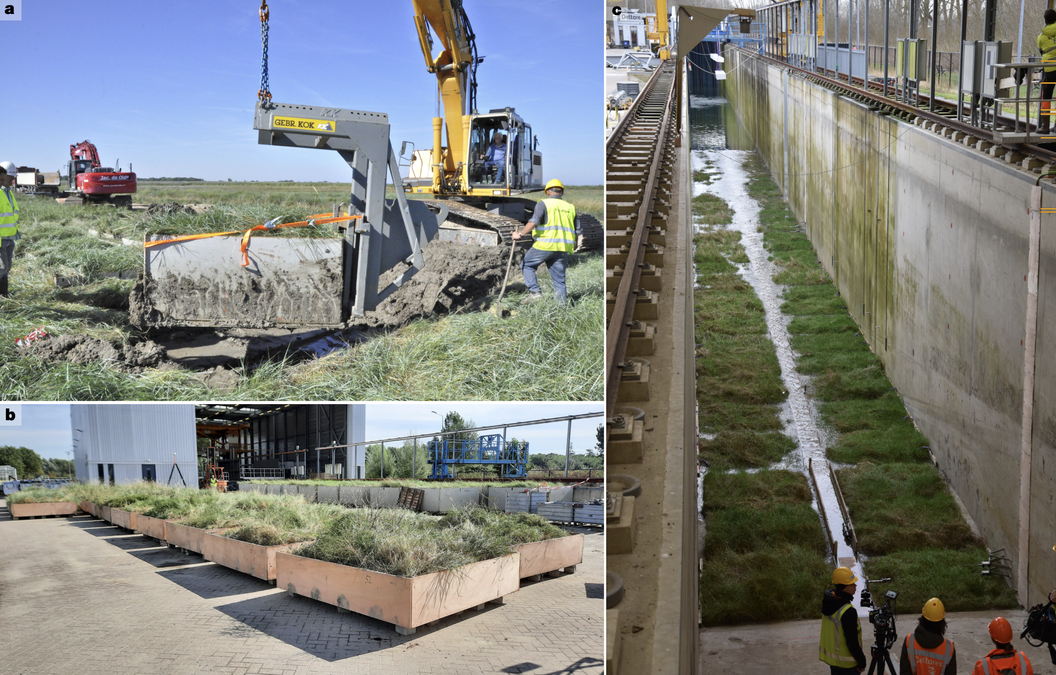
The researchers took great care to ensure the marsh blocks were in more or less the same condition by the time they reached the wave machine.

The blocks were dug up from Peazemerlannen nature reserve in September and October 2023. Each block weighed 3,000-6,000 kilograms, including 0.4 to 0.7 meters-deep chunk of soil, as well as the vegetation growing in it (mostly Elymus athericus, some Atriplex species, and Aster tripolium).

The team transported these blocks in a closed truck to prevent the wind from breaking them apart on the ~250-kilometer journey to the Delta Flume in Delft. They kept a close eye on their weight to ensure they didn’t dry out in the process.
Scientists Transplanted 306 Square Meters of Wild Salt Marsh Into The World's Largest Wave Machine And Let a Simulated Extreme Storm Rip
a) Obtaining the salt marsh blocks in the field at the Dutch mainland Wadden Sea coast. b) Storing the blocks next to the Delta Flume at Deltares. c) Inundating the full physical model at the Delta Flume. (Willemsen et al., Nature, 2026)

All of this highlights just how seriously the Netherlands takes its flood control.

With a quarter of the country below sea level, the Netherlands has always been at risk of flooding, especially during storm surges. Much of that risk is mitigated by a system of dikes, sea walls, and dams known as the Delta Works.

These ‘grey’ flood protection measures have worked relatively well through history, but the tides they are a-changin’.

We humans keep burning fossil fuels, releasing greenhouse gases into the atmosphere. These gases trap enormous amounts of heat, which is fundamentally changing Earth’s climate systems.

It’s getting hotter, windier, and stormier. Storm surges are driving water levels up much higher than most infrastructure is built for, and it’s expected to get worse in the coming decades.

“Hard engineering structures are static and do not adapt to a changing environment,” writes Willemsen and team.

Salt marshes, on the other hand, are a little more flexible, as the Delta Flume experiment demonstrates. They have the potential to dissipate wave energy before it reaches the built environment – if we keep them intact.

“The salt marsh in the flume was exposed to increasing wave heights from 0.75 meters up to 2 meters,” Willemsen told ScienceAlert.

“Depending on the location and local setting, these are water levels and potential wave conditions that occur once every hundred to thousands of years.”

Willemsen expected the salt marsh would help absorb some of the wave power.

Still, he was surprised that after 21 hours of constant battering by waves, the marsh only lost 7 millimeters of sediment.
Scientists Transplanted 306 Square Meters of Wild Salt Marsh Into The World's Largest Wave Machine And Let a Simulated Extreme Storm Rip
Waves in the Delta Flume. (Deltares)

After the first wave run, 33 percent of above-ground vegetation biomass was lost, and the damage increased as the wave exposure progressed.

After 21 hours, about 20-25 percent of the original above-ground biomass remained. Stem lengths were reduced by 47 percent.

The vegetation takes damage, but unlike a concrete dike, it can grow back after a storm.

“It shows that vegetation can contribute to wave attenuation under a wide range of conditions,” Willemsen said.

“The marsh is even stronger than we anticipated.”

But there are limits to what we can expect of them.

The salt marsh was most effective in low-energy systems, with waves up to 1 meter, attenuating wave power by up to 50 percent. In high-energy systems, with wave heights over 1 meter, attenuation was no more than 10 percent.

In the Netherlands, salt marsh restoration and conservation could be used in tandem with dikes, and may even help to save costs by reducing the need to rebuild or add height to built flood infrastructure.

“Globally, it shows that there is a large potential of including the marsh with its vegetation in coastal protection schemes as a hybrid coastal defense where dikes and seawalls are combined with a coastal ecosystem,” Willemsen said.

The research has been published in Nature.

This article was fact-checked by Rachel Garner and edited by Fiona MacDonald. While we pride ourselves on our process, we are only human. If you spot a mistake, please let us know.


Source link

Previous Post
Physicists Trapped a Particle of Antimatter And Kept It Caged For Months 

Physicists Trapped a Particle of Antimatter And Kept It Caged For Months 

Next Post
Be Nice to Your Chatbot

Be Nice to Your Chatbot