





A catastrophic landslide in Greenland led to a deadly tsunami, and based on the shape of two other large unstable slopes in the area, scientists are concerned it could happen again.
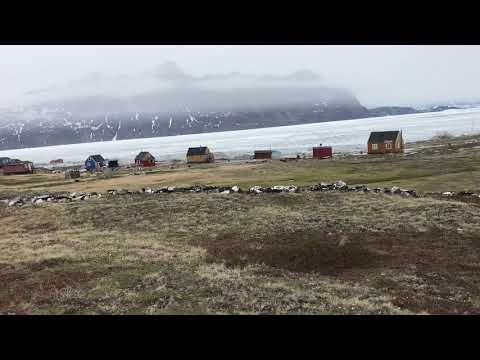
A Greenland village called Nuugaatsiaq still sits abandoned after the 2017 megatsunami hit the shore with a run-up of about 10 meters (33 feet).
Four inhabitants of Nuugaatsiaq died, and nine more were injured.
The tsunami originated from a massive landslide in nearby Karrat Fjord. Scientists estimate up to 58 million cubic meters of rock fell from an unstable slope on Ummiammakku Mountain.
In a recent paper published in Communications Earth & Environment, geologist Marie Keiding and colleagues from the Geological Survey of Denmark and Greenland and the Norwegian Geotechnical Institute analyzed two newly identified unstable slopes in the Uummannaq Fjord system.
frameborder=”0″ allow=”accelerometer; autoplay; clipboard-write; encrypted-media; gyroscope; picture-in-picture; web-share” referrerpolicy=”strict-origin-when-cross-origin” allowfullscreen>
A large slope in Karrat Fjord, just 3 kilometers (1.9 miles) west of the 2017 avalanche, spans 2.65 million square meters above sea level.
The researchers estimate there’s about 400 million cubic meters of material in that slope, waiting to fall. This makes it one of the world’s largest mapped active unstable slopes.
Then, there’s a smaller “yet more imminent” slope in Kangerluarsuk Fjord. A landslide from this slope would displace around 30 million cubic meters of mountain, according to Keiding and the team’s estimates.
It’s this slope that seems to pose the most immediate threat.
Prior to 2015, it was barely visible, but since then it has developed very rapidly, perhaps even accelerating.
“It is likely to fail in whole or in parts within the next few years or decades as a translational rockslide, although the timing of this remains very uncertain,” the team writes.
If this slope falls, it could generate a run-up of 3 to 7 meters at the settlement of Ukkusissat, about 25 kilometers away, which would arrive just 6 minutes after the initial landslide.
Based on how the 2017 tsunami went down, it’s clear that the waves generated by a landslide at Kangerluarsuk Fjord would pose a serious threat to nearby communities.
But if the entire Karrat Fjord unstable slope were to fail, tsunamis as tall as telephone poles could ricochet across the entire Uummannaq Fjord system.
“While the deep-seated deformation of the Karrat unstable slope appears to be long-term and relatively slow, a collapse of the entire unstable slope cannot be excluded,” the researchers write.
“Such a failure could generate a tsunami with run-up exceeding 10 meters more than 100 kilometers away, demonstrating the far-reaching impact of such an event.”
Landslides are a normal process in fjords, but scientists think climate change may be playing a part in the growing risk of such catastrophic landslide activity in Arctic areas by melting the permafrost.
“These slopes and the tsunamis they may cause illustrate an emerging
hazard in Arctic and high-mountain areas, where progressive permafrost
degradation associated with global warming will increase the frequency and
magnitude of such events,” Keiding and team conclude.
The research has been published in Communications Earth & Environment.
This article was fact-checked by Rebecca Dyer and edited by Rebecca Dyer. While we pride ourselves on our process, we are only human. If you spot a mistake, please let us know.


