

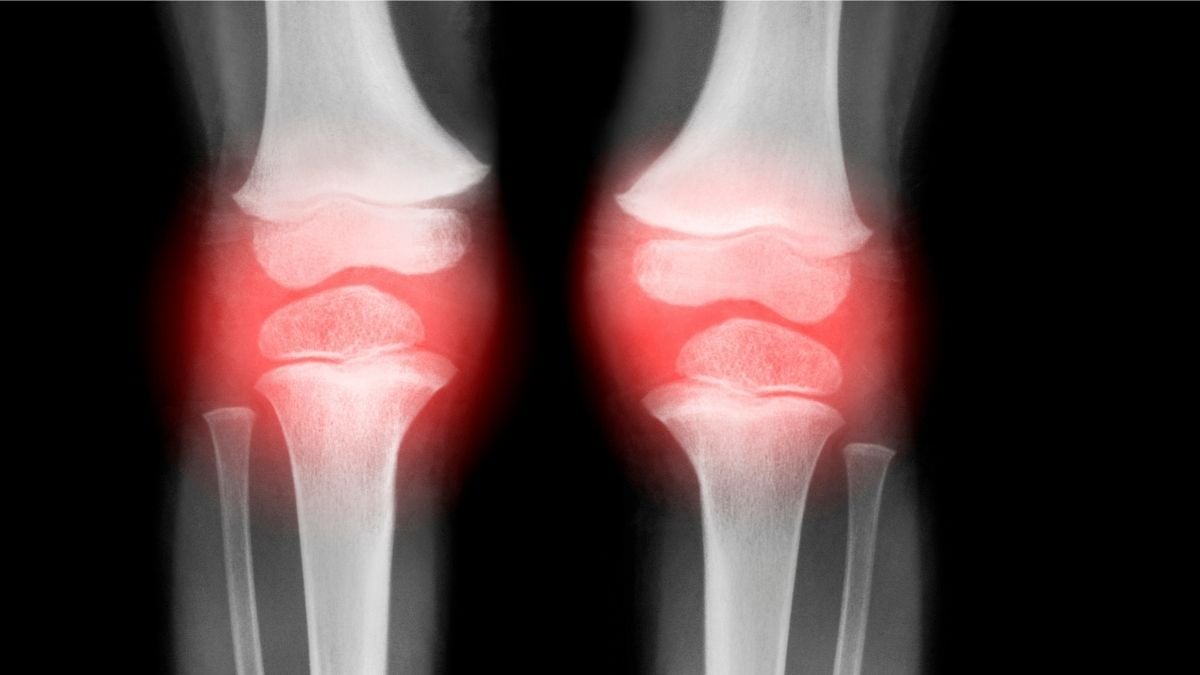
The chronic loss of joint cartilage known as osteoarthritis causes pain and bone decay for hundreds of millions of people every day.
But a new treatment option just got a step closer to human trials – in the form of a simple, single shot.
Based on ongoing animal experiments, researchers have shown that injecting a carefully engineered, slow-release drug-delivery system into the damaged joint can coax the body’s own cartilage and bone cells to carry out an effective repair job in just a few weeks.
After a single injection, the joints patched themselves up to a healthy state within four to eight weeks, according to the team from the University of Colorado (UC) Boulder.
Early tests on human cells in the lab, taken from patients undergoing joint replacements, have also shown positive signs that the therapy can help regenerate human tissue.
It’s important to note that the results are still awaiting peer review, so we can’t get too carried away just yet.
“In two years, we were able to go from a moonshot idea to developing these therapies to demonstrating that they reverse osteoarthritis in animals,” says chemical and biological engineer Stephanie Bryant, from UC Boulder.
Having completed the first tranche of the animal experiments, the team is ready to move on to phase two. This will gather further data on safety and toxicology, laying the groundwork for human clinical trials.
“Our goal,” says Bryant, “is not just to treat pain and halt progression, but to end this disease.”
Right now, there is no cure for osteoarthritis: Either the pain has to be managed, or the joint has to be replaced with a metal or plastic substitute.
The research underway here potentially points to a solution that rallies the body’s own cells to repair damaged joints.
Besides their drug delivery system, the team is developing an injectable ‘implant’ that sets in place and recruits the body’s cells to patch up gaps in cartilage. Ultimately, the aim is to have different options for different stages of the condition.
There are actually four stages of osteoarthritis, from early and mild cartilage loss to a complete lack of cartilage and intense pain as bone meets bone – this is where the stiffness, swelling, and inflammation will be at its worst.
“At the moment, the options for many patients are either a massive, expensive surgery or nothing,” says Evalina Burger, an orthopedic surgeon and professor at UC Anschutz.
“There’s not a lot in between.”
Considering how common osteoarthritis is, how painful it can be, and how much it limits mobility and day-to-day life, there are now numerous research efforts underway looking at treatment options.
The amount of cartilage in our joints naturally decreases over time, but regular exercise is one way you can protect against this. Stronger muscles reduce the strain on joints, and movement pushes nutrient-rich fluids through them.
Earlier this year, Stanford University researchers were able to identify a specific protein responsible for the loss of cartilage that comes with aging – and reducing levels of that protein may help protect joints into old age.

Meanwhile, semaglutide – the active ingredient in drugs such as Ozempic and Wegovy – has also shown promise as an osteoarthritis treatment, through the way that it boosts cell metabolism and encourages healthy cartilage to remain in place.
It’s still going to take some time for actual treatments to be developed, but these research efforts are encouraging.
The team behind the injection treatment is hopeful that clinical trials can get underway within the next 18 months – but that depends on their next round of animal experiments.
Related: Ozempic-Like Drugs May Increase Risk of Bone And Joint Conditions
“The drug has demonstrated, through the studies that we’ve done, [that it is] able to reverse osteoarthritis,” Bryant said in a recent video.
“So we are hopeful that one shot could really enable patients to be able to kind of restore their joints, and get back to healthy lives.”
The research is funded by the Novel Innovations for Tissue Regeneration in Osteoarthritis (NITRO) program, an initiative of the Advanced Research Projects Agency for Health (ARPA-H) run by the US Department of Health and Human Services.
This article was fact-checked by Rachel Garner and edited by Clare Watson. While we pride ourselves on our process, we are only human. If you spot a mistake, please let us know.