




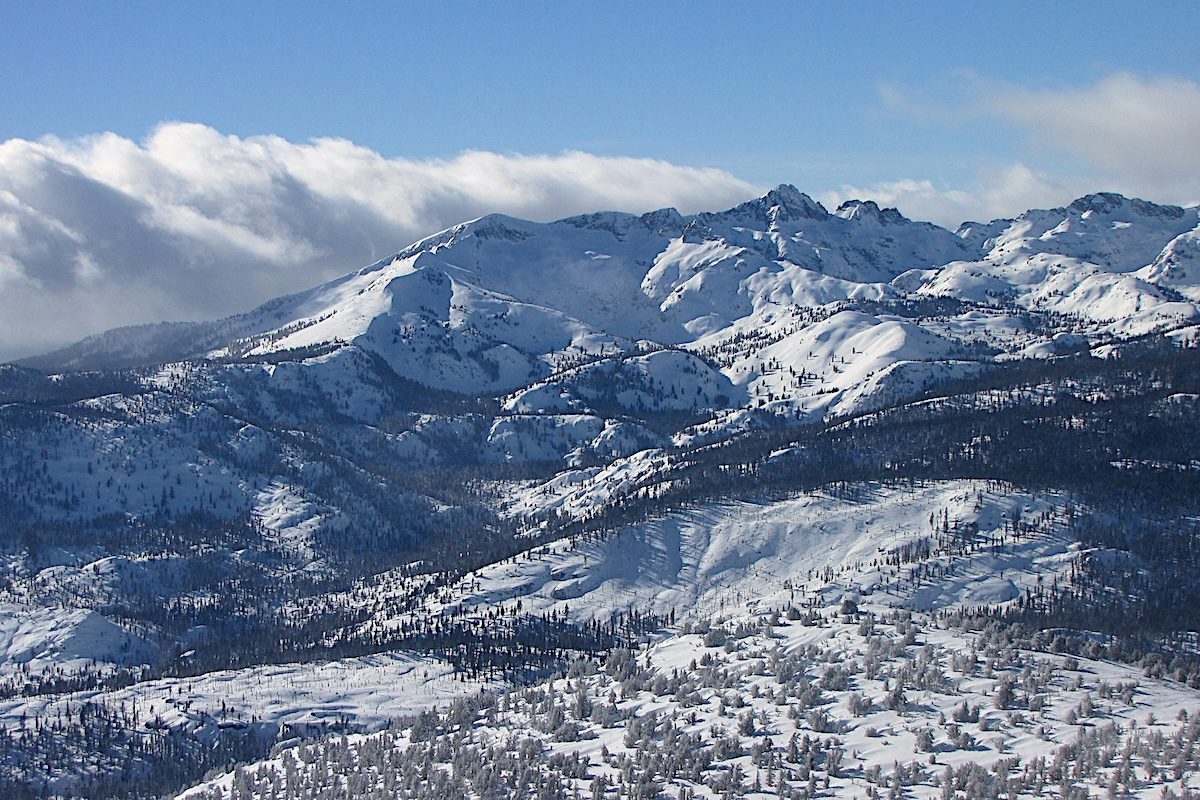
Researchers have found that snowstorms are delivering vast numbers of tiny plastic particles to remote reaches of California’s Sierra Nevada mountains. Snowmelt is a major source of fresh water for the state.
As plastic goods, synthetic fibers, and car tires wear down, they shed microplastics, which can be gathered up by the wind and become suspended in the air. When snowflakes descend, they collect some of these particles and carry them to the ground.
Prior research found microplastics in snow in the Mountain West. The new study showed the contributions of individual storms. In remote parts of the Sierra Nevada, researchers found that snowfall delivered as many as 3,200 plastic particles per square meter per day. Still, the total amount of plastic is tiny — less than a tenth of an ounce per acre per day, researchers found.
The most common types of plastic found in the snow were polyethylene and polypropylene, which are used in packaging, and polyester, which is used in clothing. The study, published in Environmental Science & Technology, did not gauge how much plastic ends up in drinking water, but roughly a third of California’s fresh water comes from Sierra Nevada snowpack.
Previous research has shown that airborne microplastics may be affecting the climate. Microplastics can travel thousands of miles through the atmosphere and seed clouds, which means they have the potential to influence temperature and rainfall. Dark bits of airborne plastic also absorb heat, with a warming effect. Some researchers say that climate models may need to be updated to account for the effects of plastic.
ALSO ON YALE E360
What Do We Actually Know About the Microplastics Inside Us?