Google Scholar has dominated scientific-literature searching for years.Credit: IB Photography/Alamy
Google Scholar — the largest and most comprehensive scholarly search engine — turns 20 this week. Over its two decades, some researchers say, the tool has become one of the most important in science. But in recent years, competitors that use artificial intelligence (AI) to improve the search experience have emerged, as have others that allow users to download their data.
The impact that Google Scholar — which is owned by web giant Google in Mountain View, California — has had on science is remarkable, says Jevin West, a computational social scientist at the University of Washington in Seattle who uses the database daily. But “if there was ever a moment when Google Scholar could be overthrown as the main search engine, it might be now, because of some of these new tools and some of the innovation that’s happening in other places,” West says.
Many of Google Scholar’s advantages — free access, breadth of information and sophisticated search options — “are now being shared by other platforms”, says Alberto Martín Martín, a bibliometrics researcher at the University of Granada in Spain.
AI-powered chatbots such as ChatGPT and other tools that use large language models have become go-to applications for some scientists when it comes to searching, reviewing and summarizing the literature. And some researchers have swapped Google Scholar for them. “Up until recently, Google Scholar was my default search,” says Aaron Tay, an academic librarian at Singapore Management University. It’s still top of his list, but “recently, I started using other AI tools”.
Still, given Google Scholar’s size and how deeply entrenched it is in the scientific community, “it would take a lot to dethrone”, adds West.
Anurag Acharya, co-founder of Google Scholar, at Google, says he welcomes all efforts to make scholarly information easier to find, understand and build on. “The more we can all do, the better it is for the advancement of science.”
Biggest and broadest
Google Scholar came onto the literature-search scene in 2004 and changed everything. At the time, researchers used libraries to find information or searched for academic papers by accessing paid online services such as the science-citation database Web of Science. Another paid service launched the same month as Google Scholar — Elsevier’s Scopus, a large database of scientific references and abstracts.
Google Scholar crawled the web for scholarly work of any kind, such as book chapters, reports, preprints and web documents — including those in languages other than English. The goal was “to make researchers of the world more effective, to help make it possible for everybody to be able to stand on a common frontier of science”, says Acharya.
Google Scholar’s agreements with publishers give it unrivalled access to the full text of articles behind paywalls — not just titles and abstracts, which is what most search engines offer. It ranks papers by how relevant they are to a search query — typically bringing the most-cited articles to the top — and suggests further queries. Its depth of coverage facilitates highly specific searches.
Google declined to share usage data for the service, but according to the web-traffic meter Similarweb, Google Scholar receives more than 100 million visits per month.
The database is also very good at pointing people to free versions of an article, says Martín Martín. This promotes the open-access movement, says José Luis Ortega, a bibliometrician at the Institute of Advanced Social Studies, Spanish National Research Council in Córdoba.
But in other ways, Google Scholar is opaque. Among the key concerns is a lack of insight into what content, including what journals, it searches and the algorithm it uses to recommend articles. It also restricts bulk downloads of its search results, which could be used for bibliometric analyses among other things. “We don’t have a lot of insight into one of the most valuable tools that we have in science,” says West.
Acharya says Google Scholar is chiefly a search tool and its main goal is to help scholars find the most useful research.
Updated engines
In the past few years, competitors have emerged that offer this kind of bibliometrics data, although none can beat Google Scholar’s size and access to full-text articles behind paywalls. One noteable example is the index OpenAlex, which launched in 2022. The previous year, Microsoft Academic Graph, which crawled the web for scholarly information, had been discontinued and its entire data set released. OpenAlex builds on this and other open sources of scholarly data. Users can search the content it catalogues by authors, institutions and citations and also download its entire records for free. “They are doing what we wanted Google Scholar to do,” says Martín-Martín.
Another popular research tool, Semantic Scholar, launched in 2015, uses AI to create readable summaries of papers and identifies its most relevant citations. Another tool, Consensus, launched in 2022, relies on Semantic Scholar’s database to find answers to questions informed by research (West is an adviser for Consensus). One of Tay’s favourites is Undermind, which uses a more sophisticated agent-based search, in which an autonomous entity scans the scientific literature the way a human would, adapting the search based on the content it finds. It takes a few minutes — as opposed to seconds for Google Scholar — to spit out results, but Tay says the wait is worth it. “I find the quality of the results that come back are better than Google Scholar.”
Acharya says Google Scholar also uses AI to rank articles, suggest further search queries and recommend related articles. And earlier this month, the company introduced AI-generated article outlines to its PDF reader. Acharya also says the search tool tries to understand the intent and context behind a query. This semantic search approach is based on language models and has been in use for about two years, he says.
One thing Google Scholar does not yet do is include AI-generated overviews of answers to a searched query, similar to those that are now found at the top of a typical Google search. Acharya says that summarizing conclusions from multiple papers in a way that is succinct and includes important context is challenging. “We haven’t yet seen an effective solution to this challenge,” he says.
Ranga Dias is no longer employed as a researcher at the University of Rochester in New York, but continues to work at his company nearby, Unearthly Materials.Credit: Lauren Petracca/New York Times/Redux/eyevine
Ranga Dias, a once bright star in the field of superconductivity who has been enmeshed in a public scandal for the past two years, is no longer employed by his university.
Exclusive: official investigation reveals how superconductivity physicist faked blockbuster results
Dias claimed to have discovered superconductors — materials in which electrons flow without any resistance — that could operate at high pressures and ambient temperatures. Previous materials of this type worked only at ultralow temperatures impractical for use in real-world devices. The purported breakthroughs shot Dias to fame and won him millions of dollars in research grants. But after physics sleuths scrutinized the extraordinary results and reported concerns to journals where they were published, several of Dias’s papers were retracted. And an investigation by the University of Rochester in New York, where Dias was employed, concluded that he had committed extensive misconduct, including data fabrication.
The Wall Street Journal and Nature’s news teampreviously reported that university administrators recommended Dias, who did not have tenure, be fired before his contract expired in June 2025. Now, Dias is out, although the university has declined to clarify whether he was fired. “Ranga Dias is no longer a University of Rochester employee, nor does he have any research activity connected to the University,” a university spokesperson said in a statement. Dias did not respond to a request for comment.
The Dias scandal cast a shadow over the field of high-pressure superconductivity, but it particularly affected his former graduate students, who commented to Nature but requested anonymity because of concerns about their careers. “I am relieved that we finally have closure on this matter, though very disappointed it took so long,” one says. They added that they “await a public statement from the University of Rochester outlining what policies failed”, allowing the controversy to go on for as long as it did.
A Rochester spokesperson says that the university supports students “impacted by the research misconduct of Ranga Dias” and that it is “reviewing and updating our research misconduct policy”.
Under investigation
Dias joined Rochester as a professor in 2017, fresh from a postdoctoral fellowship at Harvard University in Cambridge, Massachusetts, where he claimed to have produced metallic hydrogen. In theory, when hydrogen is compressed to pressures greater than that at Earth’s centre, it should transform from an insulating gas to a superconducting metal. The results were never reproduced, and many scientists doubted it.
Nature retracts controversial superconductivity paper by embattled physicist
At Rochester, Dias turned his eye to other high-pressure superconductors. In September 2020, he published a breakthrough study in Nature1, which claimed that a compound made of carbon, sulfur and hydrogen (CSH) is a superconductor at room-temperature. And in March 2023, he published another in Nature2 finding that a compound of lutetium, hydrogen and nitrogen is a room-temperature superconductor at pressures 100 times lower than CSH — conditions even more practical for commercial use. (Nature’s news team is editorially independent from its journals team.)
After the first paper was published, Dias’s star rose and Rochester doubled his salary. At the same time, Jorge Hirsch, a theorist at the University of California, San Diego, raised questions that led to three inquiries at the university. None found evidence of misconduct, however. Nature’s journal editors meanwhile retracted the CSH paper after they conscripted independent specialists to review it, and those specialists found evidence of data fabrication.
Data in the 2023 paper also raised questions in the research community, and Dias’s former graduate students contacted Nature that year with concerns about the validity of the results. It was retracted that November.
One sleuth, James Hamlin, a high-pressure physicist at the University of Florida in Gainesville, brought his concerns to the National Science Foundation (NSF), a major funder of science in the United States that awarded grants to Dias. Ordered by the NSF, Rochester launched a full misconduct investigation.
Three external investigators commissioned by the university found that Dias more likely than not committed research misconduct in 16 out of 16 allegations that they examined. Public records from the NSF show that an approximately US$800,000 grant awarded by the agency to Dias was cancelled after the investigation concluded.
Researchers shared their thoughts about Dias’s departure from Rochester with the news team. “Did the system work?” says Peter Armitage, a condensed-matter researcher at Johns Hopkins University in Baltimore, Maryland. “Yes, eventually, but many institutions failed us along the way.” He points to Rochester for having missed problems in those early inquiries and Nature for having published a second paper by Dias after the first retraction.
Nature‘s journals team declined to comment.
Case closed?
Dias has insisted on the validity of his superconductivity research on social media, but he has published no further evidence supporting it. And independent teams have not replicated the results since Rochester’s investigation results were made public. In June, another of Dias’s papers, this one published by the journal Physical Review Letters and claiming to create another high-temperature, high-pressure superconductor, was retracted3. This brings his total retractions to five.
What Dias will do now remains unclear, but according to reporting from the Rochester Democrat and Chronicle, Dias continues to work at Unearthly Materials, his Rochester-based company that aims to make novel superconductors. In 2022, the company received $15 million in funding from the venture capital group Plural, based in London. A spokesperson for Plural declined to comment on Dias’s misconduct, and after receiving questions from the Nature news team for this story, references to Dias disappeared from the company’s website.
Disclosure: The author of this story is related to Robert Garisto, the chief editor of Physical Review Letters. The two have had no contact about this story.
This article is part of an occasional series in which Nature profiles scientists with unusual career histories or outside interests.
André Hesselbäck has spent the past 22 years hunting down fraudulent organizations that sell phoney degrees with no academic requirements or proper accreditation. Credential fraud encompasses diplomas, degrees, transcripts, certificates and other documents that are sold by bogus institutions that do not render genuine academic services. The practice, Hesselbäck says, has links to organized crime — and according to one estimate, it generates several billion US dollars each year.
Hesselbäck’s work spans many regions, but his current main focus is South Asia, which has both large student populations and many universities that are unrecognized by accreditation organizations. This is a far cry from his first job in higher education: after graduating with a PhD in Finno-Ugric languages, which include Hungarian and Finnish, from Uppsala University in Sweden in 2001, he chose academic administration because he wanted a stable career path and a role that allowed him to explore his interest in different educational systems.
Still living in Uppsala, he is now an analyst and credential evaluator — someone who assesses academic or professional qualifications and their comparability between countries — at the Swedish Council for Higher Education (UHR), a government organization based in Solna. Hesselbäck is matter-of-fact about the huge scale of academic fraud. He estimates that, in some sectors including economics and engineering, “10–15% of the workforce are graduates of degree mills or unrecognized, substandard schools” in certain countries. Costs tend to rise with the degree level. People pay up to tens of thousands of dollars for fake doctoral or medical degrees from such companies.
It’s not straightforward to determine whether a particular credential is invalid, says Hesselbäck. “It’s easier to prove that a university is legitimate than it is to prove that a university is fake,” he adds. It can be especially thorny when a degree was granted in an unrecognized or occupied territory, such as Somaliland or Crimea.
What is it like to attend a predatory conference?
On a daily basis, he fields queries from prospective employers in both the private and public sectors, and from universities seeking to admit graduate students or recruit faculty members. He also conducts research as part of the European Network of Information Centres–National Academic Recognition Information Centres, an umbrella organization of more than 50 national bodies, including the UHR, that provide information on credential recognition.
Degree-mill operators have seized on the growing scale and prestige of US research universities over the past century, he says. Their bogus websites might show images of idyllic campuses reminiscent of the Ivy League, a group of prestigious US universities, and have names such as Barkley or Manhattan Bay University that resemble those of familiar US institutions.
One helpful asset is Hesselbäck’s strong memory, for instance when spotting suspect similarities between website images and text. “He has this mind,” marvels Zeba Safi, another UHR credential evaluator, whose command of a handful of Asian languages has been a boon in her work. “You say a number, and he remembers it,” whether that’s an address or a case number from a long-ago investigation, she says.
His background in linguistics might also help, but his photographic memory for numbers, words and images is “something I’ve always had”, Hesselbäck says.
The work requires strong attention to detail, to keep up as degree mills change their modus operandi. Some fraudsters adopt the name of a defunct but once-legitimate university, creating what Hesselbäck calls a zombie university. For instance, Hesselbäck once checked website registration details and official sources in Latin America to discover that a Mexican university that had previously gone out of business had popped up several years later in connection with students in Sri Lanka.
Real harms, but slow reactions
According to Hesselbäck, in Sweden it’s not illegal for a job applicant to submit qualifications from a fake university, although it is a crime to forge an academic transcript or degree from a legitimate university. The relevant laws vary by country.
In Norway, he adds, it is a criminal offence to submit credentials from a fake university, but the burden of proof has to be strong. At the federal level, the United States does not explicitly prohibit the issuing, holding or advertising of bogus degrees, although some states have laws banning them. In practice, individual holders of phoney medical degrees have surrendered their licences or been removed from their positions. Public exposure leads to embarrassment and, in some cases, resignations. And legal cases can be pursued against degree mills through the creative application of laws that prohibit financial fraud through the mail or telecommunications.
But even so, Hesselbäck says, degree fraud is not seen as a problem — so governments aren’t taking it seriously enough. Last year, he and six co-authors wrote a report that provided recommendations to counter education fraud for member states of the Council of Europe, an organization promoting democracy, rule of law and human rights in Europe. The authors wrote that, to address the problem effectively, governments need to establish clear laws on the consequences of using fraudulent degrees, and then enforce them.
Fake degrees — such as these ones, confiscated in New Delhi — are not a victimless crime, Hesselbäck says, because the credibility of higher education suffers, as do legitimate degree holders.Credit: Qamar Sibtain/The India Today Group/Getty
“[Governments] have no idea about the dimension of it all,” Hesselbäck comments. Retired US FBI investigator Allen Ezell estimates that providing bogus degrees is a US$7-billion-per-year business. And this is far from a victimless crime, Hesselbäck stresses. “The main victim is the legitimate higher-education system”, which can lose revenue as well as credibility. There are also individuals who are affected, such as the customers of an engineer, doctor or other professional with fraudulent credentials. Students who have been duped into unwittingly purchasing invalid degrees are also harmed by the practice.
Then, there are the people who work hard for their degrees, only to lose out on opportunities to others who took shortcuts. Hesselbäck knows of at least one lecturer at a US university and two people employed by Swedish universities who obtained degrees through degree mills.
“Traditionally, higher-education systems have been very slow to react to this,” Hesselbäck says. Many people found to be using false degrees face limited disciplinary actions, if any (with the notable exception of fake medical degrees). He gives the example of a woman teaching at a US university who was found to have obtained a PhD from a Russian degree mill. The university allowed her to retain a teaching position, telling her simply not to use the ‘Dr’ title.
The issue extends to university admissions as well: “In Sweden, the problem is probably bigger when it comes to admission to PhD programmes.” Hesselbäck says that, compared with universities, non-academic employers are more concerned about fake degrees because “they want to make sure the individual has the claimed knowledge and skills and will be able to make adequate contributions based on that”. He thinks that some universities, meanwhile, might have a more relaxed attitude towards fake credentials if they view tuition-paying students as customers.
Hesselbäck reports that he’s been sued or threatened with legal action several times, but no case has come to fruition. And he is not overly worried about his own safety given the various links that his work and that of others have uncovered between organized crime and large degree mills. Because his role involves supplying information to law enforcement, rather than carrying out enforcement himself, Hesselbäck thinks others are at greater risk. “Much of my work is less visible,” he says.
Decades tracking a big target
Hesselbäck’s long-standing preoccupation is Axact, a sprawling media and software empire operating from Karachi.
The company first came onto Hesselbäck’s radar in 2005, when some masters’ students were admitted to the Faculty of Mathematics and Technology at Uppsala University. He didn’t recognize the names of any of the universities they had previously attended, and couldn’t find them in official sources. After looking at the institutions’ websites, he noticed that many had a similar appearance. He checked the website registration information, which included an address in Pakistan. And he realized that the disclaimer on all of the peculiar university websites was identical to the disclaimer on Axact’s website.
The geneticist who uses science to free parents wrongly convicted of killing their children
This spotting of similarities and tracing of names would snowball over the years. For instance, Hesselbäck drew connections between an accreditation organization being paid by a Cyprus-based company, which was directed by Shoaib Ahmad Shaikh, the chief executive of Axact. On the basis of his research, Hesselbäck suspects that Axact has created more than 4,000 websites, including fake government agencies and fictitious universities that might exist on a website or a diploma, but not in any meaningful sense.
From the findings of his work and others’, Hesselbäck thinks that “Axact is by far the largest” of the degree mills. He estimates that it has sold more than nine million fake degrees, largely in the United States and the Middle East, but spanning just about every country in the world. The company seems to have grown with dizzying speed and changes of tactics.
In a 2008 civil case between Axact and Student Network Resources, a former academic-essay-editing service based in Manalapan, New Jersey, a US judge stated that Axact “operates and/or controls a score of websites, using hundreds of domain names, in a number of Internet businesses based in Pakistan. [These include] sites selling term papers and other academic works, and sites selling counterfeit academic degrees and/or diplomas from non-existent universities with no instructors or classrooms.” When Axact’s lawyers failed to appear before the court, the judge ruled by default against them and included damages under the New Jersey Consumer Fraud Act.
In 2015, Pakistan’s Federal Investigation Authority raided Axact and arrested executives, including Shaikh. They were initially charged with dishonestly inducing students to acquire degrees from Axact’s fake universities and with blackmailing students to extort money. However, last year, the Sindh High Court in Karachi acquitted Shaikh and the others of all charges.
In 2017, an Axact executive, then assistant vice-president Umair Hamid, pleaded guilty in a US court to conspiracy to commit wire fraud. According to court documents, Axact had falsely claimed customers would receive instruction at legitimate educational institutions. The company collected upfront fees and then issued worthless diplomas from roughly 350 non-existent schools and universities. Hamid admitted that “the degree program websites run by clients were mostly not real universities or colleges with real coursework”, and that people who gave the company money were misled. Axact did not respond to several requests from Nature for comment.
However, the company continues to operate — and Hesselbäck, undeterred, continues to follow it.
Training the next generation of investigators
“The experts on degree mills are getting older and fewer,” says Hesselbäck, who is 60. “And this means that a lot of information and a lot of knowledge will be lost.”
Working Scientist career profiles
This also worries 83-year-old Ezell, whose FBI team dismantled more than 40 degree mills and who has collaborated frequently with Hesselbäck over the past decade. There are a few researchers who study credential fraud from a research-ethics standpoint. There are also other credential evaluators, such as Safi. But in terms of dedicated investigators, “there is nobody following us”, Ezell says.
Safi, who has been mentored by Hesselbäck, calls it the “work of decades. And you can’t possibly pass it on to someone in a year or two or three.” Nor, she says, can their burning interest in credential fraud — the kind of work they carry on into the evening, or into retirement — be easily taught.
As the number of investigators dwindles, the types of fraudulent activity proliferate, says Ezell. But some efforts are under way to share information on education fraud across generations and across borders. The Council of Europe is discussing creating an organization dedicated to combating education fraud. And at the UHR, Safi, Hesselbäck and their colleague Erik Johansson are building a directory of degree mills and of unrecognized, substandard providers of higher education.
Although government frameworks and cooperation are crucial to stemming the tide of credential fraud, individual employers and universities must remain vigilant about checking credentials. “You’ve got to verify everything all the time,” Ezell stresses.
Hesselbäck, meanwhile, continues plugging away and raising awareness about the massive scale of the problem: “Even though it’s sometimes an uphill struggle, I still find this work necessary.”
Quick-fire Q&A
What are the most helpful tools you use for your work?
First and foremost, the knowledge of other evaluator colleagues. When tracking down fake schools, I use a lot of different online tools like the Internet Archive, a repository of archived webpages; TinEye, a reverse-image search engine; ipaddress.my, a source for looking up the hosting company and owner of an IP address; and OpenCorporates, a database of company information.
Does your photographic memory come in useful outside work?
Yes — I don’t exactly feel the need to write down passwords or passcodes. I also have a huge repertoire of song lyrics and poems that I know by heart.
What do you do to unwind from your job?
I have an community-garden plot where I spend quite a lot of time throughout the year. I grow things such as aubergines, cardoon (artichoke thistle), various types of pumpkin, quite a lot of fennel, beans, tomatoes and cabbages. I also read a lot, and I am particularly interested in early Judaism, pseudo-science and pseudo-history and, at the moment, quantum mechanics. And I spend a lot of time with my dog, a basenji called Yembe.
This interview has been edited for length and clarity.
Early-careers researchers in China need highly sought-after grants to progress in their career.Credit: Xinhua/Shutterstock
Scientists in many countries face intense competition for research funding, but the situation in China is particularly fierce, say researchers, especially for those in their early-career. To address this, one of the country’s largest funders of basic research, the National Natural Science Foundation of China (NSFC), has introduced reforms over the past year aimed at better supporting young scientists. But some worry that the changes are making matters worse.
The NSFC, based in Beijing, oversees several programmes that provide funding through competitive grants. This year, there was a massive jump in applications, more than 380,000 overall, up 26% compared with last year. Only 13% of those were successful, compared with 16% in 2023.
The success rate for the NSFC’s Youth Scientists Fund, which supports male researchers who are under 35 and female researchers under 40, also declined, from 17% in 2023 to 15.5% this year, according to an analysis posted on WeChat. The number of applications to the fund grew by 11.3% over the same period, according to a report compiled by the NSFC.
“The competition is very, very intense,” says Cong Cao, a science-policy researcher at the University of Nottingham Ningbo China. For comparison, the US National Science Foundation’s funding rate was 29% in 2023.
New policies
Researchers say the jump in NSFC applications this year stems from the foundation’s decision to eliminate its requirement that applicants who were unsuccessful for two consecutive years wait a year before reapplying.
Another recent policy change is an extension to the Distinguished Young Scholars (DYS) programme, which gives outstanding young scientists an opportunity to pursue research of their choosing, funded for five years. From this year, up to 20% of these scholars will be eligible for a further five years of funding.
“It’s a positive development,” says Albert Hu, an economist who focuses on science and technology at the China Europe International Business School in Shanghai. It suggests that China’s policymakers are becoming more aware that basic research projects need long-term support, Hu says.
But others are concerned that providing extra funds to a small number of already well-supported DYS researchers will make it more difficult for other early-career researchers to obtain limited grants. Typically, DYS researchers already have access to a wide range of funding sources from universities, local governments and the corporate sector, says Yanbo Wang, a science-policy researcher at Hong Kong University. He’s also not convinced that the funding boost will result in better research. “There is little evidence to suggest that these few individuals can utilize the additional funding more effectively than those who have been overlooked for funding,” says Wang.
The NSFC declined Nature’s request for comment about the impact of the policy changes. In August, the head of the agency, Dou Xiankang, told Nature that the reforms were designed to provide further support for young scientists. As part of them, the NSFC also introduced funding for undergraduate and PhD students to help them start their research careers.
Old problem, getting worse
The struggle to secure funding isn’t unique to researchers in China, says Li Tang, a science-policy researcher at Fudan University in Shanghai. “Many countries face similar challenges in balancing the demand for excellence in research with equitable funding distribution,” says Tang.
But China’s broader research-evaluation system — which places emphasis on researchers securing NSFC grants, in particular — is making the competition for limited funding particularly intense, says Tang.
NSFC grants are a measure of achievement when researchers are assessed for contracts, promotions and tenure, says a researcher who requested to remain anonymous because they are worried their view might harm their chances of obtaining NSFC grants in future. Many early-career researchers view NSFC funding as opening the door to career opportunities rather than just as a vehicle to fund their projects, the researcher says. “We regard the NSFC as a bridge.”
Bigger research pool
The growing number of early-career researchers is set to add to funding pressures. In 2023, around 1.3 million graduate students were enrolled in universities across China, an increase of 4.8% on the previous year, according to the Ministry of Education.
Another factor adding to the pressure to obtain grant funding is that many universities don’t offer start-up packages to young scientists, which forces them to obtain grants from elsewhere to get up and running, adds Cao. “If you don’t have money from external sources, it’s very difficult to start your career,” he says.
One way to ease the competition and pressure on young Chinese scientists is to create a more diverse range of funding sources, says Hu. Universities and research institutions should also base their research evaluations on the outcomes of funded projects instead of the number of grants researchers win, he adds. “There has to be a change in the way these young scientists are evaluated,” says Hu.
Neuroscience has undergone remarkable progress. Researchers can now study specific areas of the brain with unprecedented detail thanks to cutting-edge imaging and genetic tools. Advanced modelling techniques, driven by artificial intelligence, have facilitated whole-brain mapping to track cognitive development over a lifetime. But fundamental questions about how the brain’s core functions emerge from cellular and molecular processes remain unanswered, limiting treatment options for neurological conditions.
Nature Index 2024 Neuroscience
Countries are pooling their resources and expertise to up the ante. Large-scale neuroscience projects are making use of unique strengths, including China’s vast population data and the United States’ med-tech industry. But researchers are calling for more funding, pointing out that budgets in other areas, such as the European particle-physics laboratory, CERN, and NASA’s James Webb Space Telescope, dwarf those of the biggest neuroscience initiatives.
Raising more money is not the only challenge. Over the past decade, tens of billions have been spent on finding effective treatments for Alzheimer’s disease, with limited patient benefit. A greater understanding of how brain conditions relate to other organs and biological systems, and vice versa, is needed. Studies investigating long COVID, for instance, could have major implications for autoimmune diseases.
In the coming years, technological advances such as implantable brain–computer interfaces (BCIs) are expected to fundamentally change how neuroscience is researched, and how neurological disorders are treated and diagnosed. The United States, the leading country in Nature Index neuroscience output by some margin, is setting the pace for BCI regulation, and other nations will need to find their footing fast.
Among the top 25 countries for neuroscience output in the Nature Index, these ten have the highest proportion of neuroscience Share relative to their overall Share (neuroscience %). The United States, Germany, United Kingdom and Canada all rank within the top 10 overall for neuroscience; Norway and Portugal have the lowest overall ranks, at 22 and 23, respectively.
On the up
The Share of the fastest rising institutions in neuroscience for 2022–23 is shown over a five-year period. The University of Queensland in Australia is the only institution from outside China in the top five. The top-ranked institution in neuroscience overall, Harvard University in Cambridge, Massachusetts, was the sixth fastest riser, increasing its Share by 4.5% to reach 229.20 in 2023.
Institution outputs
Institutions with a special focus on neuroscience research are highlighted in this chart, which plots their neuroscience Share against their neuroscience %. Just over 10% of the top 200 institutions in neuroscience have more than 200 Share in the topic for the period 2019–23, and only 8.5% have more than 30% of their overall Share related to neuroscience.
The Chinese Academy of Sciences in Beijing has a relatively low proportion of its Nature Index output focused on neuroscience research, but it has the 6th highest Share in the topic, at 378.76. Harvard University’s Share in neuroscience (996.17) dwarfs that of all other institutions. With 19.6% of its total Share in the Index related to neuroscience, this is a clear priority area. Neuroscience-related outputs represented 89.7% of the total Share of the Allen Institute in Seattle, Washington, for 2019–23. The institution is ranked 144th in the topic overall, with a Share of 53.15.
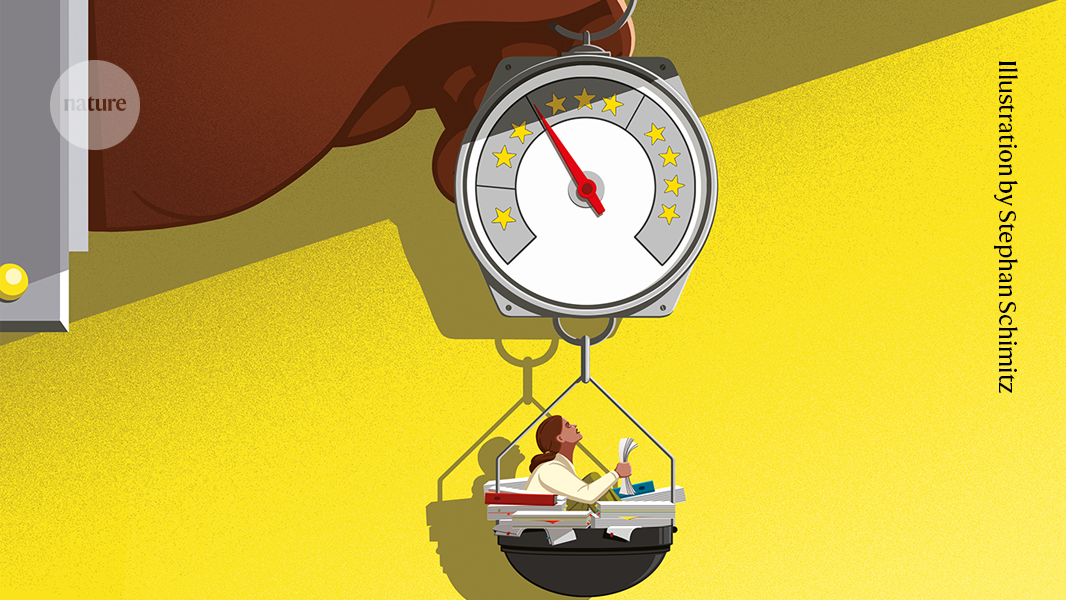
The term ‘REF-able’ is now in common usage in UK universities. “Everyone’s constantly thinking of research in terms of ‘REF-able’ outputs, in terms of ‘REF-able’ impact,” says Richard Watermeyer, a sociologist at the University of Bristol, UK. He is referring to the UK Research Excellence Framework (REF), which is meant to happen every seven years and is one of the most intensive systems of academic evaluation in any country. “Its influence is ubiquitous — you can’t escape it,” says Watermeyer. But he and other scholars around the world are concerned about the effects of an extreme audit culture in higher education, one in which researchers’ productivity is continually measured and, in the case of the REF, directly tied to research funding for institutions. Critics say that such systems are having a detrimental effect on staff and, in some cases, are damaging researchers’ mental health and departmental collegiality.
Unlike other research benchmarking systems, the REF results directly affect the distribution of around £2 billion (US$2.6 billion) annually, creating high stakes for institutions. UK universities receive a significant proportion of their government funding in this way (in addition to the research grants awarded to individual academics).
Research assessment toolkit
Since its inception, the REF methodology has been through several iterations. The rules about which individuals’ work must be highlighted have changed, but there has always been a focus on peer-review panels to assess outputs. Since 2014, a team in each university department has been tasked with selecting a dossier of research outputs and case studies that must demonstrate societal impact. These submissions can receive anything from a four-star rating (for the most important, world-leading research) to just one star (the least significant work, of only national interest). Most departments aim to include three- or four-star submissions, often described as ‘REF-able’.
But the process is time-consuming and does not come cheap. The most recent REF, in 2021, was estimated to have cost £471 million. Tanita Casci, director of the Research Strategy & Policy Unit at the University of Oxford, UK, acknowledges that it’s resource-intensive, but says that it’s still a very efficient way of distributing funds, compared with the cost of allocating money through individual grant proposals. “I don’t think the alternative is better,” she concludes. The next exercise has been pushed back a year, until 2029, with planned changes to include a larger emphasis on assessment of institutional research culture.
Tanita Casci says the UK REF assessment is an efficient way to distribute funding.Credit: University of Oxford
Many UK academics see the REF as adding to an already highly competitive and stressful environment. A 2021 survey of more than 3,000 researchers (see go.nature.com/47umnjd) found that they generally felt that the burdens of the REF outweighed the benefits. They also thought that it had decreased academics’ ability to follow their own intellectual interests and disincentivized the pursuit of riskier, more-speculative work with unpredictable outcomes.
Some other countries have joined the assessment train — with the notable exception of the United States, where the federal government does not typically award universities general-purpose research funding. But no nation has chosen to copy the REF exactly. Some, such as the Netherlands, have instead developed a model that challenges departments to set their own strategic goals and provide evidence that they have achieved them.
Whatever the system, few assessments loom as large in the academic consciousness as the REF. “You will encounter some institutions where, if you mention the REF, there’s a sort of groan and people talk about how stressed it’s making them,” says Petra Boynton, a research consultant and former health-care researcher at University College London.
Strain on team spirit
Staff collating a department’s REF submission, selecting the research outputs and case studies to illustrate impact, can find themselves in an uncomfortable position, says Watermeyer. He was involved in his own department’s 2014 submission and has published a study of the REF’s emotional toll1. It’s a job that most academics take on “with trepidation”, he says. It can change how they interact with colleagues and how colleagues view and interact with them.
“You’re trying to make robust, dispassionate, critical determinations of the quality of research. Yet at the back of your mind, you are inescapably aware of the implications of the judgements that you’re making in terms of people’s research identities, their careers,” says Watermeyer. In his experience, people can get quite defensive. That scrutiny of close colleagues’ work “can be really disruptive and damaging to relationships”.
UK research assessment is being reformed — but the changes miss the mark
Watermeyer often found himself not only adjudicating on work but also acting as a counsellor. “You have to attend to the emotional labour that’s involved; you’re responsible for people’s welfare and well-being,” and no training is provided, he says. A colleague might think that their work has met expectations, only to find that assessors disagree. “I’ve been in situations where there are tears,” Watermeyer recalls. “People break down.”
For university support staff, the REF also looms large. Sometimes, more staff must be hired near the submission deadline to cope with the workload. “It is an unbelievable pressure cooker,” particularly at small institutions, says Julie Bayley, former director of research-impact development at the University of Lincoln, UK. Bayley was responsible for overseeing 50 case studies to demonstrate the impact of Lincoln’s research, and describes this as akin to preparing evidence for a legal case. “You are having to prove, to a good level of scrutiny, that this claim is true,” Bayley says. This usually involves collecting testimonial letters from organizations or individuals who can vouch for the research impact, something she sometimes did on behalf of researchers who feared straining the external relationships they had developed.
Boynton says there can be an upside. “There’s something really exciting about putting together [a case study] that shows you did something amazing,” she says. But she also acknowledges that those whose research is not put forward can feel as if their work doesn’t matter or is not respected, and that can be demoralizing.
The clamour about achieving four stars can skew attitudes about research achievements. Bayley recounts a senior academic tearfully showing her an e-mail from his supervisor that read, “It’s all well and good that you’ve changed national UK policy, but unless you change European policy, it doesn’t count.” She says her own previous research on teenage pregnancy met with similar responses because it involved meeting real needs at the grass-roots level, rather than focusing on national policy. “That’s the bit I find most heartbreaking. Four-star is glory for the university, but four-star is not impact for society,” says Bayley.
The picking and choosing between individual researchers has implications for departments. “That places some people on the ‘star player competition winner’ side and, particularly where resources are limited, that means those people get more support” from their departments, explains Bayley. She has witnessed others being asked to pick up the teaching workload of researchers who are selected to produce impact case studies for a REF submission. Boynton agrees: “It’s not a collegiate, collective thing — it’s divisive.”
Hidden contributions
Research assessment can also affect work that universities often consider ‘non-REF-able’. Simon Hettrick, a research software engineer at the University of Southampton, UK, was in this position in 2021. He collaborates with researchers to produce crucial software for their work. But, he says, universities find it hard to look beyond academic papers as the metric for success even though there are 21 categories of research output that can be considered, including software, patents, conference proceedings and digital and visual media.
In the 2021 REF, publications made up about 98.5% of submissions. Hettrick says that although other submissions are encouraged, universities tend not to select the alternatives, presumably out of habit or for fear they might not be judged as favourably.
Simon Hettrick says evaluations should include more contributions such as software.Credit: Simon Hettrick
The result is that those in roles similar to Hettrick’s feel demotivated. “You’re working really hard, without the recognition for that input you’re making,” he says. To counter this, Hettrick and others launched an initiative called The hidden REF that ran a 2021 competition to spotlight important work unrecognized by the REF, garnering 120 submissions from more than 60 universities. The competition is being run again this year.
In April, Hettrick and his colleagues wrote a manifesto asking universities to ensure that at least 5% of their submissions for the 2029 REF are ‘non-traditional outputs’. “That has been met with some consternation,” he says.
Regarding career advancement, REF submissions should not feed into someone’s prospects, according to Casci, who says that universities make strong efforts to separate REF assessments from decisions about individuals’ career progression. But “it’s a grey area” in Watermeyer’s experience; “it might not be reflected within formal promotional criteria, but I think it’s the accepted unspoken reality”. He thinks that academic researchers lacking ‘REF-able’ three- or four-star outputs are unlikely to be hired by any “serious research institution” — severely limiting their career prospects and mobility.
Watermeyer says the consequences for these individuals will vary. Some institutions try to boost the ratings of early-career academics by putting them on capacity-building programmes, including buddying schemes to foster collaborations with more ‘REF-able’ colleagues. But, for more senior staff, the downside could be a performance review. “People might be ‘encouraged’ to reconsider their research role, if they find themselves unable to satisfy the three-star criteria,” he says.
There’s a similar imperative for a researcher’s work to be used as an impact case study. “If your work is not selected for that competition, you lose the currency for your own progression,” says Bayley.
The REF also exacerbates inequalities that already exist in research, says Emily Yarrow, an organizational-behaviour researcher at Newcastle University Business School, UK. “There are still gendered impacts and gendered effects of the REF, and still a disproportionate negative impact on those who take time out of their careers, for example, for caring responsibilities, maternity leave.” A 2014 analysis she co-authored of REF impact case studies in the fields of business and management showed that women were under-represented: just 25% of studies with an identifiable lead author were led by women2. Boynton also points out that there are clear inequalities in the resources available to institutions to prepare for the REF, causing many researchers to feel that the system is unfair.
Emily Yarrow found that women were under-represented in research-evaluation case studies.Credit: Emily Yarrow
Although not all the problems researchers face can be attributed to the REF, it certainly contributes to what some have called an epidemic of poor mental health among UK higher-education staff. A 2019 report (see go.nature.com/3xsb78x) highlighted the REF as causing administrative overload for some and evoking a heightened, ever-present fear of ‘failure’ for others.
UK research councils have acknowledged the criticisms and have promised changes to the 2029 REF. Steven Hill, chair of the 2021 REF Steering Group at Research England in Bristol, UK, which manages the REF exercise, says these changes will “rebalance the exercise’s definition of research excellence, to focus more on the environment needed for all talented people to thrive”. Hill also says they will implement changes to break “the link between individuals and submissions” because there will no longer be a minimum or maximum number of submissions for each researcher. The steering group aims to provide more support in terms of how REF guidance is applied by institutions, to dispel misconceptions about requirements. “Some institutions frame their performance criteria in REF terms and place greater requirements on staff than are actually required by REF,” Hill says.
Other ways forward
Similar to the REF, the China Discipline Evaluation (CDE) occurs every four to five years. Yiran Zhou, a higher-education researcher at the University of Cambridge, UK, has studied attitudes to the CDE3 and says there are pressures in China to produce the equivalent of ‘REF-able’ research and similar concerns about the impact on academics. China relies much more on conventional quantitative publication metrics, but researchers Zhou interviewed criticized the time wasted in producing CDE impact case studies. Those tasked with organizing this often had to bargain with colleagues to collect the evidence they needed. “Then, they owe personal favours to them, like teaching for one or two hours,” says Zhou.
Increased competition has become a concern among Chinese universities, and Zhou says the government has decided not to publicize the results of the most recent CDE, only informing the individual universities. And, Zhou says, some of those she spoke to favoured dropping the assessment altogether.
Mammoth UK research assessment concludes as leaders eye radical shake up
In 2022, Australia did just that. Ahead of the country’s 2023 Excellence in Research for Australia (ERA) assessment, the government announced that it would stop the time-consuming process and start a transition to examine other “modern data-driven approaches, informed by expert review”. In October 2023, the Australian Research Council revealed a blueprint for a new assessment system and was investigating methods for smarter harvesting of evaluation data. It also noted that any data used would be “curated”, possibly with the help of artificial intelligence.
Some European countries are moving away from the type of competitive process exemplified by the REF. “For the Netherlands, we hope to move from evaluation to development” of careers and departmental strategies, says Kim Huijpen, programme manager for Recognition and Reward for the Universities of the Netherlands, based in The Hague, and a former chair of the working group of the Strategy Evaluation Protocol (SEP), the research evaluation process for Dutch universities. In the SEP, institutions organize subject-based research-unit evaluations every six years, but the outcome is not linked to government funding.
The SEP is a benchmarking process. Each research group selects indicators and other types of evidence related to its strategy and these, along with a site visit, provide the basis for review by a committee of peers and stakeholders. The protocol for 2021–27 has removed the previous system of grading. “We wanted to get away from this kind of ranking exercise,” explains Huijpen. “There’s a lot of freedom to deepen the conversation on quality, the societal relevance and the impact of the work — and it’s not very strict in how you should do this.”
The Research Council of Norway also runs subject-based assessments every decade, including institutional-level metrics and case studies, to broadly survey a field. “From what I hear from colleagues, the Norwegian assessment is much milder than the REF. Although it’s similar in what is looked at, it doesn’t feel the same,” says Alexander Refsum Jensenius, a music researcher at the University of Oslo. That’s probably because there is no direct link between the assessment and funding.
Refsum Jensenius has been involved in the Norwegian Career Assessment Matrix, a toolbox developed in 2021 by Universities Norway, the cooperative body of 32 accredited universities. It isn’t used to assess departments, but it demonstrates a fresh, broader approach.
What differentiates it from many other assessments is that in addition to providing evidence, there is scope for a researcher to outline the motivations for their research directions and make their own value judgements on achievements. “You cannot only have endless lists of whatever you have been doing, but you also need to reflect on it and perhaps suggest that some of these things have more value to you,” says Refsum Jensenius. For example, researchers might add context to their publication list by highlighting that opportunities to publish their work are limited by its interdisciplinary nature. There is also an element of continuing professional development to identify a researcher’s skills that need strengthening. Refsum Jensenius says this approach has been welcomed in the Norwegian system. “The toolbox is starting to be adopted by many institutions, including the University of Oslo, for hiring and promoting people.”
For many UK researchers, this more nurturing, reflective method of assessment might feel a million miles away from the REF, but that’s not to say that the REF process does not address ways to improve an institution’s research environment. Currently, one of the three pillars of assessment involves ‘people, culture and environment’, which includes open science, research integrity, career development and equity, diversity and inclusion (EDI) concerns. Since 2022, there have been discussions on how to better measure and incentivize good practice in these areas for the next REF.
Bayley thinks the REF can already take some credit for an increased emphasis on EDI issues at UK universities. “I will not pretend for a second it’s sorted, but EDI is now so commonly a standing item on agendas that it’s far more present than it ever was.”
But she is less sure that the REF has improved research culture overall. For example, she says after the 2014 REF, when the rules changed to require that contributions from all permanent research staff be submitted, she saw indications that some universities were gaming the system in a way that disadvantaged early-career researchers. Junior staff members were left on precarious temporary contracts, and she has seen examples of institutions freezing staff numbers to avoid the need to submit more impact case studies. “I’ve seen that many times across many universities, which means the early-career entry points for research roles are reduced.”
“The REF is a double-edged sword,” concludes Bayley. The administrative burden and pressures it brings are much too high, but it does provide a way to allocate money that gives smaller institutions more of a chance, she says. After the 2021 REF, even though top universities still dominated, many received less of the pot than previously, whereas some newer, less prestigious universities performed strongly. The biggest increase was at Northumbria University in Newcastle, where ‘quality-related’ funding rose from £7 million to £18 million.
For Watermeyer, the whole process is counterproductive, wasting precious resources and creating a competitive, rather than a collaborative, culture that might not tolerate the most creative thinkers. He would like to see it abolished. Hettrick is in two minds, because “the realist in me says it is necessary to explain to the taxpayer what we’re doing with their money”. He says the task now is to do the assessment more cheaply and more effectively.
Other research communities might not agree. As Huijpen points out, “there’s quite a lot of assessments in academic life, there are a lot of moments within a career where you are assessed, when you apply for funding, when you apply for a job”. From her perspective, it’s time to opt for less ranking and more reflection.
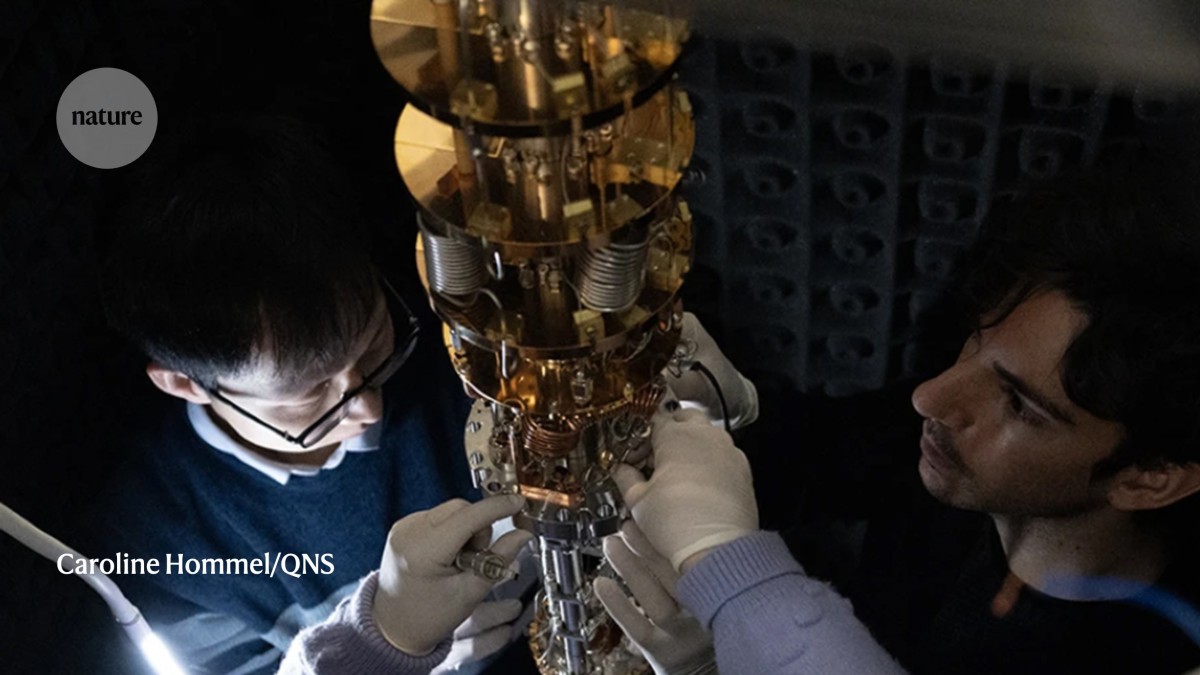
At the Center for Quantum Nanoscience (QNS), nestled in the hilly campus of Seoul’s Ewha Womans University, director of operations, Michelle Randall, shows off the facilities. “This is where we isolate our scanning tunnelling microscopes (STM) from any vibrations,” she says, pointing to an 80-tonne concrete damper, a mechanism that reduces interfering movements to near zero. Researchers at QNS are using STMs to image and manipulate individual atoms and molecules, chasing breakthroughs akin to last year’s assembly of a device made from single atoms that allows multiple qubits — the fundamental units of quantum information — to be controlled simultaneously (Y. Wang et al. Science382, 87–92; 2023). The work, done by QNS in collaboration with colleagues in Japan, Spain and the United States, could have applications in quantum computing, sensing and communication.
What gives QNS its edge, says Randall, is the diversity of teams that populate its labs. “Our composition is 50:50, South Korean and international, and we are an English-speaking workplace as a result,” she says. “We invest heavily in building relationships with our domestic scientific community and worldwide,” she adds, pointing to one room with four women — two South Koreans, one French, and one Iranian — exemplifying the collaborative spirit.
Nature Index 2024 South Korea
The diversity of the QNS team offers a glimpse of what research looks like in a country that is betting big on international collaboration. For 2024, South Korea has more than tripled its budget for global research and development (R&D) collaboration, committing to 1.8 trillion won (US$1.3 billion), up from 2023’s 500 billion won. The investment, which represents an increase from 1.6% to 6.8% of the government’s overall R&D budget, could see a shift away from using metrics such as university rankings, quantified research outputs and international student and faculty recruitment in favour of boosting ties with leading overseas research institutions in strategic areas. “There’s a huge amount of money that has suddenly been assigned to international research. With this comes many opportunities,” says Meeyoung Cha, scientific director of the Max Planck Institute for Security and Privacy, in Bochum, Germany, who holds joint positions at the Korea Advanced Institute of Science and Technology (KAIST) and the Korean Institute for Basic Science, in Daejeon.
The budget increase is part of the Korean Ministry of Science and ICT’s (MSIT) wider R&D Innovation Plan, announced in November 2023. It includes a new Global R&D Strategy Map, which will guide tailored collaboration strategies with specific countries based on their strengths in 12 critical and emerging technologies, such as semiconductors, artificial intelligence (AI) and quantum science. Industry strengths in 17 technologies related to achieving carbon neutrality and mitigating climate change will also be considered. In addition, MSIT has amended laws to allow overseas research institutions to directly participate in state R&D projects and aims to develop Global R&D Flagship Projects in key areas that will receive prioritized allocation of government funds.
Such moves are designed to refocus South Korea’s R&D, which has become stagnant over the past decade, according to MSIT, despite the country being the world’s second highest spender on R&D as a percentage of GDP, after Israel. In 2023, South Korea’s legislative national assembly approved a 14.7% cut to the overall 2024 R&D budget, from 31.1 trillion won in 2023. The cuts include shifting some more general funds for universities to a separate budget.
Foreign students line up to submit their applications at a job fair in Busan, South Korea.Credit: YONHAP/EPA-EFE/Shutterstock
“It seems that the term ‘budget cut’ really means redistributing money to more applied projects and international research initiatives,” says computational biologist, Martin Steinegger, based at Seoul National University. Steinegger experienced a 15–25% reduction in existing grants, paid annually from the National Research Foundation of Korea, the country’s main funding agency. This forced him to reduce conference travel for his students and use older hardware for research. “I have effectively less money than I did last year, but I can apply to many new things, it seems,” says Steinegger.
Off the back of such policy shifts, becoming the first Asian country to join the European Union’s Horizon Europe programme, the world’s largest research-funding scheme, is a major win for South Korea. Announced in March, the new partnership will drive collaborations between South Korean and European researchers in areas such as quantum technologies, semiconductors and next-generation wireless networks. South Korea is also forging bilateral cooperation agreements across Europe, such as with Denmark on clean-energy technologies and Germany on basic sciences, including the launch of a joint centre with the Max Planck Society, Germany’s flagship basic-research organization, at Yonsei University in Seoul.
Taking on more joint projects with Europe could help to diversify South Korea’s internationally collaborative outputs in the Nature Index. The United States, which has deep historic ties with South Korea dating back to the Korean War in the 1950s, is the country’s most important research partner in natural-sciences output, with a collaborative Share — a measure of joint contribution to research tracked by the Index — of 639.94 in 2023. China forms South Korea’s second-strongest partnership, with a collaborative Share of 300.81, followed by Japan, at 114.88 (see ‘Research ties’).
The number of natural-sciences articles in the Nature Index that have been co-authored by China- and South Korea-based researchers has grown considerably in recent years, up 222% between 2015 and 2023, compared with US–South Korean output, which dropped by 4% over the same period. But South Korean researchers report that collaborations with China are becoming more difficult, particularly in technology areas. According to data from South Korea’s national police agency, of the 78 cases of industrial technology leaks recorded between 2018 and mid-2023, 51 involved leaks to places or people in China. There is now also more oversight of collaborations with China than with other major research partners. “Researchers occasionally receive requests from their institutions or the government asking who is collaborating with China, says Cha. “They are aware that any collaboration may be monitored, creating a sense of censorship.”
In order to minimize its exposure to any supply-chain disruptions or political risks associated with ongoing US–China tensions, South Korea must look farther afield when establishing research links, says Lee Myung-hwa, who studies policy and innovation at the Science and Technology Policy Institute think tank, in Sejong. “The key is building trust with collaboration partners, which needs to be long-term, stable and maintained without being swayed by policy directions,” she says.
Cha highlights southeast Asia, a region that has long been of strategic and diplomatic interest to South Korea, as a place with untapped potential for joint innovation projects. “For instance, in Indonesia, there’s no governmental institution in charge of AI,” she says, which could open up the possibility of future collaborations around ethical and strategic development of AI technologies.
In 2023, the South Korean government committed to boosting cooperation with southeast Asia in areas including cybersecurity and communications technologies, and with individual nations, such as Vietnam, to help advance digital transition and clean-energy sectors. “Huge collaboration could happen if we work together,” says Cha.
Domestic challenges
With more than 10 million visitors moving between southeast Asian nations and South Korea each year, the region could also be important to South Korea in dealing with its dual demographic challenge: attracting overseas scientists in a country that is traditionally conservative towards immigration, and retaining homegrown talent. Solving these problems is paramount, as South Korea contends with the world’s lowest birthrate, driven by factors such as the rising costs of housing, education and childcare, a highly competitive and demanding work culture, and gender inequality issues, including the biggest gender pay gap among Organisation for Economic Co-operation and Development members. Student numbers are also in steep decline, which is putting some universities at risk of closure. An analysis of 195 Korean universities published by Seoul-based institute Jongro Academy in March showed that 51 had failed to fill their enrolment quotas for 2024. Of those, 43 were located outside the Seoul metropolitan area, accounting for 98% of the total unfilled seats.
To boost numbers, the South Korean Ministry of Education has announced new initiatives, including annual financial support for master’s, doctoral and postdoctoral researchers. These measures, which are part of the overall R&D budget, aim to incentivize mostly local students to continue their careers in research. For foreign students, the ministry wants to attract 300,000 of them by 2027 through its ‘Study Korea 300K Project’. Students will be targeted at events and language centres abroad and science graduates may be offered an easier pathway to permanent residency and South Korean citizenship. Language proficiency requirements for admission will also be reduced. Scholarship programmes are being expanded, including the government-funded Global Korea Scholarship invitation programme, which will increase recipient numbers from 4,543 in 2022 to 6,000 by 2027. The ministry has identified India and Pakistan in particular as important sources of science and engineering talent.
It’s unclear whether efforts to attract international students will bring more of a spotlight to the challenges faced by those who are already in the country. Lewis Nkenyereye, who studies computer and information security at Sejong University in Seoul, expresses concern for the many foreign students who work part-time to satisfy the minimum bank balance requirements of their enrolments. Language barriers and administrative hurdles have led to some of them being deported for not having adequate permits, says Nkenyereye, who is originally from Burundi. “The government is aware that most foreign students have part-time jobs and should adapt its policies to better accommodate their needs,” he says.
Religious and cultural differences also pose difficulties. Muaz Razaq, a student, who left Pakistan to pursue his PhD in computer science at Kyungpook National University in Daegu, is involved in a small mosque-reconstruction project next to his university that has ignited strong opposition from segments of the local community. Razaq says he’s heard many stories from other Muslim students across South Korea who describe being taunted by their peers over food choices and who lack designated spaces for practices such as ablution before prayers.
Challenging conditions for foreign students might be contributing to South Korea’s low levels of retention after graduation. According to a 2022 report by the Korea Research Institute for Vocational Education and Training in Seoul, the number of foreign students that are earning doctorates in South Korea quadrupled in the period 2012 to 2021. But the proportion of foreign students who returned to their home country after graduation has consistently increased, from 40.9% in 2016 to 62.0% in 2021.
Source: Nature Index
It is hoped that government-funded initiatives such as the Brain Pool programme, which gives doctoral researchers access to up to 300 million won annually for three years, and Brain Pool Plus, which offers outstanding researchers with expertise in core technology fields up to 600 million won annually for up to ten years, can help to attract and retain foreign talent. MSIT also plans to introduce support programmes to help new arrivals settle in and build networks.
Recent updates to visa rules for foreign researchers and students could make it easier for universities to attract overseas talent. In July, the Korean Ministry of Justice, which oversees immigration, greatly expanded the number of universities that are eligible to recruit foreign postgraduate and undergraduate students on D-2-5 research study visas and waived the three-year work-experience requirement for international master’s and PhD holders to obtain E-3 research visas.
New opportunities
The relatively low levels of English used at South Korean universities and research institutions is a major hurdle in the country’s drive towards internationalization. The number of university courses taught in English has increased in recent years, but Korean remains the primary language of instruction at many institutions. This affects foreign researchers at all career stages because they often require help from others or full-time assistance to navigate the environment, particularly in administrative matters, says Steinegger, who can manage daily life in Korean, but needs staff to help him with paperwork.
Seoul Robotics, a company that develops AI-powered software for autonomous driving and traffic management, has mandated an English-speaking work environment to attract international talent. Such a culture is unusual in South Korea; although many companies have English-speaking requirements, these are often not enforced, says Evan Thomas, business development manager at Seoul Robotics. “The ability to communicate in English without constant translation and cultural interpretation has been a significant advantage compared to more traditional South Korean companies,” he says.
Cultural attitudes towards foreigners can also hinder long-term retention, says Thomas. “Many South Koreans view foreigners as temporary visitors rather than potential long-term residents, discouraging them from settling in,” he says. A 2023 survey by the Korea Institute of Public Administration, a government-sponsored research institute in Seoul, seems to back this up, reporting that less than half of the respondents say they accept foreign nationals as members of South Korean society.
Given the shortages of local staff that are being recorded in strategic industries such as semiconductors and AI, it’s a problem that South Korea needs to address. Another report, by the University of Science and Technology in Daejon and the Korea Industrial Technology Association in Seoul, found that just 24% of 300 South Korean companies surveyed had foreign staff. Many cited a lack of information about foreign students as the reason, suggesting that there is a disconnect between academia and industry regarding graduate careers.
Hong Bui, a student from Vietnam, accepted a postdoctoral position at the Swiss Federal Institute of Technology Zurich in April, after completing her PhD at QNS. Bui cites the limited permanent career opportunities that are available to international researchers in Seoul as one of her reasons for wanting to leave, despite having a positive experience in QNS’s internationally focused environment. “South Korean companies often value overseas experience more than domestic experience, and many workplaces require Korean language proficiency,” she says.
As South Korea devotes record levels of resources to building ties with overseas institutions and attracting foreign researchers and students, its leaders hope that stronger research performance and innovation prowess will follow. But the success of such efforts hinges on the country’s ability to foster a more diverse research ecosystem, with fewer cultural challenges for foreigners to contend with.
“If the barriers are lowered and support is provided for overseas researchers to utilize South Korea’s leading research facilities and equipment, I think South Korea will become an attractive country for conducting research activities,” says Lee.
South Korea’s reputation as a leading innovator is under threat. In a benchmarking report released by the country’s Ministry of Science and ICT in February, South Korea had slipped behind China in science and technology development for the first time. The report analysed research papers, patents and expert surveys in 11 technology areas, including information and communications technology, defence and nanoscience.
Such performance metrics are taken very seriously in South Korea, says Martin Hemmert, a global business researcher at Korea University Business School in Seoul. “This kind of benchmarking is a national obsession, and they will always find a data point telling them they’re not doing well enough,” he says. The report showed that South Korea had continued to close the technology gap to the United States, but being surpassed by China in the ranking was what made national headlines.
Nature Index 2024 South Korea
“Koreans themselves would tell you that they’re not very good at R&D — even though, from an international perspective, the country is obviously a stellar performer,” says Sung-Young Kim, a political scientist at Macquarie University in Sydney, Australia, who studies the role of government in East Asia’s economic transformation. For a country that has achieved remarkable economic development, a slowdown, especially compared with its competitors, is a source of anxiety for many South Koreans.
In the wake of the Korean war, which split the country into the Soviet-influenced north and the US-influenced south in 1953, South Korea was one of the world’s poorest and least developed nations. From the early 1960s, its strategic focus on manufacturing and export fostered a period of rapid economic growth referred to as the Miracle on the Han River. By 2018, South Korea’s GPD per person measured at purchasing power parity — a metric that adjusts GDP to account for price differences between countries — surpassed that of Japan. “South Korea has become famous for mobilizing science and technology for industrialization and economic advancement,” says So Young Kim, a science and technology policy researcher at the Korea Advanced Institute of Science and Technology (KAIST) in Daejeon.
Yet signs that the country is losing momentum are hard to ignore. In the 1980s, South Korea’s compound annual growth rate of GDP per person reached almost 12%, but had slowed to 7.2% in the 1990s, 4.8% in the 2000s and 2.4% in the 2010s. This figure has since stabilized while remaining below that of other advanced economies, including Canada and Italy. “We have been growing slower and slower, and the government is quite worried,” says So Young Kim, who was appointed to chair a presidential commission in March, to propose solutions. “The new administration has been trying to revamp policies, institutions and funding structures to regain strength in science and technology, so that we can have another Miracle on the Han River.”
Picking winners
South Korea’s history has had a big impact on the national psyche, especially its development of innovative military technology, says Sung-Young Kim. “It forged this mentality that technology is a source of national security,” he says. The government designated strategic growth areas and pooled the nation’s limited public and private resources to enable the change. Information and communications technology was one such priority area. Today, South Korea is a leader in fast broadband and next-generation mobile communications, but 50 years ago, there was an 18-month wait to connect a phone to the country’s antiquated network, says James Larson, who arrived as a peace corps volunteer in 1971 and now studies digital development at the State University of New York Korea, a campus of the US university located in Incheon.
To achieve development and growth in telecommunications and other priority areas, buy-in from the corporate sector was crucial. “The key incentive for companies that participated in state projects was the potential to completely dominate an industry,” says Sung-Young Kim. The strategy catapulted a handful of companies, including Samsung and Hyundai — originally a food exporter and a local construction firm, respectively — into some of the world’s most successful conglomerates. But funds were never given freely. “The government would attach monitorable performance outcomes, and the president would sit in on meetings and stipulate targets for companies,” says Sung-Young Kim. During South Korea’s period of military rule, from 1961 to 1993, repercussions for missed targets ranged from being cut from further funding to jail time imposed for company bosses whose performance lagged.
The methods that today’s democratically elected South Korean government uses to support economic development have evolved, but the philosophy of strategic investment tied to detailed performance metrics remains. The question now is whether such an approach can deliver the same results when the companies that were once propelled by government funding and projects have become global behemoths that are not so easy to influence.
Manufacturing, meanwhile, is more reliant than ever on international supply chains, which are increasingly vulnerable. The COVID-19 pandemic and Ukraine and Gaza wars have created challenging conditions for South Korea’s export-oriented economy, as have heightened tensions between China and the United States. “With the US–China trade war, South Korea is again sandwiched between two great powers and finds that the only way it can really survive is, again, by digging into its strength in technological development,” says Sung-Young Kim.
Leveraging the innovation capacity of South Korea’s well-funded academic research is a strategy worth pursing, according to a report published by the Organisation for Economic Co-operation and Development (OECD) in 2023 (see https://doi.org/m8q9). But the government’s characteristic approach of prioritizing sectors and micro-managing the research it funds doesn’t necessarily foster innovation in the academic sector, says Hemmert, who contributed to the report.
A Samsung high-capacity DRAM module. The firm is integral to South Korea’s fortunes.Credit: SeongJoon Cho/Bloomberg via Getty Images
Another issue is that many people in South Korea are uncomfortable with the idea of providing ongoing public funding for researchers to pursue long-term goals, which makes it difficult for the government to secure support for such measures, says Sung-Young Kim. “This is a performance-based culture, so it has been difficult for people to accept that the government should be putting money into basic science” rather than more commercial areas, he says.
In 2022, the government chose to focus its research investment on 12 strategic technologies, including semiconductors and electronic displays, artificial intelligence, aerospace, cybersecurity and hydrogen. “It is the very typical government strategy of picking winners to make the most efficient use of our resources,” says So Young Kim. For researchers working in these areas, concentrating resources on their development is important for keeping up with rivals — particularly considering China’s rapid development, she says. But others in the academic sector argue that focusing funding too narrowly means neglecting areas of research where unexpected breakthroughs might arise. “Among our young researchers there is concern over whether fundamental research will be ignored because it doesn’t bring immediate benefits,” she says.
Strategic goals
Regardless of the work being funded, a more fundamental issue that is stifling innovation in research is the short-term nature of funding. “Our funding programmes are usually very short, typically one or three years,” says So Young Kim. Mid-term performance milestones are set and a heavy emphasis is placed on measuring output in terms of top-tier journal publications and patent registrations, she adds. “If you are not successful in the current programme, there’s no way to continue your research, because new funding is based on past records.” The funding structure forces researchers to focus on quick wins.
“For really cutting-edge research, you need a more patient approach,” says Hemmert. He adds that research in Japan — where the same topic can be pursued for decades in multi-generational labs — offers an interesting point of reference. “Japanese scientists have picked up a good number of Nobel prizes, but South Korea has zero,” says Hemmert. “When I looked at the profiles of Japanese Nobel scientists, they typically worked on some specific scientific problem for decades.”
Creating tailored programmes for funding science with the potential to be paradigm-shifting was a key recommendation of the OECD innovation review. “Of the many people we interviewed, many understood the need to support more high-risk, high-return research, and some in positions of influence were starting to work on it,” says Hemmert. But the level of change required has not been fully appreciated, he adds. For example, South Korea’s leading universities are highly regulated and lack autonomy. The government has designated some as ‘research universities’ — including Seoul National University (SNU) and KAIST — that receive more funds, “but instead of just leaving these well-resourced institutions alone to set strategies, there are still a lot of rules”, says Hemmert.
Source: Global Innovation Index Database, WIPO, 2023
The government has improved ties between academia and industry. Conventionally, R&D in the close-to-market technologies that the South Korean government has thrown its weight behind is seen as being more within the remit of government research institutes than of universities. But since about the year 2000, the government has sought to boost knowledge flows from universities into industry, such as by permitting universities to create for-profit spin-outs, and by focusing on public–private partnerships. SNU, for example, has active participants in many research, development and demonstration projects in the green-energy industry, says Sung-Young Kim.
Although the country’s research universities often rank highly in industry–academia linkage metrics such as patents filed and spin-outs launched, there’s room for improvement, says Hemmert. “They understand the need to collaborate more, yet when it comes to implementation, it’s still a bit chequered.”
Social shifts
Promoting high-risk, high-return research is a good strategy, but there are many social and cultural considerations to account for. South Korea has the world’s lowest birth rate, and its ageing population is putting increasing pressure on the health-care system. Previously, when science, technology and innovation were the government’s focus, the brightest students were drawn to disciplines such as engineering, says So Young Kim. Nowadays, they pursue medicine, because it’s a secure, well-paid and prestigious career with strong government support. In February, the government announced an increase to the national medical school intake quota from around 3,058 places — a number that has remained fairly consistent since 2006 — to 5,058 from 2025. “The top students are already choosing medical fields first, so by increasing the quota, what’s going to happen to science and technology student enrolments?” says So Young Kim. Even at SNU, the leading South Korean institution in the Nature Index, “their engineering programmes have a hard time recruiting students from their own undergraduate programmes”, she says.
Recent policy changes have exacerbated this problem. In 2023, the South Korean government announced a cut to R&D funding by 16.7%, later winding it back to 14.7% after a widespread criticism. R&D spending remains at approximately 5% of GDP, which is far above the 2.8% OECD average, and some targeted cuts to certain programmes is probably warranted, Hemmert says. But the way the cuts were implemented to basic funding has a disproportionate impact on young researchers, says So Young Kim, because student and postdoc stipends come directly from a professor’s own funding.
The government is considering other options for encouraging young people into science, such as expanding a programme that allows men to serve out their 18–21-month-long mandatory military service by continuing to work in their university labs. “The bigger challenge, I think, is not how we design these extra benefits, but how we make studying science and technology a really fulfilling experience for those who are interested in it,” says So Young Kim. She says that students and early career researchers often feel as though they are stuck doing manual labour in the lab, rather than being taught how to conduct research, which can be very unrewarding. “We need to find that intrinsic motivation for our students. Professors need to become role models, demonstrating that through this career we live a meaningful life,” says So Young Kim.
South Korea has an uphill battle ahead of it if it wants to regain its lead in technical innovation, but its historic ability to pivot in response to dramatic changes stand it in good stead, says Hemmert. “It’s a question of understanding what needs to be done, and then having the right leadership to implement the change.”