ChatGPT and the Future of AI: The Deep Language RevolutionTerrence J. Sejnowski The MIT Press (2024)
Some of the surprise winners of this year’s Nobel prizes were the developers of AlphaFold, an artificial intelligence (AI) model that can accurately predict the 3D structure of more than 200 million proteins. AlphaFold is powered by artificial neural networks that can glean patterns from how amino acids interact in known proteins and then use that information to model the behaviour of unknown proteins. Chatbots such as ChatGPT rely on similar technology to ‘learn’ and mimic human language.
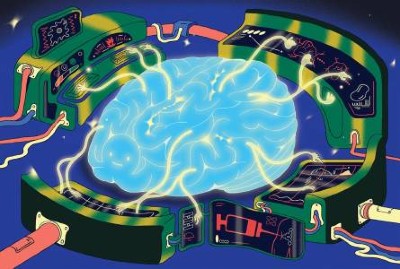
The revolution set in motion by this technology is compellingly explored in Terrence Sejnowski’s ChatGPT and the Future of AI — a sequel to his 2018 book The Deep Learning Revolution. Sejnowski, a computational neurobiologist, takes readers on a whirlwind tour of the evolution of AI — from simple computational models of a single neuron built in the 1950s to breakthroughs in deep learning over the past two decades that have resulted in the birth of large language models (LLMs), which can generate human-like responses to questions.
ChatGPT one year on: who is using it, how and why?
Sejnowski’s book is a must-read for those seeking to understand the world we live in — a world in which machines transform the fabric of human cognition. Put simply, a neural network is a web of interconnected nodes, or neurons, that can process data and learn from them by adjusting the strength of the connections between the nodes. When the strength of these connections is altered to achieve a desired output during a training phase, the model learns to detect underlying patterns.
The fundamental inspiration behind neural-network architectures is the human brain. Sejnowski suggests that untangling the mystery of why these simulated models of the brain work so well — especially when they are trained on large amounts of data — could prove to be as seminal as the discovery of DNA. By rigorously interrogating the “otherworldly behaviour” of LLMs, new conceptual frameworks might emerge, he predicts.
He sees parallels between the current debates over the meanings of ‘intelligence’ and ‘understanding’ and discussions a century ago about the nature of life. Back then, vitalists argued that life is a non-physical force — an essence infused in living things but not in, say, rocks — whereas mechanists thought that life could be fully explained by physical and chemical processes. Just as the discovery of the DNA double helix bridged conceptual gaps and transformed biology, Sejnowski predicts that advances in AI will bring forth revelations about intelligence.
Evolving understanding
The holy grail of AI, Sejnowski explains, is artificial general intelligence: a machine that can think, learn and solve problems across a wide range of tasks, much like a human can. The current generation of LLMs is far from that. Referred to pejoratively by some researchers as ‘stochastic parrots’, they mostly mimic human language without true comprehension.
Ready or not, AI is coming to science education — and students have opinions
The road ahead for AI is one of interdisciplinary collaboration, Sejnowski argues, in which insights from biology, neuroscience and computer science converge to guide AI development. Sejnowski imagines that insights about the “fundamental principles of intelligence” — such as adaptability, flexibility and the ability to make general inferences from limited information — will catalyse the next generation of machine intelligence.
The AI language revolution, which is how Sejnowski refers to the era of LLMs, is already reshaping many aspects of human life. As LLMs evolve, they will surpass their primary role as tools and start acting as collaborators in domains such as health care, education and law. That’s already beginning to happen, as shown by AlphaFold. The author liberally uses ChatGPT to provide summaries at the end of each chapter, and conversations with the chatbot are littered throughout the book. He even playfully acknowledges ChatGPT as a co-author.
The power of LLMs also lies in how users interact with them. Sejnowski flags the increasingly important skill of prompt engineering, which stresses that subtle changes in how you instruct a model can shape its output. The author offers helpful hacks: ask for multiple responses, not just one; be specific, so that the model can converge on the best answer quickly; shape your dialogue as if you are talking with a real person.
Sejnowski proposes a “reverse Turing test”, in which the intelligence of the prompter is assessed on the basis of the quality of their interactions with the AI. Such proficiency tests might become common as AI use spreads.
Can AI have common sense? Finding out will be key to achieving machine intelligence
The next generation of LLMs must undergo a developmental process akin to the childhood learning phase in humans, he surmises, learning from real-world interactions as well as data. Long-term memory and goal-oriented behaviour must be integrated so that systems can adapt and plan effectively. The addition of robotics and sensorimotor systems would allow AI tools to perceive and interact with their environment, nudging current models towards artificial general autonomy.
Although Sejnowski is optimistic about the technology, he acknowledges that there are many unsolved challenges that will need to be addressed to ensure the long-term sustainability of AI. It is likely to disrupt industries and the job market. And, the increasing necessity for heavy computational processing power has brought to the forefront the need for more-efficient, greener AI models.
Although it is some way off, it is also important, Sejnowski writes, to seriously examine the possibility of AI exceeding human intelligence, because preparing now will allow us to anticipate and mitigate potential threats. A careful and well-regulated strategy to manage ethical and existential risks — such as of AI-induced errors and political weaponization of LLMs — is essential to ensure that AI benefits society.
ChatGPT and the Future of AI sets out how the next wave of AI-driven breakthroughs could alter the landscape of knowledge itself. Sejnowski’s exploration serves as both a guide and a warning as we navigate the promises and perils of AI’s rapid advancement.
Scott Imbrie still remembers the first time that physicians switched on the electrodes sitting on the surface of his brain. He felt a tingling, poking sensation in his hand, like “reaching into an evergreen bush”, he says. “It was like I was decorating a Christmas tree.”
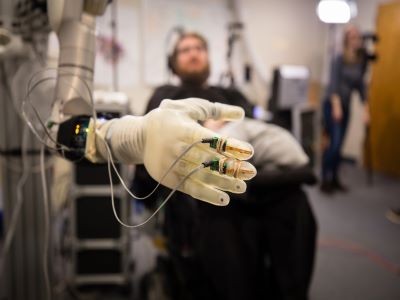
Back in 1985, a car crash shattered three of Imbrie’s vertebrae and severed 70% of his spinal cord, leaving him with very limited sensation or mobility in parts of his body. Now, thanks to an implanted brain–computer interface (BCI), Imbrie can operate a robotic arm, and receive sensory information related to what that arm is doing. Imbrie spends four days a week, three hours at a time, testing, refining and tuning the device with a team of researchers at the University of Chicago in Illinois.
Scientists have been trying to restore mobility for people with missing or paralysed limbs for decades. The aim, historically, was to give people the ability to control prosthetics with commands from the nervous system. But this motor-first approach produced bionic limbs that were much less helpful than hoped: devices were cumbersome and provided only rudimentary control of a hand or leg. What’s more, they just didn’t feel like they were part of the body and required too much concentration to use.
The brain-reading devices helping paralysed people to move, talk and touch
Scientists gradually began to realize that restoring full mobility meant restoring the ability to sense touch and temperature, says Robert Gaunt, a bioengineer at the University of Pittsburgh in Pennsylvania. Gaunt says that this realization has led to a revolution in the field.
A landmark study1 came in 2016, when a team led by Gaunt restored tactile sensations in a person with upper-limb paralysis using a computer chip implanted in a region of the brain that controls the hand. Gaunt then teamed up with his Pittsburgh colleague, bioengineer Jennifer Collinger, to integrate a robotic arm with the BCI, allowing the individual to feel and manipulate objects2. “It meant they could perform motor tasks much faster,” says Collinger. Around the same time, studies in people with limbs that have been amputated showed how restoring tactile inputs into peripheral nerves also drastically improved control of prosthetic hands3.
But researchers haven’t fully cracked the code on how to interpret or create natural sensations that truly benefit people’s lives. Somatosensation — the collection of senses that interpret touch, temperature, pain and body position — is dauntingly complex. Imagine trying to encode information that could discern a soft kiss from a painful pinch, or the needles of a pine tree from the bristles of a paintbrush. To create safe and stable interfaces with the brain and body, researchers need to make major advances in engineering as well as in understanding the sensorimotor system, says Rochelle Ackerley, a neuroscientist at Aix-Marseille University in France. And as developers look to increase the size of implanted-device trials, stakeholders have yet to solve ethical issues around the risks of BCIs and high-tech prosthetic devices.
A battery to the tongue
Prosthetics developers are beginning to create sensations that feel real and natural, but it’s a work in progress. When Imbrie thinks back to the first tests of his BCI, he says that the sensations were a bit “like holding a battery to the tongue; not painful, but more like electricity”.
One of the first challenges is the plethora of information that needs to be encoded. “When we touch an object, different sensory neurons in our skin code its shape, pressure and texture,” says Giacomo Valle, a neuroengineer at Chalmers University of Technology in Gothenburg, Sweden. Valle has been attempting to mimic these neural codes, then deliver them to the brain, either through the body’s sensory nerves or directly to the cortex.
Pedestals on Scott Imbrie’s scalp lead to electrode arrays in motor and sensory areas of his brain.Credit: Taylor Glascock for Nature
Valle worked with Imbrie during his postdoc in the laboratory of Sliman Bensmaia who was at the University of Chicago, drawing knowledge from decades of animal research about how to create different types of tactile sensation. He learnt that tweaking the parameters of electrical impulses creates very specific sensations of textures, pressures and stroking directions. When constructed together, these impulses form sensations of objects. Valle and his colleagues’ latest study4 shows just how far this approach has come. Through the electrodes in Imbrie’s brain, physicians were able to create the sensation of touching the edge of a shape or feeling the motion of an object dragged across Imbrie’s fingertips. Imbrie remembers the vivid feeling when Valle drew certain letters on the interface for Imbrie to interpret. “I said, ‘Oh my, Giacomo, you just drew an O on my fingertip’, and I could see the grin coming from his face,” says Imbrie.
The principle is exactly the same in people who have had an amputation, but technically more straightforward because tactile signals can be routed into residual nerves in the part of a person’s limb that remains. This technique is allowing individuals to better manipulate and detect objects with bionic hands, or have better balance and gait with bionic legs.
Vision without colour
Going beyond tactile inputs, researchers including neuroengineer Solaiman Shokur at the Swiss Federal Institute of Technology in Lausanne (EPFL) are beginning to bring back other aspects of somatosensation, such as discerning temperature. Shokur thinks that restoring multisensory inputs will return all the warmth and feeling that somatosensation gives us. “Touch without temperature is like vision without colour,” he says.
Shokur has created warm and cool sensations in the ‘phantom’ hands of people with an upper-limb amputation by stimulating nerves in their remaining limb with a thermal device5. These stimulations triggered very real and natural thermal sensations that people interpreted as coming from their missing hand.
By chance, one of the participants in Shokur’s trial had also participated in Valle’s trials recreating touch sensations. “Her first reaction with thermal sensation was, ‘Wow! This was what was missing the whole time’,” says Shokur.
Embodied prosthetics
Hugh Herr, an engineer at Massachusetts Institute of Technology in Cambridge is not convinced that restoring every facet of somatosensation, such as cooling or warmth, is the most important goal for helping people. Herr says that the priority should be restoring those sensory inputs that most improve mobility and function. Above all, he says, it’s important to have prosthetic limbs that feel to users like they’re part of their body, and not just bionic, artificial attachments — a sensation known as embodiment. “When amputees experience natural sensations from their prosthesis as if it was their own limb, and when people can think and move their prosthesis with little error, it gives them a sense of ownership and agency,” says Herr.
He is acutely aware of how painful poorly designed prosthetics can be: both his legs were amputated after a rock-climbing accident, and he has spent 30 years researching ways to build functional prostheses.
Herr says that the current revolution in this field stems from successes in integrating sensory components into prostheses. Designers are merging multiple tissues of the body — muscle, tendon, bone and nerves — with synthetic technologies to drive human–machine integration to the next level. Herr’s research team is focusing on surgical techniques and implants that improve on the electrodes used in current bionic-limb systems, which either penetrate the peripheral nerves or wrap around them. “We’re reimagining how limbs should be amputated and bionic limbs constructed,” he says.
Imbrie’s implants allow him to manipulate objects but also provide tactile feedback.Credit: Taylor Glascock for Nature
Herr’s group, along with collaborators such as Matthew Carty at Brigham and Women’s Hospital in Boston, Massachusetts, have developed a method of restoring sensory inputs by regrowing nerves in the residual part of an amputated leg, sometimes referred to as the stump. The idea is to make the stump sense when a prosthetic limb hits the ground while walking, but have the sensation felt in the phantom foot rather than in the stump. The approach involved taking parts of the person’s heel skin and surgically attaching them to intact sensory nerves in the stump. The skin graft is connected to a muscle–computer interface, which contracts the muscle to mechanically activate the sensory nerve. “When that muscle fires and applies a strain on the skin, the person feels heel strike,” says Herr. Initially developed in rats, the method is now being tested in a clinical trial. It’s early days, but unpublished data suggest that people can feel toe movements and heel pressures. Herr is now testing how this affects bionic-limb embodiment and motor capabilities.
In a publication in July6, Herr and his colleagues demonstrated a similar approach that aims to reproduce the sense of limb positioning, known as proprioception. It had “remarkable” results on bionic legs, restoring almost all mobility, he says. “If we restored just 18% of total proprioception into the nerve, patients could run up and down steps without a handrail,” says Herr. However, the BCI didn’t restore naturalistic sensations — individuals didn’t consciously feel the proprioceptive inputs.
How a revolutionary technique got people with spinal-cord injuries back on their feet
Gaunt says that Herr’s system is an impressive demonstration of how restoring proprioception can improve overall function of prosthetic limbs. The benefit, he says, is that the improvement comes through surgery combined with non-invasive neural prosthetics, but he questions how scalable the approach is.
Studies are also showing a somewhat unexpected outcome of creating more embodied prosthetic limbs — alleviating phantom-limb pain3. This pain, which feels like it comes from the part of the limb that is missing, is a major issue for many people with amputated limbs. “Peripheral-nerve stimulation can decrease phantom-limb pain by recovering lost or erroneous signals at the site,” Ackerley says. It’s becoming clearer, she adds, that bionic devices that stimulate peripheral nerves can also improve affective and social touch, increase comfort and reconnection with a missing limb and prevent ‘telescoping’, which is the feeling of a phantom limb ‘shrinking’ into the stump. “Embodiment and pain are major issues that bionic devices can tackle, providing ways to make prosthetic limbs useful on a more psychological level,” Ackerley says.
E-skins
Integrating sensory inputs into a prosthetic limb, either through BCIs or by connecting with peripheral nerves, goes a long way towards replacing a lost arm or leg, but creating a realistic limb, complete with simulated skin, is what many consider the ideal. Zhenan Bao, an engineer at Stanford University in California, talks of the mark that science-fiction films, such as those in the Star Wars franchise, have left on the field. Luke Skywalker’s bionic hand in Return of the Jedi (1983) still serves as the “moonshot idea” of a bionic limb gloved in synthetic skin, she says. Electronic skins, or e-skins, pull together advances in neuroscience and engineering and could open up the capabilities of prostheses. Although first developed in the 1970s, the field entered a new phase with e-skins when Bao showcased7 a high-tech example in 2023.
“We’re starting to create artificial materials that look and feel like skin. They’re capable not only of sensing information from the environment but can also generate signals to directly communicate with the nervous system to create natural sensations,” says Bao.
The brain-reading devices helping paralysed people to move, talk and touch
A handful of labs are working on improving the capabilities of various integral components of e-skin, including environmental sensors, microcircuits that convert the sensory signals into digital outputs and electrical interfaces to connect the sensors with peripheral nerves. Nitish Thakor, a neuroengineer at Johns Hopkins University in Baltimore, Maryland, who works on e-skins, says that progress has only been possible because of breakthroughs in two major domains. First, in nanomaterials and electronics, through “making flexible and organic transistors that act like a touch receptor in the skin”, and can self-heal when damaged8. Second, in neuroscience, by converting sensory information into digital data “as spikes that can be used to stimulate the nervous system”, he says.
Bao is most excited about the idea of using e-skins to “go beyond human capabilities”. One of the studies she was involved in showed an e-skin that is so tightly packed with mechanical sensors that it can read entire words in Braille, instead of one letter at a time9. “You can also imagine other sensors allowing us to know things like the chemical contents of objects,” says Bao.
Thakor highlights one glaring issue with e-skins, however: none has yet been trialled in humans or integrated into prosthetics. Bao says that she aims to test commercially produced e-skins in people fitted with prostheses in the next two years.
Challenges ahead
Although developments in BCIs, neuroprostheses and e-skins have been remarkable, the field is a long way from using them to improve people’s daily lives. Individuals who benefit from these technologies only do so as part of clinical trials, often with intensive, expensive in-lab testing schedules. It’s not yet clear how or when they could take their devices home without the need of scientists “twiddling knobs”, says Gaunt.
A major problem that researchers are trying to solve is neural interfacing. Currently, scientists can create precisely localized sensations only by stimulating the somatosensory cortex, not through peripheral nerves. But they are testing a number of techniques, such as optogenetics — a way to control the activity of specific sets of neurons with light, and high-resolution electrodes to selectively stimulate individual nerve fibres. Bao, for one, is working on these approaches, but says that they’re still early in development.
Abandoned: the human cost of neurotechnology failure
Outside the lab, the most pressing issues for individuals relates to ethical and access concerns, says Jennifer French, executive director of Neurotech Network, a patient advocacy and support organization in St. Petersburg, Florida. “We’re at a pivotal point of moving towards clinical trials, testing these devices in larger groups of patients, but there are many questions around understanding the spectrum of risks versus benefits,” she says. French listed many complex ethical questions, such as what are the clinical pathways for being fitted with devices? What should the clinical trial endpoints be? And how will health services make decisions about whether to pay for such devices?
Another concern is what happens when devices fail, or the makers of a device go bankrupt and the person is left with unsupported or non-working implants. “This is a real risk, and we have seen it demonstrated,” says Gaunt.
French is working with regulatory partners, funders, patient-advocacy groups and other stakeholders to create clinical and research frameworks. “We need guidance,” she says, both for device developers and clinicians. “But we don’t have solutions yet.”
Imbrie is positive about the changes he has experienced since he first started testing the bionic arm that interfaces with his brain. Four years worth of tests have even helped him to relearn some of the natural sensations in parts of his body. “When I started, my right side — it always felt dull or numb compared to the left side. Now when the doctor does the same test, both sides feel identical,” he says. And these sensations are feeling increasingly real. “I can feel my brain getting reprogrammed to feel different types of stimuli. It’s like being a child learning to touch, but I have the language and imagination to describe how I’m perceiving things,” he says.
Herr mirrors Imbrie’s optimism. With innovative interfaces between machine and flesh emerging, Herr is hopeful that restored function will soon become more than just a laboratory trick.
Hairy animals including mice and dogs shake themselves dry
atikinka2/Getty Images
If you have ever been close to a dog after it has gone for a swim, you have probably been sprayed with water flinging from its fur. We now know the brain pathway that causes animals to rapidly wiggle themselves dry – a phenomenon known as the wet dog shake.
At least 12 different types of nerve cells help hairy mammals like mice and dogs feel physical sensations, such as temperature changes or touch. Yet it wasn’t clear which of these neurons sense irritating substances that animals want to shake…
Experiments with mice have revealed the neuroscience of why dogs shake their wet fur.Credit: Nat NT/Getty
When a dog shakes water off its fur, the action is not just a random flurry of movements — nor a deliberate effort to drench anyone standing nearby.
This instinctive reflex is shared by many furry mammals including mice, cats, squirrels, lions, tigers and bears. The move helps animals to remove water, insects or other irritants from hard-to-reach places. But underlying the shakes is a complex — and previously mysterious — neurological mechanism.
Now, researchers have identified the neural circuit that triggers characteristic ‘wet dog’ shaking behaviour in mice — which involves a specific class of touch receptors, and neurons that connect the spinal cord to the brain. Their findings were published in Science on 7 November1.
“The touch system is so complex and rich that [it] can distinguish a water droplet from a crawling insect from the gentle touch of a loved one,” says Kara Marshall, a neuroscientist at Baylor College of Medicine in Houston, Texas. “It’s really remarkable to be able to link a very specific subset of touch receptors to this familiar and understandable behaviour.”
Sensitive skin
The hairy skin of mammals is packed with more than 12 types of sensory neuron, each with a unique function to detect and interpret various sensations. A team led by Dawei Zhang, a neuroscientist then at Harvard University in Cambridge, Massachusetts, focused on a type of ultra-sensitive touch detecting receptors called C-fibre low-threshold mechanoreceptors (C-LTMRs), which wrap around hair follicles.
Dogs might have evolved to read your emotions
In humans, these receptors are associated with pleasant touch sensations, such as a soft hug or a soothing stroke. But in mice and other animals, they serve a protective role: alerting them to the presence of something on their skin, whether it’s water, dirt or a parasite. When these stimuli cause hairs on the skin to bend it activates the C-LTMRs, says Marshall, “extending the sensibility of the skin beyond just the surface”.
To get laboratory mice to shake their fur like wet dogs, the researchers applied drops of sunflower oil to the backs of the mice’s necks. Nearly all the animals shook off these drops within ten seconds. The team then genetically modified some of the mice to remove most of their C-LTMRs. These animals showed a 50% reduction in shakes when oil droplets landed on their neck, compared with unmodified control mice.
The researchers also wanted to explore how signals from C-LTMRs travel through the nervous system to orchestrate the wet dog shakes. They traced the pathway to a group of neurons in the spinal cord; this connects to an area in the brain called the parabrachial nucleus, which is involved in processing pain, temperature and touch.
Using optogenetics, a technique that engineers neurons so that they can be switched on and off in response to light, the researchers blocked the activity of the spinal neurons. These mice showed a 58% reduction in shakes compared with control mice. Blocking activity in the parabrachial nucleus produced similar results. The mice still scratched, groomed and moved normally, suggesting that the neural circuit is specific to wet dog shakes.
Specialized circuit
The discovery opens up avenues for future research. “The wet dog shake is a very coordinated motor response,” says Thomas Knöpfel, a neuroscientist at Hong Kong Baptist University in Kowloon Tong, who adds that the study is a good starting point to study how the brain sends commands to control the movement. “Wet dog shake is triggered in many animals by psychedelic drugs,” he says. The response to psychedelics involves serotonin receptors, which also play a part in pleasurable touch. “That gives inspiration for some more work connecting the dots.”
Zhang says that future research could also investigate whether overactive C-LTMRs contribute to conditions such as twitch-skin syndrome in cats, which involves sudden rippling of the skin and excessive twitching, or to other kinds of skin hypersensitivity in humans.
The body’s clock is essential for anticipating daily environmental changes. Surprisingly, clock genes are highly expressed in innate immune cells that produce the inflammatory protein interleukin-17A, particularly in body fat. The clock drives a rhythmic production of this protein, which in turn contributes to the metabolic rhythms of fat.
Nature, Published online: 30 October 2024; doi:10.1038/d41586-024-03396-0
How do odorant receptors in the human nose recognize a wide variety of scent molecules? The structures of engineered versions of these receptors finally provide much-needed answers to this fundamental question.
Ample sleep after a heart attack dampens inflammation in the organ, aiding recovery.Credit: Getty
Immune cells rush to the brain and promote deep sleep after a heart attack, according to a new study1 involving both mice and humans. This heavy slumber helps recovery by easing inflammation in the heart, the study found.
The findings, published today in Nature, could help to guide care for people after a heart attack, says co-author Cameron McAlpine at the Icahn School of Medicine at Mount Sinai in New York City, who studies immune function in the cardiovascular and nervous systems. “Getting sufficient sleep and rest after a heart attack is important for long-term healing of the heart,” he notes.
The implications of the study go beyond heart attack, says Rachel Rowe, a specialist in sleep and inflammation at the University of Colorado Boulder. “For any kind of injury, your body’s natural response would be to help you sleep so your body can heal,” she says.
The heart needs its sleep
Scientists have long known that sleep and cardiovascular health are linked. People who sleep poorly are at a higher risk of developing high blood pressure, for example, than are sound sleepers. But how cardiovascular disease affects sleep has been less explored.
To learn more, the authors induced heart attacks in mice and investigated the animals’ brainwaves. The researchers found that these mice spent much more time in slow-wave sleep — a stage of deep sleep that has been associated with healing — than did mice that hadn’t had a heart attack.
Your brain could be controlling how sick you get — and how you recover
Next, the authors sought to understand what was causing that effect. One obvious place to look was the brain, which controls sleep, notes McAlpine. After a heart attack, immune cells trigger a massive burst of inflammation in the heart, he says, and the researchers wondered whether these immune changes also occurred in the brain.
The team found that, after a mouse’s heart attack, immune cells called monocytes flooded its brain. These cells produced large amounts of a protein called tumour necrosis factor (TNF), which is an important regulator of inflammation and also promotes sleep.
To confirm that these cells were linked to the increased sleep, researchers prevented monocytes from accumulating in the rodents’ brains. As a result, “the mice no longer had this increase in slow-wave sleep after their heart attack,” McAlpine says, supporting the theory that the influx of monocytes to the brain contributes to the post-heart-attack sleep boost. Similar experiments confirmed TNF’s role as a messenger to sleep-inducing brain cells.
Slumbering toward recovery
To understand the purpose of the extra sleep, the researchers repeatedly interrupted slow-wave sleep in mice that had had a heart attack. The team found that these mice had more inflammation in both the brain and the heart, and had a much worse prognosis than mice that were allowed to sleep undisturbed after a heart attack.
How the brain senses a flu infection — and orders the body to rest
The authors also studied humans who had experienced acute coronary syndrome, a term for conditions, including heart attack, that are caused by a sudden reduction of blood flow to the heart muscle. Those who reported poor sleep in the weeks following such an episode had a higher risk of developing heart attacks and other serious cardiovascular problems over the next two years than did those who were good sleepers.
Given the findings, “clinicians need to inform patients of the importance of a good night’s sleep” after a heart attack, says Rowe. This should also be considered at the hospital, where tests and procedures would ideally be conducted during the daytime to minimize sleep interruptions.
She adds that the findings highlight the bidirectional relationship between sleep and the immune system. “When your grandma says, ‘if you don’t get enough sleep, you’ll get sick’, there’s a lot of truth to that.”
Before now, no one had studied the brain before, during and after taking hormonal birth control
Shutterstock / Krakenimages
The largest brain imaging study of a woman to date shows that hormonal birth control can decrease brain volume – though it isn’t clear what effect, if any, this has on brain function.
Hormonal contraceptives have been around since the 1960s. Yet scientists only began investigating their potential effects on the brain in the past decade or two, says Carina Heller at the University of Minnesota. Previous studies have shown differences in brain volume between women who take hormonal contraceptives…
Strengthening activity of some brainwaves in rats’ while they sleep improves their performance on a memory test. If we can boost these in people, it could lead to new treatments for dementia and other memory impairments.
Memories are encoded in unique patterns of activity between neurons. Each time we learn or experience something new, a subset of neurons forms connections. These connections then strengthen while we sleep, reinforcing the memory. This process is known as memory consolidation.
Earlier this year, my daughter moved into college for her first year of university. Amid the boxes lining the hallways, I noticed a bulletin board covered in photos of scrub-clad physicians and inspirational quotes. When I stopped to take a closer look, the mother of the student it belonged to came out to say hello.
“I told my daughter to put her vision board where she can see it every time she…