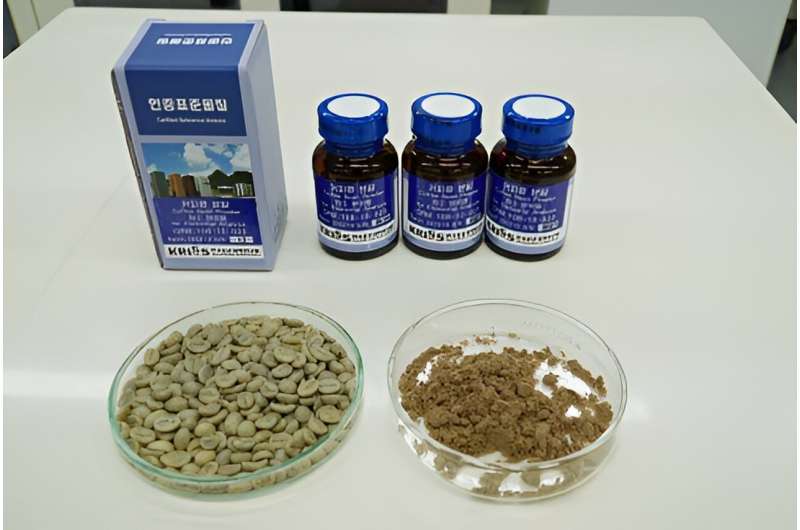
Coffee bean CRM for elemental analysis. Credit: Korea Research Institute of Standards and Science (KRISS)
The Korea Research Institute of Standards and Science (KRISS) has developed the world’s first Certified Reference Material (CRM) capable of accurate measurement of the nutritional and harmful elements in coffee beans.
A CRM, which provides accurate measurement values certified by an authoritative body, serves as a standard, providing a reference for verifying the accuracy of measurement results and analysis methods. The newly developed coffee bean CRM allows for the accurate measurement of five nutritional elements (calcium, magnesium, iron, zinc, copper) and three harmful elements (lead, mercury, cadmium) within coffee beans.
According to domestic regulations, the permissible limit for the total lead content in roasted coffee, instant coffee, and other coffee products is 2 mg/kg or less. In Europe, the cadmium content in dried edible coffee beans is regulated to be 0.05 mg/kg or less, and the lead content is restricted to 1 mg/kg or less. The lead, mercury, and cadmium content in this CRM are all approximately 0.1 mg/kg, which meets the standards for both domestic and European regulations.
To develop this CRM, the Inorganic Metrology Group at KRISS freeze-dried a large number of raw coffee beans and obtained a homogeneous sample through multiple grinding and mixing processes. The sample was then sterilized through irradiation, producing a CRM with outstanding stability and homogeneity.
To provide certified measurement values with the world’s highest level of accuracy, this CRM employs isotope dilution mass spectrometry for measurement, one of the most reliable measurement methods in the field of chemistry. With this method, KRISS achieved an accuracy that is more than three times better than that of the conventional measurement methods used by food testing institutions.
While coffee is widely favored with a substantial volume of international trade, a CRM for elemental analysis of coffee beans, allowing their quality control, has been absent. The newly developed coffee bean CRM by KRISS, however, is expected not only to enhance the measurement reliability and evaluation system of domestic food testing institutions but also to contribute to various fundamental coffee-related research through international collaboration such as overseas distribution.
Dr. Kyoung Seok Lee, the director of the Division of Chemical and Biological Metrology, said, “This achievement represents a technological advancement that can significantly improve the quality control level of coffee, a popular beverage as well as a heavily imported product. KRISS will continue to develop CRMs for foods such as Korean cabbage, blueberry, and pork so as to make a healthy and safe dining table for the nation.”
The paper is published in the journal Analytical and Bioanalytical Chemistry.
More information:
Jong Wha Lee et al, Development of a coffee bean certified reference material (KRISS CRM 108-10-023) for elemental analysis, Analytical and Bioanalytical Chemistry (2023). DOI: 10.1007/s00216-023-05051-5
Provided by
National Research Council of Science and Technology
Citation:
World’s first coffee bean Certified Reference Material for component analysis (2023, December 27)
retrieved 30 December 2023
from https://phys.org/news/2023-12-world-coffee-bean-certified-material.html
This document is subject to copyright. Apart from any fair dealing for the purpose of private study or research, no
part may be reproduced without the written permission. The content is provided for information purposes only.
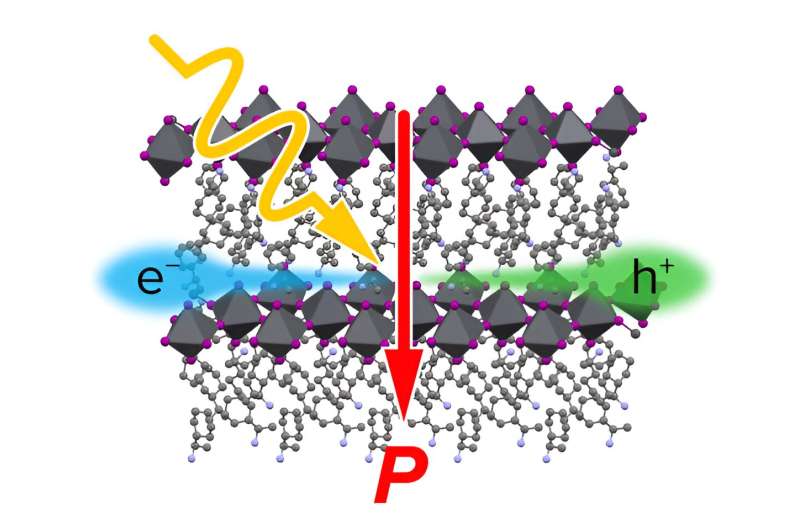
Figure 1: Schematic illustration of the bulk photovoltaic effect along the non-polar axis of the organic–inorganic hybrid perovskite. The yellow arrow represents of a photon of light, while the blue and green clouds show an electron and a hole, respectively. The red arrow is the polarization axis. Credit: WILEY-VCH Verlag GmbH & Co. KGaA, Weinheim
A team led by RIKEN researchers has investigated how special crystals convert light into electricity. Their findings will help inform efforts to improve their efficiency, which could lead to the crystals being used in solar cells. The study is published in the journal Angewandte Chemie International Edition.
Solar cells convert light into electricity by a phenomenon known as the photovoltaic effect. The vast majority of solar cells consist of two semiconductors wedged together—one with an excess of electrons and the other being electron deficient. This is because the setup has a high conversion efficiency.
But another photovoltaic effect has also been attracting attention—the bulk photovoltaic effect, so called because it only involves a single material. While its conversion efficiency is currently rather low, recent research has suggested ways for improving its efficiency.
There has been much debate about how the bulk photovoltaic effect works. It was originally thought that an electric field generated by polarizations within the material gave rise to the effect, but a new explanation has recently been gaining currency.
In this new mechanism, light shifts the electron clouds in the material and these shifts propagate, generating a current. This current has attractive properties, including an ultrafast response and dissipation-less propagation.
Materials known as organic–inorganic hybrid perovskites (OIHPs) have great potential for making optoelectronic devices. The bulk photovoltaic effect in OIHPs has generally been ascribed to the old macroscopic polarization mechanism.
“Built-in electric fields in materials have often been considered as the origin of the bulk photovoltaic effect in OIHPs, but without solid evidence,” remarks Taishi Noma of the RIKEN Center for Emergent Matter Science.
Now, by studying in detail the bulk photovoltaic effect in OIHP crystals, Noma and his collaborators have found evidence that is consistent with the shift mechanism and rules out the macroscopic polarization mechanism.
Specifically, they observed the bulk photovoltaic effect along a non-polar axis in an OIHP, which cannot be explained in terms of the macroscopic polarization mechanism.
The team’s results highlight the importance of the crystal symmetry of the material. The insights gained will help researchers optimize the properties of OIHPs by tailoring their symmetry. In particular, the insights may help improve the efficiency of OIHPs in converting light into electricity.
Noma and his team now intend to explore other kinds of materials. “In principle, shift currents can also be generated in other classes of materials, such as liquid crystals and organic molecular crystals,” says Noma. “We would like to extend this study to other materials.”
More information:
Taishi Noma et al, Bulk Photovoltaic Effect Along the Nonpolar Axis in Organic‐Inorganic Hybrid Perovskites, Angewandte Chemie International Edition (2023). DOI: 10.1002/anie.202309055
Citation:
Shedding light on the origin of the photovoltaic effect in organic–inorganic perovskites (2023, December 27)
retrieved 30 December 2023
from https://phys.org/news/2023-12-photovoltaic-effect-organicinorganic-perovskites.html
This document is subject to copyright. Apart from any fair dealing for the purpose of private study or research, no
part may be reproduced without the written permission. The content is provided for information purposes only.
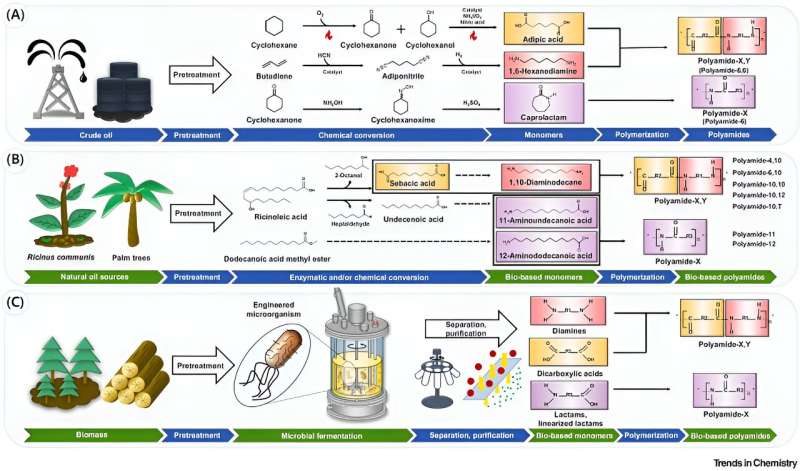
A schematic overview of the overall process for polyamides production. Credit: Trends in Chemistry (2023). DOI: 10.1016/j.trechm.2023.10.001
Global industries focused on carbon neutrality, under the slogan Net-Zero, are gaining increasing attention. In particular, research on the microbial production of polymers, replacing traditional chemical methods with biological approaches, is actively progressing.
Polyamides, represented by nylon, are linear polymers widely used in various industries such as the automotive, electronics, textiles, and medical fields. They possess beneficial properties including high tensile strength, electrical insulation, heat resistance, wear resistance, and biocompatibility.
Since the commercialization of nylon in 1938, approximately 7 million tons of polyamides are produced worldwide annually. Considering their broad applications and significance, producing polyamides through bio-based methods holds considerable environmental and industrial importance.
KAIST has announced that a research team led by Distinguished Professor Sang Yup Lee, including Dr. Jong An Lee and doctoral candidate Ji Yeon Kim from the Department of Chemical and Biomolecular Engineering, published a paper titled “Current Advancements in Bio-Based Production of Polyamides.” The paper was featured on the cover of the monthly issue of Trends in Chemistry by Cell Press.
As part of climate change response technologies, bio-refineries use biotechnological and chemical methods to produce industrially important chemicals and biofuels from renewable biomass without relying on fossil resources. Notably, systems metabolic engineering, pioneered by KAIST’s Distinguished Professor Sang Yup Lee, is a research field that effectively manipulates microbial metabolic pathways to produce valuable chemicals, forming the core technology for bio-refineries.
The research team has successfully developed high-performance strains producing a variety of compounds, including succinic acid, biodegradable plastics, biofuels, and natural products using systems metabolic engineering tools and strategies.
The research team predicted that if bio-based polyamide production technology, which is widely used in the production of clothing and textiles, becomes widespread, it will attract attention as a future technology that can respond to the climate crisis due to its environment-friendly production technology.
In this new study, the research team comprehensively reviewed the bio-based polyamide production strategies. They provided insights into the advancements in polyamide monomer production using metabolically engineered microorganisms and highlighted the recent trends in bio-based polyamide advancements utilizing these monomers.
In addition, they reviewed the strategies for synthesizing bio-based polyamides through chemical conversion of natural oils and discussed the biodegradability and recycling of the polyamides. The paper also presented future directions in which metabolic engineering can be applied for bio-based polyamide production, contributing to an environmentally friendly and sustainable society.
Ji Yeon Kim from KAIST, the co-first author of this paper, stated “The importance of utilizing systems metabolic engineering tools and strategies for bio-based polyamides production is becoming increasingly prominent in achieving carbon neutrality.”
Professor Sang Yup Lee emphasized, “Amid growing concerns about climate change, the significance of environmentally friendly and sustainable industrial development is greater than ever. Systems metabolic engineering is expected to have a significant impact not only on the chemical industry but also in various fields.”
More information:
Jong An Lee et al, Current advancements in the bio-based production of polyamides, Trends in Chemistry (2023). DOI: 10.1016/j.trechm.2023.10.001
Provided by
The Korea Advanced Institute of Science and Technology (KAIST)
Citation:
Strategies for environmentally friendly and sustainable polyamide production (2023, December 27)
retrieved 30 December 2023
from https://phys.org/news/2023-12-strategies-environmentally-friendly-sustainable-polyamide.html
This document is subject to copyright. Apart from any fair dealing for the purpose of private study or research, no
part may be reproduced without the written permission. The content is provided for information purposes only.
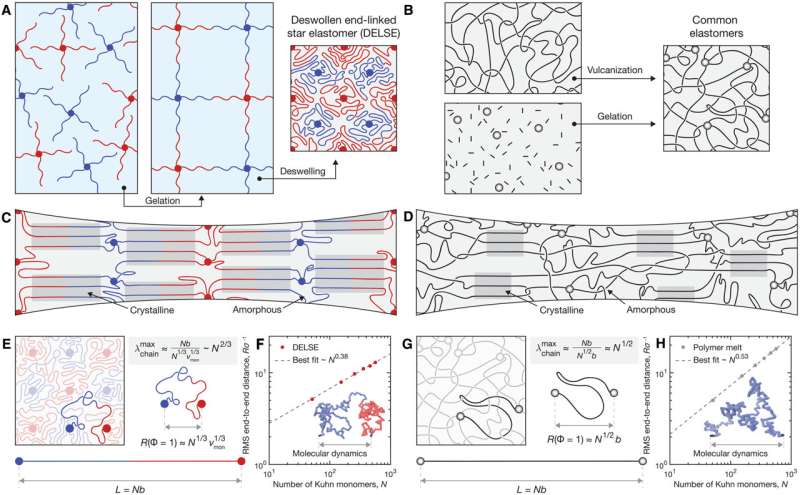
Deswollen end-linked star elastomers. (A) The DELSE forms through controlled crosslinking of star macromers followed by solvent evaporation to form a homogeneous crosslinked polymer network (illustrations are exaggerated to highlight architectural differences). (B) Conventional elastomers form through random crosslinking processes such as vulcanization of long polymer chains or gelation from monomers. (C) The more homogeneous architecture supports chain alignment during stretching causing crystalline domain formation in the DELSE. (D) In contrast, physical barriers like trapped entanglements and inhomogeneities limit the effect of SIC in common elastomers. (E) The RMS end-to-end distance of polymers chains in a DELSE in the undeformed state scales as N1/3, as validated by (F) molecular dynamics simulation (representative simulated chain conformation inset). (G) The RMS end-to-end distance of polymers chains in a conventional elastomer in the undeformed state scales as N1/2, as validated by (H) molecular dynamics simulation (representative simulated chain conformation inset). Credit: Science Advances (2023). DOI: 10.1126/sciadv.adj0411
Strain-induced crystallization can strengthen, toughen, and facilitate an elastocaloric effect in elastomers. The resulting crystallinity can be induced by mechanical stretching in common elastomers that are typically below 20%, with a stretchability plateau.
In a new report now published in Science Advances, Chase M. Hartquist and a team of scientists in mechanical engineering and materials sciences at MIT and Duke University in the U.S. used a class of elastomers formed by end-linking to achieve a percentage of strain-induced crystallinity.
The deswollen and end-linked star elastomer abbreviated as DELSE reached an ultrahigh stretchability to scale, beyond the saturated limit of common elastomers, to promote a high elastocaloric effect with an adiabatic temperature change.
Strain-induced crystallization
The process of strain-induced crystallization is common in elastomers and gels where amorphous polymer chains can transform into highly oriented and aligned domains due to an applied mechanical strain. Since the oriented and aligned crystalline domains can resist crack extension and blunting to facilitate crack deflection, the process of strain-induced crystallization preserved the network integrity, while achieving close to 100% recovery in seconds.
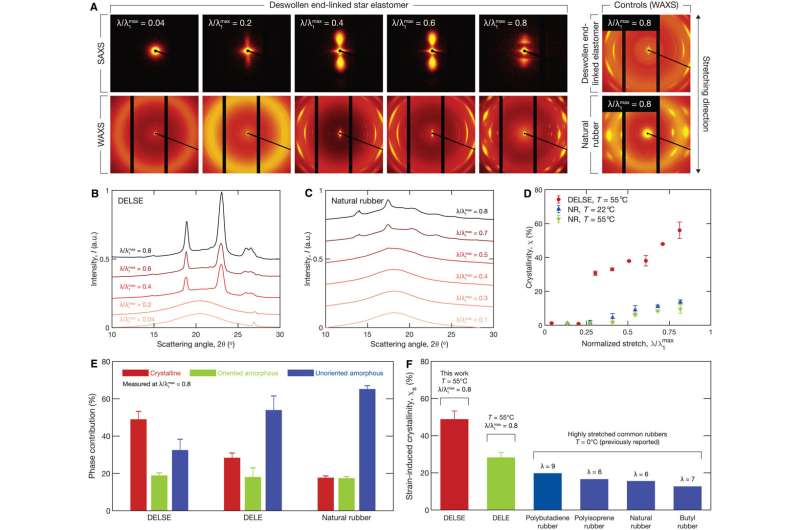
The typical process of strain-induced crystallinity in common elastomers is below 20%, while natural rubber only achieves about 15% crystallinity when stretched to six times its initial length at room temperature. In this new work, Hartquist and a team of researchers described a class of deswollen, end-linked star elastomers to achieve up to 50% strain-induced crystallinity. The scientists credited the ultrahigh strain-induced crystallization to a uniform network structure and a high stretchability to obtain the expected outcomes.
Ultrahigh SIC of the DELSE. (A) WAXS and SAXS patterns show structural development of the DELSE at 55°C compared to the DELE at 55°C and NR at 22°C when mechanically stretched. The WAXS intensity profile develops crystalline peaks for (B) the DELSE and (C) NR during stretching. (D) The crystallinity index increases more dramatically for the DELSE compared to NR. (E) Deconvolution of WAXS scans gives the distribution of oriented and unoriented phases. (F) Strain-induced crystallinity of the DELSE measured from WAXS pattern deconvolution is compared to the DELE and reported values for various common rubbers with SIC. Error bars denote standard deviations. Credit: Science Advances (2023). DOI: 10.1126/sciadv.adj0411
To study the additional features of the elastomer, the team used X-ray analysis to show how the structure and strain-induced deswollen and end-linked star elastomer promoted crystallinity when compared to common elastomers. The research team further analyzed the crystal structure formed using detailed X-ray analysis, where the deswollen and end-linked star elastomers displayed a diffraction spot to mark the formation of poly(ethylene dioxide) crystals in a helical structure. This elastomer promoted higher strain-induced crystallinity, when compared to common elastomers.
Mechanical performance and elastocaloric cooling
The research team conducted mechanical characterization at 60°C to investigate ultrahigh strain-induced crystallization in deswollen end-linked elastomers, which effectively promoted high toughness, with low stress-stretch hysteresis. Hartquist and the team reinforced the softest materials by introducing reversible bonds to induce large stress-stretch hysteresis.
The researchers further studied the stretchability of elastomers to show how the materials stretched beyond the limits of entangled networks for broader applications. They then studied the potential to use a caloric material for solid state cooling applications by investigating the elastocaloric effect in deswollen end-linked star elastomers, and compared the outcomes with conventional elastomers.
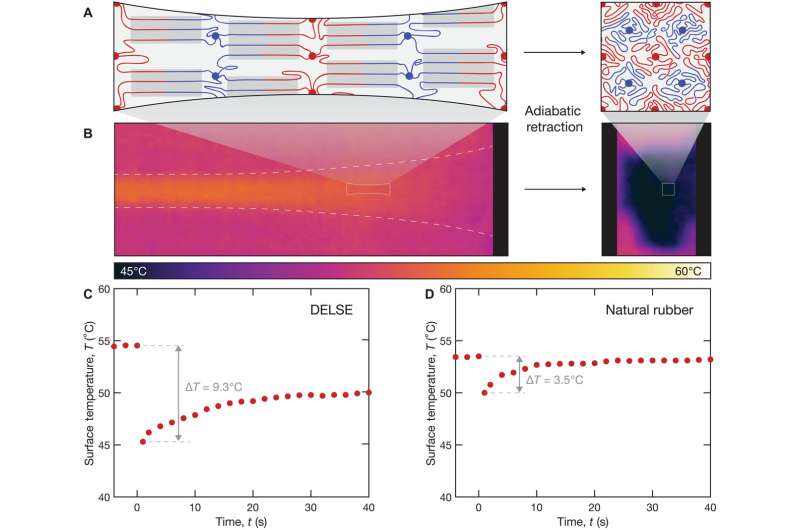
The scientists investigated the potential to use a caloric material for solid state cooling applications by studying elastocaloric effects in deswollen end-linked star elastomers when compared with natural rubber. An ideal elastocaloric cooling cycle can harness the decrease in conformation of entropy to increase thermal entropy and heat the bulk material.
In elastomers with strain-induced crystallization, additional latent heat contributed to crystallite formation to heighten the effect. The increased stretchability and uniform chain length distribution of the material increased the theoretical elastocaloric effect, when compared to conventional elastomers. Such elastomers formed strong candidates with suitability for advanced solid-state cooling technologies.
Elastocaloric effect of the DELSE. (A) Schematics indicate the destruction of crystalline domains and disruption of polymer chain alignment during adiabatic retraction. (B) Thermal images of the DELSE during the retraction. The applied mechanical loading and measured surface temperature are recorded for the (C) DELSE and (D) NR during the retraction process. Credit: Science Advances (2023). DOI: 10.1126/sciadv.adj0411
Outlook
In this way, materials scientists Chase M. Hartquist and colleagues compared the deswollen and end-linked star elastomer with natural rubber to show their increased stability, different polymer chemistry, and well-formed structure that combinatorically increased strain-induced crystallization and elastocaloric effect in elastomeric materials. The comparison between the materials revealed their stretchability and chemistry, as well as the significance of the relatively homogenous structure.
Since the early discovery of the rubber band by J.R. Katz in 1924 due to strain-induced crystallization, this biomaterial has played a significant role in society from household goods to car tires. In this report, the team described the next-generation elastomers developed with profound strain-induced crystallization that exceeded the dimensions of natural rubber and other common materials.
The materials developed showed the capacity to outperform conventional counterparts, suggesting the ability to engineer soft materials by regulating their network architecture. These materials play a crucial role to construct futuristic aerospace structures, medical devices and for applications of elastocaloric refrigeration.
More information:
Chase M. Hartquist et al, An elastomer with ultrahigh strain-induced crystallization, Science Advances (2023). DOI: 10.1126/sciadv.adj0411
Citation:
Developing a futuristic elastomer with ultrahigh strain-induced crystallization (2023, December 27)
retrieved 30 December 2023
from https://phys.org/news/2023-12-futuristic-elastomer-ultrahigh-strain-induced-crystallization.html
This document is subject to copyright. Apart from any fair dealing for the purpose of private study or research, no
part may be reproduced without the written permission. The content is provided for information purposes only.
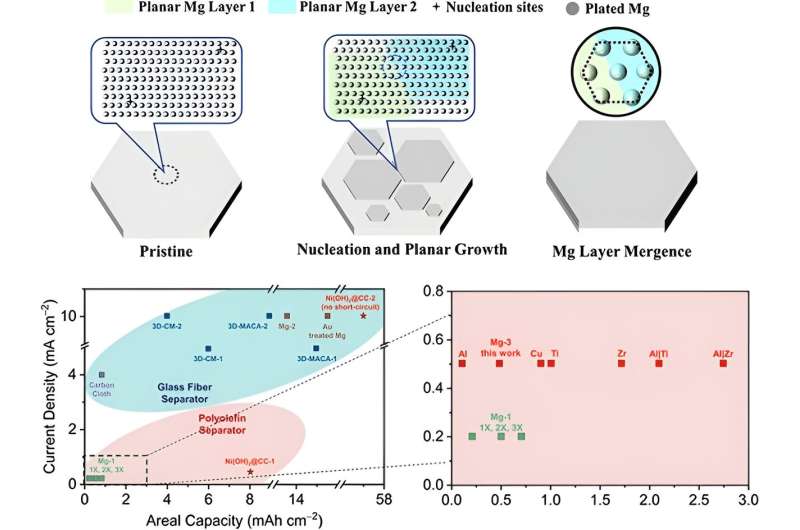
Schematic diagram of layer-by-layer planar growth model of Mg deposits and the performance comparison of various electroplating substrates. Credit: Wang Guixin & Du Aobing
As a promising candidate to current lithium-ion batteries, rechargeable magnesium batteries have attracted extensive attention due to the superior properties of magnesium (Mg) metal anodes, such as high volumetric capacity (3,833 mAh/cm3), abundant resources, environmental friendliness, and difficult to grow dendrites.
Although some studies have reported that the morphology of Mg dendrites can be observed under extreme electroplating conditions, such as using the limited Mg electrolytes with low Mg-ion conductivity and applying ultra-high current density (10 mAh/cm2), these test conditions are clearly different from practical requirements.
Researchers from the Qingdao Institute of Bioenergy and Bioprocess Technology of the Chinese Academy of Sciences (CAS) have discovered that the use of the practical polyolefin separator indeed causes the short-circuit of coin cell even at the low current density. They have established a layer-by-layer planar growth model for short-circuit suppression, and proposed the design strategy of a 3D magnesiophilic substrate to achieve planar Mg electroplating/stripping behavior.
Ample evidence has shown that Mg growth is uniform and dense when the current density is below 5 mAh/cm2. However, using practical polyolefin separators with the thin thickness, low-current charging and discharging can cause internal short-circuiting in coin cells.
The researchers have proposed the island-growth model for Mg deposits based on electrochemical tests and microscopic morphology observation, which reasonably explains the abnormal short-circuit behavior.
By further adjusting the lattice mismatch parameters and the surface energy of the substrate, the layer-by-layer planar growth of Mg deposits is achieved, effectively solving the above abnormal short-circuit problem.
The researchers used a magnesiophilic 3D substrate (Ni(OH)2@CC) with low lattice mismatch and high surface energy properties as an electroplating substrate, which not only enabled the reversible electroplating/stripping process, but also matched with a high-load Mo6S8 cathode (30 mg/cm2) .
By thoroughly exploring the short-circuit phenomenon caused by abnormal non-dendritic electroplating behavior in RMBs and proposing validated solutions, this work provides an important driving force for the practical application of Mg metal anode.
More information:
Guixin Wang et al, Achieving Planar Electroplating/Stripping Behavior of Magnesium Metal Anode for a Practical Magnesium Battery, ACS Energy Letters (2023). DOI: 10.1021/acsenergylett.3c02058
Provided by
Chinese Academy of Sciences
Citation:
A 3D magnesiophilic substrate enables planar electroplating/stripping of magnesium metal anode (2023, December 27)
retrieved 30 December 2023
from https://phys.org/news/2023-12-3d-magnesiophilic-substrate-enables-planar.html
This document is subject to copyright. Apart from any fair dealing for the purpose of private study or research, no
part may be reproduced without the written permission. The content is provided for information purposes only.
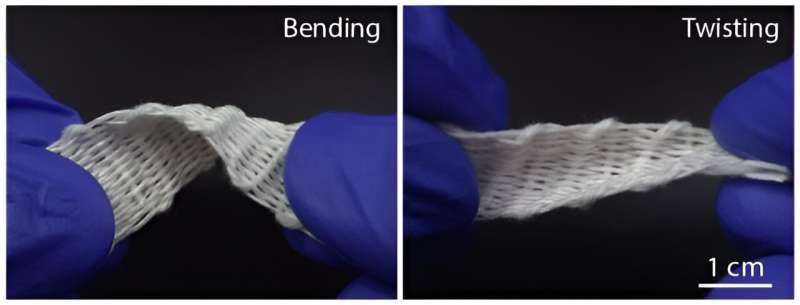
Photograph showing bending and twisting of encapsulated aerogel textile. Credit: Science (2023). DOI: 10.1126/science.adj8013
A team of chemical engineers and materials scientists at Zhejiang University in China has developed a new type of aerogel fiber that has proven to be warmer than down when woven into a sweater. In their paper published in the journal Science, the group describes the inspiration for their fibers, how they were made and how well they worked when tested in a cold environment. Zhizhi Sheng and Xuetong Zhang, with the Chinese Academy of Sciences, have published a Perspective piece in the same journal issue outlining the work done by the team on this new effort.
Aerogels are types of gels where the liquid is replaced by air. They were invented in the 1930s and have been used for a variety of applications, including NASA space vehicles. Because of their positive thermal properties, materials scientists have been trying to make fibers using them that could be used to create warm textiles. Thus far, such attempts have mostly failed, however, due to a lack of moisture permeability and strength. In this new study, the research team in China has found a way to overcome both problems.
The work by the researchers began as an effort to mimic the thermal properties of polar bear fur. They note that the reason the bears can keep warm in such cold temperatures is that the hairs that make up their fur coat have both a porous core and a dense shell. To recreate such attributes, the group created what they describe as an encapsulated aerogel fiber by starting with a precursor, which they spun as it was frozen. This process led to a sol-gel transition. The material was then freeze-dried and coated with a semi-hard shell.
The result was a thin round fiber that could be produced in desired lengths. The researchers note that no post-processing was needed to produce textiles, suggesting their fibers could be produced more cheaply than those currently in use.
The research team next produced batches of their fibers in long strands that they used to weave a sweater. They then tested the warmth of the sweater by exposing it to temperatures as low as −20°C. They claim the sweater demonstrated thermal protection that was better than similar sweaters made of down, wool, or cotton. They also stretched the sweater 10,000 times and found it suffered little damage. They also note that the fiber can be stretched, dyed, and flexed.
More information:
Mingrui Wu et al, Biomimetic, knittable aerogel fiber for thermal insulation textile, Science (2023). DOI: 10.1126/science.adj8013
Citation:
A sweater made from new aerogel fiber tests warmer than one made from down (2023, December 22)
retrieved 30 December 2023
from https://phys.org/news/2023-12-sweater-aerogel-fiber-warmer.html
This document is subject to copyright. Apart from any fair dealing for the purpose of private study or research, no
part may be reproduced without the written permission. The content is provided for information purposes only.
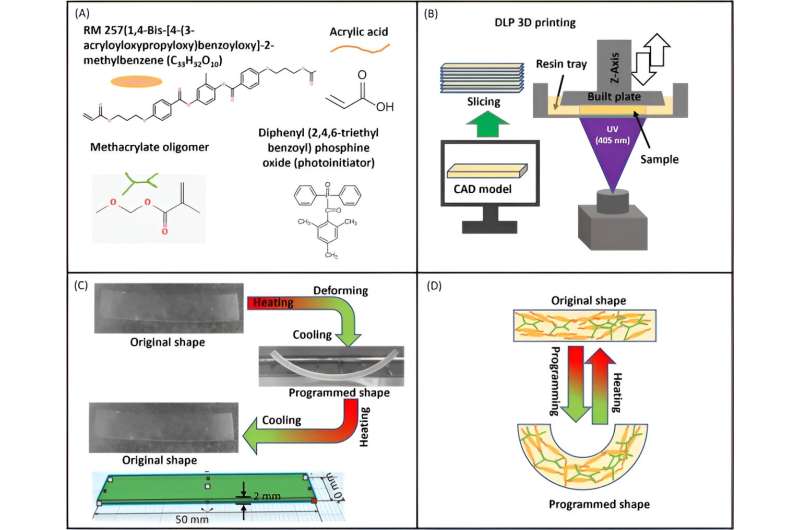
Digital light processing specifications. A) Schematic illustration of the preparation of a shape-memory polymer by utilizing a liquid crystal (RM257). B) DLP 3D printing of the prepared shape-memory polymer resin. C) Digital photographs of the shape-morphing structure. D) Schematic representation of the programming steps of the 3D-printed sample: (1) heating, (2) cooling, (3) fixing to a new shape, and (4) reheating to regain the original shape. Credit: NPG Asia Materials (2023). DOI: 10.1038/s41427-023-00511-x
Shape-memory polymers or shape-shifting materials are smart materials that have gained significant attention within materials science and biomedical engineering in recent years to build smart structures and devices. Digital light processing is a vat photopolymerization–based method with significantly faster technology to print a complete layer in a single step to create smart materials.
Fahad Alam and a team of scientists in electrical and computer engineering, and nuclear engineering at the King Abdullah University of Science and Technology, Saudi Arabia developed a facile and fast method to 3D print shape-memory polymer-based smart structures with a digital light printing 3D printer and custom resin.
They combined a liquid crystal (a material that can change its shape with temperature) with resin, to introduce shape-memory properties to directly 3D print thermoresponsive structures—while avoiding the complexity of resin preparation. The team printed the structures with different geometries and measured the shape-memory response. The shape-memory polymers can be conveniently prepared for use as smart tools, toys, and meta-materials.
The paper is published in the journal NPG Asia Materials.
Shape-memory polymers
Shape-memory polymers belong to a class of dual-shape smart polymers that can undergo mechanical deformation and return to their original shape in response to environmental parameters. The shape-memory polymer recovery depends on the application of external stimuli such as heat, light, electricity, humidity, and pH changes.
Such materials are shape-shifting constructs that have gained considerable interest in recent years due to their versatility and industrial viability. The research team demonstrated 4D printing shape-memory polymers via digital light processing; a 3D printing method based on vat photopolymerization. The outcomes highlighted the suitability of 3D-printed complex structures for a variety of applications.
The custom 3-D printed structures undergo 4-D elongation and custom shape changes in an aqueous environment. Credit: Nature Asia Materials, doi: 10.1038/s41427-023-00511-x
Creating the shape-memory effect
The research team investigated the shape-memory effect of the 3D printed samples by studying the shape inducting and recovering process. The method allowed easy and high-resolution printing of intricate 3D designs. These constructs are useful across a variety of applications as flexible smart patches, size-variable mechanical tools, and deformable toys. In this work, Alam and colleagues developed a shape-memory polymer based on a liquid crystal mixed with a photocurable resin, to develop a semicrystalline polymer and described its mechanism-of-action, based on previous studies.
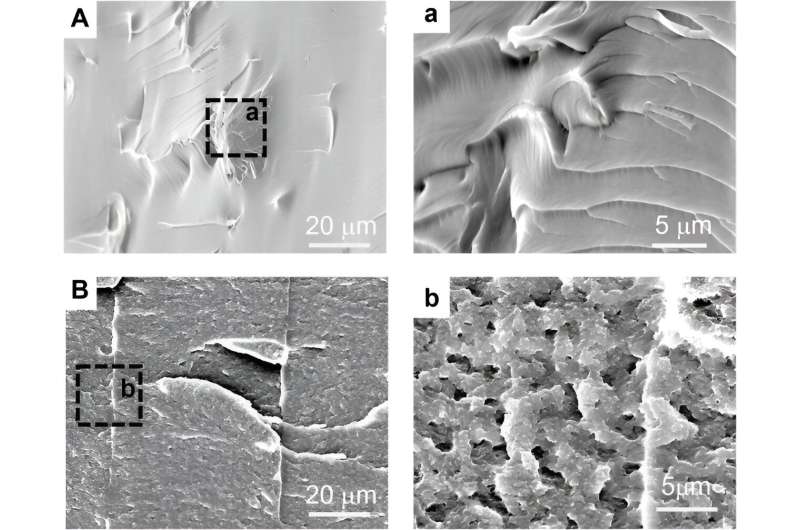
The team observed the internal morphology of the 3D printed cross sections with or without liquid crystals by using scanning electron microscopy. They then observed the responses of shape-memory polymers relative to their capacity to recover after load-bearing. The present work showed the influence of 3D digital light processing to create shape-memory polymers with 4D effects. The scientists quantified the shape-memory response to show the recovery angle ratio versus time.
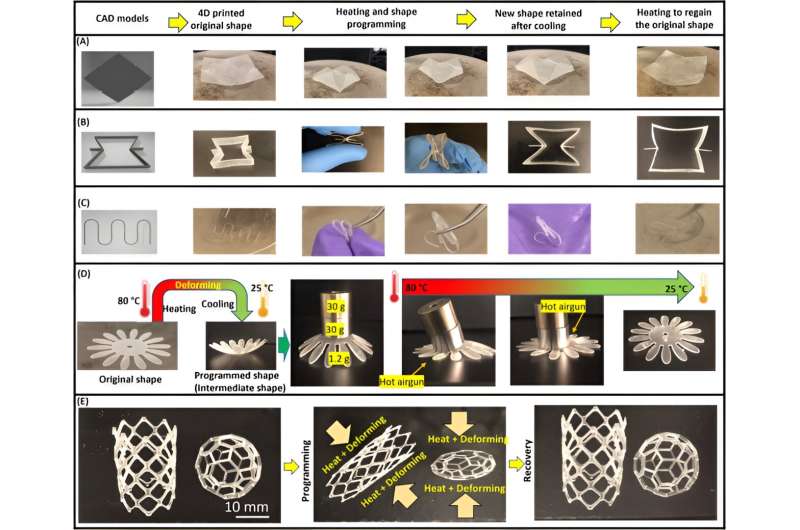
Programming and recovery of the 3D-printed structures and the load-bearing capacity of the programmed structure. A Foldable box. B Smart packaging morphing structure. C Deformation and recovery states of 3D-printed fiber. D Load-bearing capacity of the programmed flower-shaped 3D-printed structure. E Fabrication of 3D structure showing the suitability of the method in printing 2D and 3D structures. Credit: Nature Asia Materials, doi: 10.1038/s41427-023-00511-x
Tunable mechanical properties
The researchers explored the promising applications of 3D-printed smart memory polymers. To accomplish this, Alam and colleagues determined the mechanical properties of the materials by conducting tensile tests on a dog-bone specimen, to show how the mechanical properties of printed materials can be tuned by regulating the shape of the lattice structures.
They confirmed the mechanical tunability of smart materials by conducting finite element simulations, and compared the experimental results with tensile tests from the finite element analysis. The mechanical performances of the 2D lattices observed through experiment and predicted via simulation agreed. Based on the flexibility and stretchability, Alam and team tested the samples for strain testing and for joint moving sensing applications.
To facilitate joint motion via polymer integration, the scientists applied a nano-silver-based conductive coating as an electrode, which required further optimization of the printing parameters. The scientists measured the changes in electrical resistance by stretching and compressing the structure to facilitate movement in patients.
The results of resistance measurement of the prepared lattice electrode patch showed its potential for use as a smart patch for joint-movement sensing; this can be applied to a human knee, elbow joint, artificial limb, or real limbs to sense movement. Such electrode patches can be customized to the size of the patient under easy and fast manufacturing processes.
Micrographs of the cross-section of 3D-printed samples observed under SEM. A Resin only and B LC mixed with resin. (a) and (b) are the magnified positions of the micrographs highlighted with dotted yellow lines from (A) and (B), respectively. Credit: NPG Asia Materials (2023). DOI: 10.1038/s41427-023-00511-x
Outlook
In this way, Fahad Alam and team presented a method to 3D print smart materials by first using shape-memory polymers for easy and fast manufacture through digital light processing. The scientists customized the 3D-printed objects to create structures that changed with time, this is known as 4D printing. They achieved this by combining liquid crystals with a resin, and printing it by using a commercial desktop printer. The researchers used the method to manufacture a variety of complex objects including lattice patches, foldable toys, smart packaging, and mechanical wrenches.
The scientists subjected these objects to heat, to temporarily change their shape, and for subsequent shape recovery applications. The team used tensile tests to show the adjustable nature of shape-memory polymers, to meet specific applications in biomedical engineering. Such 3D-printed lattice patches are well suited for strain sensing in joint movement applications. The researchers recorded the changes in electrical resistance from the 3D-printed smart patch to detect the movement in artificial limb joints and arms of patients.
More information:
Fahad Alam et al, Swift 4D printing of thermoresponsive shape-memory polymers using vat photopolymerization, NPG Asia Materials (2023). DOI: 10.1038/s41427-023-00511-x
Citation:
Swift 4-D printing with shape-memory polymers (2023, December 22)
retrieved 30 December 2023
from https://phys.org/news/2023-12-swift-d-shape-memory-polymers.html
This document is subject to copyright. Apart from any fair dealing for the purpose of private study or research, no
part may be reproduced without the written permission. The content is provided for information purposes only.
Antibiotic-resistant bacteria have become a rapidly growing threat to public health. Each year, they account for more than 2.8 million infections, according to the U.S. Centers for Disease Control and Prevention. Without new antibiotics, even common injuries and infections harbor the potential to become lethal.
Scientists are now one step closer to eliminating that threat, thanks to a Texas A&M University-led collaboration that has developed a new family of polymers capable of killing bacteria without inducing antibiotic resistance by disrupting the membrane of these microorganisms.
“The new polymers we synthesized could help fight antibiotic resistance in the future by providing antibacterial molecules that operate through a mechanism against which bacteria do not seem to develop resistance,” said Dr. Quentin Michaudel, an assistant professor in the Department of Chemistry and lead investigator in the research, published Dec. 11 in the Proceedings of the National Academy of Sciences.
Working at the interface of organic chemistry and polymer science, the Michaudel Laboratory was able to synthesize the new polymer by carefully designing a positively charged molecule that can be stitched many times to form a large molecule made of the same repeating charged motif using a carefully selected catalyst called AquaMet.
According to Michaudel, that catalyst proves key, given that it has to tolerate a high concentration of charges and also be water-soluble—a feature he describes as uncommon for this type of process.
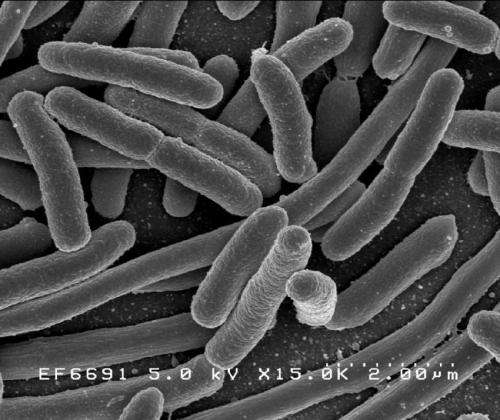
After achieving success, the Michaudel Lab put its polymers to the test against two main types of antibiotic-resistant bacteria—E. coli and Staphylococcus aureus (MRSA)—in collaboration with Dr. Jessica Schiffman’s group at the University of Massachusetts Amherst. While awaiting those results, the researchers also tested their polymers’ toxicity against human red blood cells.
“A common issue with antibacterial polymers is a lack of selectivity between bacteria and human cells when targeting the cellular membrane,” Michaudel explained. “The key is to strike a right balance between effectively inhibiting bacteria growth and killing several types of cells indiscriminately.”
Michaudel credits the multidisciplinary nature of scientific innovation and the generosity of dedicated researchers across the Texas A&M campus and country as factors in his team’s success in determining the perfect catalyst for their molecule assembly.
“This project was several years in the making and would not have been possible without the help of several groups, in addition to our UMass collaborators,” Michaudel said.
“For instance, we had to ship some samples to the Letteri Lab at the University of Virginia to determine the length of our polymers, which required the use of an instrument that few labs in the country have. We are also tremendously grateful to [biochemistry Ph.D. candidate] Nathan Williams and Dr. Jean-Philippe Pellois here at Texas A&M, who provided their expertise in our assessment of toxicity against red blood cells.”
Michaudel says the team will now focus on improving the activity of its polymers against bacteria—specifically, their selectivity for bacterial cells versus human cells—before moving on to in vivo assays.
“We are in the process of synthesizing a variety of analogs with that exciting goal in mind,” he said.
The team’s paper features Michaudel Lab member and Texas A&M chemistry Ph.D. graduate Dr. Sarah Hancock as first author. Other key contributors from the Michaudel Lab are chemistry graduate student An Tran, postdoctoral scholar Dr. Arunava Maity and former postdoctoral scholar Dr. Nattawut Yuntawattana, who is now an assistant professor of materials science at Kasetsart University in Thailand.
More information:
Sarah N. Hancock et al, Ring-opening metathesis polymerization of N -methylpyridinium-fused norbornenes to access antibacterial main-chain cationic polymers, Proceedings of the National Academy of Sciences (2023). DOI: 10.1073/pnas.2311396120
Provided by
Texas A&M University
Citation:
Research team develops polymers that can kill bacteria (2023, December 22)
retrieved 30 December 2023
from https://phys.org/news/2023-12-team-polymers-bacteria.html
This document is subject to copyright. Apart from any fair dealing for the purpose of private study or research, no
part may be reproduced without the written permission. The content is provided for information purposes only.
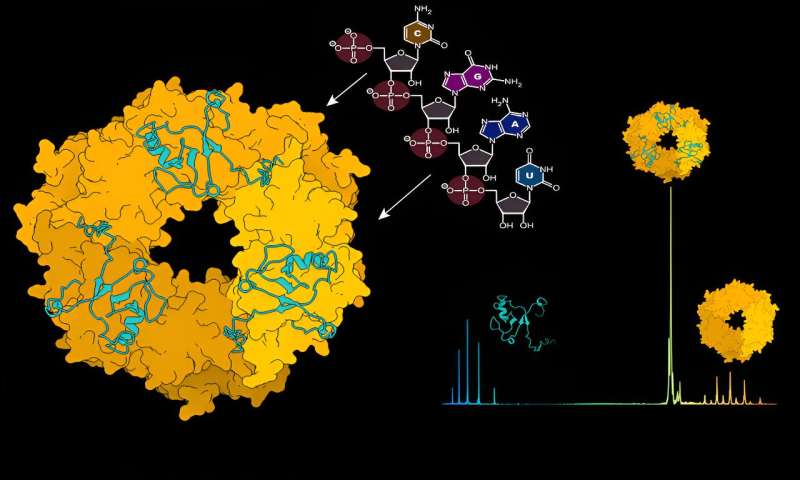
Structure prediction of the nucleoprotein (NP) ring like structure in complex with the matrix protein Z (left). RNA can induce dissociation of the NP trimer which enables NP-RNA assemblies. Native mass spectrum of the NP-Z complex with both NP trimer and Z protein being detectable (right). Credit: Journal of the American Chemical Society (2023). DOI: 10.1021/jacs.3c07325
Lassa virus (LASV) is the pathogen that causes Lassa hemorrhagic fever, a disease endemic to West Africa, which causes approximately 5,000 deaths each year. At the CSSB Centre for Structural Systems Biology, the Uetrecht (CSSB, LIV, Uni Siegen), Kosinski (CSSB, EMBL) and Rosenthal (BNITM, CSSB) groups worked together to reveal the crucial role played by RNA in critical steps of the Lassa virus life cycle.
Their findings are published in the Journal of the American Chemical Society.
In the human body, 20,000 genes produce over one million different forms of proteins. The Lassa virus in comparison is miniscule as it is composed of only four proteins, known as L, NP, Z and GPC.
“We are trying to understand how these four proteins can cause such serious damage to human cells,” explains the paper’s first author Lennart Sänger. “The activities and expression of these proteins must be tightly regulated and the proteins must communicate efficiently with one another to take on different functions.”
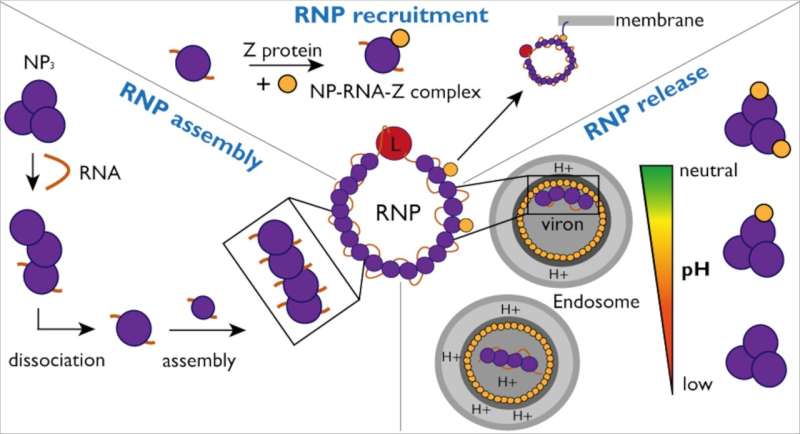
To protect and hide the virus from detection by the immune system, the nucleoprotein (NP) encloses the viral genome in a capsid. This capsid together with viral RNA and the L protein forms ribonucleoprotein complexes (RNPs).
To propagate infection, RNPs must continuously restructure themselves in order to enable viral genome replication and transcription. The researchers investigated the interactions between NP and viral RNA as well as the Z protein to gain a better understanding of the mechanism and dynamics of RNP formation and packaging into new viral particles.
Using structural mass spectrometry, a method that acts like a molecular scale by revealing the atomic weight of molecular interactions, the researchers examined the dynamics between NP and viral RNA. “Initially, the NP protein doesn’t exist in a composition that can bind viral RNA,” explains Charlotte Uetrecht, a CSSB group leader and expert in mass spectrometry techniques.
“A change needs to occur to enable this binding and we discovered that viral RNA can initiate this change by itself.” The researchers identified RNA as the driver for the disassembly of ring-like NP trimers into monomers which are then able to form higher order RNA-bound NP assemblies.
Critical Steps in the lifecycle of the Lassa virus ribonucleoparticle (RNP). RNP assembly: RNA with a critical length is the sufficient factor to drive NP-RNA assembly by initiating NP trimer disassembly and NP-RNA monomer assembly. RNP recruitment: Z can bind directly to NP and independently of RNA, this may facilitate RNP recruitment to the cell membrane. RNP release: NP-Z interaction is highly dependent on the pH. The interaction is lowered at endosomal pH, which might be a factor for RNP releasement from the viral matrix. Credit: Journal of the American Chemical Society (2023). DOI: 10.1021/jacs.3c07325
The researchers also investigated NP interaction with the Z protein in more detail. To facilitate this, the Kosinski group used AlphaFold to predict the NP-Z complex’s interaction site. These predictions were then verified by researchers in the laboratory.
“Using artificial intelligence enabled us to quickly identify possible interactions and also enabled us to create mutants to verify our hypothesis,” notes Jan Kosinski. The researchers were ultimately able to demonstrate that while NP binds Z independently of the presence of RNA, this interaction is pH-dependent.
“Overall, these findings help improve our understanding of RNP assembly, recruitment, and release in Lassa virus,” explains Maria Rosenthal, a Lassa virus expert at the Bernhard Nocht Institute for Tropical Medicine and a CSSB associate member. In West Africa, 186 million people are predicted to be at risk of Lassa virus infection by 2030, and the World Health Organization recognizes Lassa virus as a dangerous and yet understudied pathogen.
“Understanding how Lassa virus functions may ultimately enable us to develop molecules which could inhibit the replication of this virus and treat Lassa fever,” notes Rosenthal.
More information:
Lennart Sänger et al, RNA to Rule Them All: Critical Steps in Lassa Virus Ribonucleoparticle Assembly and Recruitment, Journal of the American Chemical Society (2023). DOI: 10.1021/jacs.3c07325
Provided by
CSSB Centre for Structural Systems Biology
Citation:
New research reveals critical steps in Lassa virus ribonucleoparticle assembly and recruitment (2023, December 21)
retrieved 31 December 2023
from https://phys.org/news/2023-12-reveals-critical-lassa-virus-ribonucleoparticle.html
This document is subject to copyright. Apart from any fair dealing for the purpose of private study or research, no
part may be reproduced without the written permission. The content is provided for information purposes only.
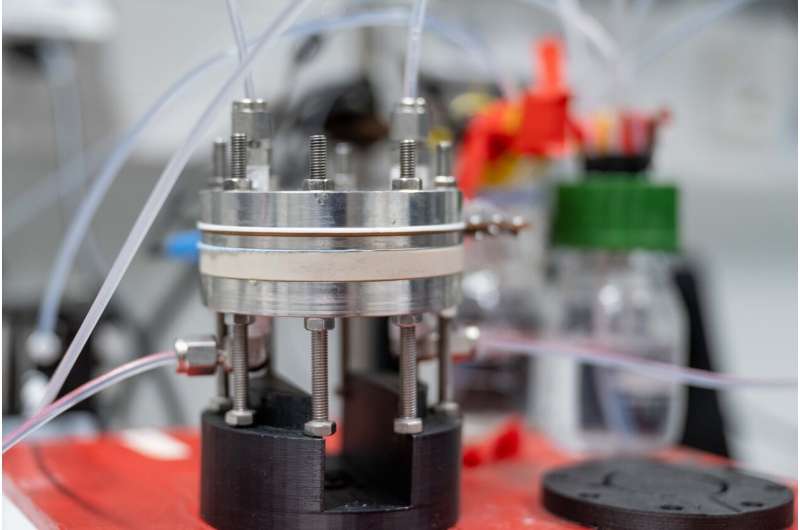
With this electrolysis cell, the researchers showed that homogeneous catalysts can be used for CO2 conversion. Credit: RUB, Marquard
Research groups around the world are developing technologies to convert carbon dioxide (CO2) into raw materials for industrial applications. Most experiments under industrially relevant conditions have been carried out with heterogeneous electrocatalysts, i.e., catalysts that are in a different chemical phase to the reacting substances. However, homogeneous catalysts, which are in the same phase as the reactants, are generally considered to be more efficient and selective. To date, there haven’t been any set-ups where homogeneous catalysts could be tested under industrial conditions.
A team headed by Kevinjeorjios Pellumbi and Professor Ulf-Peter Apfel from Ruhr University Bochum and the Fraunhofer Institute for Environmental, Safety and Energy Technology UMSICHT in Oberhausen has now closed this gap. The researchers outlined their findings in the journal Cell Reports Physical Science. The article was published on December 13, 2023.
“Our work aims to push the boundaries of technology in order to establish an efficient solution for CO2 conversion that will transform the climate-damaging gas into a useful resource,” says Ulf-Peter Apfel. His group collaborated with the team led by Professor Wolfgang Schöfberger from the Johannes Kepler University Linz and researchers from the Fritz Haber Institute in Berlin.
Efficiency and long-lasting stability
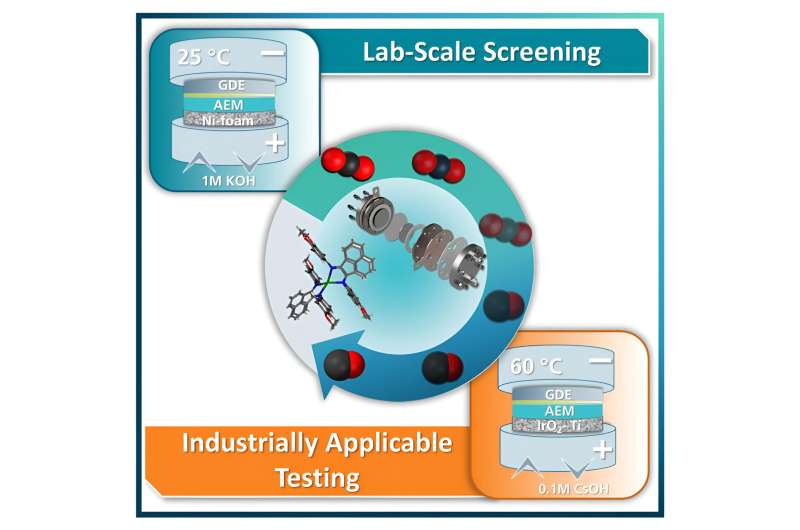
The team explored the conversion of CO2 using electrocatalysis. In the process, a voltage source supplies electrical energy, which is fed to the reaction system via electrodes and drives the chemical conversions at the electrodes. A catalyst facilitates the reaction; in homogeneous electrocatalysis, the catalyst is usually a dissolved metal complex. In a so-called gas diffusion electrode, the starting material CO2 flows past the electrode, where the catalysts convert it into carbon monoxide. The latter, in turn, is a common starting material in the chemical industry.
The researchers integrated the metal complex catalysts into the electrode surface without bonding them to it chemically. They showed that their system could efficiently convert CO2: It generated current densities of more than 300 milliamperes per square centimeter. Moreover, the system remained stable for over 100 hours without showing any signs of decay.
All this means that homogeneous catalysts can generally be used for electrolysis cells. “However, they do require a specific electrode composition,” says Ulf-Peter Apfel. More specifically, the electrodes must enable direct gas conversion without solvents so that the catalyst isn’t leached from the electrode surface. Contrary to what is often described in specialist literature, there’s no need for a carrier material that chemically couples the catalyst to the electrode surface.
“Our findings open up the possibility of testing and integrating high-performance and easily variable homogeneous electrocatalysts in application scenarios for electrochemical processes,” concludes Apfel.
More information:
Kevinjeorjios Pellumbi et al, Pushing the Ag-loading of CO2 electrolyzers to the minimum via molecularly tuned environments, Cell Reports Physical Science (2023). DOI: 10.1016/j.xcrp.2023.101746
Provided by
Ruhr-Universitaet-Bochum
Citation:
Research team designs a novel catalyst system for CO₂ conversion (2023, December 21)
retrieved 31 December 2023
from https://phys.org/news/2023-12-team-catalyst-conversion.html
This document is subject to copyright. Apart from any fair dealing for the purpose of private study or research, no
part may be reproduced without the written permission. The content is provided for information purposes only.