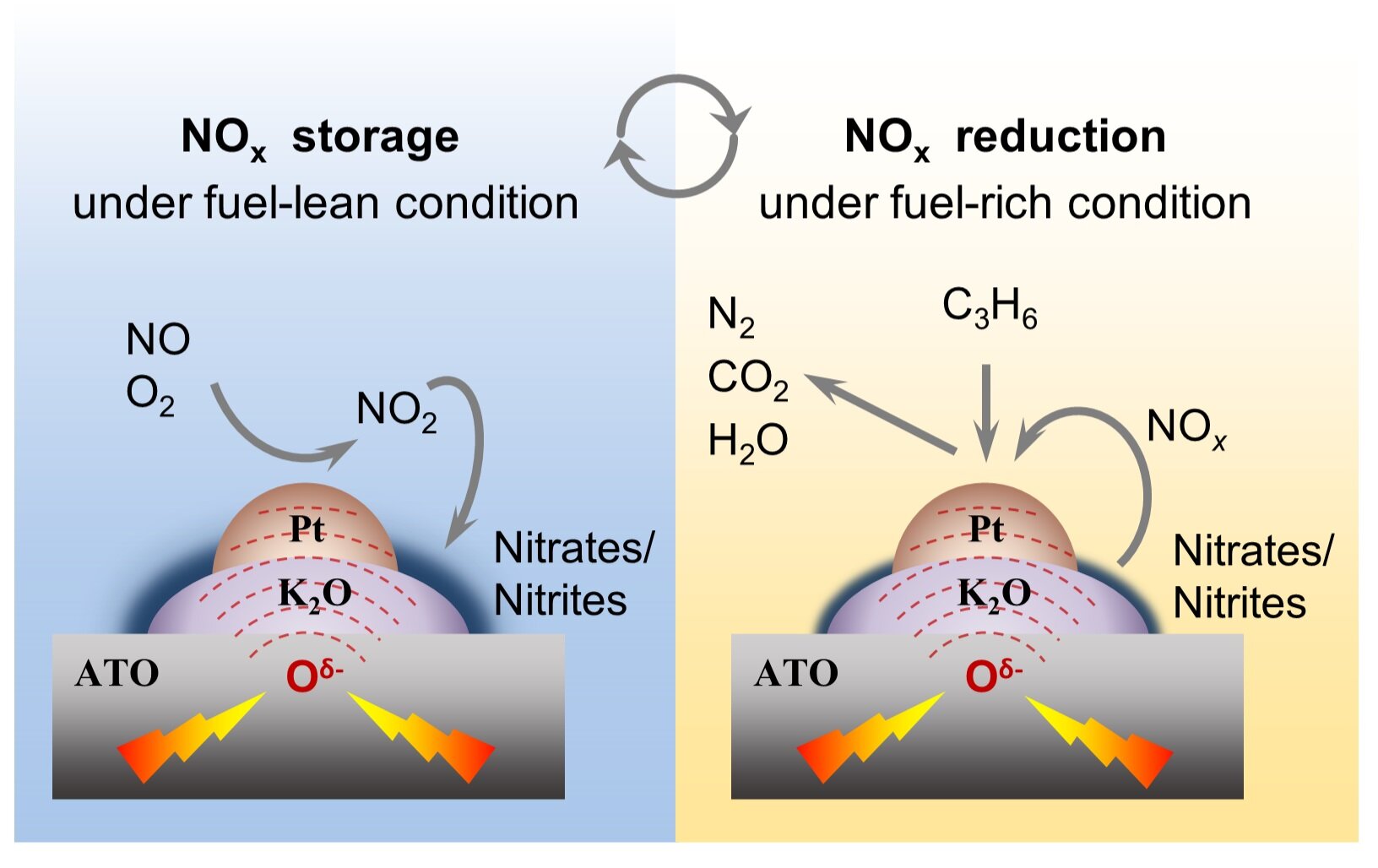
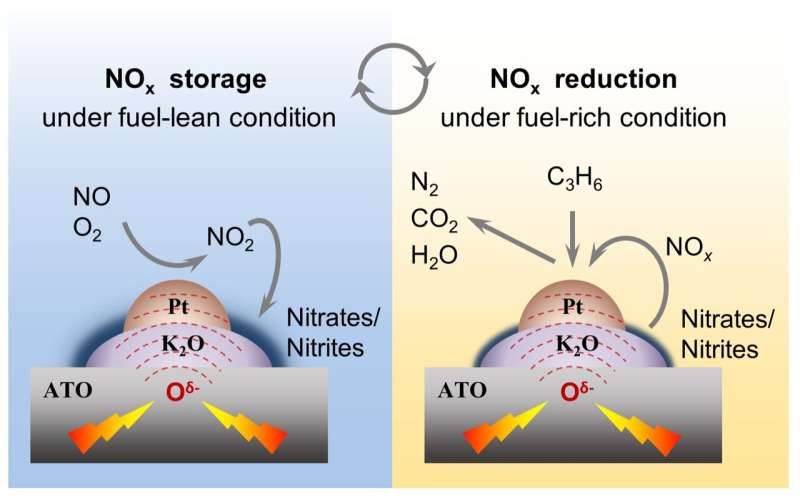
The procedure of electrified NOx storage–reduction. Credit: NIMTE
Prof. Zhang Jian’s group from the Ningbo Institute of Materials Technology and Engineering of the Chinese Academy of Sciences, cooperating with Prof. Zhang Zhaoliang’s group from University of Jinan, has developed a novel electrification strategy to improve NOx pollutant removal performance at low temperatures.
The study was published in Environmental Science & Technology. NOx storage reduction (NSR) is a promising approach to control NOx emissions from diesel vehicles, thus to address the growing global energy crisis and climate change.
However, due to the improvement of engine technologies and frequent idling in traffic, the exhaust temperatures are usually below 250 ℃, which is too low for catalytic NOx conversion to occur.
To address this issue, the researchers developed a novel electrified NSR strategy. Pt and K co-supported antimony-doped tin oxides (Pt-K/ATO) serve as conductive catalysts. Using C3H6 as a reductant, a low input power (0.5-4 W) was applied to the catalyst to trigger NSR reactions.
With this strategy, the ignition temperature for 10% NOx conversion was reduced to 165 °C, which is nearly 100 °C lower than that of the traditional thermal counterpart.
To optimize the power configuration, the fuel-lean power was reduced, resulting in a 23% increase in the maximum energy efficiency.
In addition, the electrically driven release of lattice oxygen from the catalysts is shown to play crucial roles in the NSR reactions, including promoting NO oxidation for NOx adsorption, O2 evolution for NOx desorption, as well as C3H6 activation for NOx reduction, thus greatly improving the NSR performance.
As reported in the previous work of the research group, this effect has also been applied to catalytic soot combustion, demonstrating its certain universality.
This electrification strategy may shed light on the design of hybrid vehicles, especially on developing electronic control units, since the electric power input can be adjusted in real-time to reduce exhaust pollutants.
More information:
Xueyi Mei et al, Electrification-Enhanced Low-Temperature NOx Storage–Reduction on Pt and K Co-Supported Antimony-Doped Tin Oxides, Environmental Science & Technology (2023). DOI: 10.1021/acs.est.3c05354
Provided by
Chinese Academy of Sciences
Citation:
Novel electrification strategy enhances low-temperature NOx removal (2023, December 29)
retrieved 29 December 2023
from https://phys.org/news/2023-12-electrification-strategy-low-temperature-nox.html
This document is subject to copyright. Apart from any fair dealing for the purpose of private study or research, no
part may be reproduced without the written permission. The content is provided for information purposes only.
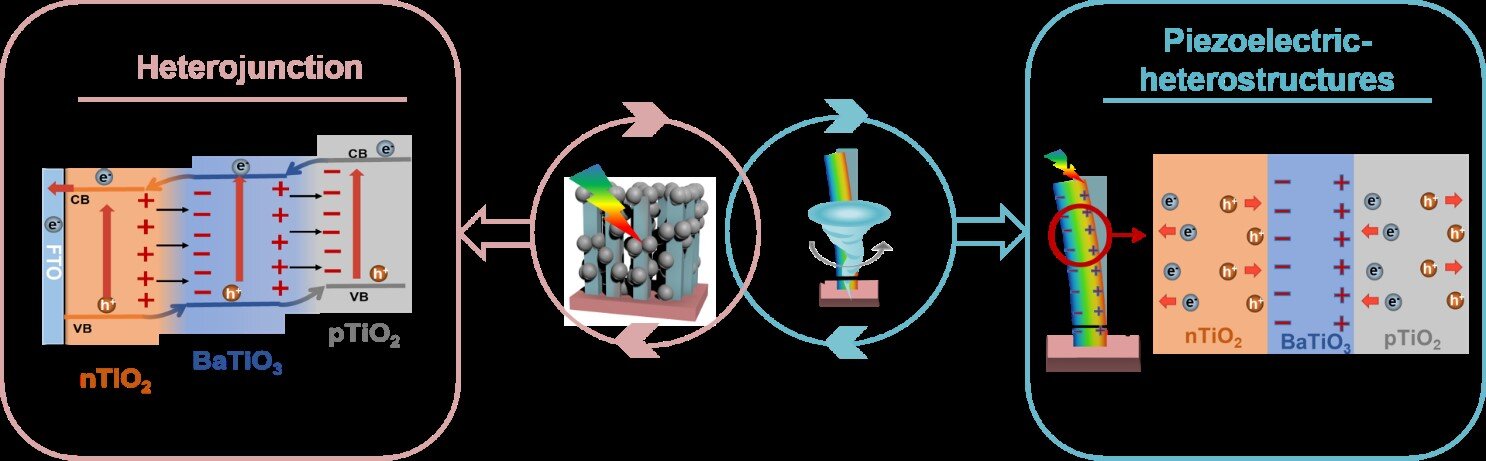
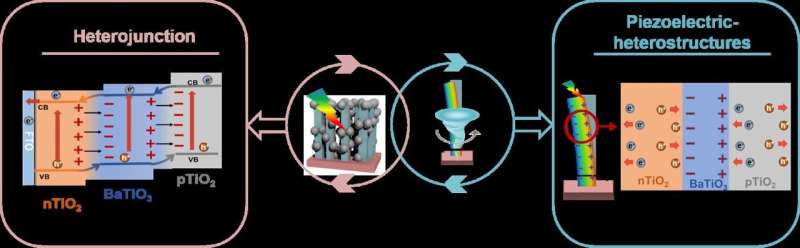
The formed built-in electric field and polarized-induced electric field at the interface of heterojunction to promote carrier separation. Credit: M. Ai et al
Photoelectrochemical (PEC) water splitting is a potentially feasible strategy for converting solar energy to green hydrogen. However, current PEC systems suffer from relatively low charge separation efficiency and sluggish water oxidation reaction, which prevent them from meeting the needs of practical applications. The main bottleneck like in achieving effective charge spatial separation, which is crucial for achieving efficient solar-to-hydrogen conversion.
Heterojunction engineering is one of the most promising methods for spatial charge separation, yet the carrier separation efficiency of heterojunction remains limited due to energy band matching or interfacial and structural compatibility between different semiconductors. Meanwhile, the construction of p-n homojunction by finely controlling dopant or defect in semiconductors has been proven to be feasible, but the phenomenon that neutralizes the interfacial electric field through rapid accumulation of carriers during transfer process is largely negligible.
To that end, a team of researchers from the School of Chemical Engineering and Technology at Tianjin University, designed a unique n-TiO2/BaTiO3/p-TiO2 heterojunction which couples with piezoelectric effect and p-n junctions to overcome the charge separation and transfer limitation of p-n junction.
“In our designed heterojunction, the ferroelectric BaTiO3 layer is between n-TiO2 with oxygen vacancies and p-TiO2 with titanium vacancies,” shares Minhua Ai, lead author of the study published in the journal Green Energy & Environment. “Consequently, the TBT3 achieves a prominent photocurrent density which is 2.4- and 1.5-times higher than TiO2 and TiO2–BaTiO3 heterojunction, respectively.”
Notably, driven by mechanical deformation, a stable polarized electric field formed in ferroelectric BaTiO3 can further regulate built-in electric fields based on comprehensive characterizations of charge carrier behaviors in such a multi-heterojunction. And n-TiO2/BaTiO3/p-TiO2 heterojunction achieve piezoelectric-enhanced PEC performance (2.84 times higher than TiO2 at 1.23 V vs. RHE).
“Based on the coupling with piezoelectric effect and p-n junctions, our work provides a piezoelectric polarization strategy for modulating the built-in electric field of heterojunction for charge separation enhancement,” adds senior and corresponding author Lun Pan.
More information:
Minhua Ai et al, Piezoelectric-enhanced n-TiO2/BaTiO3/p-TiO2 heterojunction for highly efficient photoelectrocatalysis, Green Energy & Environment (2023). DOI: 10.1016/j.gee.2023.12.001
Provided by
KeAi Communications Co.
Citation:
Piezoelectric-enhanced p-n junctions in photoelectrochemical systems (2023, December 29)
retrieved 29 December 2023
from https://phys.org/news/2023-12-piezoelectric-enhanced-p-n-junctions-photoelectrochemical.html
This document is subject to copyright. Apart from any fair dealing for the purpose of private study or research, no
part may be reproduced without the written permission. The content is provided for information purposes only.
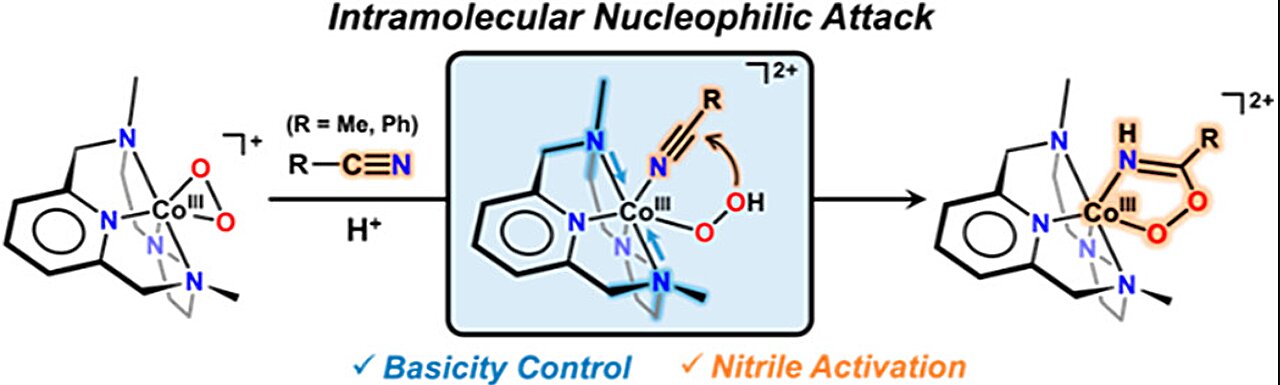
Credit: JACS Au (2023). DOI: 10.1021/jacsau.3c00532
A research team, affiliated with UNIST has unveiled a novel method to produce a selective anticancer precursor substance that targets and eliminates cancer cells. This groundbreaking method, previously existing only in theory, has now been experimentally proven for the first time, opening up new possibilities in the development of innovative drugs through extensive research on the effects of anticancer precursors on the human body.
Led by Professor Jaeheung Cho of the Department of Chemistry at UNIST, the research team has successfully demonstrated that the synthesis of hydroxymato cobalt (III), a potential candidate substance for anticancer precursors, involves the reaction of metal-active oxygen species with nitrile. Unlike previous studies that relied on expensive heavy metals, this new method utilizes cost-effective metals and operates at lower temperatures.
Nitrile, a compound widely used in pharmaceuticals and agricultural pesticides, has proven challenging to synthesize. However, the research team has now confirmed that the reaction between nitriles and cobalt-hydroperoxo species, a type of metal-active oxygen species, leads to the synthesis of peroxyimidateto cobalt (III). This finding reveals that peroxyimidateto cobalt (III) is an intermediate substance formed during the chemical reaction, ultimately producing hydroxymiteto cobalt (III).
To synthesize cobalt (III)-peroxyimidato complexes, the research team introduced a new species known as acobalt(III)-hydroperoxo specifications. Remarkably, they discovered that the reaction occurs when -hydroperoxo is nucleophilic-attacked with nitrile. Moreover, it was observed that the addition of a base to peroxymidato cobalt (III) transforms it into hydroxymito cobalt (III), enabling the synthesis of precursors.
The research team placed particular emphasis on the significance of the basicity of metal-dioxygen specifications, specifically the metal-(hydro)peroxo [M–O2(H)] complex species. By controlling the atoms bound to the cobalt-hydroperoxo species that did not react with nitrile, they successfully increased basicity, thereby enabling rapid reactions even at low temperatures.
To further investigate the structural aspects of cobalt(III)-hydroperoxo specifications, the research team employed computational chemistry simulations, which leverage the power of computer computing to analyze chemical phenomena. These simulations highlighted the impact of changes in the combination of atoms on the structure of cobalt(III)-hydroperoxo specifications, reaffirming the crucial role of basicity.
Professor Cho stated, “This research unveils the underlying mechanisms of metal-active oxygen species in activating nitrile, serving as a foundation for the future development of catalysts capable of activating nitrile.”
More information:
Yeongjin Son et al, Mechanistic Insights into Nitrile Activation by Cobalt(III)–Hydroperoxo Intermediates: The Influence of Ligand Basicity, JACS Au (2023). DOI: 10.1021/jacsau.3c00532
Provided by
Ulsan National Institute of Science and Technology
Citation:
Breakthrough in nitrile activation is promising pathway for anticancer precursor synthesis (2023, December 29)
retrieved 29 December 2023
from https://phys.org/news/2023-12-breakthrough-nitrile-pathway-anticancer-precursor.html
This document is subject to copyright. Apart from any fair dealing for the purpose of private study or research, no
part may be reproduced without the written permission. The content is provided for information purposes only.
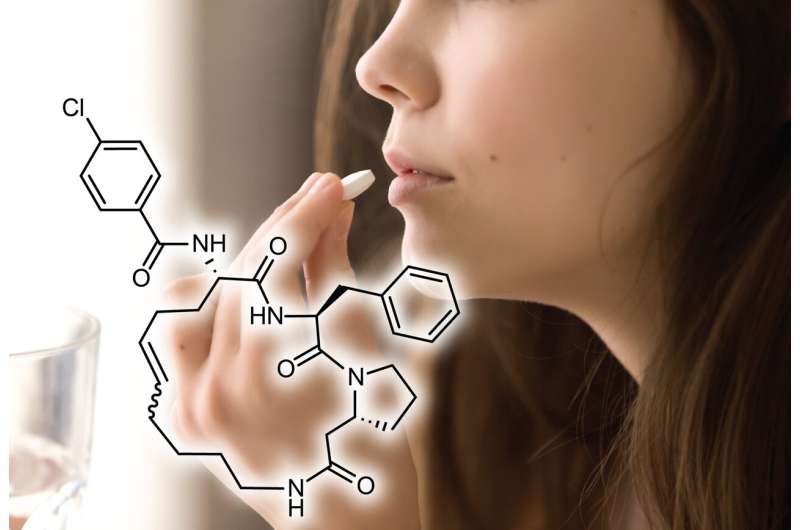
Graphical abstract of cyclic oral peptides. Credit: Christian Heinis/EPFL
For decades, a substantial number of proteins, vital for treating various diseases, have remained elusive to oral drug therapy. Traditional small molecules often struggle to bind to proteins with flat surfaces or require specificity for particular protein homologs. Typically, larger biologics that can target these proteins demand injection, limiting patient convenience and accessibility.
In a new study published in Nature Chemical Biology, scientists from the laboratory of Professor Christian Heinis at EPFL have achieved a significant milestone in drug development. Their research opens the door to a new class of orally available drugs, addressing a long-standing challenge in the pharmaceutical industry.
“There are many diseases for which the targets were identified but drugs binding and reaching them could not be developed,” says Heinis. “Most of them are types of cancer, and many targets in these cancers are protein-protein interactions that are important for the tumor growth but cannot be inhibited.”
The study focused on cyclic peptides, which are versatile molecules known for their high affinity and specificity in binding challenging disease targets. At the same time, developing cyclic peptides as oral drugs has proven difficult because they are rapidly digested or poorly absorbed by the gastrointestinal tract.
“Cyclic peptides are of great interest for drug development as these molecules can bind to difficult targets for which it has been challenging to generate drugs using established methods,” says Heinis. “But the cyclic peptides cannot usually be administered orally—as a pill—which limits their application enormously.”
Cyclizing breakthrough
The research team targeted the enzyme thrombin, which is a critical disease target because of its central role in blood coagulation; regulating thrombin is key to preventing and treating thrombotic disorders like strokes and heart attacks.
To generate cyclic peptides that can target thrombin and are sufficiently stable, the scientists developed a two-step combinatorial synthesis strategy to synthesize a vast library of cyclical peptides with thioether bonds, which enhance their metabolic stability when taken orally.
“We have now succeeded in generating cyclic peptides that bind to a disease target of our choice and can also be administered orally,” says Heinis. “To this end, we have developed a new method in which thousands of small cyclic peptides with random sequences are chemically synthesized on a nanoscale and examined in a high-throughput process.”
Two steps, one pot
The new method process involves two steps, and takes place in the same reactive container, a feature that chemists refer to as “one pot.”
The first step is to synthesize linear peptides, which then undergo a chemical process of forming a ring-like structure—in technical terms, being “cyclized.” This is done with using “bis-electrophilic linkers”—chemical compounds used to connect two molecular groups together—to form stable thioether bonds.
In the second phase, the cyclized peptides undergo acylation, a process that attaches carboxylic acids to them, further diversifying their molecular structure.
The technique eliminates the need for intermediate purification steps, allowing for high-throughput screening directly in the synthesis plates, combining the synthesis and screening of thousands of peptides to identify candidates with high affinity for specific disease targets—in this case, thrombin.
Using the method, the Ph.D. student leading the project, Manuel Merz, was able to generate a comprehensive library of 8,448 cyclic peptides with an average molecular mass of about 650 Daltons (Da), only slightly above the maximum limit of 500 Da recommended for orally-available small molecules.
The cyclic peptides also showed a high affinity for thrombin.
When tested on rats, the peptides showed oral bioavailability up to 18%, which means that when the cyclic peptide drug is taken orally, 18% of it successfully enters the bloodstream, and to have a therapeutic effect. Considering that orally-administered cyclic peptides generally show a bioavailability below 2%, increasing that number to 18% is a substantial advance for drugs in the biologics category—which includes peptides.
Setting targets
By enabling the oral availability of cyclic peptides, the team has opened up possibilities for treating a range of diseases that have been challenging to address with conventional oral drugs. The method’s versatility means it can be adapted to target a wide array of proteins, potentially leading to breakthroughs in areas where medical needs are currently unmet.
“To apply the method to more challenging disease targets, such as protein-protein interactions, larger libraries will likely need to be synthesized and studied,” says Manuel Merz. “By automating further steps of the methods, libraries with more than one million molecules seem to be within reach.”
In the next step of this project, the researchers will target several intracellular protein-protein interaction targets for which it has been difficult to develop inhibitors based on classical small molecules. They are confident that orally applicable cyclic peptides can be developed for at least some of them.
More information:
Alexander L. Nielsen, De novo development of small cyclic peptides that are orally bioavailable, Nature Chemical Biology (2023). DOI: 10.1038/s41589-023-01496-y
Provided by
Ecole Polytechnique Federale de Lausanne
Citation:
Oral peptides: A new era in drug development (2023, December 28)
retrieved 29 December 2023
from https://phys.org/news/2023-12-oral-peptides-era-drug.html
This document is subject to copyright. Apart from any fair dealing for the purpose of private study or research, no
part may be reproduced without the written permission. The content is provided for information purposes only.
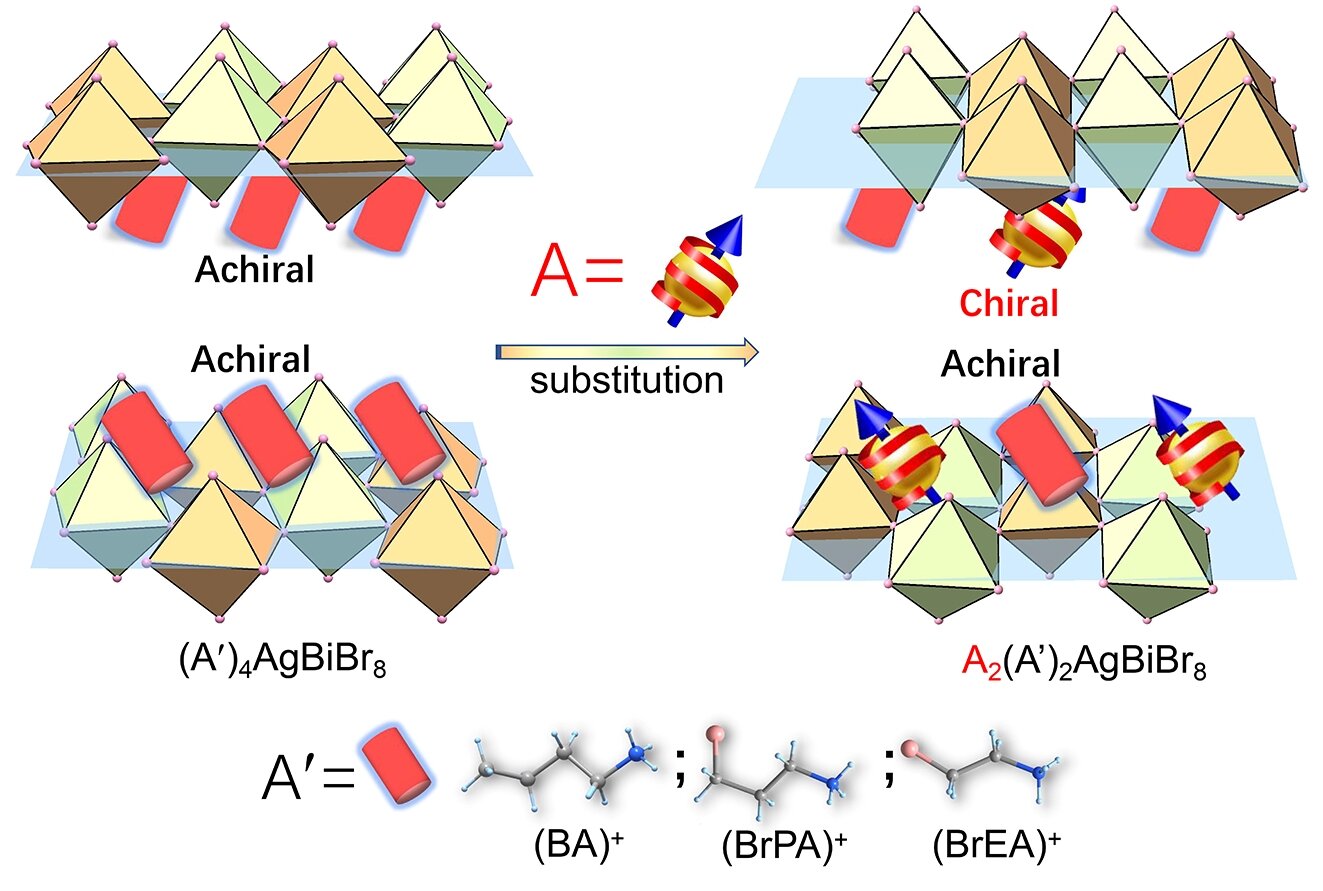
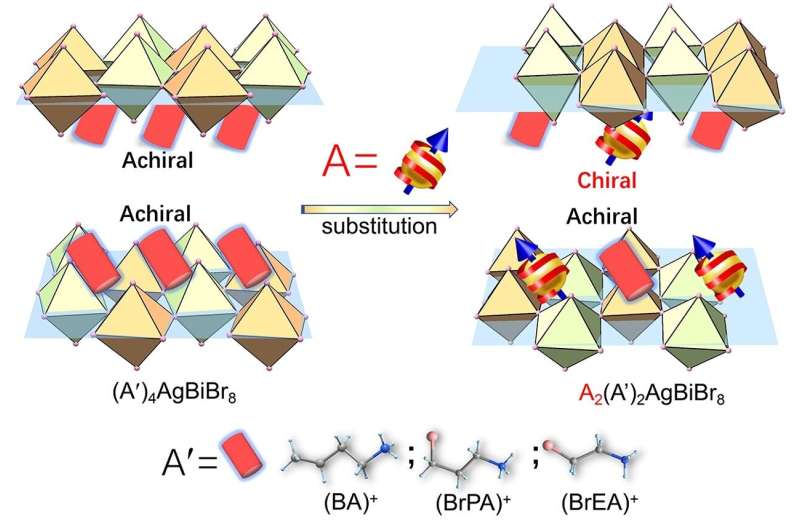
Schematic diagram of achiral-chiral cation intercalation strategy for designing a series of chiral lead-free halide double perovskites. Credit: Prof. Luo’s group
Chiral optical materials have attracted great attention in multiple disciplines due to their wide application value in fields such as remote sensing, three-dimensional display, information communication, and optical information storage. With the strong demand for stable and environmentally-friendly materials, two-dimensional, chiral, lead-free halide double perovskites are expected to generate rich chiroptical and optoelectronic properties.
However, chiral lead-free double perovskites are rare. The main challenge is that there is only one kind of organic cation A in the interlayer of double perovskites A4BIBIIIX8 (A is organic cation, BI and BIII are metallic cations, X is halogen) and the selective domain of chiral cations A in double perovskites is limited by the width of organic interlayer.
In a study published in Chem, a research group led by Prof. Luo Junhua from Fujian Institute of Research on the Structure of Matter of the Chinese Academy of Sciences proposed achiral-chiral cation intercalation strategy to rationally design a series of new enantiomeric lead-free halide double perovskites with asymmetric and chiral bifunctional features.
Through the strategy of achiral-chiral cation intercalation, the researchers realized charge conservation and overall steric hindrance balance. The arrangement of the original intercalated cations was changed from a single cations A to diverse cations A+A¢, wherein A’ represents abundant achiral cations.
The researchers then synthesized six new enantiomeric lead-free halide double perovskites (R/S-PPA)2(BA)2AgBiBr8, (R/S-PPA)2(BrPA)2AgBiBr8 and (R/S-PPA)2(Br-EA)2AgBiBr8, demonstrating the feasibility of this synthesis strategy.
Single crystal X-ray diffraction analysis showed that achiral and chiral cations arrange alternately and connect with diverse non-covalent intermolecular interactions such as CH···π, π···π, CH···Br. These interactions make the chiral organic cations and achiral organic cations coexist stably and harmoniously in chiral halide double perovskites.
Further analysis showed that chiral compounds may prefer to possess a more distorted structure because of their natural asymmetric features. Larger structural distortions generally result in lower crystal symmetries, inducing asymmetry breaking and thus pave the way for the generation of circular dichroism (CD) and second harmonic generation (SHG) signals.
Taking compounds (R/S-PPA)2(Br-EA)2AgBiBr8 as examples, the researchers found that they present strong nonlinear optical response up to two-times that of state-of-the-art KH2PO4 nonlinear crystals, and robust circular dichroism signals in the visible region.
This study provides a new approach to exploring chiral lead-free halide double perovskites.
More information:
Tingting Zhu et al, Rational design of enantiomeric lead-free double perovskites by achiral-chiral cation intercalation, Chem (2023). DOI: 10.1016/j.chempr.2023.11.010
Journal information:
Chem
Provided by
Chinese Academy of Sciences
Citation:
Enantiomeric lead-free double perovskites rationally designed by achiral-chiral cation intercalation (2023, December 28)
retrieved 29 December 2023
from https://phys.org/news/2023-12-enantiomeric-lead-free-perovskites-rationally-achiral-chiral.html
This document is subject to copyright. Apart from any fair dealing for the purpose of private study or research, no
part may be reproduced without the written permission. The content is provided for information purposes only.
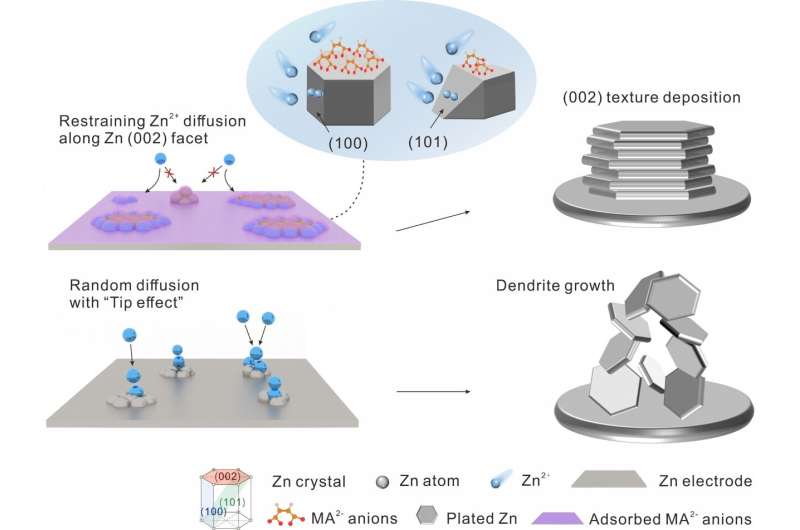
The schematic diagrams for Zn deposition in different electrolytes. Credit: Li Zhaoqian
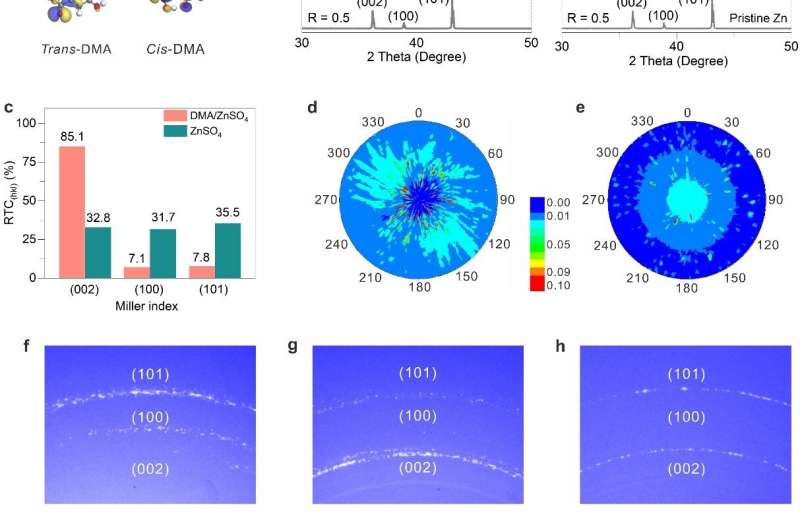
According to a study published in Advanced Functional Materials, a research team led by Prof. Hu Linhua from the Hefei Institutes of Physical Science of the Chinese Academy of Sciences found that adding disodium maleate (DMA) to the electrolyte of aqueous zinc-ion batteries would lead to the growth of the preferred Zn (002) texture, which could effectively inhibit the growth of zinc (Zn) dendrite and improve the reversibility and cyclability of batteries.
“This means that the DMA can stop harmful zinc dendrites from growing and improve the ability of batteries to be recharged and used multiple times,” said Dr. Li Zhao Qian, a member of the team.
Today, aqueous zinc-ion batteries (AZIBs) have attracted widespread attention for their safety, reliability, and cost-effectiveness. Strong Zn dendrite growth and severe side reactions have become the main obstacles to the widespread commercialization of AZIBs.
The Zn (002) crystal plane has a smooth surface atomic arrangement, uniform interfacial charge density and low surface energy, which favors the uniform Zn2+ deposition and better anticorrosion performance. Therefore, tuning the states of the plated Zn crystal holds great promise for achieving highly stable and reversible metal anodes.
In this study, the researchers have developed an electrocrystallization strategy to induce Zn (002) texture growth. The adsorption of DMA induces Zn (002) texture growth and inhibits harmful side reactions.
“When we tested the battery, it was able to work for over 3,200 hours, even when used at high power levels,” said Dr. LI Zhaoqian.
The characterization of Zn (002) texture. Credit: Li Zhaoqian
They tested it under harsh conditions of 30 mA cm-2 and 30 mAh cm-2, and the Zn anode exhibits an ultra-long cycle life of 120 hours.
They also tested the battery with different materials and found that it worked well with them, even after many cycles. They assembled Zn//Cu batteries with an average Coulomb efficiency of 99.81% after 3,000 cycles. Meanwhile, the Zn//NH4V4O10 full battery delivers a long-term stability with capacity retention of 92.3% after 10,000 cycles.
This study tailors the migration behavior of Zn2+ at different crystal planes by adsorbed DMA molecular layer to induce Zn (002) crystal growth, which provides a promising strategy to achieve the dominant texture of zinc anode at the molecular level, and should be expected to be applied to other metal anodes.
More information:
Tingting Wei et al, Building Near‐Unity Stacked (002) Texture for High‐Stable Zinc Anode, Advanced Functional Materials (2023). DOI: 10.1002/adfm.202312506
Provided by
Chinese Academy of Sciences
Citation:
Novel strategy stabilizes zinc-ion batteries (2023, December 28)
retrieved 29 December 2023
from https://phys.org/news/2023-12-strategy-stabilizes-zinc-ion-batteries.html
This document is subject to copyright. Apart from any fair dealing for the purpose of private study or research, no
part may be reproduced without the written permission. The content is provided for information purposes only.
Spices and other plant-derived products contain many active components, such as polyphenols and flavonoids. However, even the slightest variations in conditions can considerably affect the extraction efficiency of these active components, posing challenges in determining the exact quantity of active components in the extract solution.
In a new study published in Food Chemistry, researchers comprehensively measured the fluorescence emitted by polyphenols and flavonoids and analyzed the acquired data using machine learning methods. This approach yielded a highly accurate, simple, and rapid method of estimating the total polyphenol and flavonoid contents and antioxidant capacity.
The crucial factor in achieving accuracy was to integrate measurements acquired at multiple concentrations. While the conventional practice during measuring fluorescence involves diluting the sample to a single concentration, the wide variation in component amounts in plant extracts renders determining a universally suitable dilution concentration.
Consequently, the researchers conducted exhaustive fluorescence measurements at four different dilution levels and integrated this data into the machine learning process.
Therefore, machine learning was able to accurately estimate important indices for evaluating spice extracts, including the total polyphenol content, total flavonoid content, antioxidant capacity, and reducing capacity. Notably, the optical measurement’s estimation of total flavonoid content, in particular, represents a groundbreaking achievement, marking the effectiveness of this method where such estimations have not been conducted optically in the past.
More information:
Thi Bao Chau Bui et al, Utilization of multiple-dilution fluorescence fingerprint facilitates prediction of chemical attributes in spice extracts, Food Chemistry (2023). DOI: 10.1016/j.foodchem.2023.138028
Provided by
University of Tsukuba
Citation:
Light measurement enables estimation of the chemical attributes of spice extracts (2023, December 27)
retrieved 29 December 2023
from https://phys.org/news/2023-12-enables-chemical-attributes-spice.html
This document is subject to copyright. Apart from any fair dealing for the purpose of private study or research, no
part may be reproduced without the written permission. The content is provided for information purposes only.
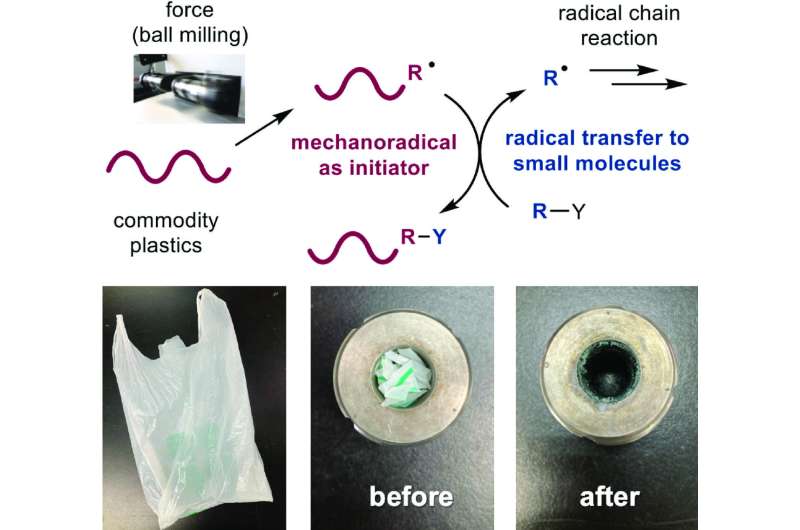
(Top) General scheme for using mechanical force to trigger a radical chain reaction. (Bottom) Shreds of a grocery bag were utilized to initiate a reaction in a ball mill jar. Credit: Koji Kubota et al, Journal of the American Chemical Society (2023). DOI: 10.1021/jacs.3c12049
Single-use plastics are a major environmental concern, but now, rather than being disposed of as garbage, used plastic bags from the grocery store could be utilized to carry out a reaction that can detoxify hazardous chemicals.
A team led by researchers at the Institute for Chemical Reaction Design and Discovery (WPI-ICReDD), Hokkaido University has developed a method that uses common plastic materials instead of potentially explosive compounds to initiate radical chain reactions.
This approach significantly increases the safety of the process while also providing a way to reuse common plastics such as polyethylene and polyvinyl acetate. These findings have been published in the Journal of the American Chemical Society.
Researchers utilized a ball mill, a machine that rapidly shakes a steel ball inside a steel jar to mix solid chemicals. When the ball slams into the plastic, the mechanical force breaks a chemical bond to form radicals, which have a highly reactive, unbonded electron. These radicals facilitated a self-sustaining chain reaction that promotes dehalogenation—the replacement of a halogen atom with a hydrogen atom—of organic halides.
“The use of commodity plastics as chemical reagents is a completely new perspective on organic synthesis,” said Associate Professor Koji Kubota. “I believe that this approach will lead to not only the development of safe and highly efficient radical-based reactions, but also to a new way to utilize waste plastics, which are a serious social problem.”
The reuse of waste plastic was demonstrated by adding plastic shreds of a common grocery bag to the ball mill jar and successfully carrying out the reaction. The team also showed their method could be applied to the treatment of highly toxic polyhalogenated compounds, which are widely used in industry. Polyethylene was employed to initiate a radical reaction that removed multiple halogen atoms from a compound commonly used as a flame retardant, thus reducing its toxicity.
Researchers anticipate this method will garner the attention of industry due to advantages in cost and safety.
“Our new approach using stable, cheap and abundant plastic materials as initiators for radical chain reactions holds the significant potential to foster the development of industrially attractive, safe and highly efficient chemical processes,” commented Professor Hajime Ito.
More information:
Koji Kubota et al, Using Mechanochemistry to Activate Commodity Plastics as Initiators for Radical Chain Reactions of Small Organic Molecules, Journal of the American Chemical Society (2023). DOI: 10.1021/jacs.3c12049
Provided by
Hokkaido University
Citation:
Reusing plastic waste to kickstart radical chain reactions, improving process safety and efficiency (2023, December 27)
retrieved 29 December 2023
from https://phys.org/news/2023-12-reusing-plastic-kickstart-radical-chain.html
This document is subject to copyright. Apart from any fair dealing for the purpose of private study or research, no
part may be reproduced without the written permission. The content is provided for information purposes only.
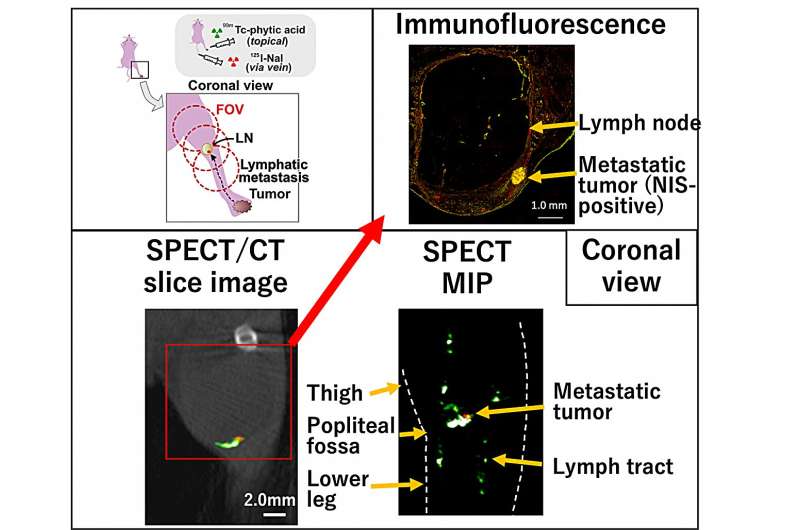
A schematic diagram of the animal experiments conducted in this study. (Upper left box) SPECT imaging was performed four weeks after 4T1-mNIS cancer cells were implanted in the foot pad. The red dashed circles indicate the field of view for SPECT. The tracer for lymphatic channels and nodes, 99mTc-phytate, was topically administered in the foot pad, and the tumor tracer 125I -NaI was administered intravenously. (Bottom box) The left image shows a SPECT/CT image of the lymph node and its surrounding. Photons from 125I (25-30 keV) are colored in red and those from 99mTc (138-142 keV) are colored in green. The right image shows a SPECT projection image. The green tubular structure by 99mTc-phytate indicates lymphatic vessels, and the small red (125I -NaI) spots on the lymphatic vessels indicates the metastatic tumors. (Upper right box) An immunofluorescence image shows a NIS-positive (yellow) metastatic tumor less than 1 mm in size within the lymph node. This location is consistent with the location of the tumor shown in the SPECT/CT image in the lower left image. Credit: Yagishita et al.
Researchers have shown it is possible to image small animal tissue clearly to several hundred micrometers using multi-probe imaging, reports a recent study in Scientific Reports.
This technique could be useful in various fields of medical research because it enables researchers to observe the microstructure of small animal tissues and clarify the localization and interaction of multiple molecules such as microscopic metastatic lesions of cancer cells.
Single-photon emission tomography (SPECT) is currently used for molecular imaging in both animals and humans. However, the technology faces several limitations, including relatively low spatial resolution and challenges associated with the simultaneous use of multiple probes.
A team of researchers, led by Kavli Institute for the Physics and Mathematics of the Universe (Kavli IPMU) Project Assistant Professors and National Cancer Center Center for Advanced Biomedical Research and Development (NCCER) Visiting Researcher Atsushi Yagishita and Shin’ichiro Takeda, and involving researchers from Kavli IPMU, NCCER, and Keio University, resolved these problems using a SPECT system equipped with a cadmium telluride (CdTe) semiconductor detector that was previously used for space observations.
This device was initiated in development by High Energy Accelerator Research Organization Professor Emeritus Hirotaka Sugawara, Kavli IPMU’s Specially Appointed Assistant Professor Shin’ichiro Takeda and Tadashi Orita, and others during their tenure at the Okinawa Institute of Science and Technology Graduate University (OIST). There, by applying the spectral analysis methods used in the analysis of astronomical observation data, they succeeded in obtaining high spatial resolution images for each of the multiple radioactive nuclide probes used simultaneously (Takeda et al., IEEE TRPMS 2023).
A schematic diagram of the animal experiments conducted in this study. (Upper left box) SPECT imaging was performed four weeks after 4T1-mNIS cancer cells were implanted in the foot pad. The red dashed circles indicate the field of view for SPECT. The tracer for lymphatic channels and nodes, 99mTc-phytate, was topically administered in the foot pad, and the tumor tracer 125I -NaI was administered intravenously. (Bottom box) The left image shows a SPECT/CT image of the lymph node and its surroundings. Photons from 125I (25-30 keV) are colored in red and those from 99mTc (138-142 keV) are colored in green. The right image shows a SPECT projection image. The green tubular structure by 99mTc-phytate indicates lymphatic vessels, and the small red (125I -NaI) spots on the lymphatic vessels indicates the metastatic tumors. (Upper right box) An immunofluorescence image shows a NIS-positive (yellow) metastatic tumor less than 1 mm in size within the lymph node. This location is consistent with the location of the tumor shown in the SPECT/CT image in the lower left image. Credit: Yagishita et al.
Using the device, the researchers this time performed SPECT imaging of submillimeter zeolite spheres absorbed with 125I- and subsequently imaged 125I-accumulated spheroids, cells that aggregates to form a sphere-like shape, which were 200–400 μm in size within an hour. They successfully captured clear and quantitative images. Furthermore, their dual-radionuclide phantom imaging revealed a distinct image of the submillimeter sphere absorbed with 125I- immersed in a 99mTc-pertechnetate solution, and provided a fair quantification of each radionuclide.
Then, the team performed in vivo imaging on a cancer-bearing mouse with lymph node micro-metastasis using dual-tracers. The results displayed dual-tracer images of lymph tract by 99mTc-phytic acid and the submillimeter metastatic lesion by 125I-, shown to align with the immunofluorescence image.
The researchers say their method could provide benefits to biological research, pharmaceutical research, and medical research.
More information:
Atsushi Yagishita et al, Dual-radionuclide in vivo imaging of micro-metastasis and lymph tract with submillimetre resolution, Scientific Reports (2023). DOI: 10.1038/s41598-023-46907-1
Provided by
Kavli Institute for the Physics and Mathematics of the Universe (Kavli IPMU)
Citation:
Development of tissue molecular imaging technique using multiple probes at hundreds of microns (2023, December 27)
retrieved 29 December 2023
from https://phys.org/news/2023-12-tissue-molecular-imaging-technique-multiple.html
This document is subject to copyright. Apart from any fair dealing for the purpose of private study or research, no
part may be reproduced without the written permission. The content is provided for information purposes only.
A new study has compared the reinforcing efficiency of pineapple leaf fiber (PALF) and cultivated flax fiber in poly(butylene succinate) composites. PALF, a less explored but potentially sustainable alternative, outperformed flax at 20 wt.%, showcasing its potential in high-performance bio-composites and aligning with environmental goals.
The focus of this research revolves around a comprehensive exploration of the reinforcing capabilities of two distinct natural fibers, namely pineapple leaf fiber (PALF) and cultivated flax fiber, within the context of unidirectional poly(butylene succinate) (PBS) composites. The primary objective is to discern and compare the mechanical efficiency of these fibers as potential reinforcements in polymer composites.
Flax, renowned for its robust mechanical properties, is a benchmark for comparison against PALF, which represents a less investigated yet potentially sustainable alternative. To systematically assess their performance, short fibers with a length of 6 mm were incorporated into the composites at varying weight percentages, specifically at 10% and 20% levels.
The manufacturing process involved two-roll mill mixing, then creating uniaxially aligned prepreg sheets that were subsequently compression molded into composite materials. The 10 wt.% composite formulations of PALF and flax exhibited remarkably similar stress–strain curves, suggesting comparable mechanical behaviors at this concentration.
However, the study took an intriguing turn at the 20 wt.% level, where PALF unexpectedly outperformed flax despite its inherently lower tensile properties. This unexpected result prompted a more detailed investigation into PALF’s mechanical characteristics at the 20 wt.% level, PALF/PBS composites demonstrated impressive mechanical properties, reaching a flexural strength of 70.7 MPa, a flexural modulus of 2.0 GPa, and a heat distortion temperature of 107.3°C.
In contrast, the equivalent flax/PBS composites exhibited slightly lower values, with a flexural strength of 57.8 MPa, a flexural modulus of 1.7 GPa, and a heat distortion temperature of 103.7°C. This comparative analysis provides valuable insights into the potential of PALF as a reinforcement material, especially at higher concentrations.
Complementing the mechanical analysis, X-ray pole figures were employed to assess the matrix orientations in both PALF/PBS and flax/PBS composites. The results revealed similar matrix orientations, indicating that the overall structural integrity of the composites was comparable despite the differences in fiber type.
Further scrutiny involved the examination of extracted fibers to elucidate differences in breakage behavior. This microscopic analysis unveiled distinct characteristics in the fracture patterns of PALF and flax fibers, shedding light on the underlying mechanisms influencing their mechanical performance.
In conclusion, this research underscores the significant potential of PALF as a sustainable reinforcement option for high-performance bio-composites. The unexpected superiority of PALF at higher concentrations challenges conventional assumptions about its tensile properties compared to flax.
Encouraging the adoption of PALF in composite materials not only expands the repertoire of sustainable alternatives but also aligns with broader environmental goals, promoting the development of eco-friendly and mechanically robust materials for diverse applications.
More information:
Taweechai Amornsakchai et al, Comparative Study of Flax and Pineapple Leaf Fiber Reinforced Poly(butylene succinate): Effect of Fiber Content on Mechanical Properties, Polymers (2023). DOI: 10.3390/polym15183691
Provided by
Newcastle University in Singapore
Citation:
Examining how fiber content affects mechanical properties in flax and pineapple leaf fiber-reinforced plastic composites (2023, December 27)
retrieved 29 December 2023
from https://phys.org/news/2023-12-fiber-content-affects-mechanical-properties.html
This document is subject to copyright. Apart from any fair dealing for the purpose of private study or research, no
part may be reproduced without the written permission. The content is provided for information purposes only.