Tag: The Innovation Platform Issue 17

  • Carbon capture solutions for the oil industry

    Carbon capture solutions for the oil industry

    [ad_1]

    Pieter Kapteijn and Gabriël de Scheemaker, CEO and CFO of TriGen Energy BV, discuss the company’s carbon capture and storage (CCS) and carbon capture utilisation (CCUS) technology, and how they contribute to a net zero fossil fuel industry.

    TriGen Energy BV, a company comprised of many experienced experts, is seeking to be the first carbon neutral oil and gas producer. To achieve this, they are utilising their own carbon capture and storage, and carbon capture utilisation solutions, designed to clean the process of energy production.

    With COP28 reaffirming the need to step away from fossil fuels and decarbonise energy production to keep global warming under 2°C, and indeed, start to reduce that number, TriGen is offering solutions to decarbonise energy production.

    They also offer alternative uses for the produced emissions, which can be used in everything from further energy production to agriculture. We spoke to the CEO and CFO of the company, Pieter Kapteijn and Gabriël de Scheemaker, to find out more about these technologies.

    How do TriGen’s carbon capture and storage and carbon capture utilisation technologies work?

    The TriGen plant burns hydrocarbons with pure oxygen (oxy-fuel burner). You can think of an oxy-fuel burner as a static rocket engine, running continuously. The beauty of the combustor is that it efficiently converts all the C and H molecules in the fuel to CO2 and H2O, which is pure water. The CO2 is easily separated from the water and is immediately suitable for injection and storage in a reservoir.

    This means combustion and CO2 capture are done in one simple step. The heat and pressure generated in this process are converted directly, using an expansion turbine, or indirectly, using a steam cycle, into mechanical energy and then into electrical power. Because the CO2 from the combustion is sequestered, the power is produced with zero emissions.

    For oxy-fuel combustion, you need oxygen, which has to be produced using Air Separation Units, which take energy. This means that if the plant has a 45% efficiency, you are left with some 35-37% efficiency after subtracting the energy consumed by the ASU. But other capture technologies also consume a lot of energy.

    If you are not interested in the capture and storage of CO2, conventional power plant cycles are best. Still, if you look at total system efficiencies, including carbon capture and storage, oxy-fuel makes a lot of sense in many oil & gas applications. On top of that, oxy-fuel is the only power cycle that produces rather than consumes water. For many customers in water-starved regions, this is a significant advantage.

    How do they compare to other CCS and CCU technologies?

    When TriGen Energy started, we did a comprehensive technical review of all CCS/CCUS technologies available, also considering future development potential. That comparison showed us that oxy-fuel was uniquely suited to oil and gas applications. Gas produced from oil and gas fields worldwide has large variations in quality and composition, often containing CO2, nitrogen, H2S, and other impurities. The compositions may also vary over the life of the field. Some poor-quality gas fields are effectively stranded for that reason.

    Oxy-fuel has excellent tolerance for what we call ‘bad gas,’ which is poor-quality gas that conventional carbon capture technologies cannot handle. The combustors have been tested with as much as 70-80% CO2 in the feed and still work efficiently. Our analysis clearly showed that of the three main flavours of carbon capture technology (pre-combustion, post-combustion and oxy-fuel), oxy-fuel came out on top.

    Having an ASU often brings additional value: the nitrogen from the ASU may be used for pressure maintenance of oil/gas fields. In some applications, we can sell the Argon, too. The key is not to focus on the CC technologies in isolation but to look at the whole value chain of which the plant is part and then do the economics.

    Although TriGen is technology agnostic when we look at a project’s technical design, we have decided that oxy-fuel is the right starter technology to help the oil industry decarbonise.

    How much of an impact will the Oxyfuel technology have?

    Very significant. After COP28, the energy landscape will be undergoing a seismic shift. The oil industry must pivot towards the diminished use of fossil fuels. I read recently that CCUS capacity must be scaled up by two orders of magnitude, from 60 to 6000 projects globally, to hit the five Gt/yr of CO2 stored in 2050.

    The oil industry’s contribution is critical to us having any chance to keep global warming below 2°C, let alone 1.5°C. Another estimate I saw was that CCUS projects will require a yearly investment of $500bn a year by 2050. Clearly, there is a market for our solutions!

    We see increasing interest in the solutions we offer coming from companies that realise they must make the transition and make it profitable if they want to survive and thrive. What better way to transition your existing asset base to producing clean power than by capturing the CO2 at source?

    We are not even talking about the other business models that the TriGen solution enables and the options it opens to convert clean power into other energy vectors like hydrogen, methanol, and ammonia.

    How does TriGen justify the higher cost of its Oxyfuel process, and what compensating values does it bring?

    Let’s look at the ‘higher cost’ assumption first. Firstly, TriGen are confident that the cost of TriGen plants will decrease significantly over the next decade. This is through simple scaling and efficiency improvement. We estimate that within ten years, a TriGen power plant could cost less than $3500/kW installed. It is marginally more expensive than a CCGT with carbon capture, but remember, the CCGT plant produces only power from relatively clean fuel gas.

    Secondly, the exceptionally high oxy-combustion temperatures of up to 2000°C allow for more efficient thermo-dynamic cycles, and ultimately, the plant efficiencies will top 50%. That includes the ASU power consumption.

    Lastly, our studies have shown that the TriGen plant produces additional value in many oilfield applications, which comes from, for example, water, nitrogen, argon, and heat-integration with oilfield processes. While it is somewhat higher in cost, it yields much higher business value and generally better project economics.

    We carried out 18 studies on oil and gas assets worldwide, and the trend was evident: with very few exceptions, the economics of a TriGen oxy-fuel-based CCUS solution at the integrated system level was superior to solutions based on other CCUS technologies.

    How does this process help oil companies reduce CO2 emissions through carbon capture and storage?

    The challenge for oil companies is to reduce their scope-1, -2, and -3 emissions to zero or maybe even become negative by importing other industries’ CO2 emissions. Scope-3 emissions reduction is the most difficult to achieve as it also requires complex reconciliation and verification across the energy value chain, presenting a considerable challenge.

    If you produce oil or gas, you generally create the space in producing reservoirs to take injected CO2 volumes. Theoretically, if you burn all the oil and gas from a reservoir, the CO2 produced could be stored in those same reservoirs. Therefore, the ideal solution would be to convert all the produced hydrocarbons into power at the assets, inject and store the produced CO2, and only export and sell clean power. As a bonus, you would also create 10-15% extra space in the reservoir to store other people’s CO2. This scenario could well lead to a new kind of oil industry. One that monetises its reserves through the sale of clean power. TriGen’s vision for the oil industry, “clean power from fossil fuels,” reflects our conviction that this will be how the industry ultimately goes.

    Ultimately, every industry should strive to minimise its environmental footprint, but the oil industry faces an additional challenge. It currently produces something like 85% of all the energy humanity needs, and it is expected to continue to produce that energy reliably and affordably through the energy transition. By 2050, even in the most extreme scenarios, the oil industry will have to meet at least 30% of the global energy needs. TriGen offers an attractive solution to the industry that allows the transition to net zero to be profitable and responsible. Our solution builds on the assets and capabilities the industry has today.

    With our solution the oil industry can become part of the solution rather than remain part of the problem.

    Please note, this article will also appear in the seventeenth edition of our quarterly publication.

    [ad_2]

    Source link

  • FlowPhotoChem Project: Chemical production made sustainable

    FlowPhotoChem Project: Chemical production made sustainable

    [ad_1]

    The FlowPhotoChem Project is helping to achieve European climate targets by delivering innovations for sustainable chemical production.

    The EU has committed to tackling climate change targets head-on, aiming to reduce CO2 by 40% by 2030 and achieve a climate-neutral economy by 2050.

    The European chemical industry, one of the largest manufacturing sectors and producers of high-value industry-wide materials, must also significantly reduce carbon emissions to meet these targets.

    Europe’s chemical sector is one of the most polluting industries, with figures estimating that the sector released 123 million tons of CO2 equivalents in 2021. This is because a significant portion of chemical production is derived from fossil fuels, using processes that also generate significant quantities of greenhouse gases.

    Launched in June 2020, FlowPhotoChem is a 48-month Horizon 2020 project that aims to make Europe’s chemical industry more sustainable by focusing on sustainable approaches to manufacture ethylene – a chemical used in producing plastic polyethylene. FlowPhotoChem will not produce CO2; instead, it will consume CO2 during the process.

    Developing three types of reactors for sustainable chemical production

    The FlowPhotoChem project has made strides in developing a novel modular system of flow reactors for the use of carbon dioxide in chemical production, providing new technology with the potential to help meet CO2 reduction targets.

    The team has yielded significant achievements with three types of reactors associated with reducing CO2, upping their efficiency, and lowering their cost. The modular flow reactors – photoelectrochemical (PEC), photocatalytic (PC), and electrochemical (EC) – each operate in a unique way.

    Why modular? FlowPhotoChem’s modular reactor technology allows for the production of a broader range of chemicals compared to dedicated non-modular systems because different combinations of reactors (PEC, PC, and EC) can overcome kinetic barriers and thus lead to a variety of final chemicals. While multiple reactors are more expensive than a single dedicated reactor, the extra costs are worthwhile since the reactions and reactors can be optimised for each end product with higher efficiency and stability.

    Photoelectrochemical reactor

    By using solar energy, FlowPhotoChem’s photoelectrochemical (PEC) reactor converts water into hydrogen and oxygen, while adding CO2 into the process can also produce solar syngas and other chemicals.

    Previously, these technologies and types of reactions have relied on unstable catalytic materials, meaning that costs and stability needed to be improved. However, this new advancement utilises methods that will allow for a more straightforward reduction of CO2 as well as storage of solar energy.

    The partners used computer modelling to design optimised catalysts that have a high yield efficiency and long-term stability.

    By using more concentrated sunlight, the efficiency of solar-to-CO2 is raised to 19%. This demonstrates a viable method of converting CO2 with sunlight and represents a way to reduce CO2 while using sustainable energy.

    It is intended that the excess heat produced from this chemical reaction can then be used to feed the photo-catalytic (PC) reactor.

    sustainable chemicals production, flowphotochem
    © shutterstock/Anusorn Nakdee

    Photocatalytic reactor

    A photocatalytic (PC) reactor uses light energy and a catalyst to drive a chemical reaction. FlowPhotoChem researchers utilise the PC reactor to combine CO2 with the hydrogen produced from the PEC reactor to produce CO and the base material for plastics.

    Incorporating a co-doped hydroxyapatite (HAP) catalyst significantly improved the rate of combining CO2 with H2, a process known as hydrogenation. With the HAP catalyst in place, conversion rates increased- as high as 21.4%.

    Moreover, there is a further improvement when both visible and near-infrared light are used. This is an advantage, as it reduces the rate at which solar energy is wasted during the process, helping to contribute to sustainable chemical production.

    FlowPhotoChem researchers have developed a different type of PC reactor for alternative chemical reactions. This is based on a rotary system that uses continuously flowing material through the process, allowing for a consistent supply of the reagent mixture for conversion, and no clogging occurring.

    Work has been undertaken on the use of continuous-flow photochemistry within photocatalytic reactors to assist with chemical production, including working on the efficiency of charge separation and slowing down the recombination kinetics to tackle the issue of light-to-chemical efficiency, and engineering the band gap of semiconductor photocatalysts to absorb visible light more efficiently.

    Due to the nature of photochemistry, it has been difficult to perform on a large scale, because of the large amount of solid material required. But with FlowPhotoChem’s innovations, the process demonstrates extremely high CO selectivity due the careful design of the photocatalyst, reactor geometry and optimum operating conditions, improved conversion and formation rates, and enhanced stability of the catalysts involved.

    Electrochemical reactor

    An electrochemical reactor uses renewable energy and catalysts to convert the CO from the PC reactor into value-added products, including ethylene, ethanol, acetate, and n-propanol – the final stage of the chemical production process.

    The FlowPhotoChem team has developed two distinct electrochemical reactors, a zero-gap lab-scale electrolyser and a 3D-printed reactor, both of which possess anodic and cathodic sides with corresponding catalysts.

    The zero-gap electrolyser can effectively measure the ability of the electrochemical test cell, making the evolution of the reactor’s operation much more straightforward to study, and allowing the more accessible monitoring of degradation and deactivation pathways.

    The 3D-printed reactor processes are simulated in a computer model, which can help to identify the most significant issues in developing an electrolyser cell and making it more productive.

    Results and plans for the future

    FlowPhotoChem culminates in 2024. The end result will be an end-to-end integrated demonstrator for solar ethylene production from water and CO2. The system is comprised of the three reactor types working together to create a continuous flow, ultimately producing ethylene.

    Beyond that, a final report will be prepared with the closure of the project, and the next steps will be identified.

    So far, all of the due milestones have been achieved, and the devices developed by other partners have been sent to our partner, Deutsches Zentrum für Luft- und Raumfahrt e.V., (DLR) in Germany, for work on an integrated demonstrator. The future is looking bright for sustainable chemical production facilitated by FlowPhotoChem.

    This project has received funding from the European Union’s Horizon 2020 research and innovation programme under grant agreement No 862453. The material presented and views expressed here are the responsibilities of the author(s) only. The EU Commission takes no responsibility for any use made of the information set out.

    Please note, this article will also appear in the seventeenth edition of our quarterly publication.

    [ad_2]

    Source link

  • The advancement of quantum technology in Ireland

    The advancement of quantum technology in Ireland

    [ad_1]

    Ireland has long been a quantum research powerhouse, but now, with new legislation, they are setting the stage for a further revolution in the journey to Quantum 2.0.

    In November 2023, the Irish government’s Department of Further and Higher Education, Research, Innovation and Science released Quantum 2030: A National Quantum Technologies Strategy for Ireland, Putting Ireland in a Quantum Super Position. This document outlines Ireland’s quantum strategy and plans to become an internationally competitive hub for quantum technology and advancement by 2030.

    Quantum has various potential applications in the medical, internet, security, finance, and other sectors. Because of this, many countries are throwing their hats into the ring to increase their quantum research, and both government and private investments fund the immense work that goes into this endeavour. Quantum 2030 is Ireland’s first official strategy to address quantum technologies.

    This does not mean, however, that Ireland has had nothing to do with quantum until now. Indeed, Ireland has developed a multitude of quantum assets, talents, and support frameworks, including university courses and research centres such as C-QuEST at University College Dublin and Tyndall National Institute at University College Cork, as well as government funds such as the Disruptive Technology Innovation Fund, the National Advisory Forum for Quantum Technology, and the continued presence of large technology and quantum technology firms that are investing heavily in quantum.

    Ireland is no stranger to quantum, and Quantum 2030 will only enhance that as it emphasises mechanisms for growing quantum talent. The quantum technology strategy can build on the expertise of two leading Science Foundation Ireland (SFI) Research Centres: IPIC Bringing Photonics to Life, led by Tyndall National Institute, and CONNECT for Future Networks and Communications, led by Trinity College Dublin. Combining photonics with optical communications and networking expertise, whilst challenging, will result in unique advantages for developing innovative quantum technologies and solutions in Ireland. All of this, combined with local and international industry collaboration, will ensure that Ireland has an ecosystem of quantum development that will drive innovation.

    The five pillars of Quantum 2030

    Quantum 2030 focuses on five pillars of quantum technology, with the first four being vital individual aspects of quantum development and the fifth enveloping the other four. These pillars are:

    • Excellent fundamental and applied quantum research;
    • Top science and engineering talent;
    • National and international collaboration;
    • Innovation, entrepreneurship, and economic competitiveness; and
    • Building awareness of quantum technologies and real-world benefits.

    Pillar one: Excellent fundamental and applied quantum research

    This pillar consists of heavily investing in new research in quantum computing technology. This will act as the core of the Quantum 2030 plan, as new and existing research projects receive funding to ensure that results are achieved, driving Ireland’s quantum value further.

    Pillar two: Top science and engineering talent

    Of course, to continue the development of quantum research, there needs to be the talent to fulfil those needs. While Ireland is already host to many excellent minds, both grassroots and from across the seas, Quantum 2030 will see further growth in these numbers and enhance inclusion, diversity, and equality in Ireland’s quantum field.

    Pillar three: National and international collaboration

    While Ireland’s strategy primarily concerns itself, there is much to be gained from looking globally. As such, Ireland will work more tightly knit as a country and work more closely with various other countries regarding investment and fostering talent.

    Pillar four: Innovation, entrepreneurship, and economic competitiveness

    This pillar seeks to bring together academics and enterprises to work more closely, to innovate and stimulate both research and economic opportunities from said opportunities. This will work across Ireland and in international collaborations.

    Pillar five: Building awareness of quantum technologies and real-world benefits

    Moreover, bringing quantum technology to more light within society. This will lead to further interest in quantum and ensure that the future of quantum research has the best possible chance of remaining healthy and increasing academic and economic strength.

    © shutterstock/Denis Belitsky

    Quantum technology in Ireland

    There are many facets of quantum technology; in Ireland in particular, there is a great strength in quantum computing and communication. Quantum computing offers distinct advantages over traditional computing in certain aspects, as it can calculate many more outcomes much quicker than conventional computing. This is due to the quantum state of their codes. While traditional computing can only work through a calculation as a series of 1s and 0s, quantum can do this, as well as have each number be a 1 and a 0 simultaneously, known as a superposition. This will allow quantum computers to solve specific problems much faster and on a greater scale, offering obvious benefits in weather predictions, healthcare, AI, and finance.

    Quantum communication concerns the security of the data being transferred and ultimately developing a quantum internet. This will bring quantum encryption, data assets, and enhanced defences against cyber-attacks. This has obvious advantages in data security, which itself affects many fields, from finance to research, security, and personal applications.

    There is also quantum sensing, the current best possible method of sensing various things, such as time, gravity, position, or magnetic fields. This technology’s development will benefit medical technology, atmospheric monitoring, and GPS systems, among other aspects.

    Due to Ireland’s already well-developed quantum industry and knowledge base, the tools to continue developing are already present. Ireland is set to become a cornerstone in the international quantum industry.

    IrelandQCI

    As a part of the European Commission’s EuroQCI programme, the IrelandQCI (Ireland Quantum Communication Infrastructure) project is underway to build a national quantum communication infrastructure for Ireland. Using both Irish governmental funding from the Department of the Environment, Climate and Communications and EU funding (under the Digital Europe Programme), the €10m project seeks to upgrade conventional communications by integrating innovative and secure quantum devices and systems into traditional communication infrastructures.

    The project will demonstrate quantum communications over ESB Telecoms and HEAnet’s communication networks by integrating innovative quantum technologies with classical networks. The knowledge gained from these demonstrations will be shared and ultimately help advance the country’s overall telecommunications sector and information security.  There are several partners that are making this project a reality, led by Walton Institute at South East Technological University (SETU) in Waterford, the consortium includes Trinity College Dublin, University College Cork’s Tyndall National Institute, University College Dublin, Maynooth University, and the Irish Centre for High End Computing at University of Galway, all of which are members of CONNECT. HEAnet and ESB Telecoms are also key partners in the project, as the quantum communications network is being built across the dark fibre optic network of ESB Telecoms parallel to the existing HEAnet backbone between Dublin, Waterford, and Cork.

    IrelandQCI is establishing an infrastructure for Quantum Key Distribution (QKD), a method of communication based on sharing encryption keys using quantum physics to boost security. QKDs will be distributed over the existing classical network, creating a quantum communication network which will significantly increase information security in Ireland.

    quantum technology
    © shutterstock/vs148

    IrelandQCI Consortium of Partners

    Of leading the IrelandQCI project, the Director of Research at Walton Institute, SETU, Dr Deirdre Kilbane, said: ‘’Using the laws of quantum physics, we are creating a secure communication infrastructure that will benefit not only industry, academia and government, but wider Irish society. There are huge benefits to quantum networking in Ireland, for sectors such as healthcare, finance, and energy, all of which rely on knowing their data is secure. We are very proud to lead this ground-breaking project at Walton Institute at SETU, where our researchers are making a significant contribution to the growth and awareness of quantum technologies, positioning Ireland for future investment opportunities and collaboration on an international scale.’’

    Director of CONNECT, TCD, Professor Dan Kilper said: “By experimenting on the transmission of quantum signals on a public network between Dublin and Cork, IrelandQCI is laying the groundwork so that Ireland will be ready for the quantum Internet.”

    Managing Director of ESB Telecoms, Mr John Regan, said: “In the ever-evolving telecommunication landscape, the emergence of quantum technology marks a pivotal evolutionary moment. As part of the IrelandQCI consortium, ESB Telecoms is proud to be at the forefront of this revolution. Our expertise in delivering high availability, low latency networks, positions us as a key player in building the quantum future. Leveraging our robust fibre infrastructure, we are poised to lead the charge in providing quantum-ready networks, ensuring resilient infrastructure for tomorrow’s demands. This collaboration reflects our unwavering commitment to innovation and our relentless pursuit of excellence in service delivery. It resonates with our vision of ‘The Future. Connected’, where connectivity is seamless, secure, and drives positive societal change through innovation and growth.”

    Director of PIXAPP, IPIC, Tyndall National Institute, Professor Peter O’Brien, said: ‘’At Tyndall National Institute, we are currently installing a state-of-the-art micro-optical 3D printer capable of producing extremely complex optical structures with sub-micron precision. The new 3D printer is manufactured by Vanguard Automation in Germany and is being installed in Tyndall’s photonics packaging and system integration facility. The new equipment will reduce optical power coupling losses in quantum photonic devices and the 3D printed micro-structures are capable of withstanding cryogenic temperatures, delivering the extremely high operating efficiencies required for quantum applications.’’

    Innovation and R&D Manager HEAnet, Mr Eoin Kenny, said: ‘’HEAnet takes pride in its role as the network’s operations centre for the IrelandQCI network. By constructing and operating a dedicated quantum communications research infrastructure, we are not only learning how to build and operate such a network but also providing the Irish research and education community with unprecedented access to cutting-edge quantum communications technologies. Our initial demonstrations focus on the exchange of security keys, employing the principles of quantum mechanics to guarantee interference-free communication. Securely transmitting keys across this quantum communications network marks the first stride towards our ultimate ambition – the establishment of a quantum Internet.’’

    Many of these partners are a part of other quantum projects, such as Trinity College Dublin’s SFI CoQREATE (Convergent Quantum REsearch Alliance in Telecommunications) project, an international collaboration working towards developing a quantum internet. This sees an alliance between the Republic of Ireland, Northern Ireland, and the US. A quantum internet will provide enhanced interconnectivity between quantum computers, linking them for even greater computational power and laying the foundation for future quantum communications. There is also Tyndall National Institute’s participation in the Quantum Flagship Initiative, via the Quantum Secure Networks Partnership (QSNP), which is dedicated to bringing new quantum technologies to the market. This initiative was established by the European Commission in 2018 with a budget of €1bn and a decade’s duration. Tyndall National Institute’s participation sees work on advanced packaging solutions.

    Collectively, these three projects intend to drive development in quantum technologies by combining the efforts of policy makers, academics, research institutes, and more. The goals are to create advanced quantum technology for quantum secure communication networks, to integrate quantum cryptography technology to telecommunication systems at all levels, and to take all the newly developed skills and technology and deliver them to European technology, such as government level systems, raising awareness and educating key stakeholders in the process.

    The future is bright for Ireland’s quantum landscape.

    For more on the IrelandQCI project visit: www.irelandqci.ie

    This project has received funding from the European Union’s DIGITAL Europe Programme under grant agreement No 101091520

    Please note, this article will also appear in the seventeenth edition of our quarterly publication.

    [ad_2]

    Source link

  • Brazil Lake lithium project: Maiden mineral resource estimate

    Brazil Lake lithium project: Maiden mineral resource estimate

    [ad_1]

    Lithium Springs Limited’s maiden MRE for the Brazil Lake lithium project signals a promising lithium reserve, coupled with an excellent location, making for an excellent lithium resource.

    Lithium Springs Limited (LS1) is proud to announce our maiden Mineral Resource Estimate (MRE) for the Brazil Lake lithium (Li) project of 10.01 million tonnes @ 1.20% Li2O at a cutoff grade of 0.33% Li2O, reported under JORC (2012) guidelines. This highly encouraging outcome results from an extensive and well-executed drill programme that started in October 2022, and involved the drilling of 97 diamond core holes for over 26,700m and the use of 70 historic drill holes for approximately 6,600m.

    Location of the Brazil Lake lithium project

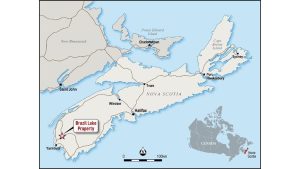
    The Brazil Lake lithium project is located in southern Nova Scotia, Canada, approximately 25km north-east of Yarmouth and approximately 300km south-west of the city of Halifax (Fig. 1).

    Fig. 1: Location of the Brazil Lake lithium project

    The region can be accessed via highways 101 and 103, and the project area is easily accessible via Route 340 (bitumen road) and then along secondary gravel roads.

    Geology and mineralisation

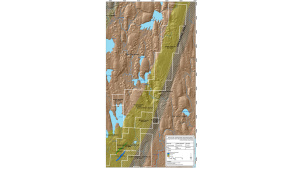
    The highly evolved, spodumene-bearing pegmatites within the Brazil Lake lithium project that are the focus of Lithium Springs Limited’s exploration are hosted by meta-sedimentary and meta-volcanic rocks of the White Rock Formation sequence, which locally include quartzite, amphibolite, tuff, psammite and pelitic schist and strikes northeast/southwest and locally dips steeply to both north-west and south-east. These rocks are part of the south-western part of the Meguma terrane of the Canadian Appalachian Orogen. The favourable geology of the host sub-unit, the Government Brook Member, bounded on the east by a major regional shear zone, extends greater than nine kilometres NE of the drilling to date.

    Exploration and drilling

    The most recent exploration and drilling on the Brazil Lake lithium project was completed by Lithium Springs Limited, in conjunction with our project partners Champlain Mineral Ventures Ltd. (a GOLDFIELDS Group Company). Before LS1’s involvement in the project, all previous exploration of the Brazil Lake lithium project and the surrounding areas was completed by Champlain Mineral Ventures Ltd; other than some early-stage exploration completed by the Nova Scotia Department of Natural Resources and Renewables (NSDNRR) between 1960-1993, which included five drill holes for a total of 577m.

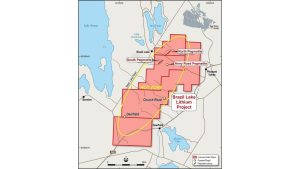
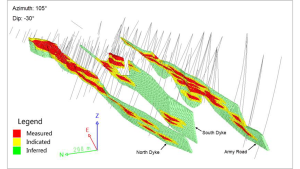
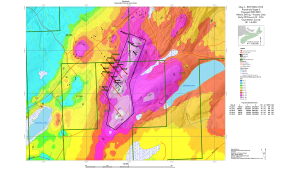
    Fig. 2a: Location of the three spodumene-bearing pegmatite bodies relative to the Brazil Lake lithium project tenure

    Champlain completed 16 diamond drill holes for a total of 1,325m in 2002; 16 diamond drill holes for a total of 801m in 2003; 28 drill holes for a total of 2,666m in 2010; five drill holes for a total of 505m in 2019; and six drill holes for a total of 1018m in 2020, as well as field mapping and sampling (including pits), soil surveys, trenching, and geophysics.

    This sample was then subjected to metallurgical test work, which produced a spodumene concentrate with highly encouraging Li2O grade and recoveries utilising heavy liquid separation. Lithium Springs is currently in the process of verifying the historical metallurgical test work through independently verified test work to be completed by SGS Lakefield, Canada.

    Fig. 2b: Extent of Government Brook Member relative to known dykes

    Mineral resource estimate

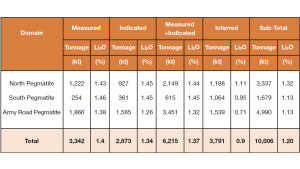
    The Brazil Lake lithium project mineral resource estimate (MRE) as of 6 August 2023 is 10.01MT @ 1.20% Li2O at a cutoff grade of 0.33% Li2O and is reported in accordance with JORC (2012) guidelines by the independent mining consultants, JP Geoconsulting Services. This MRE results from a combination of three spodumene-bearing pegmatites: the Army Road Pegmatite, North Pegmatite and South Pegmatite (Figs. 2 and 3).

    Fig. 3: Three mineralisation domains’ MRE by category (at 0.33% Li2O cutoff grade)

    A breakdown of the mineral resource estimate by Li2O% cutoff grade and resource confidence classification from these three pegmatites is shown in Table 1.

    Table 1: Breakdown of Mineral Resource Estimate by classification at 0.33% Li2O cutoff grade

    The Brazil Lake Lithium Project is comprised of three ore bodies – North Pegmatite, South Pegmatite, and the Army Road Pegmatite, all aligned in parallel, dipping steeply and at a downward plunge of 20° to the SSW. The North Peg and South Peg outcrop at the surface, while the Army Road Pegmatite is covered at the closest point to the surface of five metres of cover.

    The combination of 6,500m of historic drilling and the Lithium Springs fully-funded 28,000m of diamond drilling has produced an outstanding maiden JORC resource of 10.01Mt @ 1.20% Li2O at 0.33% Li2O cutoff grade. The Brazil Lake project has real mine development potential located in a Tier 1 mining jurisdiction with significant Canadian federal and Nova Scotian provincial government incentives that match the funds available under the US federal government’s Inflation Reduction Act, and development grants from the US Departments of Defense and Energy. These present further funding opportunities for critical mineral development, especially given Canada’s classification as a US domestic supply source.

    The Debert Lake Heavy Rare Earth deposit

    Magnum Resources Inc (a GOLDFIELDS Group company) owns a 100% interest in the property. The property is located in northern Nova Scotia, 25km NW of Truro. It is on forestry land and is serviced by a logging road within eight kilometres of a sealed highway and the power grid.

    Assays from 235 samples of outcrop and drill core show that key elements by value (>80%) include: Europium, Erbium, Thulium and Ytterbium.

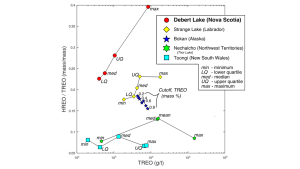
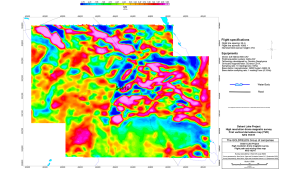
    High-resolution (25m line spacing) magnetic drone surveys have identified new drill targets on the heavy REE deposit at Debert Lake, owned by Magnum Resources Inc. (a GOLDFIELDS Group company). The deposit features the highest ratio (~75%) of heavy to light of any REE deposit in North America. REEs have been designated as a critical mineral by both Nova Scotia and Canada, as well as the EU.


    The Frenchvale Flake Graphite deposit

    Mt. Cameron Minerals Inc. (a GOLDFIELDS Group company) owns 100% interest in the property. It is under option to Argyle Resources Corp., which is committed to spending $4.4m over four years to earn a 60% interest.

    The Frenchvale Flake Graphite deposit is located 25km west of Sydney, Cape Breton Island, Nova Scotia, Canada. The deposit is hosted in Grenville Age marbles and has a strike length of eight kilometres. Sealed highways service it, and it is on the power grid.

    Flake Graphite has been designated as a critical mineral by both Nova Scotia and Canada.

    Deep drilling is planned on geophysical (TDEM CH13) targets as above.

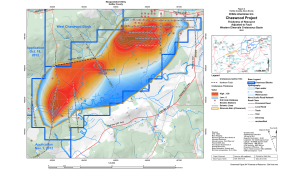
    The Chaswood Aluminium (Kaolin) deposit

    AlNova Mining Inc. (a GOLDFIELDS Group company) owns 100% interest in the deposit.

    The deposit is hosted in unconsolidated cretaceous secondary deposits of kaolin and high-purity quartz sand lenses. The deposit is found at the surface under glacial till. It is considered one of Canada’s largest aluminium deposits, with >600 million tonnes of kaolin at a grade of >30% Al2O3. It is located in central Nova Scotia, 50km NE of the port of Halifax. It is on forest land within three kilometres of a sealed highway and power grid. It is suitable for mining by dragline with a very low strip ratio and is within eight kilometres of a gas pipeline.

    The estimated resource was calculated from diamond drilling and seismic profile surveys. The kaolin and sand are suitable as additives for the production of cement.  Designated as a critical mineral by Canada, the kaolin can be initially refined to SGA alumina or further for electronic applications.

    Please note, this article will also appear in the seventeenth edition of our quarterly publication.

    [ad_2]

    Source link

  • University of Waterloo is strengthening EU connections for global impact

    University of Waterloo is strengthening EU connections for global impact

    [ad_1]

    The University of Waterloo, Canada’s number one comprehensive research university, is excited to tap into €53bn in new funding opportunities offered by Pillar II of Horizon Europe.

    Researchers at the University of Waterloo (Waterloo), Canada’s number one comprehensive research university for the last 16 years, eagerly anticipate the official launch of Canada’s participation in Horizon Europe’s Pillar II programme to further support the university’s globally important and impactful research.

    As the latest developed economy to join Horizon Europe under Pillar II, Canada has the opportunity to access €53bn in funding available through the European Commission. Waterloo’s proven track record of research excellence and successful international collaborations ensures that the university is well-positioned to leverage the myriad opportunities offered by this game-changing agreement.

    Waterloo’s international reach

    Waterloo is committed to advancing learning and knowledge worldwide through teaching, research and scholarship. Through Waterloo International, the university collaborates with other leading institutions around the globe to enhance its expertise further in the areas of research, entrepreneurship, and innovation.

    Waterloo recognises the world is changing and that humanity must evolve with it. International collaborations are vital to achieving success in the future.

    Global futures

    To create maximum global impact, Waterloo is focusing on the following five key areas for humanity where it can leverage its academic and research strengths:

    Societal futures

    Demographic transformations, increased migration, digitisation, and automation, and shifting geopolitical relations are among the forces transforming society.

    Waterloo’s dedication to producing ground-breaking research aims to improve communities worldwide.

    Health futures

    Waterloo is poised to take a unique leadership position by focusing on its strengths at the intersections of health, society, technology, entrepreneurship, and engaging partners to co-create solutions that advance population health and support the development of more sustainable community-based health systems.

    Sustainable futures

    While the global climate emergency is the greatest threat to our collective future, Waterloo is also addressing challenges in preserving biodiversity, ensuring clean water for all, and producing enough food for a growing planet.

    As a leader in sustainability research and education, Waterloo will build on its strength to help guide society towards a sustainable future.

    Technological futures

    Waterloo has seen that big data can be harnessed to help governments and organisations make informed decisions and address equity and equality concerns. The world demands that innovators develop technology with greater responsibility and accountability.

    As Waterloo continues to lead in technology and innovation in critical areas, it can shape technology to serve society rather than letting technology shape it.

    Economic futures

    Labour shortages, disruptions to supply chains, and geopolitical and digital threats have demonstrated vulnerabilities and risks inherent in several economies. Waterloo has the foundation to shape innovative ecosystems and develop talent to help create more equitable, resilient, and future-proofed economies.

    Already a leader in work-integrated learning, Waterloo will support learning-integrated work to help organisations and individuals keep pace with technology and the changing world of work.

    Waterloo excels in research, entrepreneurship, innovation, and work-integrated learning

    Waterloo’s Global Futures initiative provides a framework to address the world’s most pressing challenges. Access to Horizon Europe’s funding will be instrumental in facilitating the university’s objectives to create a worldwide impact.

    © shutterstock/Terelyuk

    Dr Trevor Charles, professor in the Department of Biology and director of Waterloo Centre for Microbial Research at the University of Waterloo, said: “The full inclusion of Canadian scientists in international activities will have a transformative impact on research and innovation.”

    One of Dr Charles’ current research areas intersects with Waterloo’s Health and Sustainable Futures. It addresses the challenges of food waste and plastics pollution by applying bacterial genome engineering and microbiome analysis within a circular bioeconomy concept to develop innovative methods for converting food waste into biodegradable plastics.

    Through the startup company MetaCycler BioInnovations, members of Dr Charles’ research group are driving commercialisation by working with dairy companies to produce the bottles they package milk in, using the waste from the process. Opening pathways from research to commercialisation is another key differentiator at the University of Waterloo. The upcycling of waste lactose from the dairy industry to biodegradable plastics suitable for food packaging materials maximises resources and vastly reduces waste.

    International collaboration is crucial for addressing complex global challenges and Dr Charles agrees that Horizon Europe’s expansion into North America enhances such collaboration. He said:  “Science is international by nature. Our experience with the Horizon2020 project MicrobiomeSupport was enlightening. Rather than taking a human health-first approach to Microbiome, the concept was centered around food. By doing this, it touched on the impact of microbiome in all corners of society, without neglecting human health.”

    © shutterstock/Urte

    The MicrobiomeSupport project, with Canada represented by the Waterloo Centre for Microbial Research, led to the establishment of the MicrobiomeSupport Association, of which Waterloo is a founding member.

    The official inauguration of the MicrobiomeSupport Association will be at the first Food System Microbiomes 2024 International Conference, which will take place in Torino, Italy, from 14-17 May 2024. These strides would not have been possible without financial contributions from the European Union’s Horizon 2020 research and innovation programme. Horizon’s Pillar II programme is especially noteworthy as it provides increased funding across multiple disciplines, including energy, technology and culture.

    From left to right: Dr Charmaine Dean, Dr Myra Fernandes, Dr Trevor Charles

    Dr Myra Fernandes, professor in the Department of Psychology at the University of Waterloo, has also experienced the tremendous advantages of working with researchers in Europe. She is collaborating with Dr Hélène Sauzéon and Maxime Adolphe, PhD student at INRIA (National Institute for Research in Digital Science and Technology) and the University of Bordeaux. Dr Sauzéon and Adolphe use augmented reality to study ways to improve cognitive behaviour and spatial navigation.

    Dr Fernandes said: “France is using augmented reality to enhance basic research. The French company that PhD student Maxime is partnering with is interested in developing augmented reality glasses. One idea we had was to extend our project to look at the effect of different ways of implementing guided navigation.”

    Seniors experiencing spatial memory decline could show signs of improvement if they were provided with some guidance through the use of aids.

    On a global scale, this sort of discovery aligns with Waterloo’s Technology and Health Futures. It is significant as route memory problems are often the first sign of Alzheimer’s disease or dementia — diseases that are becoming more common as the world’s population continues to skew older.

    Dr Fernandes continued: “France is advancing the way that my lab is thinking in terms of using the basic science findings and applying them. Translation of ideas is facilitated when the graduate students themselves here at the University of Waterloo and in France are involved in thinking of novel, cutting-edge solutions.”

    In the current climate of global uncertainty, Waterloo is looking to strengthen relationships with our trusted EU partners. Charmaine Dean, Vice-President, Research and International at Waterloo, said: “The University of Waterloo welcomes the opportunity to forge new European partnerships to advance innovative research that will leave a lasting footprint around the world.”

    “Waterloo facilitates large numbers of outbound and inbound student exchanges annually. The goal is to remain at the forefront of innovation by cultivating new collaborations with international partners. We welcome the opportunity to deepen our ties with the EU countries.”

    Developing relationships and leveraging diverse perspectives through internationalisation is a top priority for the university.

    Please note, this article will also appear in the seventeenth edition of our quarterly publication.

    [ad_2]

    Source link

  • The future of mining in the region

    The future of mining in the region

    [ad_1]

    The Québec Mining Association, an association with 88 years of experience in Québec’s mining landscape, explores the future production of Québec rare earths and plans to promote sustainable mining practices.

    As the world takes stock of the required materials for reducing carbon production, critical materials become increasingly important. It is expected that by 2040, the world will need four times as many critical materials to sustain clean technologies.

    Rare earth elements (REE) are one group of these critical materials, and various countries are stepping up their production of these. The province of Québec is well-known for its quantity of rare earths, meaning they are well positioned to ramp up exploration and production.

    The Québec Mining Association (QMA), the association acting as the voice and representative of the mining industry in Québec, attending governmental policy discussions and promoting the interests of their communities and mining companies, tells us more about the future of the region.

    Can you provide an overview of the recent projects undertaken by the Québec Mining Association (QMA)? How are these projects aligned with the Québec Mining Association’s long-term objectives?

    The QMA is beginning a new strategic cycle with a plan that will run until 2026. The Board of Directors has adopted a new vision to further propel the QMA and the industry. Its new vision is:

    ‘In 2030, the QMA is recognised by its stakeholders as the catalyser for the mining industry, inspiring its members to follow an ethical approach and enabling them to respect the highest environmental, social and governance standards.’

    The new strategic plan has five orientations:

    • To reposition the industry’s communication strategy to focus on its tangible ESG achievements (leadership through action, lead by example);
    • To improve the social acceptability and environmental and social performance of mining companies;
    • To ensure the competitiveness and sustainability of the industry;
    • To become a key player in the decarbonisation of the economy (positioning the industry as a real solution to certain climate issues); and
    • To maintain its organisational strength of influence and increase its legitimacy.

    Communication, the protection of the environment, and social acceptability will be at the heart of the following Action Plan. The QMA will put forward the know-how and innovations of the mining companies to reduce the environmental footprint and inform the population and stakeholders of the good practices of the mining industry in Québec.

    In 2023, the QMA participated in many public consultations and concluded that the population generally does not know the mining industry well. The public is unaware of our industry’s legal and regulatory obligations and of how the mining industry works to reduce its environmental footprint. The QMA hopes that its new strategic plan will help improve that knowledge.

    © shutterstock/Awana JF

    What role does the Québec Mining Association see for rare earths in the global push towards electric vehicles and renewable energy?

    Rare earth elements are part of the critical minerals necessary for the transition to a low-carbon economy. It is well known that the global demand for critical minerals, including REE, will rise significantly as the adoption of electric vehicles and renewable energy technologies continues to grow.

    Currently, no REE mines are in operation in Québec, but many deposits were identified. The QMA keeps an eye on the two projects that are the most advanced and under development in Northern Québec: Kwyjibo (SOQUEM) and Strange Lake (Torngat Metals).

    Québec is rich in critical minerals, which enables us to become a leading player in the global energy transition. In October 2020, the Québec Government adopted a plan to valorise the development and production of critical minerals: Plan Québécois pour la valorisation des minéraux critiques et stratégiques’ (PQVMCS) and later a strategy to develop the battery value chain in Québec.

    In doing so, Québec has decided to position its mining sector. It is stimulating the demand for Québec’s critical minerals. Many budget measures were put in place to help the development of mines and processing plants in Québec in that sector.

    The province has substantial deposits of rare earths, and the mining industry in Québec has been exploring ways to extract and process these elements. Some key points regarding Québec’s role in the context of rare earths and the push towards electric vehicles and renewable energy include resource potential, supply chain security, economic opportunity, environmental considerations/research, and innovation.

    Québec Mining Association greatly advocates for sustainability in the mining sector. Can you discuss how you promote sustainable practices?

    The QMA and its members are committed to the Towards Sustainable Mining (TSM) standard. Developed by the Mining Association of Canada (MAC) in 2004, the TSM standard is a globally recognised sustainability programme that supports mining companies in managing key environmental and social risks. Since 2014, the TSM has been a condition of membership for QMA members.

    The QMA supports its members in the implementation and monitoring of the protocols. The TSM management team is committed to remaining at the forefront of sustainable management of mining operations.

    The initiative applies to all types of mining, including those mining for rare earths and battery metals. It includes nine protocols based on 30 indicators that support transparent and efficient communications with communities of interest and ensure that the main risks associated with mining are managed responsibly. Each year, mining companies must publish performance results for their facilities and state the improvement solutions to be put in place. These protocols are:

    • Climate Change;
    • Crisis Management and Communications Planning;
    • Biodiversity Conservation Management;
    • Indigenous and Community Relationships;
    • Prevention of Child and Forced Labour;
    • Safe, Healthy, and Respectful Workplaces;
    • Tailings Management;
    • Water Stewardship; and
    • Equitable, Diverse, and Inclusive Workplaces.

    The TSM is, therefore, a powerful tool to encourage and continuously improve sustainable practices in extracting all types of minerals, including rare earths and battery metals. Most important is that the TSM goes beyond legal and regulatory obligations and that all the results are public.

    Are there any new technologies or methods being adopted in Québec to improve mining efficiency for rare earths and battery metals?

    Several government aid and funding programmes are available to the mining industry, and even more are available for critical minerals. The sector may thereby improve its exploration techniques, extraction methods and processing technologies in terms of efficiency, environmental footprint reduction and enhanced overall sustainability. Research and development initiatives, supported by industry and government partnerships, can stimulate innovation in mining practices.

    The Plan d’Action 2023-2025 pour la mise en œuvre du PQVMCS is one such method. It contains four orientations for the valorisation of rare earth minerals, increasing knowledge and expertise on strategic and critical minerals (SCMs), setting up or optimising integrated value chains in partnership with SCM-producing regions, contributing to the transition to a sustainable economy, and raising awareness, support and promotion.

    Each orientation is described in terms of objectives, actions, managers, indicators, and targets. This makes the plan an excellent tool for improving the efficiency of mining for critical minerals, including rare earths and battery minerals.

    How are you collaborating with other provinces or countries to advance mining in Québec?

    In Canada, all the provincial associations and the two Canadian associations (MAC and PDAC) are part of the Canadian Mineral Industry Federation (CMIF). We meet a few times a year and have the opportunity to exchange ideas on issues affecting our industry, share experiences and discuss the provincial and federal framework.

    The QMA, as a TSM partner association, also participates in discussions with other TSM partner associations across the globe. We share experiences and issues to improve TSM and its worldwide expansion.

    What are the future plans of the Québec Mining Association?

    With its new vision and strategic plan, the QMA is working on new communication tactics to reach the public better. According to a QMA survey of the Québec population, 78% of respondents have a poor understanding of the mining industry.

    Based on these findings, the QMA has committed to providing more information and highlighting best practices in the industry, as well as the positive impacts of mining activities on Québec as a whole and on host communities in particular.

    With our social and environmental practices as well as our legislative and regulatory framework, Québec can produce minerals and metals with the lowest environmental footprint in the world, and the QMA wants to share that with the public.

    The QMA wants to gain the population’s confidence and raise awareness that it is better to mine here in Québec than in other, less responsible jurisdictions.

    History shows that mining projects can develop with respect for local populations and the environment. Mining companies wish to remain partners of the communities in which they operate, which is why they favour the reconciliation of land uses and actions are taken daily to adhere to it.

    The mining companies active in Québec have committed to the population to do things right and be respectful and responsible. Combined with access to the territory, in compliance with the rules and regulations, Québec is on the right track to remain among the best mining jurisdictions in the world.

    Please note, this article will also appear in the seventeenth edition of our quarterly publication.

    [ad_2]

    Source link

  • Developing REE and uranium assets to power future technology

    Developing REE and uranium assets to power future technology

    [ad_1]

    Appia’s portfolio, spanning regions in Canada rich in both REE and uranium, along with the promising PCH Ionic Adsorption Clay REE project in Brazil, has great potential for our clean energy future.

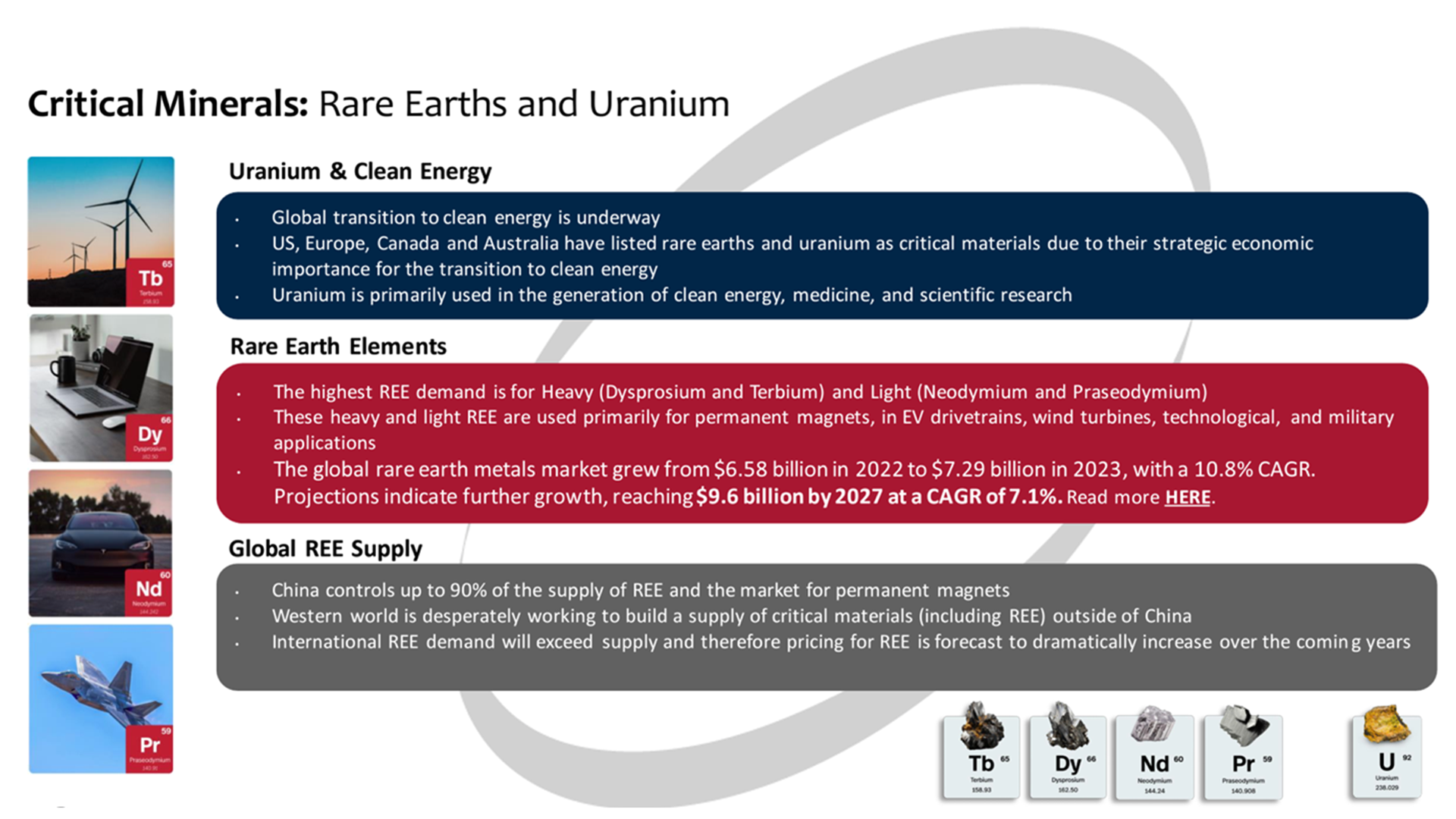
    Rare earth elements (REE) remain largely unnoticed in our daily lives. Yet these seventeen minerals, including the priority magnet REE neodymium, praseodymium, dysprosium and terbium, will play a vital role in powering the 21st-century technologies we find in all aspects of our day-to-day lives.

    Rare earth bearing minerals are rarely found in the Earth’s crust in significant concentrations, hence their name. REEs possess unique properties that are indispensable in various modern applications, ranging from smartphones and electric vehicles to wind turbines and advanced medical equipment.

    Certain rare earth metals, such as terbium and dysprosium, are prized for their heat-adsorbing properties. These magnet REEs play a crucial role in manufacturing powerful magnets vital for electric vehicle motors and wind turbines.

    Indeed, these minerals are equally indispensable in our digital world, serving as key components in display screens, compact batteries, and fibre optic cables, driving the technological advancements we benefit from today.

    Beyond fuelling technological marvels, rare earth metals are pivotal for achieving a future with renewable energy technologies like solar panels and wind turbines. Their electronic properties optimise the efficiency of these green energy solutions.

    The significance of rare earth metals extends beyond practical applications and reaches geopolitical discussions.

    With China dominating rare earth metal production, concerns about supply security have arisen globally. Diversifying sources, exploring alternative extraction methods, and fostering international collaboration have become crucial to ensuring a stable and sustainable supply chain.

    Uranium’s role in the energy transition

    Uranium, often overlooked despite its strategic importance, plays a pivotal role in our world. This is particularly true due to the global renaissance in the nuclear power industry. The IAEA is on record as saying that a ‘doubling’ of nuclear capacity is required by 2050 to achieve climate change goals.

    Uranium, derived from uranium oxide (U3O8), is a potent source of clean and efficient energy through controlled nuclear fission, where uranium atoms are split, releasing substantial heat converted into electricity.

    Uranium’s significance in achieving climate goals lies in its unparalleled energy density, with a small volume capable of generating millions of times more energy than equivalent amounts of coal or oil. This makes uranium the most efficient fuel for producing massive amounts of electricity, with near-zero CO2 emissions.

    In pursuing a clean energy future, uranium will play a crucial role as nations transition away from fossil fuels. As a stable and continuous source of electricity, nuclear power offers an important advantage over weather-dependent solar and wind energy.

    The surge in uranium demand and spot pricing reflects the growing acknowledgement of nuclear energy as an essential element in the clean energy mix.

    Additionally, the rising demand for nuclear energy, particularly in emerging economies like Asia, is driven by rapid industrialisation and urbanisation, where nuclear power stands out as a reliable and environmentally friendly solution to meet surging energy needs.

    Uranium’s remarkable energy properties are key to a cleaner and more sustainable energy future. With the recent upswing in demand and spot pricing reaching a 15-year high in Q4 of 2023, nuclear power is unmistakably gaining traction as a crucial component of our global energy future. View Fig. 2 here.

    Company overview

    Appia Rare Earths & Uranium Corp. (CSE: API / OTCQX: APAAF / FSE: A010) is a publicly traded mining exploration company that is strategically positioning itself to capitalise on the growing demand for critical minerals, including REE and uranium. In advancing this resource development, Appia can play a significant role in helping to meet the increasing input needs for electric vehicles, wind turbines, and advanced electronics.

    Appia’s focus on advancing multiple REE and uranium projects is centred around prolific international mining-friendly regions. These mining districts include Goiás State, Brazil, the Athabasca Basin in Saskatchewan and Northern Ontario, Canada. By targeting these strategic locations, Appia aims to maximise the efficiency and success of its exploration efforts.

    Demand for critical minerals will continue to rise. With its focus on strategic projects in leading mining jurisdictions, Appia seeks to unlock shareholder value by developing new REE and uranium resources.

    Canadian REE and uranium projects

    The Athabasca Basin district in Northern Saskatchewan is globally renowned for its rich uranium deposits, making it one of Canada’s most desirable exploration and mining regions. At the heart of Appia’s Canadian operations are five projects strategically positioned in Saskatchewan’s prolific Athabasca Basin:

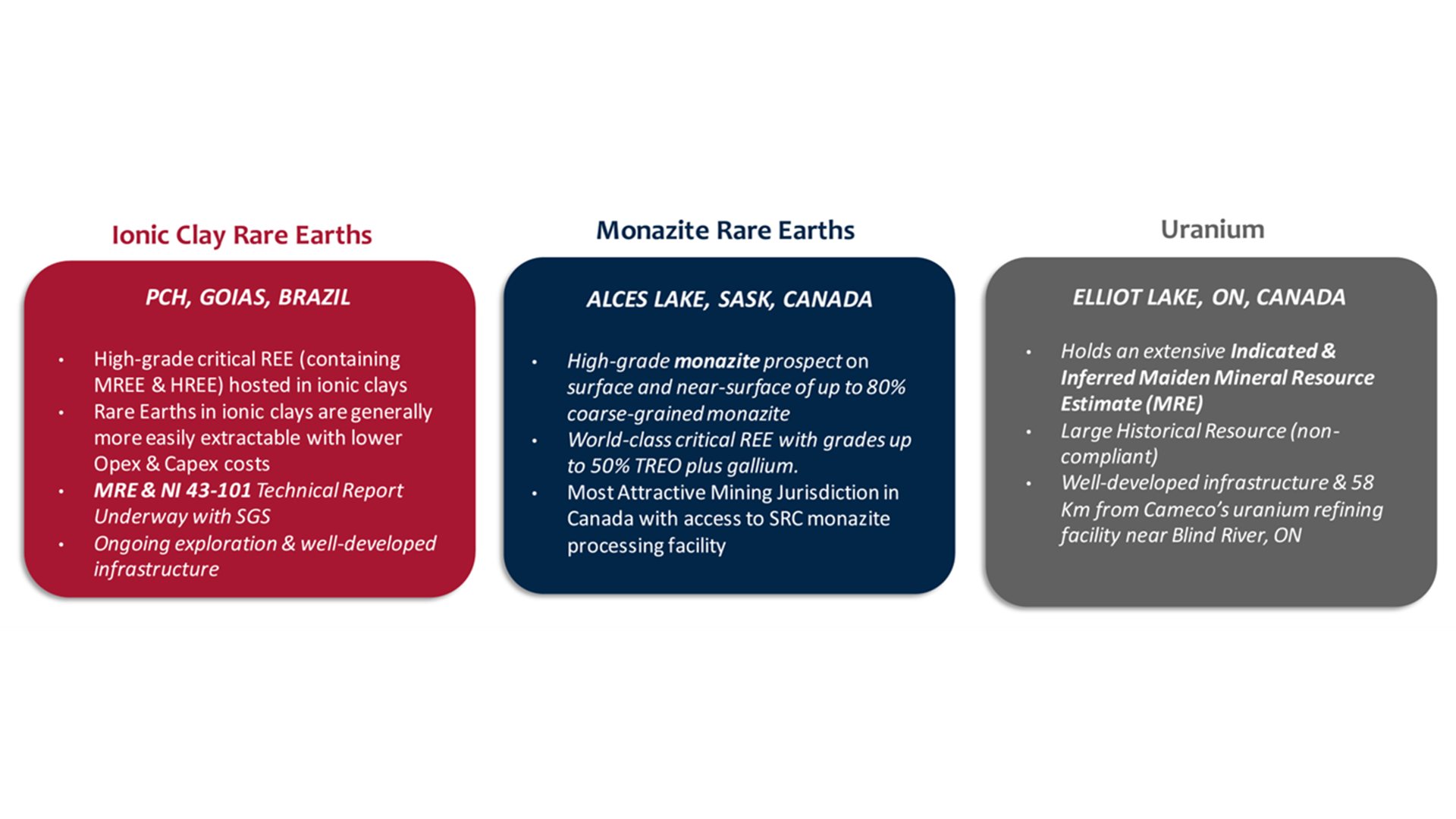
    Alces Lake, one of the company’s flagship projects, is located in northern Saskatchewan. However, its focus is not on uranium but on high-grade REE hosted in monazite.

    In addition to Alces Lake, Appia holds four other prospective properties in Northern Saskatchewan. These other projects (Loranger, Eastside, Otherside, and North Wollaston) focus on early-stage uranium exploration.

    Beyond the Athabasca Basin, Appia has diversified its Canadian footprint with its Elliot Lake Uranium Project in Ontario, an area globally known for significant historic uranium mining and milling.

    Supporting the project’s development, a major Canadian uranium refinery is situated approximately 60km away, near Blind River. This proximity enhances the project’s potential and opens opportunities for synergies with established mining operations.

    Elliot Lake, Ontario

    Situated in the Algoma District, Ontario, Canada, Appia holds 100% ownership over the Elliot Lake project. This is a substantial land parcel spanning 13,008 hectares (32,143 acres) and strategically positioned between the prominent cities of Sudbury and Sault Ste. Marie.

    The geological strength of this expansive property is underscored by the presence of five known mineralisation zones featuring well-established mineralisation of both REE and uranium.

    With substantial mineralised zones and defined NI 43-101 resources for both REE and uranium, Elliot Lake is emerging as a promising long-term source for these critical metals. Appia’s CEO, Tom Drivas, framed the potential of Appia’s uranium assets for investors.

    He said: “Appia’s uranium portfolio of both past producing and earlier-stage projects positions the company well to participate in the long-term uranium market appreciation. The company holds a large ground position in Elliot Lake with a historical resource (non-NI 43-101 compliant) totalling approximately 199.2 million lbs. of uranium at a grade of 0.76 lbs. U3O8/ton.”

    The NI 43-101 Indicated Mineral Resource for the Teasdale Lake Zone stands at 14,435,000 tons with a grade of 0.554 lbs U3O8/ton and 3.30 lbs TREE/ton, resulting in a total of 7,995,000 lbs U3O8 and 47,689,000 lbs TREE. In the Inferred Mineral Resource category, the Teasdale Lake Zone comprises 42,447,000 tons, grading 0.474 lbs U3O8/ton and 3.14 lbs TREE/ton, totaling 20,115,000 lbs U3O8 and 133,175,000 lbs TREE. Additionally, the Inferred Mineral Resource for the Banana Lake Zone is 30,315,000 tons, with a grade of 0.912 lbs U3O8/ton, resulting in a total of 27,638,000 lbs U3O8. The resources are largely unconstrained along strike and down dip. Refer to the NI 43-101 Mineral Resource Estimate page for qualifying notes regarding the Mineral Resource estimates, and individual element grades supporting the reported TREE results.

    Click HERE to view the Elliot Lake NI 43-101 Technical Report.

    1. The historical resource was not estimated in accordance with definitions and practices established for the estimation of Mineral Resources and Mineral Reserves by the Canadian Institute of Mining and Metallurgy (CIM), is not compliant with Canada’s security rule National Instrument 43-101 (NI 43-101), and unreliable for investment decisions;
    2. Neither Appia nor its Qualified Persons have done sufficient work to classify the historical resource as a current mineral resource under current mineral resource terminology and are not treating the historical resources as current mineral resources; and
    3. Most historical resources were estimated by mining companies active in the Elliot Lake camp using assumptions, methods and practices accepted at the time and based on corroborative mining experience.

    Alces Lake, Saskatchewan

    With a vast property covering 38,522 hectares (approximately 95,191 acres), the Alces Lake project offers robust exploration opportunities. Situated where the expansive Canadian Shield extends into northern Saskatchewan, Alces Lake offers both scale potential and high grades of REE.

    A total of 34,248.29m has been drilled to date, spread across 316 drill holes. This extensive exploration has uncovered new zones of REE mineralisation, including Jesse and Hinge.

    To date, exploration results align with the project’s original geological modelling, indicating substantial potential for expansion of mineralisation and resource development. Appia announced the completion of a NI 43-101 technical report in May 2023 to support further exploration.

    Besides Alces Lake, the company already holds four high-potential early-stage uranium projects in the prolific Athabasca Basin area: Loranger, North Wollaston, Eastside and Otherside.

    PCH Ionic Adsorption Clay REE, Goiás, Brazil

    Appia established its international footprint with the acquisition (click HERE) of its PCH Ionic Adsorption Clay (IAC) REE project in Brazil’s Goiás state, where the initial drilling revealed very promising ground-breaking results.

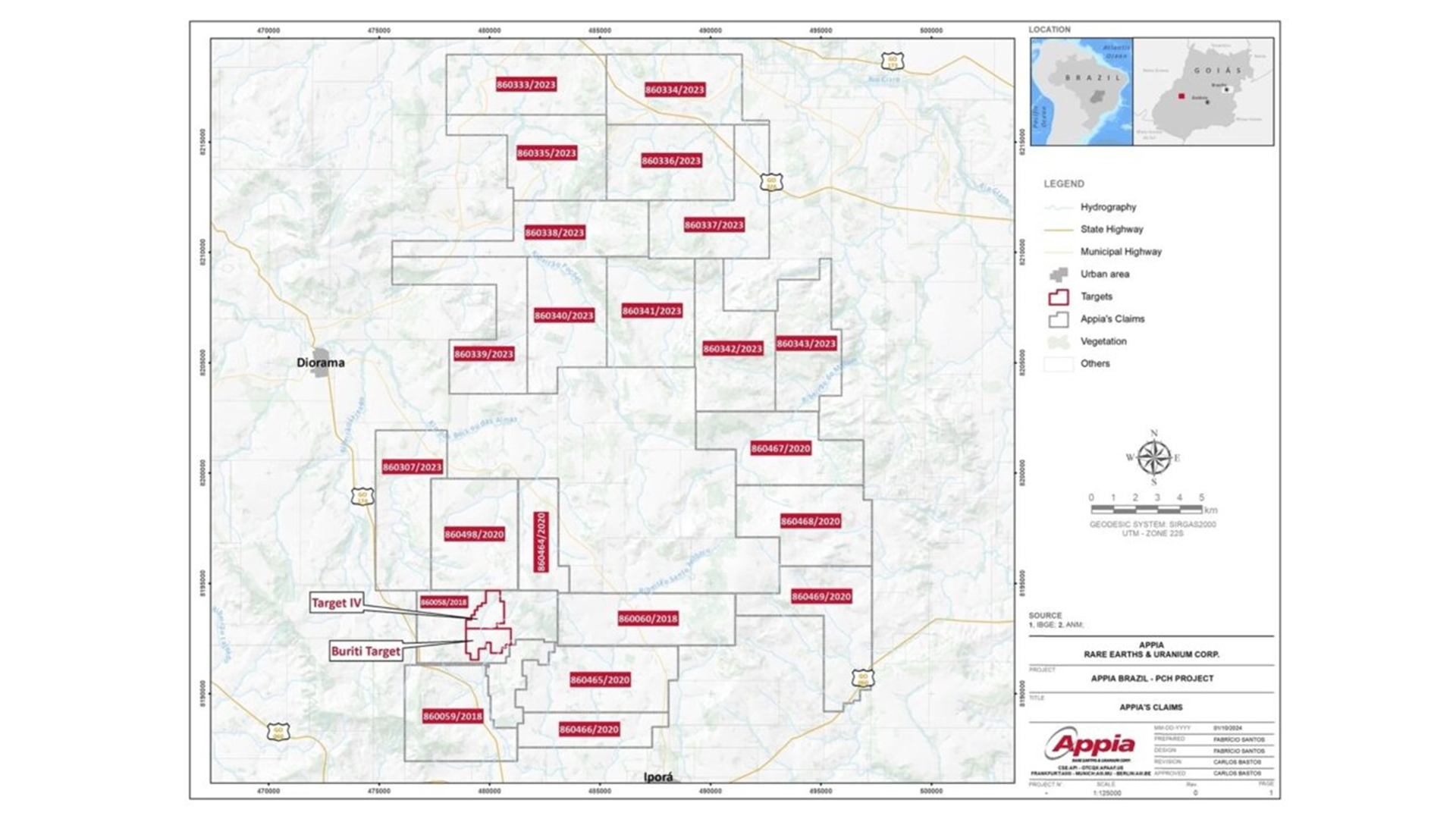
    Stephen Burega, President, said: “The expansion of our exploration rights to 40,963.18 hectares (101,222.22 acres) marks a pivotal moment for Appia in Brazil as we build on the momentum achieved through our initial drilling programme at the Target IV and Buriti zones. Our dedicated Brazilian team is eager to explore the untapped potential of the northern corridor, where similar geological and geophysical features have been identified.”

    Burega added: “There is huge potential in these new claim blocks as we can draw clear parallels to the favourable geology that hosts the critical rare earth minerals that initially convinced us to enter our agreement on the PCH project. Doubling the size of our overall land package within the prolific alkali province not only reflects our commitment but also strengthens the company’s strategic plans. We aim to develop a series of potential target zones, extending the project focus for the benefit of our valued shareholders.

    The headline assay result from this 300-hole drilling programme is a remarkable 24-metre mineralisation zone starting from the surface on drill hole PCH-RC-063, averaging 38,655 ppm or 3.87% Total Rare Earth Oxides (TREO). This includes a higher-grade interval from 10–12m depth, registering an exceptional 92,758 ppm or 9.28% TREO. Click HERE.

    PCH Project mineralisation includes significant concentrations of Magnet Rare Earth Oxides, Heavy Rare Earth Oxides, and Light Rare Earth Oxides. This unique discovery extends from the surface and remains open at depth.

    These results indicate substantial potential for further expansion of mineralisation at depth, and Appia is currently working with SGS to develop the maiden Mineral Resource Estimate (MRE) on Target IV and Buriti zones of the PCH Project, which will be a crucial part of the NI 43-101 technical report on the PCH project as a whole.

    REE and Uranium
    Fig. 3: Appia is committed to advancing multiple rare earths and uranium projects in mining-friendly regions, including Goiás State, Brazil, the Athabasca Basin area in Saskatchewan, Canada and Elliot Lake, Ontario, Canada
    Fig. 4: Target IV covers 193.28 hectares, and Buriti covers 210.39 hectares of claim 860058/2018, which spans a total area of 1,874.6 hectares

    For investors new to REE, Appia’s PCH project discovery is important because mining REE from ionic adsorption clays offers significant benefits, starting with much more efficient exploration.

    Unlike traditional REE extraction methods, ionic adsorption clays require less complex and costly processing techniques. This offers additional efficiencies that include streamlined operational procedures, reduced capital costs, and a potentially quicker path to production.

    Brazil is a leading mining jurisdiction with a government that has demonstrated a solid commitment to resource development. Government investment and regulatory support play pivotal roles in developing the industry. National strategic initiatives aim to enhance exploration, extraction, and processing capabilities.

    Brazil’s national commitment to mining development also extends to many of its state governments. This combined support for project and industry development and its immense resource wealth has made Brazil an increasingly attractive destination for the global mining industry.

    With an impressive portfolio spanning regions in Canada rich in both REE and uranium, along with the promising PCH Ionic Adsorption Clay REE project in Brazil, Appia is positioning itself to generate substantial shareholder value in developing meaningful and strategic global assets to help meet the demand for clean energy solutions.

    Appia’s future exploration plans run in parallel with what most world experts call for in developing uranium resources as fundamental and crucial in meeting global climate change objectives. Also, seeing the Western world’s need for non-Chinese controlled REE resource development, it has now finally assumed a priority position of strategic importance across all boardrooms and government discussions.

    For investors looking to add exposure to these sectors in their portfolio, Appia Rare Earths & Uranium Corp. offers a compelling value proposition.

    Please note, this article will also appear in the seventeenth edition of our quarterly publication.

    [ad_2]

    Source link
  • How autonomous vehicles will transform mobility

    How autonomous vehicles will transform mobility

    [ad_1]

    Autonomous vehicles will hit the roads by 2026, but what are the benefits and practicalities of widespread implementation?

     The UK Government envisions a future where self-driving vehicles play a significant role in transportation. It is a sector that holds immense promise, with the potential to revolutionise our lifestyle, maximise the efficiency of our transport infrastructure, and enable the country to meet its green targets. With the technology already in development, it is time to consider the practicalities of widespread implementation.

    The Institution of Engineering and Technology (IET) is working to facilitate innovation and advancement in areas such as the automated transport sector. Providing expertise, the IET is a membership organisation working with policymakers, local authorities, and industry to feed into standards and regulations for automated vehicles – this ensures considerations can be made at a local and national level.

    Sunil Budhdeo, Transport and Innovation Manager for Coventry City Council and IET Transport Expert with 35 years’ experience completing a variety of successful innovation projects in the Traffic and Transport industries. He spoke with The Innovation Platform on the outlook for automated transport in the UK, its challenges and benefits, and the next steps in its implementation.

    What are the societal, economic, and environmental benefits of automated vehicles?

    Socially, the opportunity to engage with autonomous vehicles in an urban environment will be invaluable for vulnerable users who are restricted to their homes simply because they can no longer drive. Though the average life expectancy has increased, the aged population can often be isolated. Autonomous vehicles provide on-demand transport, allowing local authorities committed to diversity and equality to keep people engaged and prevent isolation.

    The pandemic affected an increase in distribution and logistics, meaning the number of vehicles to support this has likewise increased. This has created an opportunity to utilise autonomous and electric vehicles for this purpose, enabling us to have multiple engagements with distribution and logistics companies. Rather than relying on several different operators, autonomous vehicle technologies could be employed to pick up and deliver in an area from a distribution hub, creating a more efficient, economical, and comprehensive delivery operation. This is part of a larger logistical attempt to engage with local councils to create an intelligence hub.

    The most significant benefit of autonomous vehicles is environmental since the technology allows us to communicate with vehicles and could, therefore, be utilised to manage congestion and emissions. For example, remote connectivity in vehicles could be developed to connect to traffic signals at junctions, meaning congestion and the stop-start movements of traffic jams could be avoided. This will result in less braking, which, in turn, means fewer particulates – the main challenge of emissions control. Alternatively, if there are no traffic signals, the ability for vehicle-to-vehicle communication will create a network in which cars can recognise and adapt to each other’s speed and routes. For example, your vehicle is travelling at 30 miles per hour (mph) with 15 cars behind, while a car on the side approach is only travelling at 20 mph with three cars behind. By communicating, automated vehicles can use situational judgement to ensure the most efficient flow of traffic, again reducing both congestion and emissions.

    With any new technology, all benefits, opportunities, challenges, and impacts must be looked at – the IET works with its experts to provide an independent voice for the industry, making recommendations on how best to utilise autonomous vehicles. This includes looking at costs, safety, and system operations.

    Can you discuss some of your recent and ongoing research in the field of automated vehicles?

    Coventry City Council was the first authority to have the UK’s largest project – the UK Auto Drive project – in 2018. In collaboration with Jaguar Land Rover, Tata Motors European Technical Centre, and Ford, this was a trial of autonomous vehicles in an urban environment. Test routes were then designed in Coventry and Milton Keynes, cities that presented entirely different scenarios. Milton Keynes is a fairly new city, with a gridded layout and more roundabouts than traffic signals, whereas Coventry is a historical city that presents its own challenges.

    In the first trial, we demonstrated, at low speeds and with a safety driver, how the autonomous car could safely drive the streets of Coventry, engaged in live traffic without any closures. The success of this trial led us to advance to the famous ring road of Coventry, which is challenging at the best times, requiring the vehicle to drive 40 miles per hour.

    Subsequently, in partnership with Highways England and funded by Innovate UK, we worked on creating a test bed to establish the infrastructure required for automated vehicles to operate safely. This considered the network of vehicle-to-vehicle communication, vehicle-to-infrastructure communication, and vehicle-to-anything else communication. We were able to assess what was required for safety by creating a 45km track and driving in a highway environment as well as urban and interurban environments.

    Recently, we participated in the SAVER project, which focused on remote driving. Following a successful trial, a bid to extend the project was successful, which we will continue to engage with.

    More autonomous vehicles are required to determine their benefits realistically. The technology is already in existence, and OEMs have the capability to engage with autonomy. It is infrastructure and legislation that this industry is waiting on, and these must be our next steps.

    What are the challenges associated with automated vehicle development and widespread implementation? How can these be addressed?

    The primary challenge facing autonomous vehicles is risk. It only takes one incident to delay the project by years, as was the case during testing in the US. To combat this, every trial is de-risked, which is in itself a challenge. One of the ways this is done is by engaging with the most vulnerable users – e.g., those who are partially sighted or disabled – to determine how they would interact with particular scenarios. A question often asked about autonomous vehicles is, how does it know when to stop? If someone is waiting to cross a road, human eyes will detect it, and we need to be confident that a vehicle will also. De-risking intends to address this.

    A second challenge concerns the infrastructure and legislation for electric automated vehicles, which pose their own questions, including: How does an EV find a charge point and plug itself in to charge, and how does it know where to park? These are a few of the challenges identified through trials. We are now working towards developing inductive charging and the digitalisation of traffic regulation to accommodate these additional considerations.

    As we proceed with trials, we are also continuously addressing the challenge of communication. The automated vehicle network we are striving for is going to be the panacea of communications. However, it is a huge project we are not yet ready for, and work must now be directed towards securing the appropriate bandwidth. A comprehensive 5G network that covers all areas equally is in development. Still, we are working with the communications industry as well as the Department of Transport (DfT) to develop a network with higher security – since a remote network must be able to defend against hacking and interference.

    A key consideration in the widespread implementation of automated vehicles is ensuring it is, indeed, widespread. Autonomous vehicles should be equally accessible throughout the UK, with consistent standards, regulations, and infrastructure between local authorities. They should not need to recognise geographical boundaries but be able to travel seamlessly to their destination regardless of individual authorities. Currently, regulations vary from county to county and city to city. To maximise the efficiency of an autonomous road network, these regulations should merge standards for infrastructure – e.g., signs – that can be digitised for the vehicles. This is an issue the DfT is addressing, and those authorities not currently involved in this discussion must begin engaging.

    © shutterstock/metamorworks

    How will automated vehicles affect existing urban planning and transportation infrastructure?

    Though it poses its challenges, the practicalities of implementing the technology can be simple. To put a communication pod at an intersection or a junction, it is simply a cat five cable that’s required to plug in the device, and this could be done at the time of installing a fibre cable, or during the construction of a junction.

    What we have to consider is whether integration is the aim at all. The big question is: Does the general public need to own a car? Automated vehicles have the potential to revolutionise the way we travel. With automated vehicles comes the potential for a pool of cars providing on-demand transport. Imagine that instead of buying a car, ordering a taxi, or renting a holiday car, a pool of automated vehicles could provide all three services for a lower price. For example, take the infrastructure of an estate; rather than having cars line the roads, there could be a readily accessible, communal, intelligent hub of cars, reducing congestion. In this case, we need to consider the storage infrastructure for such a hub, one that is widely accessible and within an appropriate distance of all users.

    The development of autonomy on the roads could be extended to other modes of transport. If the technology works for cars, it could certainly be applied to buses, trams, and trains. Automated vehicles allow us to re-evaluate existing infrastructure, rendering traffic lights at slow-speed junctions largely unnecessary. Roads can be made narrower since a network of automated vehicles would not require any overtaking facility, increasing green spaces, reducing emissions, and making our roads safer.

    What does the future look like for automated vehicles in the next five to ten years and beyond?

    The future looks incredibly bright, particularly when we consider the achievements of the last five years. What many do not realise is that this technology is already employed in aspects of modern life. Most modern cars are equipped with multiple cameras that work to control speed, positioning, and braking. Cruise control enables cars to follow lane discipline and can adapt a car’s speed according to its surroundings.

    The development of automated vehicles allows us to improve our environment, both in regard to meeting green targets and lifestyle. Cars, as a mode of transport, will not go away, but a communal intelligent hub could require a short walk. Creating an automated road network also increases efficiency; eradicating traffic jams means hospital appointments can be met, and flights will not be missed. We rely on transport for so many aspects of daily life that its simplification and improved efficiency could have huge repercussions.

    The technology is here; we are only waiting on the legislation and infrastructure that must accompany it. Within the next five to ten years, we can expect continued innovation around the development of automated vehicles.

    The UK Government has already announced that the UK will have autonomous vehicles and permission for vehicles to be operated in an autonomous mode by 2026. In fact, Ford’s Mustang Mach-E was permitted a license to drive in autonomous mode on motorways last year. The wheels are already in motion, and the next few years will only see this increase.

    Please note, this article will also appear in the seventeenth edition of our quarterly publication.

    [ad_2]

    Source link

  • An overview of Europe’s ocean energy revolution

    An overview of Europe’s ocean energy revolution

    [ad_1]

    Ocean Energy Europe, a network of over 120 organisations, discusses its work in developing a new sustainable energy industry and in which areas more support will be needed.

    In the battle against climate change, the key to keeping the global temperature rise to 2°C or below is to switch from primarily fossil-fuel-based energy production to sustainable, zero-emissions energy production.

    The recently-held COP28 reinforced this, with attendants agreeing that at least 50% of energy production needs to come from sustainable sources by 2030.

    As such, Ocean Energy Europe is doing its part to facilitate this shift. Here, they tell us more about the wave, and tidal energy industries, how they are growing, and what they need to continue.

    Renewable energy in Europe

    Transitioning Europe’s energy system away from fossil fuels and towards homegrown, renewable energy sources is vital, now more than ever. Putin’s war in Ukraine has demonstrated that price stability for gas is gone. Europe has been reminded the hard way that indigenous renewable energy sources are the best way to provide Europeans with affordable energy prices.

    Europe has always been a leader in renewable energy technology development, and today, wind and solar are Europe’s cheapest forms of electricity production. In fact, according to the IEA, building a new onshore wind or solar PV plant is now cheaper than operating existing fossil fuel plants.

    However, Europe can’t rely only on wind and solar to reach a stable 100% renewable energy mix. It will need support from other innovative renewable technologies that can reliably produce energy at different times.

    That’s where ocean energy comes in. Our oceans are the largest untapped source of renewable energy. By harnessing the power of the tides and waves, ocean energy could generate 100 GW in European waters by 2050 – that’s 10% of Europe’s current electricity needs.

    But ocean energy has more to offer than the number of gigawatts it can pump into the grid. Thanks to their unique characteristics, tidal and wave energy technologies are highly complementary to more established forms of renewable energy production, such as wind and solar.

    Tidal energy, for example, is entirely predictable decades in advance and completely independent of weather conditions since it relies only on the tides’ ebb and flow. This long-term predictability is invaluable to balancing a grid built around variable wind and solar production.

    Wave energy devices can be fitted in offshore wind farms as there is much unused space between the giant wind turbines. The wind drives waves, but they will keep coming for hours after the wind dies down, which means wave devices will keep producing long after the wind turbines stop.

    Building a new industry

    The European Union has always strongly supported ocean energy research and innovation. Just in the last year, the EU demonstrated its political support by naming ocean energy as a strategic EU technology in the Net-Zero Industry Act, setting a new innovative renewable energy target in the revised Renewable Energy Directive (RED III), and specific wave and tidal power deployment targets in its strategy for offshore renewable energy.

    Over the past year, ocean energy and its immense potential have made significant inroads. At the national level, governments are creating more market visibility and enabling ocean energy to take decisive steps towards commercialisation. Thanks to this new-found support, the sector is scaling up in major ways, with over 100 megawatts (MW) of installed capacity planned for deployments in the coming years.

    A rising tide of pilot farms

    Both France and the United Kingdom possess excellent tidal energy resources – some of the best in the world – and have now stepped up to develop and support their national tidal industries.

    In the United Kingdom, the Contracts for Difference (CfD) scheme provides revenue support to renewable energy projects. In 2023, 53 MW of tidal energy capacity, split between 11 projects, have been granted support and are planned for deployment between 2026 and 2028.

    Among these, the MeyGen tidal farm, which has been operating for nearly a decade, will increase its installed capacity to 50 MW. Building a farm this size means scaling up to a high-volume production. This will kickstart the cycle of cost reductions and drastically increase tidal energy’s competitiveness in the market.

    In France, the government announced their support for the FloWatt project, a 17.5 MW tidal farm led by technology developer HydroQuest. The French government will provide at least €65m of direct funding and dedicated revenue support. In addition to this direct support to FloWatt, French President Macron announced commercial tenders for tidal energy in the 2023 national energy strategy update. This is a game changer for France, which has been struggling to take advantage of its extensive resources due to a lack of political support for the sector.

    Increased national support is an important win, but continued support from the EU is still crucial. Thanks to the Horizon Europe programme, €40m were recently granted to develop pilot tidal farms in Europe. The two winners of the call are the EURO-TIDES and SEASTAR projects, led by Scottish companies Orbital Marine Power and Nova Innovation. EURO-TIDES will deploy 9.6 MW of tidal power, while SEASTAR will install an array of 16 turbines for a total of four megawatts in the next few years.

    Overall, the European tidal sector is looking stronger than ever. Tidal technology developers have been ready to scale up for several years, and now that national governments are sending positive market signals, they will move fast.

    Tapping into wave energy’s potential

    The potential of wave energy is truly astonishing, second only to wind energy. However, harnessing that energy is a complex task, mostly due to the harsh environments in which wave energy converters operate.

    Wave energy development is still mostly funded by the European Union, and this longstanding support has made Europe the global leader in wave energy technology. But interest in wave energy production has grown beyond Europe’s border over the past few years, and countries such as China and the United States are investing heavily in the sector. For Europe to retain its lead and wave energy to truly take off, national governments need to step in and provide long-term market visibility with deployment targets and earmarked revenue support schemes.

    The European wave energy sector has made great strides over the past year. Most existing projects are now using full-scale prototypes and are rapidly progressing towards the first-wave pilot farms. Over eight megawatts of wave energy are expected to deploy in the coming years, and that includes several wave farms. On top of that, the Horizon Europe funding programme will announce the winners of its wave energy pilot farms call later this year, which will help put even more wave energy devices in European waters.

    Two of the current flagship wave projects are the HiWave-5 and Saoirse projects. Both are financed by EU funds – respectively FEDER and the Innovation Fund – and will use the wave energy technology developed by Swedish company CorPower Ocean. HiWave-5 will see the deployment of four 300 kW wave energy converters in northern Portugal by 2025, the first of which has already been installed. Saoirse will be Ireland’s first full-scale wave energy conversion test and demonstration project. A total of five megawatts of wave energy capacity will be installed off the coast of County Clare, powering 3500 homes.

    Another important upcoming wave energy project is called SEAWORTHY. Driven by Danish developer Floating Power Plant, it’s a commercial-scale demonstration project financed by the European Union’s Innovation Fund. The demonstrator technology integrates a 4.3 MW wind turbine, a 0.8 MW wave energy converter, and a hydrogen system on the same floating platform.  This deployment is planned for 2028.

    Supportive policy for the ocean energy sector

    Ocean Energy Europe has been advocating for national governments to create a supportive policy environment and give market visibility to the ocean energy sector for years. This is now starting to happen across Europe: in the UK with the CfD scheme, which provides direct revenue support; in France with dedicated funding and revenue support for the FloWatt tidal project; in Spain with a new €12.2m fund for wave energy projects; and in Portugal with a recent increase of the national wave energy target from 70 MW to 200 MW.

    As predicted, this new wave of support for ocean energy coupled with long-term market visibility has sparked interest from the big energy players. Companies such as Total Energies and Shell have started investing and partnering with upcoming ocean energy projects across Europe. French utility Qair supports the FloWatt tidal project in France, while Irish utility ESB is partnering in the SAOIRSE project. Eni is developing its own wave energy technology in Italy and is currently operating a 260 kW wave device connected to the grid in Pantelleria Island. SEV, the Faroe Islands utility, signed a power purchase agreement with Swedish tidal developer Minesto to build a tidal farm in Vestmannasund.

    All the pieces are starting to fall into place for ocean energy’s growth to accelerate and evolve into a fully commercial industry. Europe has some of the best ocean energy resources in the world and is home to cutting-edge technology developers who are leading the most advanced demonstration projects. Ocean energy is already bringing power and jobs to Europe.

    To fully tap into ocean energy’s potential, European governments must now deliver long-term visibility with deployment targets, investment aids, and revenue support for wave and tidal, as they have done in the past for wind and solar.

    Please note, this article will also appear in the seventeenth edition of our quarterly publication.

    [ad_2]

    Source link

  • An outstanding place for scientific research in the Baltic Sea region

    An outstanding place for scientific research in the Baltic Sea region

    [ad_1]

    The University of Latvia’s Institute of Solid State Physics is bringing the future closer through scientific research, encouraging young scientists and business ventures alike to develop the technologies of tomorrow.

    The Institute of Solid State Physics, University of Latvia (ISSP UL) is an independent legal entity founded by the University of Latvia. It is an internationally recognised leader with 46 years of experience in materials science and cross-disciplinary topics in Latvia. The Institute employs more than 100 Doctors of Science, conducting internationally competitive research, educating students, and offering innovative solutions for industrial needs.

    The ISSP UL cares for education and attracts highly qualified scientific staff. The master’s degree study programme, developed in co-operation with the Faculty of Physics, Mathematics and Optometry, the University of Latvia, is the basis for building young people’s knowledge and industrial competitiveness in the future.

    The Institute actively co-operates with more than 100 international scientific organisations and universities around the world to raise the qualifications of students and scientists and attract entrepreneurs and investors.

    ISSP UL elaborates an average of 50 scientific projects per year. About one-third of the projects are carried out jointly with companies.

    Along with progress in scientific research, the ISSP UL has developed solid collaboration with high-level innovation industries in Latvia. Technological and scientific research outcomes of the ISSP UL are transferred into several spin-off companies.

    Major application-oriented priority directions of the ISSP UL’s activities:

    • Photonics;
    • Thin films, low dimensional (0D, 1D, 2D) structures and sensors;
    • Energetics; and
    • Medical technologies (diagnostics) and microfluidics.

    ISSP UL’s four priority research directions have been strategically established to increase strong international scientific capacity and to represent the most current trends of material science, reflecting development in terms of scientific results, available infrastructure, and ongoing collaboration with scientific organisations and industry.

    Photonics

    The direction is related to fundamental scientific research in non-linear optics and the study of advanced optical materials for organic and non-organic materials to develop polymer photonic elements, optical fibre-based devices, and new light sources and displays.

    The Laboratory of Organic Materials conducts fundamental and applied research on organic molecules, materials, and their structures to build knowledge about the relationship between structure and properties in organic materials for next-generation electronics and photonics.

    The Micro and Nanodevices Laboratory performs R&D and fabrication of various micro-devices and nanostructures: sensors, transistors, etc. Industrial experience in the fields of photonics, semiconductors, and microfluidics.

    The Laboratory of Visual Perception researches the optical quality of different optical systems, adaptive optics, wave-front phase retrieval, various light sources and their influence on visual perception, and different visual stimuli designed for studies on visual psychophysics. The laboratory combines knowledge in materials science, wave optics, vision science and optometry.

    The Laboratory of Optical Materials studies persistent luminescence, the interaction of ionising radiation with crystalline, ceramic and glass-like structures, and performs research on optical fibres and ultraviolet optics.

    Thin films, low dimensional (0D, 1D, 2D) structures and sensors

    Applications related to this direction are coatings, thin films for nanoelectronics, antiviral coatings, and chromogenic multilayer structures for smart windows. The dimensional scaling of materials dramatically modifies their electrical, thermal, mechanical, and magnetic properties and their material-property relationship, which in turn alters the physical behaviour of nanoscale electronic and photonic devices. There are significant challenges related to understanding and controlling material properties at the nanoscale and integrating nanomaterials into hybrid systems at advanced technology nodes.

    The Thin Films Laboratory provides a thin film deposition service for a wide variety of inorganic materials, using different deposition techniques, including the PVD vacuum multifunctional R&D cluster SAF25/50, the magnetron sputtering G500M cluster including High Power Impulse Magnetron Sputtering (HiPIMS), as well as PLD, MOCVD and ALD.

    The EXAFS Spectroscopy Laboratory studies the structure of various materials using synchrotron radiation X-ray absorption spectroscopy.

    The Laboratory of Spectroscopy is one of the largest and best-equipped laboratories at the ISSP UL. It combines various research techniques related to optical, electron and magnetic spectroscopy.

    The Microscopy Laboratory focuses on studying material structures, morphology, and composition using modern experimental and theoretical methods. This is, to a significant degree, a method-based laboratory providing full-scale services to other research laboratories.

    The Laboratory of Computer Modelling of Electronic Structure of Solids performs large-scale ab initio computer simulations on advanced materials, their surfaces, interfaces, and nanostructures.

    Energetics

    This covers many things, including fuel cells, photovoltaics, thin film batteries, lithium-ion and potassium-ion batteries, supercapacitors, piezoelectric energy harvesters, lead-free ferroelectric ceramics for electromechanical actuators and energy harvesting, hydrogen generation, hydrogen as energy storage technologies with a lower environmental footprint, thermoelectric generators, and advanced functional and construction materials for thermonuclear fusion.

    The Energy Materials Laboratory studies cathode materials and anode materials for Li-ion and Na-ion batteries, materials, and technologies for producing hydrogen in electrolysis or photoelectrolysis in biomass dark fermentation processes and its storage in metal hydrides and nanostructured composite materials.

    The Laboratory of Optical Materials conducts comprehensive scientific research on ferroelectric solid solutions of perovskite structure, the technology of transparent ceramics and its application in electronic and photonic devices. The laboratory focuses on the R&D of lead-free ferroelectric ceramics and thick films.

    Medical technologies and microfluidics

    The Micro and Nanodevices Laboratory performs R&D and fabrication of various microdevices and nanostructures: Microfluidic devices, sensors, transistors, etc. The biotechnology spin-off Cellbox Labs is developing organs-on-a-chip that could help pharmaceutical companies test new drugs more efficiently. The Laboratory is also involved with cancer biomarker separation and detection. Other key laboratories of ISSP UL involved in developing this direction:

    • Laboratory of Thin Films;
    • Laboratory of Spectroscopy; and
    • Laboratory of Computer Modelling of Electronic Structure of Solids.

    Education is key to developing the regional scientific industry

    Sustainability is highly dependent on the next generation, who will take on the mantle of scientific enthusiasm and maintain it in ongoing research and continuous development. Education is identified as a key to developing a regional high-tech industry by providing well-educated, competent, and skilled scientists, engineers, and entrepreneurs. Since its foundation, ISSP UL has been actively teaching at the bachelor, master, and doctoral levels, with close links to scientific work at the Institute.

    A significant share of the diploma works defended at the University of Latvia is carried out here. A number of scientists at ISSP UL are involved in teaching and administering both bachelor’s and master’s programmes in physics. This engagement is of vital importance for the recruitment of students and young scientists to the ISSP UL.

    The developed programmes are more cross-disciplinary and application-oriented and aim to produce well-educated, competent, and skilful scientists, engineers, and entrepreneurs. The courses of the new programmes have been accepted into the curriculum of the Department of Physics, University of Latvia, and have gained tremendous popularity among the students.

    The objectives of the modifications are elaborated to achieve scientific excellence of strategic relevance for ISSP UL and projected industrial needs. Hence, the compulsory part of the programme is modern, extensive, and comprehensive to attract students with different backgrounds in physics and with a broad interest ranging from science to innovation and development. Both master’s and doctoral programmes are open to international students, as courses may also be taught in English.

    The master’s programme includes general topics on quantum physics, solid-state physics, photonics, nanomaterials, electronics, and nanotechnologies. Specific topics on the design of nanosemiconductor devices, synthesis and characterisation of thin films, nanoceramics and spectroscopy are also covered. Courses on the management of innovation processes and ethics have been established, too.

    The doctoral programme was developed in co-operation between ISSP UL and RISE scientists and professors from the KTH. It consists of studies with regular lectures in the existing doctoral programme, ‘Functional Materials and Nanotechnologies’, based at the ISSP UL. The programme’s content was upgraded to include more elements of applied sciences, innovation, and entrepreneurship.

    Another essential need for scientific development is attracting the next generation of skilful and passionate young students to Science, Technology, Engineering and Maths (STEM) disciplines, encouraging school youths to study exact sciences and continue their professional development in academia and industry. Therefore, ISSP UL actively participates in conferences and exhibitions devoted to school youth and students in higher education and research institutions, awarding student grants at ISSP UL, organising excursions for school students, and giving lectures at schools and during career days. Each year, the Institute provides an opportunity to shadow scientists during Job Shadow Day and welcomes children of all ages to the Researcher’s Night. For 15 years, the Institute has been organising a Solar Cup competition for school youth and providing possibilities to conduct scientific research projects for secondary school students.

    A collaborative innovation platform

    ISSP UL created the industry collaboration platform Materize in 2018 to establish a single point of contact where science can benefit businesses. The platform provides access to the expertise and resources of the Institute. Accessible research and an innovative environment make an excellent combination for local and international companies to develop cutting-edge ideas and meet the needs of the industry.

    The collaboration is straightforward and transparent within the framework of Materize: Business-customer-tailored processes, clear information for the industry, and a simple approach to ISSP UL competencies and infrastructure.

    Materize is providing ISSP UL scientific services in the following areas:

    • Materials for electronics and photonics;
    • Solutions for energy storage and hydrogen;
    • Coating development and testing;
    • Nanomaterial development and synthesis;
    • Battery material synthesis and cell cycling;
    • OLED full-cycle development;
    • Modern methods of material characterisation;
    • Theoretical modelling and design;
    • Prototyping and small-scale production;
    • Novel sensor material development; and
    • Protection of Intellectual Property.

    By drawing on the experience of ISSP UL, Materize works alongside the industry to develop internationally competitive research innovations in the fields of thin films, electronics, light emitters, fibre optics, sensors, and photonics, which have applications ranging from ICT to energy harvesting and storage.

    The Institute has already gained experience in co-operation with international market players in high-technology areas, such as GroGlass, Sidrabe, NacoTechnologies, Baltic3D, LightGuideOptics International, EuroLCDs, CeramOptec, RD Alfa Microelectronics, Dinex Latvia, Giraffe360, Latvenergo, Canatu OU, and others.

    The Excellence Centre of Advanced MAterial Research and Technology Transfer (CAMART²)

    One of the ten projects to receive funding through the WIDESPREAD 1- 2014: Teaming competition was CAMART2, the biggest project in the history of Latvian science at the time. This was launched at a ceremony attended by representatives of the European Commission, Latvian government officials, foreign co-operation partners and guests, as well as the project’s orchestrators, i.e., the employees of the Institute of Solid State Physics, University of Latvia. The project’s objective is to strengthen the position of the Institute and the Latvian state within the European science sector through the development of the centre into a regional institution of European renown in the field of materials science and technology transfer.

    The strengths of the CAMART² project are the high qualifications of the scientists involved, a firm plan for passing on this knowledge and experience, and encouraging mutual collaboration between the academic and business sectors. This project has all the characteristics required to make it exemplary: High-level science, the potential for innovation, the business sector, new enterprises, and powerful partnerships, as well as a convincing management structure, which is vital for a project of this scale.

    During its implementation, the project has facilitated the formation of a more comprehensive innovation and technology transfer ecosystem in the realm of research into modern materials and the use of such materials in innovative products. Thus, it has already paved the way for the launch of new advanced technology and high-added-value manufacturing companies. This effort epitomises the ends for which Teaming was established.

    CAMART2’s aim is to establish the ISSP UL as a significant centre of modern materials research and technology transfer in Latvia and the Baltic Sea region. The material science centre was established with world-class innovation and technology transfer experts and project partners – the Swedish Royal Institute of Technology (KTH) and the Research Institutes of Sweden (RISE).

    Since 2017, using the resources of CAMART2, ISSP UL has implemented an innovation development system to translate the new knowledge from fundamental research into real innovation potential, thereby making it disruptive. A new approach was required to change the mindset and realise that fundamental research should also be directed towards technological needs and industrial challenges. The established system has contributed to the development of advanced, unique, and commercialisable technologies.

    Please note, this article will also appear in the seventeenth edition of our quarterly publication.

    [ad_2]

    Source link