Dark Mode Light Mode
Chemistry, medicine, materials and the technology shaping tomorrow — the best science stories from trusted sources, every day.

The Bloody Palette of the Animal Kingdom

The Bloody Palette of the Animal Kingdom The Bloody Palette of the Animal Kingdom


This story was originally published by Knowable Magazine.

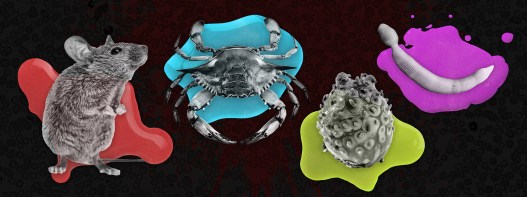
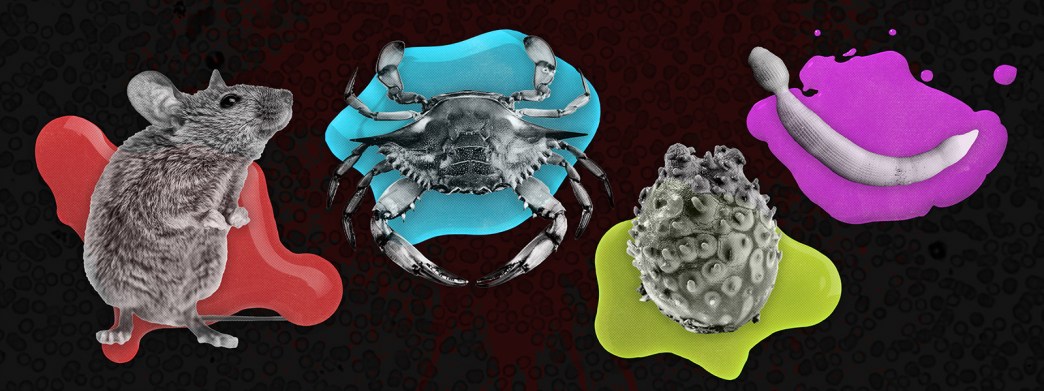
Whether it’s gushing from a bumped nose or pooling atop a pricked finger, our blood is some hue of red. But red-bloodedness isn’t universal in the animal kingdom. In some creatures, the vital fluid is purple, in others it’s yellow, green or even white.

What imparts these different colors to the liquid of life? To find out, Knowable Magazine waded into the research and spoke with a couple of scientists who have studied the stuff: John Postlethwait, a developmental geneticist at the University of Oregon, and Zachary Cheviron, an ecophysiologist at the University of Montana. Here’s what’s known about the science behind the hues.

Bizarre Blues and Purples

The rich red of vertebrate blood comes from hemoglobin, a protein in red blood cells that contains iron atoms. Hemoglobin’s job is to deliver oxygen, and its iron atoms, which grab onto oxygen, make our blood look red. When iron atoms are attached to oxygen, blood is a bright cherry red; when less oxygen is bound it’s a muddier brown-red. But many creatures don’t use hemoglobin. Octopus and squid, for example, and crustaceans such as shrimp and crabs, rely on a protein called hemocyanin to ferry oxygen around. Hemocyanin has copper atoms — which look blue when bound to oxygen — instead of hemoglobin’s iron.

Hemocyanin doesn’t bind to oxygen as efficiently as hemoglobin does. But it functions especially well in cold temperatures, such as those found in the deep ocean. And it can have more jobs than carrying oxygen in the creatures that use it — research suggests that hemocyanins can play an immunity role, aiding in healing wounds, for example.

Horseshoe crabs (left) bleed blue, thanks to copper-rich hemocyanin, while icefish (right) don’t use an oxygen-carrying protein and bleed ghostly white. Credit: Recherches Sur L’Anatomie des Limules 1873 (left); Antarctic Fishes of the Scottish National Antarctic Expedition 1913 (right)

Other marine creatures, such as clam-like brachiopods and the seafloor dwelling peanut worm, bleed violet — but not because of hemocyanin. Instead, these creatures use an iron-rich, purple-colored protein pigment called hemerythrin to shuttle oxygen throughout their blood.

Chilling Chartreuse

Some sea squirts — squishy, potato-shaped ocean-living animals — bleed greenish yellow. They do not produce hemoglobin, and there’s some debate about what imparts the yellowish hue. One candidate is the element vanadium, which many sea squirts concentrate in their blood.

Another theory points to diet. When sea squirts metabolize their staple meal, marine phytoplankton, they create carotenoids, pigments that are yellow, red or orange.

Different mechanisms can make animals bleed full-on green. Several lizard species in New Guinea use hemoglobin to transport oxygen around, like vertebrates typically do. But then they break down the hemoglobin into a naturally green pigment called biliverdin (the same molecule, when present in high concentrations, causes the yellow-green appearance of jaundice in people). And unlike most vertebrates that metabolize biliverdin into other, duller compounds, these New Guinea lizards accumulate the pigment in their blood to the point that its green hue overwhelms the red of hemoglobin in the bloodstream and tissues.

Creepy and Clear

Antarctic blackfin icefish of the family Channichthyidae are the only known vertebrates that don’t make hemoglobin and do not have red blood cells. Their blood is a milky, translucent white. “They really are kind of ghostly,” says Postlethwait.

Instead of hemoglobin or any equivalent oxygen-binding protein, the icefish rely on oxygen dissolving directly into their bloodstream. They also have larger hearts and capillaries compared with other Antarctic fish, and these can pump and circulate greater quantities of blood. Icefish are patient ambush predators — they lie in wait rather than darting around to catch their meals, expending less energy and requiring less oxygen use.

A recent study of icefish by Postlethwait and colleagues investigated the genomes of several fish species to understand why genes for making hemoglobin have been deleted from the creatures’ DNA. Whether icefish first lost their red blood cells and then their hemoglobin, or vice versa, is still a mystery, Postlethwait says. What drove the loss is also a puzzle. One notion the researchers suggest is that the cold waters of Antarctica’s Southern Ocean were oxygen-rich enough to render the middle-man job of hemoglobin obsolete.

Supercharged Hemoglobin

The bizarre colors that blood can take on are just the start of what’s amazing about blood. And the findings keep coming. In high-altitude ecosystems, many species must cope with low oxygen. This has pushed the hemoglobin of some mountain dwellers into overdrive.

The deer mouse, for example, can live up to 14,000 feet above sea level — thousands of feet higher than the point that many humans start to develop altitude sickness. The mouse has evolved hemoglobin that makes extra tight bonds with oxygen. Andean hummingbirds and high-altitude black-spotted frogs have similar alterations to their hemoglobin, too.

Yet there are always tradeoffs with adaptations, says Cheviron of the University of Montana. That high-elevation deer mouse, for example, has some trouble getting oxygen off the hemoglobin and into its tissues. They make up for missed oxygen deliveries, he says, by having higher quantities of oxygen-releasing mitochondria in their muscle fibers.

The more scientists look, the more they uncover exquisite variations of this type within blood: cells “remarkably tuned by evolution,” says Postlethwait, “that facilitate the wonderful diversity of life-forms that inhabit our Earth.”

Weird blood across the animal kingdom can also inform human health. Hemoglobin evolution in the tiny deer mouse could inspire therapies for hypoxia-inducing diseases, Cheviron says, including chronic obstructive pulmonary disease. And for the nearly 2 billion people living with anemia, or insufficient red blood cells or hemoglobin, the transparent bleeders of the Antarctic may hold clues to new treatments. “Clearly,” says Postlethwait, “the icefish have figured it out.”

This article originally appeared in Knowable Magazine, a nonprofit publication dedicated to making scientific knowledge accessible to all. Sign up for Knowable Magazine’s newsletter.

Lead Image: Knowable Magazine


Source link

Previous Post
Punitive student loans threaten the future of UK science | News

Punitive student loans threaten the future of UK science | News

Next Post
Scientists Tested a Toad Venom Psychedelic on Treatment-Resistant Depression. Here’s What Happened.

Scientists Tested a Toad Venom Psychedelic on Treatment-Resistant Depression. Here's What Happened.