

Dark Mode Light Mode
Join us on a journey where chemistry meets creativity, and the wonders of science unfold. Quench your intellectual thirst with thought-provoking articles that transcend the boundaries of conventional knowledge.

The Strange Hypothesis That Suggests Earth May Be Alive

The Strange Hypothesis That Suggests Earth May Be Alive The Strange Hypothesis That Suggests Earth May Be Alive


Earth has survived asteroid impacts, volcanic catastrophes, ice ages, and dramatic changes in the Sun’s brightness. Yet it has remained habitable for billions of years.

Was that merely extraordinary luck? Or could life itself have helped keep the planet suitable for life?

It sounds like something from science fiction. Yet the idea was developed by a respected British scientist and went on to influence how researchers think about the relationship between life and the planet.

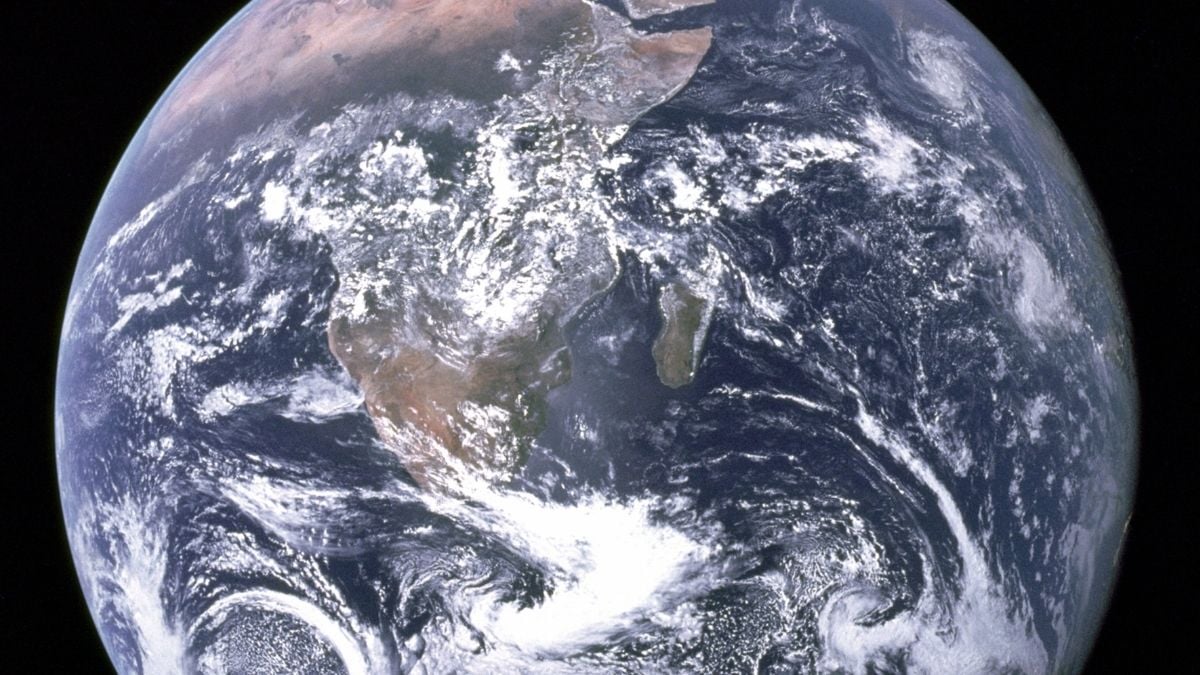
Known as the Gaia hypothesis, it proposes that Earth’s living organisms, atmosphere, oceans, soil, and rocks form one enormous interconnected system.

Through countless feedback loops, this system may help maintain conditions in which life can continue.

In other words, life may not simply exist on Earth. It may be helping to run it.

To understand what that means, think about your own body.

(helivideo/iStock/Getty Images Plus)

When you become too hot, you sweat. When you become cold, you shiver. Your body continually makes adjustments to keep its internal conditions within a safe range. This process is called homeostasis.

British chemist James Lovelock wondered whether Earth might do something broadly similar. This was the provocative possibility that he explored with American microbiologist Lynn Margulis during the 1970s.

Photosynthetic organisms help replenish atmospheric oxygen. Microorganisms produce and transform gases and compounds involving methane, nitrogen, sulfur, and other elements. Together, biological processes continually reshape the atmosphere and Earth’s surface chemistry.

None of these organisms understands what it is doing. There is no planetary control room and no committee of microbes deciding how warm Earth should be.

Their actions change the environment – and those environmental changes then affect the organisms. The result is an immense network of feedback loops linking life, air, water, and rock.

To demonstrate how something resembling planetary regulation could emerge without intelligence, Lovelock and Andrew Watson developed a model of a fictional planet called Daisyworld.

This hypothetical Daisyworld is home to only two kinds of life: black daisies and white daisies.

YouTube Thumbnail frameborder=”0″ allow=”accelerometer; autoplay; clipboard-write; encrypted-media; gyroscope; picture-in-picture; web-share” referrerpolicy=”strict-origin-when-cross-origin” allowfullscreen>

Black daisies absorb sunlight and warm their surroundings. White daisies reflect sunlight and cool them. When the planet becomes cold, black daisies thrive and help warm it. As temperatures rise, white daisies gain the advantage and help cool it down.

The daisies are not trying to save their planet, the researchers propose. They are simply growing under the conditions that suit them. Yet their competition acts like a planetary thermostat, keeping temperatures suitable for life longer than would otherwise be possible.

This thought experiment does not prove that Earth is alive, of course.

But it shows that a planet could appear to regulate itself without consciousness, foresight, or a master plan.

The hypothesis has always had its skeptics. Biologists pointed out that if organisms appear to regulate the planet ‘for the benefit of’ life as a whole, natural selection offers no obvious mechanism to have produced that – selection acts on individuals within a species, not on planets.

Daisyworld was built partly to answer that criticism, showing that self-regulation can emerge from ordinary competition rather than cooperation or foresight.

And this is where the Gaia hypothesis becomes more than an entertaining thought experiment.

If Earth resembles a self-regulating system, it is tempting to assume that the planet will correct the damage humans cause. But Gaia is not a protective mother who will always restore the world we know.

A system can regulate itself in ways that are disastrous for some of its inhabitants.

Earth has endured mass extinctions before. Life continued, but countless species disappeared. A self-regulating planet is therefore not necessarily one that remains safe for every species – including us.

Subscribe to ScienceAlert's free fact-checked newsletter

This leads to the most unsettling question raised by Gaia: are humans triggering a planetary change that could destroy us while creating conditions suitable for whatever life comes next?

Burning fossil fuels and destroying ecosystems are now altering the atmosphere, oceans, and climate on a planetary scale. Some of these changes can activate feedback loops that make the original problem worse.

Melting ice reveals darker land and water that absorb more sunlight, causing additional warming. Thawing permafrost releases greenhouse gases. Dying forests can release the carbon they once stored.

Beyond certain tipping points, parts of the system may continue changing even if humans later reduce the pressure that started the process.

Some researchers have therefore asked whether humanity could become part of a more deliberate form of planetary regulation.

Related: Earth’s Greatest Catastrophes Seem to Follow a Mysterious 27-Million-Year Pulse

2022 study described Earth as having an “immature technosphere.” Our technology is powerful enough to change the entire planet, but our collective intelligence is not yet advanced enough to control the consequences.

As ScienceAlert has previously reported, intelligence exists on Earth, but humanity has not yet achieved a mature form of planetary intelligence.

The Gaia hypothesis does not prove that our planet thinks, plans, or cares whether humans survive. Its warning may be more disturbing than that.

Earth will respond to the changes we cause. But its response will not necessarily be designed to save us.

This article was fact-checked by Fiona MacDonald and edited by Fiona MacDonald. While we pride ourselves on our process, we are only human. If you spot a mistake, please let us know.



Source link

Keep Up to Date with the Most Important News

By pressing the Subscribe button, you confirm that you have read and are agreeing to our Privacy Policy and Terms of Use
Add a comment Add a comment

Leave a Reply

Your email address will not be published. Required fields are marked *

Previous Post
Sustainable innovators honored with ACS 2026 Green Chemistry Challenge Awards

Sustainable innovators honored with ACS 2026 Green Chemistry Challenge Awards

Next Post
In Photos: The Sea Creatures Lurking Off the Shores of Nantucket

In Photos: The Sea Creatures Lurking Off the Shores of Nantucket

Advertisement