

Going to Mars is no easy endeavor. Among the many obstacles a mission to the red planet would need to overcome is resources, specifically how to feed a crew for the months or years the trip would take. To solve that problem, NASA came up with the Deep Space Food Challenge, an effort to “generate novel food production technologies” that can keep astronaut bellies full without needing to pack extra provisions that might weigh down the spacecraft. One of those novel technologies was recently unveiled at the fall meeting of the American Chemical Society: a protein-rich cookie made from plastic.
“We were trying to develop technologies for plastic upcycling to make more valuable products,” Lahiru Jayakody of Southern Illinois University said in a statement. “We thought, ‘Why not focus on making food?’ Because plastic is carbon, and food is carbon.”
The cookie recipe starts with polyethylene terephthalate (PET) plastic, one of the most common kinds of plastic used in soda bottles, electronics packaging, and more. This waste gets added to other biomass (like corn stalks) then put through a process called oxidative hydrothermal dissolution that uses oxygen, water, and heat to break the waste down into its chemical constituents—perfect bite-sized pieces for hungry yeast microbes.
Read more: “Cookie-Cutter Supernovas Might Come in Different Flavors”
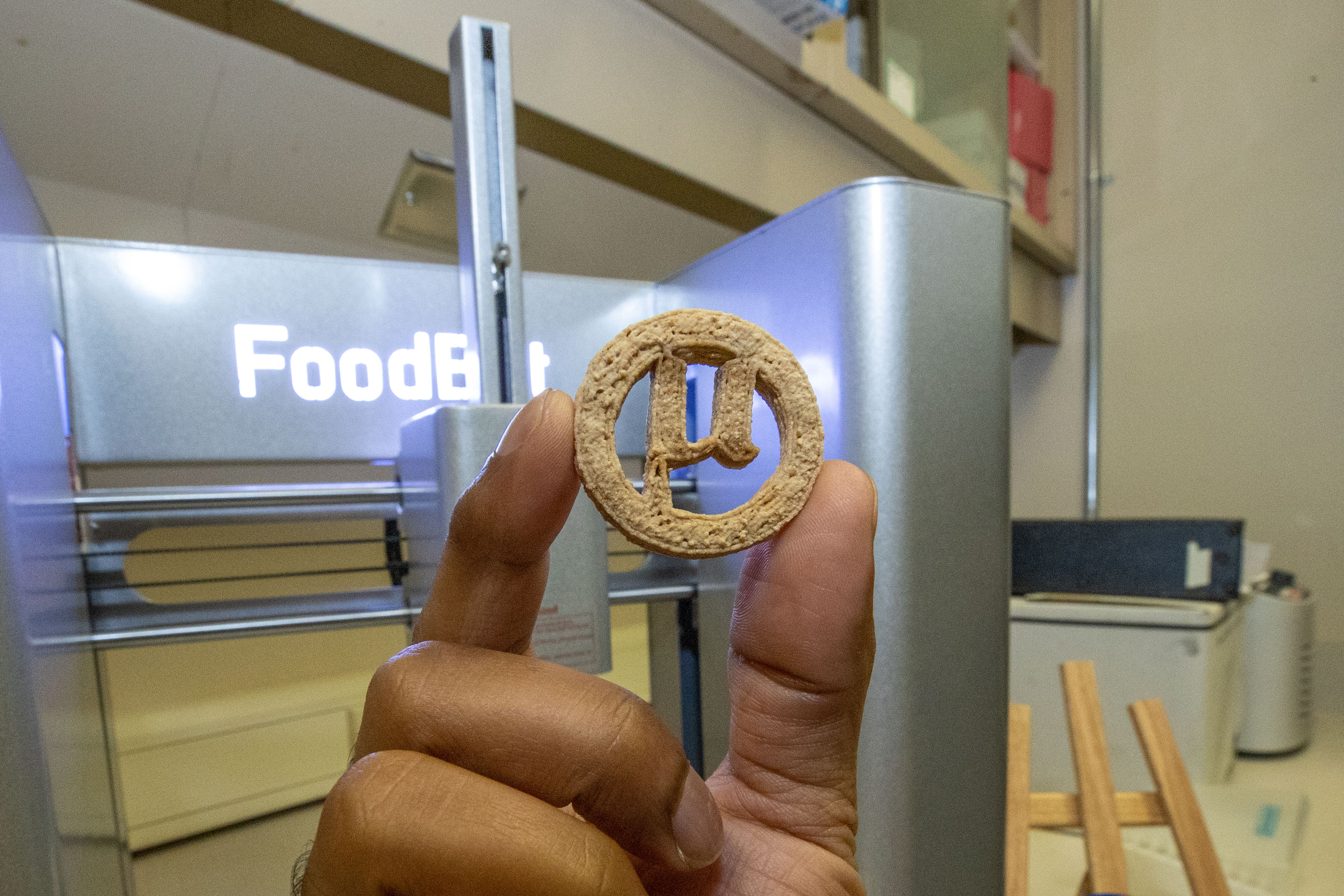
These yeast come genetically pre-programmed to produce nutrients like proteins, fats, and acids, as well as additives like vanilla for flavor and beta carotene for color and vitamin A. After fiber, starch, and sweeteners are added to the slurry, it gets glopped into a 3-D printing machine, extruded into something that resembles a cookie, and microwaved. The final product is called “µBites” (microbites).
Sounds delicious, right?
Unfortunately, the FDA approvals for taste-testing are still pending (although I’m willing to bet someone’s snuck a nibble). The aroma of the cookies, however, have gotten positive reviews, and people report that they’d eat them in “resource-limited situations,” like a disaster zone.
It might not sound like the most ringing endorsement, but this is a proof-of-concept, and the team is still refining the process. If they’re successful, the new trash-derived treats could even help combat hunger here on Earth. “Global food demand is expected to rise 35-56 percent by the year 2050, and about 30 percent of the world population will be at risk of hunger in the future,” Jayakody said. “The way to address that, I believe, is by using microbes.”
We already eat plenty of junk, at least with this one we’re cleaning up the planet.
Enjoying Nautilus? Subscribe to our free newsletter.
Lead image: SIU Carbondale Communications