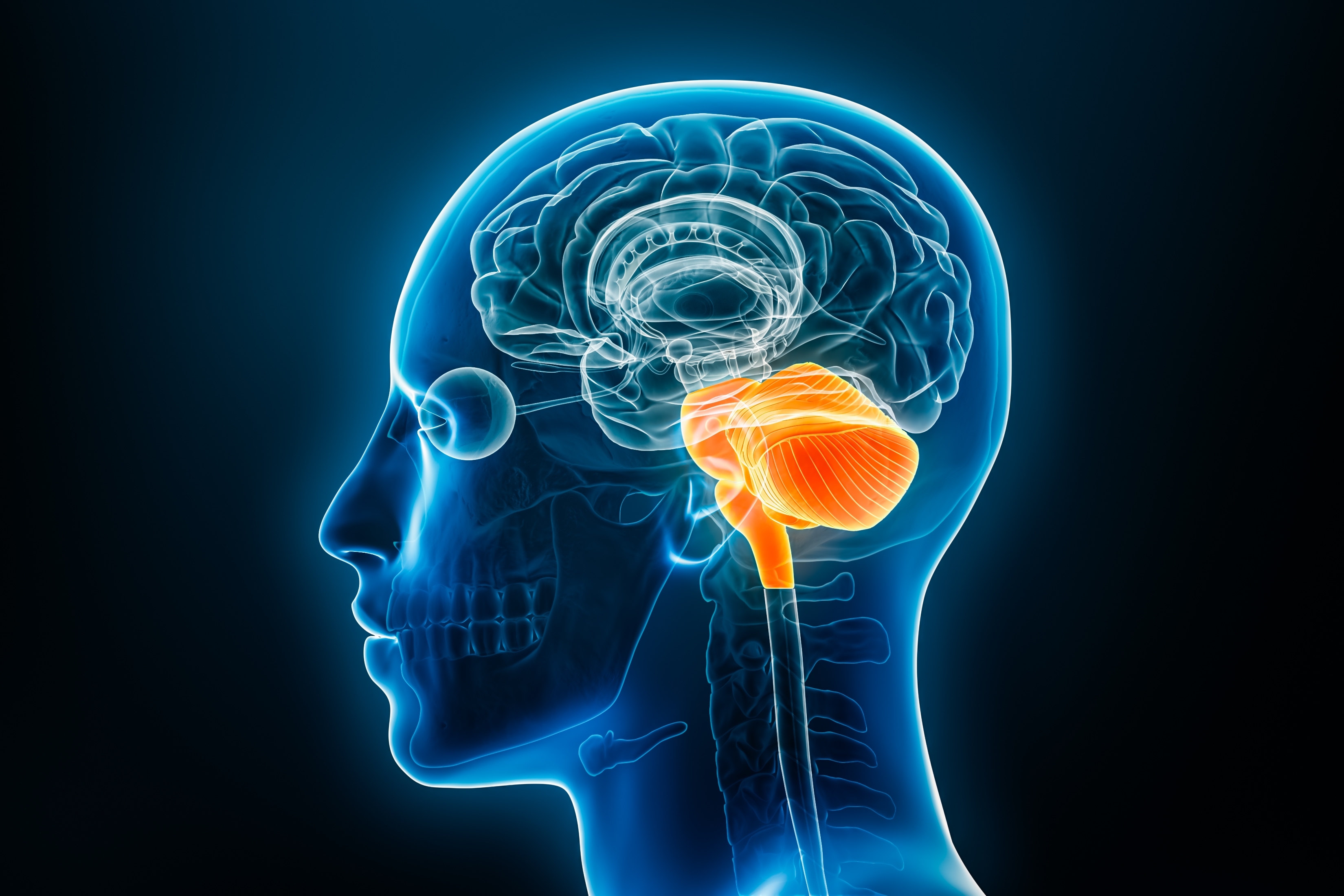
How a single cell becomes a magnificent human brain capable of building airplanes and writing sonatas is “one of the great astonishments of the earth,” wrote physician, and author Lewis Thomas in his 1979 book, The Medusa and the Snail, which won the 1981 National Book Award. “People ought to be walking around all day, all through their waking hours calling to each other in endless wonderment, talking of nothing except that cell,” Thomas continued. But as he considered the lowly origins of this wondrous organ, Thomas had a second thought, which he added in a footnote. “Maybe not one, but two cells,” wrote the author, the so-called poet laureate of twentieth century medicine.
With his humble footnote, Thomas may have anticipated a massive new discovery about the nature of the most complex biological structure known to humans: The brain is not one, but two distinct organs, according to a team of neuroscientists from California. One organ governs primitive functions, such as breathing, sleep, hunger and the beating of our hearts, while the other is responsible for poetry, memory, math, and philosophy.
Read more: “Evolution May Be Drunk, But It’s Serious About Making Brains”
The findings, which were published today in Nature Neuroscience, may overturn a model of brain development that has dominated the field for decades. They have implications not just for how we understand the evolution of human and animal brains, but how we treat diseases that originate in the brain and perhaps even how we understand intelligence and consciousness.
I spoke with study author and Stanford University developmental biologist Kyle Loh, who relayed the passage in Thomas’ book to me, about why evolution might have favored a split brain, what a rooster named Mike without a head can tell us about the brain’s organs, and how the findings may help us better understand human disease and intelligence.
Neuroscientists have generally thought of the brain as a single organ until now. Why?
The brain comprises the forebrain, the midbrain, and the hindbrain. And the forebrain does all the fancy stuff—thinking, and so on—while the hindbrain controls the life sustaining functions, which are underappreciated. In 1951 or 1952, this very famous Dutch embryologist called Peter Nieuwkoop proposed that there’s a common progenitor cell for the entire brain. And that intuitively made sense to everyone because the forebrain, midbrain, and hindbrain are all contiguous. They seem to be like one organ. The lung has two lobes, left and right, but no one would think that the lung comes from two separate origins. It’s clearly just like one organ, right?
It was a bit of a surprise, and quite the uphill battle to get our paper published because it was so widely believed that what we found was not true. In fact, when I gave a talk on this at a conference several years ago, the chair of a developmental biology department at an unnamed institution stood up and said, “This is completely false.”
What does it mean to say that the brain is two organs?
One could say this is a bit of a triviality, because if you look at any two things at sufficiently high resolution, eventually you will see two different sources. But let me qualify what I mean. We know, by definition, that everything in the body came from a single cell, the fertilized egg. What does it even mean to say that something has two origins? The current view says that the moment a cell gains brain identity or has become restricted to make only the brain—and not say the muscle or the heart—that cell is a naive cell that can make the forebrain, the midbrain, or the hindbrain.
Our work is subtly but importantly different. We know that there is a certain point in development when cells funnel down these tracks, that there is a brain progenitor. But what we found is that in the moment when a cell puts on its brain hat, it also says, “I’m already restricted to become the forebrain or midbrain versus the hindbrain.”
You discovered that the brain is at least two organs while observing the development of mouse embryos. Can you tell me what you first noticed?
We essentially just looked at a mouse embryo that was seven and a half days old. It’s just a big U-shaped clump of cells. There’s no head or tail that you can see. It was once thought that all the cells inside of the embryo would form the brain. But when we look at the expression of two different genes, one called Otx2TX2, the other called Gbx2BX2, we found that there’s clearly not one brain progenitor, but two different groups. The Otx2OTX2 will develop into the forebrain and midbrain, and Gbx2GBX2 will become the hindbrain. In the ’90s, people had already observed that these genes were turned on in different parts of the embryo, and so we were basically just taking it a step beyond that.
What do we know about when this kind of two-part brain first evolved?
If you look very far back in evolution to the jellyfish, you notice they don’t actually have one brain. They have two physically separate nervous systems. I believe the idea that the brain is one organ is a historical anachronism because scientists studied mice and humans first, where obviously you have a skull and one big squishy gray thing inside of it. It seems obvious that the brain is one organ and it would come from a common progenitor cell.
But I think if scientists had studied jellyfish first, they’d say, “Well, there’s this weird animal under the ocean. It obviously has two physically separate nervous systems at different ends of the body. They probably came from different sources.” No one would think that these are the same thing. They’re two separate things. And so probably they would have realized that evolution had taken the existing Lego building blocks and pushed those progenitors together, giving rise to the appearance of one brain. They’re kind of pushed against each other to make it more efficient essentially.
In our work, we did not deal with the jellyfish themselves, but we looked at monkeys, humans, chicken, zebrafish, and acorn worms. It was quite amazing that these two brain progenitors conserved across all five of them, including the acorn worms, which I think is very remarkable because acorn worms diverged over 500 million years ago, which is before the supercontinent Pangea formed. If you look at a photo of an adult acorn worm, you’ll agree it looks nothing like a human.
Apparently, the heart is similar, with two different fields combining into one. Why would evolution favor this kind of bifurcated development in major organ systems?
It seems very counterintuitive, right? You think that development is such a complicated thing that happens over nine months, you’d want it to occur in the most parsimonious way. But evolution is just really a series of accidents. The heart is actually the clearest example, because we have four chambers of the heart, but we began with one, which became two, and then later four in evolution. It’s very clear that the first chamber came from one of those progenitors. And then essentially, we initiated one-chambered hearts. Actually, neck muscles were then recruited into the heart in later stages to build the remaining chambers, which is something that not many people appreciate.
That’s very weird!
It’s very weird, and I think exceptionally interesting when you look at the developmental origins of organs. You get this very strange view of evolution and what stood the test of time. To a human, it doesn’t seem obvious because the heart is one entity, the atria and ventricles have to function together as one system. You’d never think that one was basically built after the other.
You write in the paper that the origin of the cerebellum—a part of the brain at the very base of the skull that coordinates movement, balance, and posture—is not resolved, and you suggest that maybe that could be even a third pathway?
That’s right, because basically people are saying why stop at two? Maybe there are more than two organs in the brain. But I can’t speak to that because we don’t have any data supporting or refuting the idea. But at the very least, there are two separate organs.
The more interesting thing that we’re working on right now is whether the spinal cord—which comes off the back of the hindbrain—also derives from a different source. We’re still working on that, but hopefully in a year or two we will have some results.
All these organs are integrated or are continuous and connected by very long linkages between these axons, but it seems that developmentally, they’re made in different pieces and kind of glued together essentially.
You note that your discovery helps explain why scientists have struggled to grow hindbrain cells in the laboratory: They had been using the wrong progenitor cells. Why is it so important to be able to grow these hindbrain cells?
The hindbrain is the life sustaining part of your brain that controls eating, sleep, wakefulness, heartbeat. Have you heard about the headless chicken? In the 1940s, a farmer beheaded a rooster named Mike, but he didn’t cut off the whole brain. He left the hindbrain intact. The chicken survived for 18 months after that, a story that was written up in Time magazine in 1945. It shows you that all the things that you need to survive are controlled through this hindbrain. The neurons that control REM or non-REM sleep, the circuits that control wakefulness and anxiety, are in the hindbrain. Brain death happens in the hindbrain. It’s the brain stem. Because it’s required for consciousness and wakefulness, if it is damaged, you’re not conscious. It’s also how Ozempic works.
Tell me about how the hindbrain governs ozempic.
As you know, many people have tried weight loss drugs for a long time, which have not really worked. There’s a certain part of the brain in the forebrain called the hypothalamus that controls energy balance. People have tried a drug called leptin that impacts the hypothalamus, but it’s never helped humans lose weight. Hunger is an evolutionarily ancient survival drive, like breathing or the heartbeat, so it makes sense for it to be controlled by the hindbrain, and it’s actually very clear now that the hindbrain controls hunger, and that’s how Ozempic works. A recent paper in Cell Metabolism demonstrated this. They gave Ozempic to a mouse. The mouse loses appetite and it begins to lose weight pretty quickly. Then they basically destroy some of the hindbrain neurons in the mouse that bind to Ozempic, and suddenly the Ozempic doesn’t work. The mice don’t lose appetite or weight.
You note that there are other diseases that affect the hindbrain that could be helped by your findings. Can you tell me how this would work?
It was previously hard to make these hindbrain neurons in a Petri dish, but by discovering this unique road leading to the hindbrain, we’re able to do that. It’s like going down a main road, going home, that leads to the forebrain, midbrain. But we didn’t know there’s a concealed side entrance leading to the hindbrain. We never knew where to turn off to get there. Now that we know, we were able to make these hindbrain cells in a Petri dish for the first time.
One thing we really care about beyond heartbeat, hunger, breathing, is that the hindbrain controls certain kinds of movement, which are governed by the motor neurons. One set of motor neurons in your spinal cord controls your arms and legs. A second group of motor neurons sit in your hindbrain and they project through your cranial nerves to enervate your face, jaw, eye, tongue, and neck muscles. These might not sound that important, but they’re essential for eating and swallowing, which is essential for life. They’re also essential for facial movement and speech. We could not conduct this interview without this powerful group of neurons. And evolutionarily, facial movement and speech distinguished us from other animals.
The reason to care, for most people, is because of some deadly neurodegenerative diseases, like ALS, Lou Gehrig’s disease, and spinal muscular atrophy. Spinal muscular atrophy is the number one genetic killer of babies less than one year old. And these patients die in part because they can’t eat or swallow. If you can’t eat or swallow, you choke and often die. With our new hindbrain neurons in a Petri dish, we can study how ALS and SMA work and look for potential treatments.
Can your finding tell us anything about why we’ve struggled to understand consciousness? If the brain is made up of two different organs, then maybe how it shapes subjective experience is different than we thought. I was recently talking with leading consciousness expert Antonio Damasio, and he believes that having a body is essential for consciousness. One of the reasons he believes this is due to repeated experiments showing that in patients who completely lack consciousness, it’s almost always due to damage to the hindbrain.
I guess one way to think about it is that there are two different paths to make the brain. It is kind of special that one of them leads to the consciousness part. That seems like an important part that you’d want to separate out and do stuff to.
If the brain consists of two distinct organs, does that tell us anything about how human intelligence differs from AI intelligence?
The forebrain does the fancy stuff like memory or creativity, and that’s immediately the first thing that people associate with AI. Is it being creative? Some people could argue not. But if hindbrain is required for consciousness, that’s being alive in a very different way than being creative or having memory. Many people would say creativity and memory are more special and unique, but many biological systems exhibit memory without being conscious, like yeast. Yeast cells can remember, and they have no brain. They’re single-cell organisms. If you put a yeast cell in poor nutrient conditions, it will remember this for the next few generations and divide more slowly because it doesn’t want to use up existing nutrients. This is communicated through long-lived proteins that a mother cell will pass on to its daughter. There are very ancient forms of biological memory that have nothing at all to do with the nervous system.
Does the idea that these two separate brain organs developed distinctly across evolution tell us anything about why humans advanced so quickly in higher level thinking?
This is speculation, but I think that when you build an organ from multiple different sources, it gives you modularity. You can tinker with one part without affecting the other. Evolution could play around with the forebrain without worrying about damaging the hunger or breathing circuits, which are so important. I believe that is what multiple organ progenitors buy you: the modularity to play in evolution.
Enjoying Nautilus? Subscribe to our free newsletter.
Lead Image: MattL_Images / Shutterstock