
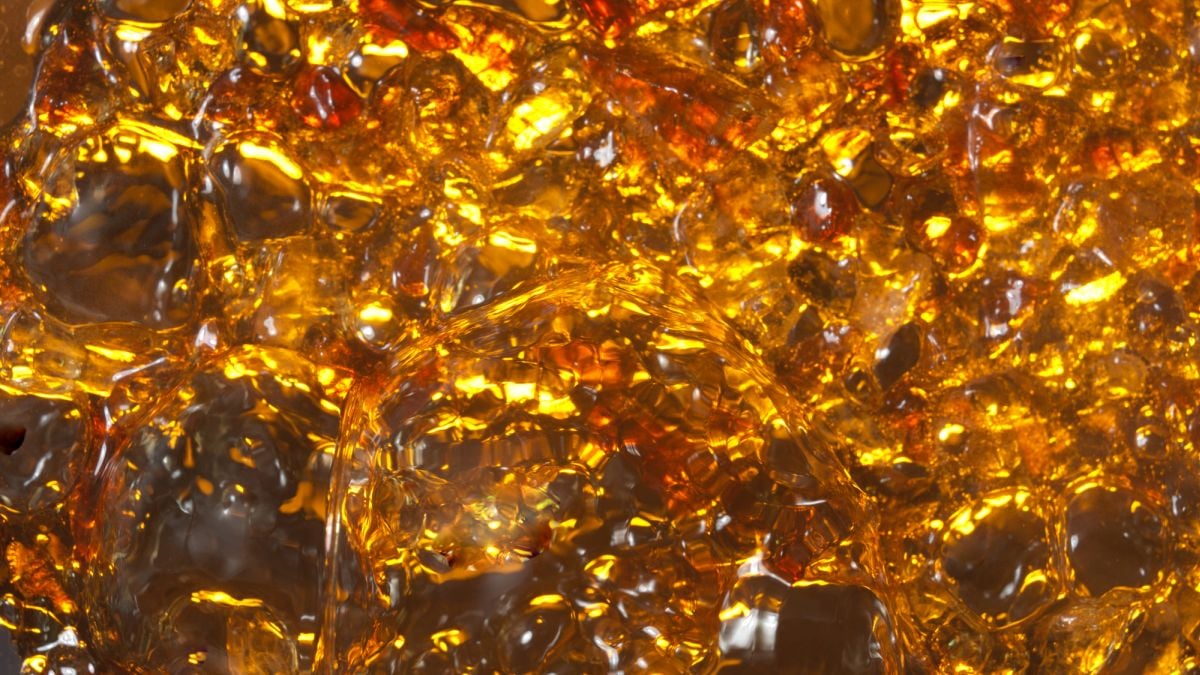



These prismatic crystals are more than just pretty light-catchers. The researchers who made them believe they could be the future of quantum computing. The crystals contain an organic carbene compound whose two unpaired electrons, located in orthogonal molecular orbitals, allow the molecule to function as a quantum bit (qubit), the fundamental circuit component in quantum computers.
Carbene qubits have several advantages over other molecular qubits, says Tobias Schaub, a senior director of quantum chemistry research at NVision Quantum Technologies. They are easier to synthesize and fabricate than inorganic materials, and they are able to hold their quantum spin states for longer than organometallic qubits. Organic materials offer a “vast molecular design space” for researchers to refine the qubits’ optical, electronic, and magnetic properties, Schaub says. The one downside is that carbenes can be reactive, which is why these are embedded within a stabilizing crystalline matrix of similarly sized ketone molecules.
Credit: NVision Quantum Technologies
Do science. Take pictures. Win money. Enter our photo contest.
See more Chemistry in Pictures.