


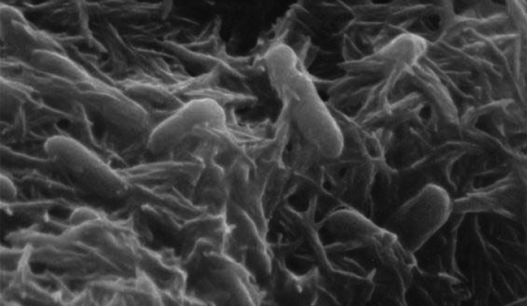




The world’s worst nuclear disaster didn’t only affect humans.
When the Chernobyl Nuclear Power Plant experienced a catastrophic explosion on 26 April 1986, radioactive fallout compelled Soviet authorities to abandon the area, declaring a giant exclusion zone that covered about 2,600 square kilometers (1,000 square miles).
Studies have since shown that animals came to thrive in the abandoned Chernobyl Exclusion Zone (CEZ), free from the interference of living human populations.
At the time of the evacuation, many residents were forced to leave their pets behind, and ‘liquidators’ were subsequently sent in to destroy the remaining animals, along with livestock in the contaminated area.
But many animals survived the purge.
“It is unclear how many animals were able to evade the liquidators, but enough domestic dogs escaped this fate to establish persistent populations within the zone,” researchers explain in a new paper in Genes, led by first author and population geneticist Megan Dillon from North Carolina State University.
“Several hundred dogs are now estimated to inhabit the CEZ and are thought to descend, at least in part, from pets left behind after the disaster.”
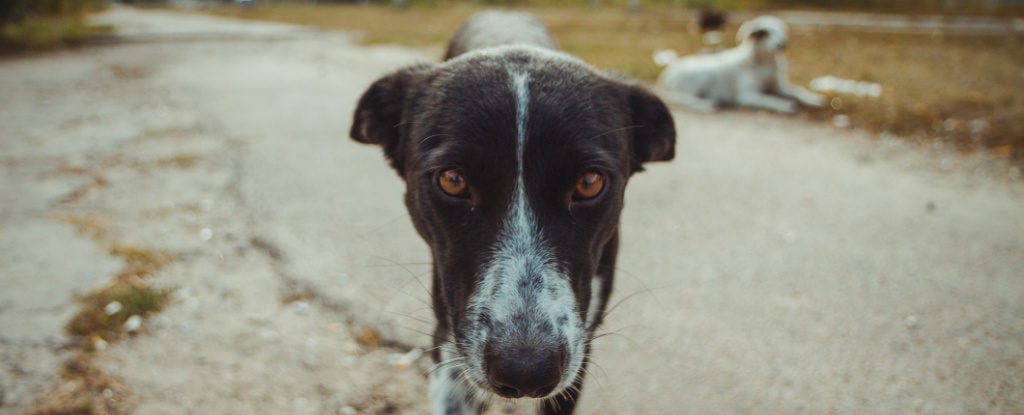
These dogs, now more than 30 canine generations removed from the disaster, offer a unique opportunity to study how decades of contamination might affect living organisms and their evolution.
In a study published in 2023, some of the same research team analyzed the dogs, finding that dogs that lived near the site of the abandoned nuclear power plant were genetically distinct from dogs that lived further away, leaving open the possibility that the genetic variations could be the result of mutations caused by lingering radiation.
A follow-up study in 2024 found no evidence that mutations were driving the genetic differentiations, so Dillon and fellow researchers kept investigating, in an attempt to solve the mystery.
“This [new study] ties up some of the loose ends from our previous work, where in characterizing the population’s genetic structure we found that while these two dog groups are geographically very close, they have a very high degree of genetic difference, and those differences aren’t due to mutation,” says Dillon.
“With this work we wanted to explore two additional larger-scale evolutionary drivers – are the genetic differences due to selection, or are they due to genetic drift over time in an isolated population?”
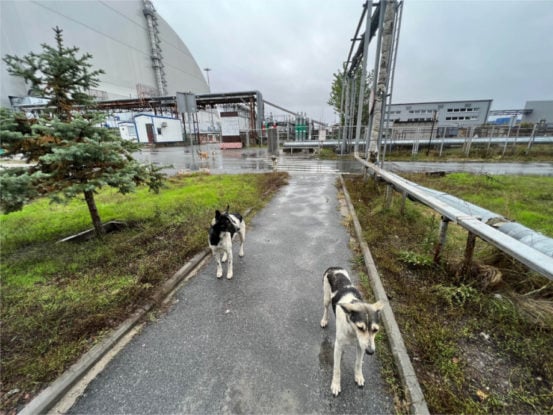
In the new research, Dillon and team analyzed whole-genome sequence data collected from 106 dogs between 2018 and 2019, including animals from the Nuclear Power Plant (NPP) and from Chornobyl City (the Ukrainian spelling of Chernobyl), approximately 16 kilometers (10 miles) away.
If mutations aren’t responsible for the genetic differences seen in dogs living at the nuclear plant, natural selection could be an explanation, with existing genetic variants becoming more common if they improve an organism’s chances of surviving and reproducing in a particular environment.
Alternatively, it’s possible genetic drift could explain the result, in which genetic changes occur at random, not necessarily conferring any survival advantages.
In the case of the dogs living near the nuclear power plant, however, the differentiation doesn’t seem to be down to chance alone.
The researchers found evidence of changes concentrated in specific genomic regions located near genes associated with cancer, cellular function and maintenance, infectious diseases, and immune response.
“While we can’t say for certain whether what we’ve found can be directly confirmed as selection, we do find these genomic signatures suggestive of selection,” Dillon says.
“When we dig deeper into those genomic regions, we find that these genes are involved in biologically relevant pathways that could allow them to overcome the effects of being exposed to toxicants in this environment.”
We don’t know for sure, and it will fall to future research to investigate further, but the researchers think it’s plausible that in the wake of the disaster, some dogs may have had existing genetic advantages that protected them from cancer, or gave them better immune responses, or resistance to toxic exposures.
As time passed, those dogs may have bestowed survival advantages to their offspring, as did each successive generation, in a mode of natural selection called directional selection.
“When we consider the toxic environment around Chornobyl, I can see why most people would think, ‘Surely there’s got to have been some consequence of living in that environment,'” says geneticist Matthew Breen from North Carolina State University.
“But what we’re saying is the consequence may not have gone as far as changing the dogs’ genome in order to adapt, it could be the ones that were able to survive the initial exposures had this level of underlying genetic diversity and variants to offer a higher degree of fitness.”
The findings are reported in Genes.
Editor’s note: This article selectively uses the spelling “Chernobyl” to reflect the historical context of the 1986 disaster, when Ukraine was part of the Soviet Union and Russian transliterations were widely used. The Ukrainian spelling is “Chornobyl”.
This article was fact-checked by Rebecca Dyer and edited by Rebecca Dyer. While we pride ourselves on our process, we are only human. If you spot a mistake, please let us know.


