


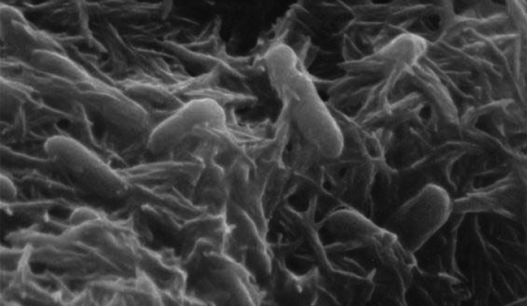



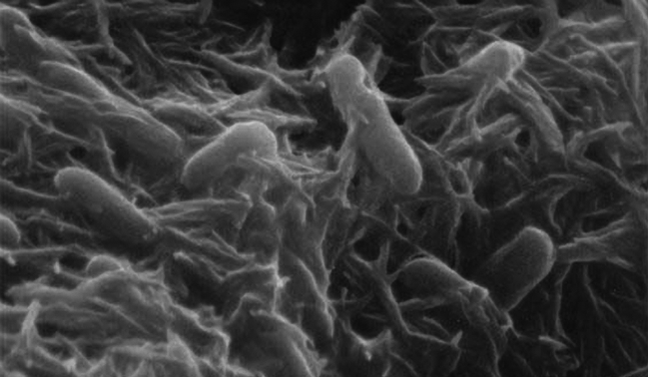
Halloween seems like an appropriate time to let you know that zombies are real. Or at least zombie bacteria are, according to a timely new study published in Angewandte Chemie. A team of biologists and nanoscientists made the discovery after researching two species of bacteria used to clean up heavy metals.
But first, any good zombie story needs a little exposition. Some bacterial colonies can produce a biofilm, a sticky matrix that allows them to adhere to wet surfaces, offers protection, and promotes growth. It’s a little like a slimy neighborhood of bacterial houses (and it also makes up dental plaque).
Inside the bacterial houses, they’ve got other interesting things going on, like dormant phages. These tiny pieces of viral DNA sit inactive in many bacterial species until certain environmental conditions, like starvation, activate them. By utilizing both these features, scientists from Denmark’s Aarhus University recently discovered something else interesting—bacteria can keep producing DNA after they die.
By starving two different bacterial species (Shewanella oneidensis and Bacillus subtilis) of nutrients , the team activated their dormant phage DNA, kickstarting the replication process and causing the bacteria to burst open. Remarkably, their intracellular “guts” spilled into the biofilm and continued churning out DNA. “In a way, life goes on after the bacterium has died,” study author Gabriel Antonio Minero of Aarhus University said in a statement.
It’s a fascinating finding in its own right, but what’s even more intriguing is how we may be able to harness this pathway for our own benefit. “What matters most to me is that we can hijack the process,” Minero said.
The team coaxed the bacteria into producing DNA folded into specialized structures called G-quadruplexes, which can act like enzymes, binding to other molecules and catalyzing chemical reactions. According to the researchers, that opens up the possibility that the bacteria could be chemically programmed to perform tasks like wastewater cleanup.
In the future, you might sip fresh, pristine water courtesy of zombie bacteria.
Lead image: Wikimedia Commons


