






In 1802, the famous German composer Ludwig van Beethoven wrote a desperate letter to his brothers that he never sent.
In his short life, the famous musician suffered from chronic illness, hearing loss, and severe gastrointestinal and liver problems.
His state of health, Beethoven wrote at the age of 31, was “hopeless” and he feared “the prospect of a lasting malady.”
“As soon as I am dead,” he beseeched his brothers, “if Dr. Schmid is still alive ask him in my name to describe my malady and attach this document to the history of my illness so that so far as possible at least the world may become reconciled with me after my death.”
Now, 200 years later, Beethoven is finally getting his wish.
The exact cause of his death in 1827 is still unknown, but scientists have now found evidence that hepatitis B and lead poisoning might have played a role in his afflictions.
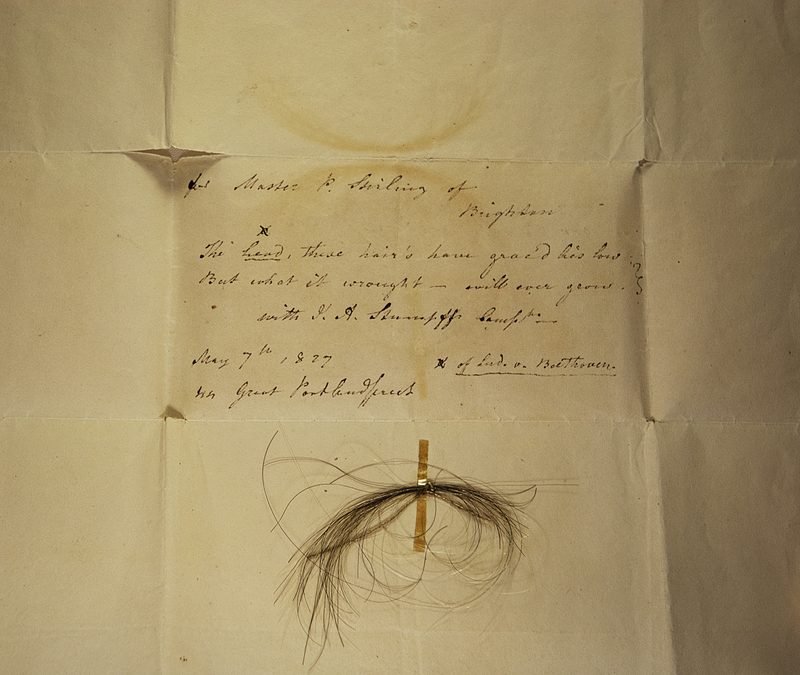
During his life, Beethoven gave some of his friends cuts of his hair, and after his death, many more samples were collected from his head and preserved by acquaintances, scholars, collectors, and museums.
Several of these precious locks are now being analyzed by researchers to better understand the composer’s health way back in the 19th century.
In 2023, genomic sequencing revealed that some of these locks did not come from Beethoven’s head after all.
But others likely did, and those samples suggest that the composer’s death may have been partly caused by a hepatitis B infection.
Heavy alcohol consumption may have also exacerbated damage to his liver.
“We cannot say definitely what killed Beethoven,” biochemist Johannes Krause from the Max Planck Institute for Evolutionary Anthropology explained in a press statement in 2023.
“But we can now at least confirm the presence of significant heritable risk, and an infection with hepatitis B virus.
“We can also eliminate several other less plausible genetic causes.”
These findings, published in Current Biology, were enlightening.
But they still could not explain the causes of Beethoven’s hearing loss or his gastrointestinal issues.
The next year, in 2024, another team of researchers found a second explanation.
They discovered signs of lead poisoning in two bundles of Beethoven’s hair, one of which is historically determined to have come straight from the musician’s head.
That sample contained a lead concentration 95 times greater than the reference range. It also had high levels of arsenic and mercury.
The study was led by Nader Rifai of Harvard Medical School, with researchers from the Mayo Clinic and Beethoven specialists, and the findings were published in Clinical Chemistry in 2024.
The lead levels found in Beethoven’s hair equate to a blood concentration of up to 71 micrograms per deciliter (µg/dL), the researchers say.
That isn’t enough to cause death, but it may have contributed to several of Beethoven’s ailments.
“Such lead levels are commonly associated with gastrointestinal and renal ailments and decreased hearing but are not considered high enough to be the sole cause of death,” Rifai and colleagues wrote in a short letter to the editor.
The idea that Beethoven might have been exposed to dangerous levels of lead was first put forward at the turn of the century.
At the time, drinking vessels were often made of lead, and several medical treatments depended on this metal, without experts realizing its toxic effects.
Decades later, however, researchers would find that the locks of Beethoven’s hair that first revealed high levels of lead actually belonged to a woman – not the musician after all.
Now, we have better techniques to ensure the hairs we are examining actually belong to Beethoven.
Using this evidence, a 2025 study hypothesized what would happen if Beethoven lived today, “with comparable health complaints, clinical symptoms, or test results”.
What would a doctor say to this modern Mr B? And how would he be treated?
If the physician ordered blood tests, researchers say that Beethoven’s blood lead concentration would be roughly 17 times higher than that of 95 percent of adult men in Germany in 2019.
To put those concentrations into clinical perspective, a modern physician might compare Beethoven’s results to the German Human Biomonitoring Commission’s values.
“This provides a medical orientation,” the authors of the study explain.
“In the case of Mr. B, his blood lead concentration would be 2.8 times the HBM-value II.”
That means his risk of adverse health outcomes from lead is very high.
“Empirically, exposure to lead at this level may contribute to or cause health problems,” the authors conclude.
They compare Beethoven’s multiple diagnoses to the saying “a patient who has fleas may also have lice.”
His hearing loss and abdominal pain are not necessarily caused by one exposure alone.
Related: DNA From The Shroud of Turin Reveals a Surprise Centuries Later
While Beethoven might have been blessed with musical skill, he was cursed by poor health.
What he managed to achieve despite his maladies is truly impressive.
In his 45 years of composing, Beethoven created more than 700 works.
“… to my art I owe the fact that I did not end my life with suicide,” Beethoven wrote to his brothers.
“It seemed impossible to leave the world until I had produced all that I felt called upon me to produce, and so I endured this wretched existence…”
This article was fact-checked by Rebecca Dyer and edited by Rebecca Dyer. While we pride ourselves on our process, we are only human. If you spot a mistake, please let us know.


