






If you’re not used to cold showers, they’re not exactly for the faint of heart.
Opting to immerse your naked body in a torrent of frigid water might even seem like pure masochism, but evidence suggests there are reasons to take the plunge.
In a series of experiments, psychologist Lena Glaser investigated the effects of people having cold showers, as part of a broader study into the psychological factors involved when people are urged to adopt new behaviors.
The research, completed as part of Glaser’s doctoral dissertation at the University of Basel in Switzerland, uncovered a striking finding.
In a pooled analysis of three randomized controlled trials involving 719 people, participants who regularly took cold showers reported 31 percent fewer days off work due to illness, compared with those who didn’t regularly take cold showers.
The cold shower group also saw a 26 percent reduction in reported illness days, compared to the participants who mostly took warm showers.
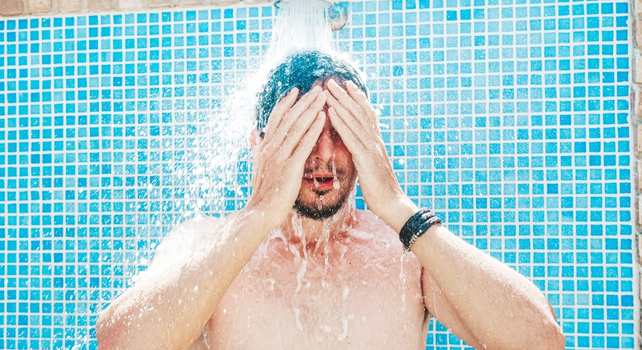
In addition, participants taking cold showers reported slightly improved psychological well-being in questionnaires during the experiment. They also reported signs of improved physical well-being, but the measurement was not statistically significant.
According to Glaser, many participants dropped out in the first two weeks of the experiment, but the dropout rate declined after that. Among those who stuck with it at least 70 percent of the time, an average of 77.3 to 90 percent reported taking cold showers in any given week, depending on the trial.
“That suggests people gradually get used to it,” Glaser says.
The key findings echo a 2016 study, which similarly found that people taking cold showers showed a 29 percent reduction in absence from work due to illness, although it didn’t observe a reduction in days when people felt ill.
“Our pooled analysis shows a clear reduction in both illness days and sickness absence, suggesting a robust effect that translates directly into improved work attendance and reduced productivity loss,” Glaser and fellow researchers write in their preprint paper, which has been submitted to the Journal of Health Psychology.
With regard to the well-being effects, the researchers suggest the benefits of cold showers extend beyond illness prevention and can deliver a more holistic improvement in people’s well-being.

“Crucially, the observed improvement in well-being directly refutes the common initial concern that a cold shower intervention would lead to a worsening of the participants’ well-being or comfort,” the team writes.
“Our findings on improved well-being suggest that cold showers might offer [an] effective method for improving mental and physical health, thereby potentially reducing the risk factors that lead to sickness absence in the first place.”
It’s worth noting that the findings have not yet been peer-reviewed, the results come from self-reported data provided by the participants during the experiment, and participants were grouped by how often they actually took cold showers rather than at random.
But if future studies can confirm and replicate these results, cold showers could make for a simple, low-cost intervention in workplaces that promotes employees’ health while curbing absenteeism, the researchers say.
As to what it is about cold showers that might provide benefits to health, this study didn’t look at the biological mechanisms.
But a study published in 2024 found that people who took cold showers showed increased signals of immune response, suggesting that repeated exposure to cold water might confer benefits to immunity, and similar effects have been seen in studies investigating cold water immersion.
If so, it’s possible those immune effects could translate into fewer days when people fall ill – and fewer days missing work as a result – but we’ll need more research to confirm the theory.
For now, if you want to try taking cold showers yourself, Glaser suggests starting off slowly, gradually dropping the temperature over time, and experimenting with it to stay comfortable.
“The water doesn’t have to be equally cold every day,” she says.
“It’s important to listen to your body and pay attention to how you feel. But sometimes it’s worth pushing yourself a little.”
The findings are reported in Lena Glaser’s doctoral dissertation, available on the University of Basel’s website.
This article was fact-checked by Rebecca Dyer and edited by Rebecca Dyer. While we pride ourselves on our process, we are only human. If you spot a mistake, please let us know.


