Nature, Published online: 29 May 2024; doi:10.1038/d41586-024-01363-3
Innovative solutions are needed to decrease greenhouse-gas emissions. Field trials show that supplementing farm soil with a bacterium that consumes the greenhouse gas nitrous oxide can substantially lower harmful emissions.
Reaching peak groundwater pumping could impact agriculture across the globe
Peter Bennett / Alamy
Groundwater extraction is set to peak globally within the next three decades as unsustainable pumping depletes accessible stores. This could reshape the food and water systems that serve at least half the world’s population.
Between 1960 and 2010, global groundwater extraction increased by more than 50 per cent, largely to irrigate crops. Today, one-fifth of all food is produced using groundwater. Much of this water is extracted from aquifers faster than they naturally refill, driving declining water levels. This…
Making agricultural trade policies more sustainable calls for an integrated, systemic, multi-method approach covering multiple dimensions of sustainability.
Having played a key role in providing food security and diversifying diets, global agricultural trade has also generated negative impacts on environmental sustainability, social well-being, and economic viability in global agri-food value chains.
The EU Horizon2020 project Making Agricultural Trade Sustainable (MATS) identifies some of these impacts and showcases an innovative approach to identify leverage points for sustainable transformation.
The MATS project responds to the need for agricultural trade policy analysis that manages complex interrelations between natural, social, and economic systems from local to global level.
In so doing, the project outputs include an integrated multi-method approach for policy analysis, including 15 case studies, leading to a set of policy recommendations and transition pathways towards more sustainable agricultural trade policies.
Focusing on governance, design, and implementation improvements at EU, African, and global levels, this approach transcends sustainable agricultural trade and is applicable to other sectors and contexts.
Furthermore, integrating environmental and social externalities into economic analysis, this approach holds transformative potential for policy evaluation and impact assessments in the fields of agricultural trade and sustainable development.
Finally, MATS analysis identifies and strengthens the links between trade policies and sustainable investments to unlock the transformative potential in global agri-food value chains. Building upon these links, MATS hopes to contribute to drafting future policies that foster the positive and mitigate the negative impacts of trade on sustainable development.
The MATS project runs until the end of 2024. Here, we present the key project features and discuss the lessons learned so far towards enhanced tools for policy evaluation and for making agricultural trade more sustainable.
A core part of the MATS integrated multi-methods approach was to conduct 15 in-depth country, regional, and product (commodity) specific case studies. The aim was to provide local-level evidence and shed light on the intricate linkages between key elements in the food system, mainly focusing on African countries, but also covering Europe and Latin-America.
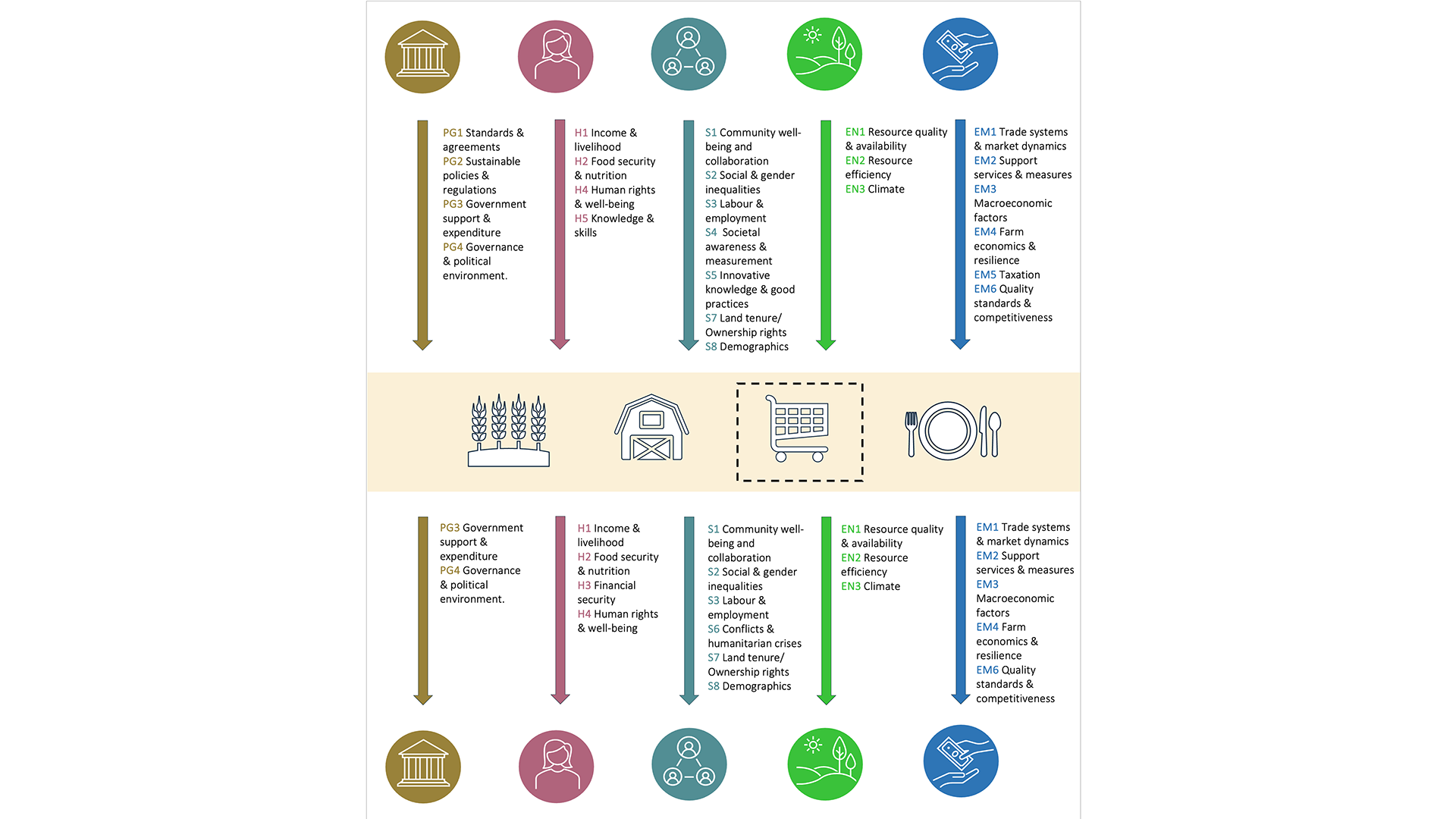
The MATS Agricultural Trade Systems Conceptual Framework (Fig. 2) illustrates these linkages and identifies how elements across political, human, social, environmental, and economic dimensions interrelate with agricultural trade regimes and policies.
Understanding this complex structure is pivotal for identifying leverage points to effectively address the key positive and negative impacts of trade on environmental sustainability and human well-being.
For example, a case study that examined linkages between Tunisian olive oil exports and water use showed that export trend has a high hidden economic, social, and environmental cost. Export and import oriented firms accumulate economic gains while traditional farmers and local consumers lose.
Furthermore, government policies favouring export-oriented large olive oil plantations have led to monoculture (that accounts for 80% of olive oil plantations), over-irrigation, and deterioration of soil, to mention a few drawbacks.
Another case study that concentrated on the alleviation of poverty among smallholder coffee farmers in Tanzania, found that unstable government policies on agriculture and co-operatives has decreased the effectiveness of the coffee value chain and the institutions governing the sector.
Fig. 1: MATS Agricultural Trade Systems Conceptual Framework
Small-scale farmers are the least privileged in the value chain, not competitive enough, have poor access to financial instruments, and are often excluded from the decision making. To uplift smallholder farmers, agricultural marketing co-operatives should be strengthened through capacity building in governance and market intelligence, their participation in the decision making should be fostered, and access to financial instruments guaranteed.
The importance of identifying leverage points
The joint analysis of the 15 case studies unveils key leverage points in three dimensions: Policy and regulatory frameworks, economy and markets, and social capital.
Regarding policy and regulatory frameworks, the findings suggest that participatory governance should be fostered by facilitating more collaborative and community-based work along the value chain, creating spaces for diverse stakeholders to engage in understanding issues (such as externalities or market power asymmetries), and collectively identifying potential solutions to inform policies and influence decision-making.
Additionally, policymakers should establish robust facilitation and resolution mechanisms between public and private institutions involved in global agri-food value chains for greater policy coherence and more effective implementation of policy interventions. To further improve policy coherence, it would be essential to ensure regulatory consistency across different sectors, aligning them with evolving political and socioeconomic context, and recognising the specificities of local context.
Transparency and accountability are foundational leverage points for enforcing regulations and promoting the adoption of voluntary sustainability standards and certifications. Without a clear understanding and support from local and global stakeholders, policies and projects may fail to contribute to establishing a system rooted in fair trade, socioeconomic justice, and ecological resilience.
The case studies underscore the delicate balance between prioritising competitiveness to meet the demands of global markets, and the need for strengthening resilience of domestic agrifood systems in terms of working towards food self-sufficiency through enhanced local markets. This balance is particularly vital in regions where a significant portion of the population faces food security challenges.
Within the dimension of economy and markets, access to finance for small- and medium-scale farmers was identified as essential for adopting sustainable production practices and enhancing competitiveness. Investments in infrastructure and technology were found to be key leverage points for adding value to farming products and reducing transportation and operational costs derived from a strong dependence on imported inputs.
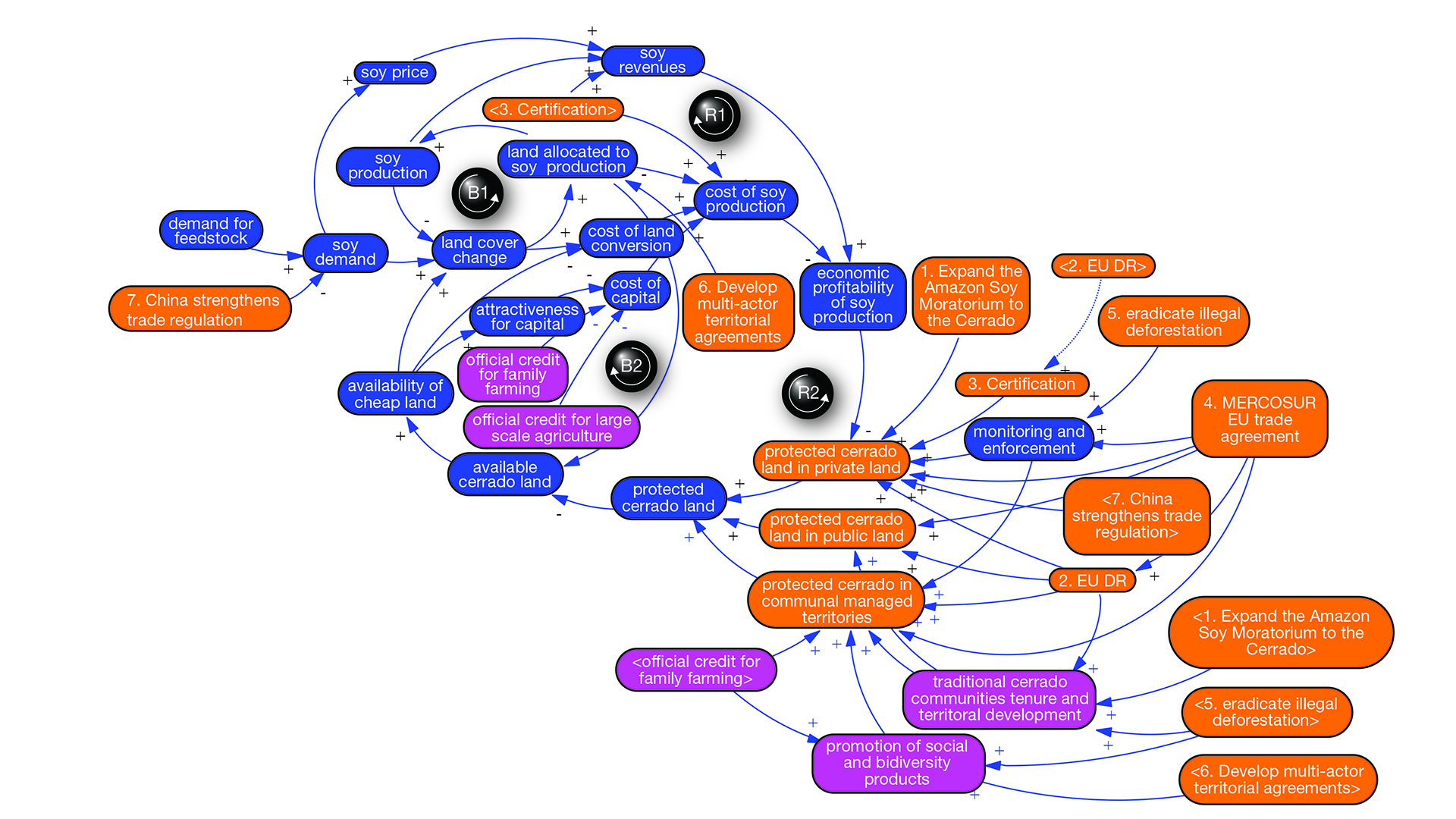
Fig. 2: Causal Loop Diagram developed in the case study on the Cerrado region in Brazil
Improving access to technology, especially for smallholder farmers, to enhance pricing transparency was identified as a potentially powerful lever to ensure fairer prices and address power imbalances.
Finally, within social capital, supporting associational membership, local partnerships, and collaborations along the global agri-food value chain were identified as key leverage points for strengthening inclusive decision-making and traditionally marginalised actors such as smallholder farmers.
Addressing the complexity of the global agri-food value chains
The second key part of the MATS multi-methods approach consisted of a modelling framework that combined three modelling approaches: A participatory qualitative systems approach (including the creation of system maps, or Causal Loop Diagrams (CLD), customised quantitative systems models (using System Dynamics coupled with spatially explicit models), and a global Computable General Equilibrium (CGE) model. To capture the complexity of global agri-food value chains, system dynamics were introduced into the framework as a method to fully integrate social, economic, and environmental indicators.
At its core, the food system embodies a dynamic web of relationships among various actors and elements such as environmental indicators, socioeconomic factors, and market dynamics. System dynamics provide a holistic framework to analyse how changes in one of these elements ripple through and affect others, thereby supporting the integration of detailed knowledge across each of the dimensions mentioned above.
The modelling framework was applied to seven of the 15 case studies. The impact of unsustainable production and case-study specific trade policies, as well as multidimensional gains emerging from improved sustainability were identified and quantified individually for each case study.
For example, Fig. 2 presents a Causal Loop Diagram (CLD) showing trade-related interrelations for a case study concentrating on the soy-meat complex in the Cerrado region in Brazil. It shows there are two key leverage points for improving social and environmental sustainability, first by supporting traditional communities and second by endorsing soy production that upholds social and environmental production standards.
The case study found that politically viable options to actualise these leverage points would be for example multi-actor territorial agreements and eradication of illegal deforestation through trade-related standards proposed by Chinese partners.
Another case study assessed social, economic, and environmental outcomes of milk production to illustrate the level playing field for trade across various countries. Several intervention options were identified to improve simultaneously the three sustainability dimensions. In terms of economic outcomes, the impact of farm size, milk productivity, and labour costs on the profitability of farm operations was considered. The environmental constraints covered, for example, manure management and GHG emissions.
The study found several solutions to achieve multi-dimensional sustainability and improved trade dynamics. For example, efforts to improve labour conditions turned out to level the playing field across regions on the social dimension, while reforestation, land restoration and the introduction of renewable energy for farm operations would help to reduce GHG emissions. To increase dairy farm revenues, offset higher labour costs, and decrease land use and expansion requirements, improved milk productivity turned out an important factor.
The power of economic valuation of externalities
The MATS modelling assessment confirmed that seamless integration of economic valuation into policy analysis that assigns a value to externalities, becomes a powerful tool for creating domestic incentives that encourage the adoption of sustainable practices with global impacts.
Economic incentives serve to motivate farmers and other value-chain businesses to transition towards sustainable practices, aligning environmental and social considerations with economic interests.
Similarly, the impacts of trade policies on domestic production should be assessed using such economic valuation of externalities, since the power of economic valuation of social and environmental impacts lies in its ability to uncover the hidden costs associated with unsustainable agriculture practices. Hence, it would be of high importance to integrate economic evaluation of environmental and social externalities in sustainability impact assessments of trade policies.
Regulatory frameworks need to connect local and global levels
To connect local level to global level, MATS addressed the interplay of domestic and international legal and regulatory frameworks and their connections to the above leverage points, focusing on labour and environmental standards, pricing mechanisms, and intellectual property.
Global agri-food value chain actors understand the need for transparency throughout the chain in a heterogenous manner, despite their awareness of binding formal rules.
Therefore, institutional frameworks that enable change throughout the value chain ought to promote both formal and informal collaboration and coherence in trade policies. Principles like risk-based regulations and revising outdated laws to streamline value chain processes were identified as part of valuable revisions of legal frameworks for supporting environmental and social sustainability.
Transition pathways towards more sustainable trade
The MATS project culminates in the creation of transition pathways towards more sustainable agricultural trade regimes based on the evidence gained from the 15 case studies and the modelling assessment.
At the heart of this process, a MATS vision for sustainable agricultural trade was created to arrive at a common understanding of the aims, timelines and activities needed for making agricultural trade more sustainable. A participatory visioning process helped to identify desirable future directions that was followed by the identification of concrete actions, leading to the accomplishment of different vision statements for the time horizon extending beyond 2035.
The formulation of transition pathways is still ongoing. However, the process so far reveals that both existing and new policies are needed for addressing all three dimensions of sustainability. Decentralisation of decision-making and reduced bureaucracy were identified as critical leverage points for guaranteeing smallholder farmers’ access to markets and fair prices.
Evaluating the impacts of agricultural trade policies
Up to date, the MATS project has revealed the importance of integrated evidence-based analysis. It extends beyond economic indicators, enabling the evaluation of the impacts of agricultural trade policies across a range of social, economic, and environmental sustainability indicators.
Furthermore, it confirms that the heterogeneity of location-context-product specific cases must be addressed when evaluating sustainability impacts of trade policy interventions, or the lack thereof.
The integrated multi-methods approach can help to identify the most effective interventions in global agri-food value chains to promote environmental and social stewardship while maintaining productivity and resilience.
Furthermore, researchers and policymakers can simulate different scenarios to anticipate potential outcomes and devise strategies to mitigate risks and harness opportunities, ensuring a more sustainable and resilient food system.
This article has presented an overview of the project’s work, yet research is still ongoing. The project is currently wrapping up the findings that will be processed into transition pathways, policy recommendations, scientific articles, and much more. As the MATS project will run until the end of the 2024, more outputs can be expected towards the end of the year. The project will organise a Sustainable Trade Policy Forum in Brussels (19-20 November, 2024) to showcase the final project outputs.
Please note, this article will also appear in the 18th edition of our quarterly publication.
Alabama has become the second US state to ban the sale of cultivated meat. The bill, signed into law by Governor Kay Ivey on May 7, will make it illegal for anyone to manufacture, sell, or distribute cultivated meat in Alabama. Anyone found guilty of violating the law will have committed a class C misdemeanor, which in Alabama carries the possibility of up to a three-month jail sentence and a fine of $500.
Earlier this May, Florida governor Ron DeSantis signed a similar bill banning cultivated meat in his state. US senator John Fetterman posted his support of the Florida bill on X, writing that “as some dude who would never serve that slop to my kids, I stand with our American ranchers and farmers.”
These two bans mean that approximately 28 million Americans now live in states that have banned cultivated meat—meat that comes from real animal cells grown by bioreactors instead of requiring the slaughter of animals. Only two companies have approval to sell cultivated meat in the US, and it is not currently on sale in any restaurants.
The laws have been greeted with disappointment from supporters of the cultivated meat industry. “With these shortsighted laws, Alabama and Florida politicians are trampling on consumer choice and criminalizing agricultural innovation,” says Pepin Andrew Tuma, legislative director at the Good Food Institute, a nonprofit that works to accelerate adoption of alternatives to animal protein.
“At a time when American farmers and manufacturers face stiff competition around the world, states can either support new initiatives that create thousands of good-paying jobs, or they can play politics and police the foods people eat,” says Tuma. “When they’re done with distractions and political theater, we hope these public servants will remember their former affinity for free markets and free speech.”
The Alabama bill was proposed by Senator Jack Williams, vice chair of the Senate Agriculture, Conservation, and Forestry Committee. The bill had a smooth passage through the state legislature, passing the Alabama House with 85 votes for and 14 against, and the Senate with 32 votes for and none against. The law will come into effect from October 2024.
Cultivated meat companies have argued strongly against the bans, saying that it should not be up to state governments to decide what people can eat, and that the bans will stifle a technology that could offer a way to produce meat with lower environmental impact and less animal cruelty. The Alabama bill includes a carve-out that allows higher education institutes and government departments to conduct research into cultivated meat.
“Alabama’s decision to strip its citizens of their right to decide what they can eat erodes freedom at an important moment. During the same legislative session, a bill—HB14—was considered which would require, among other things, signage warning Alabamans of fish that have been contaminated by polluted waters. Shouldn’t Alabamans have the right to feed their families a product like ours which avoids these contaminants?” says Justin Kolbeck, CEO of cultivated seafood firm Wildtype.
A $3.7m plant lab will allow scientists to adapt plants to a hotter, drier planet, increasing food production as the security of supply becomes increasingly threatened.
The Smart Technology Experimental Plant Suite (STEPS) facility at the University of Essex will feature a standard vertical farm, an indoor field that replicates real environments worldwide. Researchers will be able to raise the CO2 concentration and temperature levels at will.
Computer plant scanning technology will also be used to monitor plants as they grow and identify changes in photosynthesis.
The research will be underpinned by AI and robotics to develop new strategies to predict how agriculture is changing due to climate change.
Why is increasing food production important?
With the human population expected to reach 9.7 billion by 2050, current levels of food production will not meet the projected demands.
The areas available to grow crops are limited, so increasing food production to reach demand must be achieved by improving efficiency.
Food production must be sustainable and not negatively impact the environment.
World-leading biologist Professor Tracy Lawson, leader of the new project, said: “This cutting-edge lab will put us at the forefront of research into how we can help plants change and adapt to climate change – helping secure everyone’s future.”
The facility will ensure food security by developing climate-resilient plants.
The UK’s first university to have a commercially standard vertical farm
The new plant lab is the only one in the nation to combine all facilities and will be the first UK university to have a commercial standard vertical farm.
The STEPS facility will develop strategies to optimise performance whilst working towards net zero.
Researchers will be able to foster connections in the community to develop relationships with agriculture and technology businesses.
The STEPS lab is partly funded by the Wolfson Foundation, which pledged $1.2m to support its development.
Paul Ramsbottom, chief executive of the Wolfson Foundation, said: “We are in a race against time to futureproof agriculture against climate change, not just in the UK but globally.
“The University of Essex is leading the way in critical research and development to support innovation and sustainability in food production, and we are delighted to be funding the technology platforms that will help them achieve this.”
The company installed the commercial standard vertical farm unit, deploying a full-scale GrowFrame360.
Kate Brunswick, Business Development Director at IAG, said: “Our innovative GrowFrame360 technology will empower scientists and students alike to tackle the complexities of a changing climate on future crop production, aiming for future food security.
“We eagerly anticipate the transformative impact this facility will have on agricultural resilience and productivity.”
The H2020 EU funding project Cities2030, headed by the Department of Economics of Ca’Foscari University of Venice, explores the development and implementation of innovative urban food systems to address the growing demand for food in cities.
Urbanisation has had an unprecedented impact on the environment, people, and their way of life. According to the World Bank, 56% of the global population lives in cities, and this number is estimated to reach 70% by 2050.
Obviously, with an increasing population comes a growing need for food to sustain it. Yet, traditionally, urban areas have not been utilised for agriculture.
However, this is slowly changing as thoughts turn to the increasing demand for food and the issues that food production presents.
The Cities2030 project, run by Ca’Foscari University of Venice, seeks to remedy the myriad issues threatening the food supply in urban areas.
Urban Food Systems and Ecosystems
The primary purpose of the Cities2030 project is to develop and enhance urban food systems and Ecosystems (UFSE), effectively future-proofing the food supply and putting the consumer at the centre of solutions. This can mean several things, including making existing urban farming programmes more sustainable or creating new ones.
This will also increase the connectivity between urban farming and City Region Food Systems to increase their output and efficiency and reduce environmental impacts.
If utilised properly, these UFSEs will meet the demand for food and reduce the environmental impact of urban agriculture, which comes from sources such as transport and waste materials.
Cities2030 developments
There are many partners with projects in development dedicated to this end, including:
Optimus Garden
This is essentially an experiment in vertical gardening, removing a need for pesticides or even soil.
Located in Valencia, Spain, this project sees gardens and orchards that take up very little horizontal space and can be outdoors or indoors.
The amount of time needed to grow useable crops was also reduced by about 50% and saved 90% of the water required to grow the same in regular agriculture.
Besides using less water and soil and causing less waste, this also shows that the supply chain can be reduced drastically, as the hydroponic system can be implemented within the city.
This is a rooftop greenhouse by INAGRO, located in Roeselare, Belgium. It is intended to research how to best use the tops of buildings (which will naturally receive more relatively uninterrupted sunlight) to create the most ideal and efficient growing conditions through factors such as space utilisation, water usage and recycling, and energy costs.
Watertuun
The practice of aquaponics combines hydroponics (growing plants in water with no soil) with aquaculture (keeping aquatic animals in tanks) by keeping the water used to grow the plants supplied with the nutrients that would otherwise be given through soil, the supply of which is helped by the animals in the water.
Similarly to other projects, this avoids using soil, pesticides, and medicine and cuts down the supply chain by growing crops and fish in the city.
Seestadthonig
In a slightly different vein, urban beekeeping is being utilised in Bremerhaven, Bremen, Germany. The Seestadthonig project provides both a safe habitat for bees and a honey product for consumers, which is made right there in the city.
With declining bee populations globally and bees being an important part of the ecosystem, this is extremely beneficial to the environment and brings new ideas about what habitats bees require to live.
These are just some of the many projects under the Cities2030 umbrella.
Living labs and Policy labs
Another facet of the programme is the development of Living and Policy labs. While both work towards achieving the same goals, their focuses are different enough to warrant their separation.
Living labs focus on innovating citizen-led action, business-led innovation, and research actions.
On the other hand, policy labs focus on developing and implementing policies and legislation to support the creation of UFSE.
Both Policy and Living labs are a part of different work packages (WP).
WP4, for Policy labs, aims to:
Activate UFSE actors, building capacities to facilitate an efficient co-creation process.
Deliver policy life cycle assessments within labs, design and pilot at real scale, validate, and deploy sustainable City Region Food Systems (CRFS) policies that meet the EU FOOD2030 and UN-SDG11 policy frameworks.
Build competencies at the city level.
WP5, Living labs, aims to:
Deliver a structured environment to unlock cities innovation potential;
Accelerate innovation processes incorporating the design, pilot, validation, and deployment of cutting-edge food-related technology;
Implement pilots on products, services, and mechanisms at the city level and eventually generate sustainable business models; and
Identify and activate funding schemes to support the structured and sustainable development of the innovations above.
In conjunction with the others (not listed here), these work packages will work together to deliver sustainable food solutions that can be implemented worldwide.
The future of Cities2030
The Cities2030 project will ultimately secure sustainable food chains for urbanised areas, relieving pressure from the growing food demand by providing healthy food and reducing waste and carbon emissions.
Food supply chains will be minimised as they will start and end where they need to be, in the heart of urban life. They will also provide products and legislation that will help protect the environment regarding wildlife and reduce the human impact.
The labs and projects under the Cities2030 project’s umbrella already operate in several cities, including Bruges, Vicenza, Murska Sobota, and many more. The work undertaken thus far has shown promising results, and the future is bright for urban food production, giving hope and determination to secure the future.
This project has received funding from the European Union’s Horizon 2020 research and innovation programme under grant agreement No 101000640
Nicola Camatti, PhD, is a researcher at Ca’ Foscari University of Venice and coordinator of the Cities2030 project as Lead Partner.
His research focuses primarily on business ecosystems, sustainable tourism planning, food systems and regional development. His recent studies focus on the development of decision support systems and big data analysis to manage and promote tourist destinations and the food business ecosystem, as well as to implement territorial marketing strategies.
Please note, this article will also appear in the 18th edition of our quarterly publication.
In late March, the US Department of Agriculture (USDA) announced it had detected cases of bird flu in dairy cattle. Initially discovered in dairy farms in Texas, Kansas, and New Mexico, there are now 36 confirmed outbreaks in dairy herds in nine states.
Although the H5N1 virus circulates widely in wild birds, it is now circulating among dairy cattle in the US. The USDA has confirmed transmission between cows in the same herd, from cows to birds, and between different dairy cattle herds.
But the reported outbreaks are likely to be a major underestimation of the true spread of the virus, says James Wood, head of veterinary medicine at the University of Cambridge. “It’s likely there is going to be a fair amount of underreporting and underdiagnosis,” he says.
Tests by the Food and Drug Administration (FDA) of retail milk samples might give some indication of how widespread the virus is. The agency found viral fragments in one in five samples of commercial milk, although this virus had been deactivated by pasteurization so was not infectious.
So far there is only one confirmed human infection in the outbreak: someone in Texas who had close contact with dairy cattle. Their only reported symptom was conjunctivitis, and the individual was told to isolate themselves and take an antiviral drug for flu. But anecdotal reports of illness on dairy farms hints that infections among humans may be more widespread than official data suggests. Although human infections have tended to be rare, the virus is dangerous—just over half of the human cases recorded by the World Health Organization over the past two decades have been fatal.
Dairy workers are most at risk of possible infection in the current outbreak, but understanding the extent of any infections is extremely tricky, says James Lawler, professor of infectious diseases at University of Nebraska Medical Center. More than half of workers in the US dairy industry are immigrants, and manyof them are undocumented.
These undocumented workers are unlikely to want to put themselves at risk by coming for testing, Lawler says. “There’s an inherent disincentive that many of the workers, because of their status as undocumented immigrants, are not raising their hands.” The result, Lawler says, is that it’s difficult for scientists to track any possible spread of the virus through humans.
Another issue is incentivizing owners of dairy farms to report when their animals seem sick. The USDA Animal and Plant Health Inspection Service specifically provides payments for poultry farmers who have to kill their livestock due to bird flu infections. Dairy farmers don’t get compensated for reporting infections, which incentivizes producers to keep quiet, upping the risk that outbreaks get out of hand and spread to other cattle or farm workers.
This presents a major problem for tracking the spread of the disease. “From the perspective of a producer, how is it going to benefit them to share or even test and understand if there’s a virus circulating in their herd?” Lawler says.
Through research and collaboration, the University of Manitoba is addressing the growing challenges facing Indigenous peoples, advancing food systems and climate change mitigation as part of its reconciliation efforts.
Situated at the midpoint between Western and Eastern Canada, the Province of Manitoba has the largest, most diverse, and fastest-growing Indigenous population in North America. It’s flagship post-secondary institution, the University of Manitoba (UM), is a leader in research, innovation, and collaboration. As a driving force for progressive thought and transformational change, we are uniquely positioned to lead the way in advancing reconciliation.
Our institution is committed not only to fostering the intellectual growth of researchers and students but also to helping re-shape the narrative of reconciliation with the leaders of tomorrow.
Located on the Canadian Prairies, the original lands of the Indigenous peoples of the Anishinaabeg, Ininewuk, Anisininewuk, Dakota Oyate, and Denesuline, and the National Homeland of the Red River Métis, UM is a Prairie institution that embraces the Indigenous peoples and roots of the land by advancing social and economic reconciliation through bold, transformational research initiatives. We are also engaged with the Inuit people who inhabit Northern Manitoba.
UM’s central priority is to advance human rights and social justice as part of its renewed research agenda. This priority includes building on our research strengths in water and food security and sovereignty, and partnering with Indigenous rightsholders to develop future trading pathways through the Hudson Bay to transform connectivity, strengthen regional and global supply chains, and secure economic prosperity for local Indigenous communities.
Dr B Mario Pinto
Our research priorities are informed by the unifying concept of ‘One Health and Underserved Communities’, an interdisciplinary approach to individual and community health that recognises the intersection of financial, environmental, logistical, and social factors that influence community health and well-being.
Reimagining food systems for climate change adaptation, mitigation, and social justice
Access to food and fresh water is an essential need of all communities and peoples and is inextricably linked to the economic, social, and environmental health of our planet. However, both climate change and inequities impede such access.
Climate change has threatened access to food and fresh water by altering weather patterns, causing shifts in precipitation, salinity, and ocean temperatures, and increasing the frequency and intensity of extreme weather events. These shifts continue to affect water and food security locally, nationally, and globally.
Though roughly 20% of the world’s freshwater is contained within Canada’s borders, many First Nations and Inuit families in Canada continue to be among the billions of people worldwide lacking access to safe drinking water through systemic inequities including a lack of water sovereignty.
Motivated by these threats and inequities, UM researchers and scholars across disciplines and in the creative arts are actively engaging in interdisciplinary research to raise awareness about the complex interconnectedness between water, food security, and socio-environmental issues, promote innovative strategies, and inspire action toward sustainable solutions.
The Reimagining Food Systems (RFS) project is one of UM’s initiatives where researchers are actively working to tackle these serious barriers to food and water security.
Led by Dr David Levin, UM Professor of Biosystems Engineering, in collaboration with Bruce Hardy, President and CEO of Myera Group Inc., this project is a bold endeavour to mitigate climate-related risks to food security, human health, and living standards in terrestrial and aquatic ecosystems.
Through this project, we hope to empower rights holders to participate in policy formulation and hold accountable those who have a duty to act.
Guided by the principles of a ‘circular economy’ with deep roots in Indigenous Ways of Knowing and Being, RFS leverages the ongoing work of Myera Group Inc., an Indigenous-led corporate body based in Manitoba. It was created to advance food systems technologies in Indigenous communities and promote health and food security.
These principles include stewardship of the land and ecosystem services, which can potentially impact water use, waste reduction, and wealth generation. RFS also incorporates ‘food as medicine’, acknowledging that Indigenous and local peoples possess vast knowledge of traditional medicines and the nutritional benefits of their traditional foods.
Integrating the knowledge, skills, and experiences of Indigenous peoples, riparian, and low-income populations, especially women, with the analysis from global researchers, RFS is a participatory project identifying existing challenges and developing strategies to address them.
This visionary project seeks to enhance food security by respecting and mobilising the rights of systemically disadvantaged people worldwide. It will decentralise and de-scale global trade to local, circular economies by amplifying local knowledge and tradition and repairing relationships with land and water to restore ecosystem health.
Myera’s Integrated Multi-Trophic Ecosystem (IMTE) offers a unique approach to sustainable aquatic food production. IMTE imitates a natural ecosystem by amalgamating the farming of varied, compatible species from different levels of the food chain. It also takes the byproducts of one aquatic species and repurposes them as fertiliser or food for another.
By converting these byproducts from aquatic species into harvestable crops, the approach increases environmental and economic sustainability in vulnerable communities, reducing waste while increasing food security.
Numerous iterations of the IMTE research have been conducted in different countries to better understand the environmental, economic, and sociopolitical complexities of the global value chain. The concept has the potential to revolutionise the future of aquaculture.
REACH – Reimagining Arctic and Central Canada accessibility through Hudson Bay
UM boasts a far-reaching legacy as a leader in Arctic and Prairie research, with a particular focus on climate change and its effects on Arctic Sea ice, adaptations by Indigenous communities, and climate change mitigation in agricultural production.
Our university has also prioritised research on related water issues, such as carbon capture, storage, and other chemical and biochemical processes, contaminants in seawater and associated risks to food chains, and mitigation of marine oil spills.
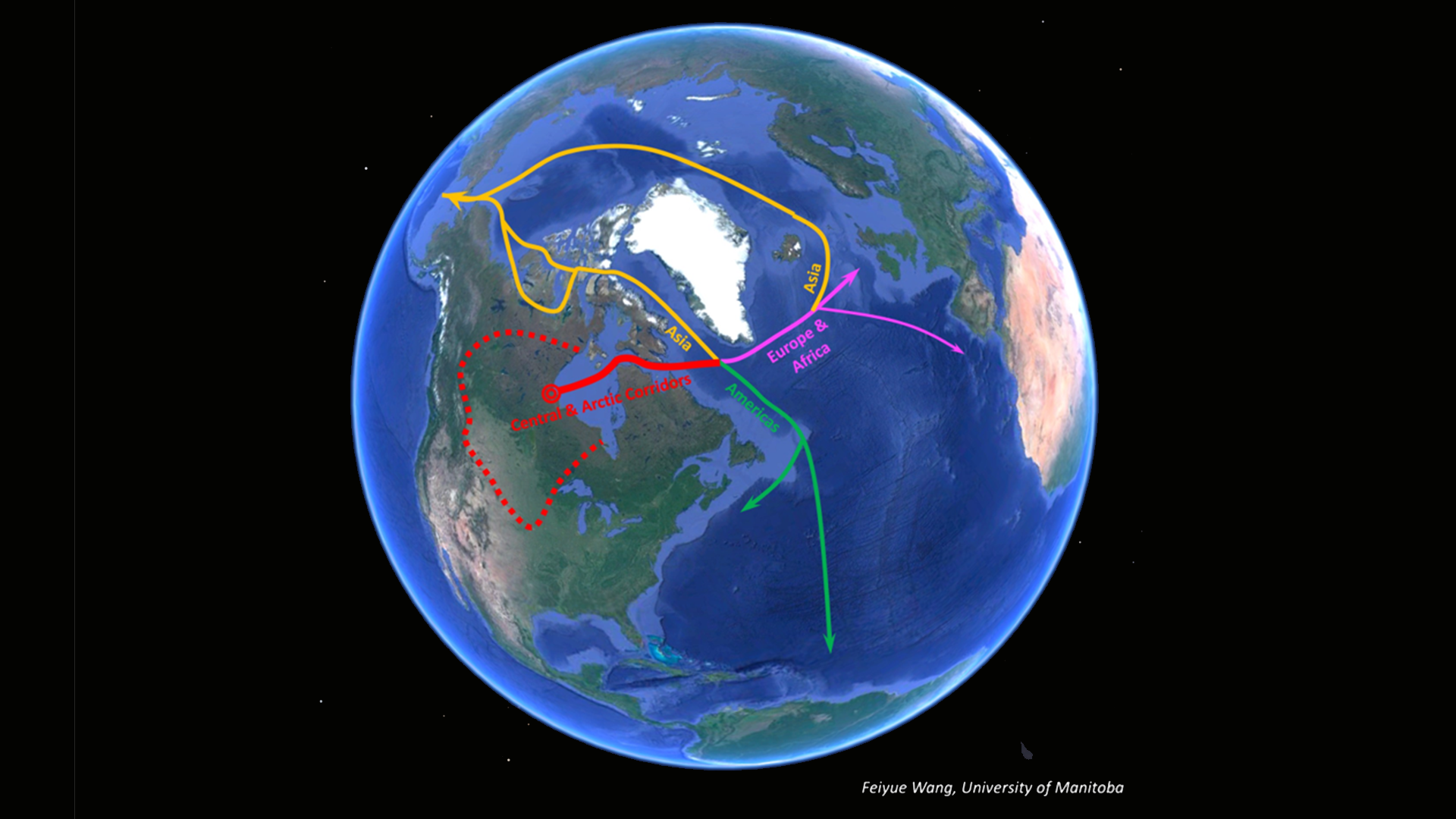
As climate change continues to rapidly reduce sea ice flows in the Hudson Bay region, UM researchers have seized upon a unique opportunity to transform the accessibility of the Arctic and Central Canada.
Led by Dr Feiyue Wang, UM Professor and Canada Research Chair in Arctic Environmental Chemistry, and co-designed and co-led by Indigenous community leaders from Western Hudson Bay, the REACH project focuses on strengthening accessibility in the Arctic and Central Canada through the creation of a new port with the potential to dramatically alter regional and global accessibility and secure economic prosperity for the region.
Aided by technological advancements, this reimagined pathway has the potential to transform community and regional connectivity and economic futures and strengthen regional and global supply chains. Researchers will co-develop a framework, using both Indigenous knowledge and Western science, to evaluate benefits and impacts, determine feasibility, and mitigate risks to support what could be a nation-building development opportunity to unlock economic and social benefits for local communities.
Pictured here is The Churchill Marine Observatory, a UM multidisciplinary research facility located in Churchill, Manitoba overlooking the Northern Lights. The facility is an integral part of the REACH project
The possible benefits of this endeavour include better affordability for people living in Northern and remote regions, opportunities for economic development and job creation in communities through education and training, and enhanced Indigenous sovereignty to improve health and well-being for First Nations and Inuit peoples in the region.
Providing solutions for society through research
As we look toward the future, global societal challenges are evident, and the necessity of creative research solutions to address these problems has never been greater.
Our focus on innovation across the ecosystem will translate into industry productivity for the entire country. Such innovation will benefit Canada by empowering the next generation of leaders to think big and take risks.
Successful collaboration is the beating heart of innovation, and UM is committed to fostering fruitful, purpose-driven, cross-sector collaborations between academic researchers and industry, government, clinical, and community partners to secure our collective success and well-being.
By prioritising these collaborative partnershi UM is forging a sustainable path from discovery to impact that translates to solutions for society, providing the conditions for creative innovation to thrive and signalling that the research we do matters.
Please note, this article will also appear in the 18th edition of our quarterly publication.
Cows are milked on a farm in New York State.Credit: Angela Weiss/AFP via Getty
The outbreak of avian influenza in US dairy cattle shows no signs of slowing. Over the past three weeks, the number of states where cows infected with bird flu have been detected has risen from six to eight. A preprint1 posted on 16 April reported the discovery of the virus in raw milk from infected cows, and US federal authorities said on Wednesday that the virus had been found in lung tissue collected from a seemingly healthy cow.
Also on Wednesday, US officials confirmed at a media briefing that genomic material from the H5N1 strain, which is causing the outbreak, had been detected in milk sold in shops.
Detection of viral particles in milk sold to consumers suggests that avian flu in cows could “be more widespread than initially thought”, says food scientist Diego Diel at Cornell University in Ithaca, New York. “Increased surveillance and testing in dairies should be an important part of control measures going forward.” Nature looks at the implications for human health and the future of the outbreak.
What does it mean that H5N1 is in retail milk?
It’s still unclear how many milk samples the FDA has tested or where the samples were collected. The agency said that it would release more information in the coming days and weeks.
After it leaves the farm and before it hits the shelves, milk is pasteurized to inactivate pathogens. To detect H5N1, the FDA used a test called quantitative polymerase chain reaction (qPCR), which picks up viral RNA. Because it detects fragments of the viral genome, the test cannot distinguish between living virus and the remnants of dead virus, says dairy scientist Nicole Martin at Cornell University.
Bird flu outbreak in mink sparks concern about spread in people
“The detection of viral RNA does not itself pose a health risk to consumers, and we expect to find this residual genetic material if the virus was there in the raw milk and was inactivated by pasteurization,” she says.
The presence of viral material in commercially available milk does have broader implications, however. There are several possible explanations, says virologist Brian Wasik, also at Cornell University. It could be that the outbreak is more pervasive than farmers realized, and that milk from infected animals is entering the commercial supply. Another possibility, he says, is that “asymptomatic cows that we are not testing are shedding virus into milk”. But it’s also possible that both scenarios are true.
US federal rules require milk from infected cows to be discarded, but it’s not yet clear whether cows often start shedding the virus before they look sick or produce abnormal milk. The 16 April preprint, which has not yet been peer reviewed, includes reports that milk from infected cows is thicker and more yellow than typical milk and that infected animals eat less and produce less milk than usual.
Is milk with traces of H5N1 in it a threat to humans?
There is no definitive evidence that pasteurization kills H5N1, but the method kills viruses that multiply in the gut, which are hardier than flu viruses, says Wasik. “Influenza virus is relatively unstable,” he says, “and is very susceptible to heat.” Pasteurization of eggs, which is done at a lower temperature than pasteurization of milk, does kill H5N1.
It’s possible that pasteurization would be less effective at killing relatively high viral concentrations in milk, says Wasik. Finding out whether this is the case requires experimental data. In the absence of a definitive answer, keeping milk from infected cows out of the commercial supply is extremely important.
When Nature asked when to expect more evidence on whether pasteurization kills H5N1, Janell Goodwin, public-affairs specialist at the FDA in Silver Spring, Maryland, said that the agency and the US Department of Agriculture (USDA) “are working closely to collect and evaluate additional data and information specific to” H5N1.
Is milk spreading bird flu among cows?
USDA researchers have tested nasal swabs, tissue and milk samples of cows from affected dairy herds and have found that milk contained the highest viral concentrations. This indicates that the virus could be spreading through milk droplets.
If so, milking equipment could be involved. “The teat cups of a milking machine could transfer remnants of H5N1-containing milk from one cow to the teats of the next cow being milked,” says virologist Thijs Kuiken at Erasmus University Medical Centre in Rotterdam, the Netherlands. “Even if they are washed and disinfected, the levels of virus in the milk of infected cattle are so high that one could not exclude the possibility of infectious virus being transferred from cow to cow by this route.” In fact, in some equipment set-ups, workers spray down milking machines with high-pressure hoses to clean them, which would aerosolize any infected milk, says Wasik.
The USDA website concurs that viral spread is “likely through mechanical means”.
Is enough being done to stop the spread?
The FDA announced on Wednesday that cows must test negative for bird flu before they can be moved across state lines. That might help to stem the outbreak, scientists say. Animals in the US dairy industry move around a lot, Wasik says. Calves are moved to be raised into milk cows, cows are moved when they stop producing milk and farmers sell the animals. Such movement is probably “a main driver” of the outbreak, Wasik says.
Diel would like to see surveillance of bulk milk samples at farms. Wastewater testing and environmental sampling could be useful, too, Wasik says, particularly around farms near outbreaks or farms where cows have been moved. He also advocates for a quarantine or observation period of 24 or 48 hours when cattle are moved to a new farm.
Such surveillance measures “could really buy us time, slow down the outbreak”, says Wasik, so researchers and agencies can “get a better handle on it. Because time is what’s of the essence.”
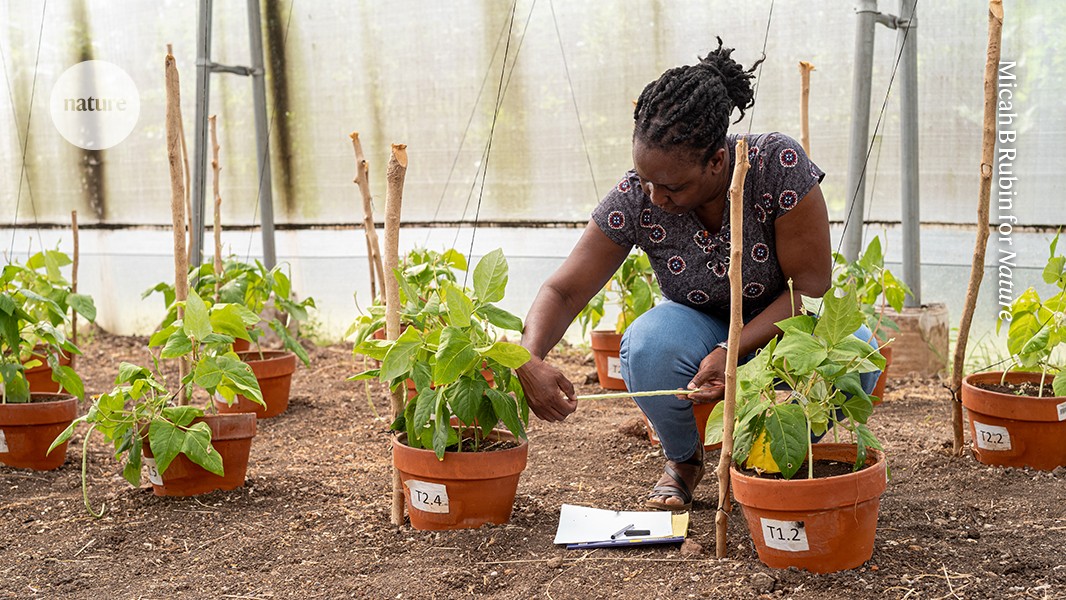
“As a public-health researcher based in Grenada, I’m looking at some of the climate-change issues that plague this small island state and the wider Caribbean region. Agriculture is facing a significant impact from climate change here, especially from droughts on the northern, drier side of the island, and it needs to adapt and respond.
In this photo, I’m measuring green-bean plants in an experiment that my team and I ran at the request of Grenada’s government. The idea was to test an innovative farming product that could help to counter those droughts. Called Porous Alpha, this ‘foamed glass’ product was developed by researchers at Tottori University in Japan, together with a private research organization, Tottori Resource Recycling.
Porous Alpha is made by grinding up waste glass, mixing the result with calcium carbonate and a proprietary ingredient, then heating it to 750 °C to produce many tiny, continuous pores. The resulting powder can be added to soil, where the pores trap water — along with the nutrients dissolved in the water — and retain it for much longer than untreated soil can. Because it’s made from glass, it’s stable in the soil for a long time and is environmentally friendly. We’ve shown, albeit only in a pilot study, that plants grown in soil treated with porous glass consistently had a higher yield than control plants did.
Such a product would help farmers to adapt to climate change by using less water. Members of the Best Practices Farmers Movement, an advocacy group here, say they’re excited about the potential of using this technology to conserve water. Agricultural research is a major undertaking for Grenada, because the country has a low research capacity — but every little bit counts if it can bring benefits to farmers and protect our island environment.”
This interview has been edited for length and clarity.





 This project has received funding from the European Union’s Horizon 2020 research and innovation programme under grant agreement No 101000640