


Dark Mode Light Mode
Join us on a journey where chemistry meets creativity, and the wonders of science unfold. Quench your intellectual thirst with thought-provoking articles that transcend the boundaries of conventional knowledge.

Three rising stars of nanoscience and nanotechnology

Three rising stars of nanoscience and nanotechnology Three rising stars of nanoscience and nanotechnology


Working at the nanoscale lets researchers tap into unusual physical behaviours and material properties that can underpin more powerful and efficient technologies and systems. But studying and manipulating materials at this scale presents many challenges. Nanomaterials can be extremely delicate, for instance, and often need specialized methods to process and integrate them into devices.

These three researchers, who work in nanoscience and nanotechnology in research institutions around the world, are exploring these obstacles and more, with the aim of applying nanomaterials to advance energy technologies, imaging tools and electronic systems.

PRISCILA VENSAUS: Golden touch

Credit: Paddy Mills

The use of nanomaterials to improve clean-energy production is still a relatively new research area, but Priscila Vensaus sees great promise in it. Gold nanoparticles, for example, could take solar-panel technology to the next level, she says, thanks to the unique properties that occur at a such a small scale.

When gold is broken down into extremely small particles, or formed from gold-based chemical salts, it behaves differently from bulk gold. Instead of being an unreactive yellow metal that reflects light, it becomes a highly reactive material that absorbs light. This shift occurs because, at the nanoscale, electrons in gold particles oscillate collectively in response to light, causing the particles to absorb and scatter specific wavelengths depending on their size and shape.

Vensaus, who studies the use of gold nanoparticles in clean energy technologies at the Laboratory of Nanoscience for Energy Technologies at the Swiss Federal Technology Institute of Lausanne (EPFL), says that solar panels embedded with thousands of gold nanoparticles “can absorb parts of the solar spectrum that other materials cannot”.

By acting like microscopic antennas that capture and redirect light, the nanoparticles can enhance overall light absorption, potentially improving the system’s efficiency and allowing the panels to generate more electricity even under weaker sunlight1.

Vensaus is also investigating how nanomaterials can reduce the electricity required for electrolysis — the process of splitting water into hydrogen and oxygen that underpins hydrogen production for fuel cells — enabling it to run on renewables rather than fossil-fuel energy.

In a paper published earlier this year2, Vensaus’s team showed that adding porous structures loaded with nickel nanoparticles to water in an electrolysis system increases the available surface area for the reaction, allowing it to run more efficiently at lower voltages.

It’s an area that Vensaus has been working in since her PhD days at the National University of San Martín in Buenos Aires, in her native Argentina. During electrolysis, which uses electrodes connected to a power source to split water into its components, gas bubbles form and cling to the electrodes, which blocks the electric current and wastes energy. Vensaus demonstrated that when magnets are added to the system at a specific distance from the electrodes, they could push the bubbles away and speed up the process3.

Vensaus is now looking into how chiral materials could improve the efficiency of solar-powered electrolysis for hydrogen production4. With their twisted or helical structure, these materials can influence the spin of electrons during the reaction, which could improve how efficiently charge is transferred and reduce energy losses. “It’s a promising field, but we first need to learn more about these structures,” she says.

The ultimate goal, says Vensaus, is to create a low‑carbon energy cycle in which hydrogen is produced using renewable energy and then used in fuel cells to generate electricity through a zero‑emission electrochemical reaction. “There are still challenges that we need to figure out, but there are also many possibilities for the field to advance further to cut fossil fuels out of the process altogether,” she says. — Anna Napolitano

FARNAZ NIROUI: Force field

illustrated portraits of Farnaz Niroui

Credit: Paddy Mills

Farnaz Niroui became interested in nanotechnology during a high-school physics project about space elevators — a decades-old concept in which robotic climbers carry cargo into space by travelling along cables stretching from Earth into orbit. The idea gained traction in the 1990s with the discovery of carbon nanotubes, an ultra-strong, lightweight material that could, in principle, make such a structure possible.

Although space elevators remain largely speculative, the concept sparked Niroui’s curiosity about the creative possibilities of working with materials on a scale “about five orders of magnitude smaller than the thickness of a stand of hair”.

Now a nanoengineer at the Massachusetts Institute of Technology (MIT), Niroui and her team study materials at the smallest end of the nanoscale, where structures are measured in atoms. “Our focus is to be able to push nanotechnology towards the atomic scale and leverage the new phenomena that uniquely occur at these extremely small dimensions,” she says.

Two-dimensional materials, for example, are just one or two atoms thick, but extend more widely in all other directions. This extreme thinness gives rise to optical, electronic and mechanical properties that are not found in bulkier materials. Researchers are particularly interested in their unusually high electrical conductivity, which could enable faster, more efficient computation — an increasingly urgent goal as demands from artificial-intelligence systems grow.

But integrating two-dimensional materials into computer chips and other devices remains a major challenge. Conventional methods for stacking layers of nanomaterials together or onto other materials typically rely on high temperatures or solvents, which can damage their delicate structures or introduce contaminants. “If something is just one, two or three atoms, it’s quite fragile,” says Niroui.

In 2023, she and her colleagues described a new method for integrating two-dimensional materials into electronic devices5. They created an ultra-smooth surface containing metal and insulating components, then brought it into contact with a separately prepared two-dimensional material. Weak forces known as van der Waals interactions — which are naturally present between all matter — helped to bond the layers together without the need for heat, harsh chemicals or further processing steps.

“Due to their atomically thin nature and unique electrical properties, two-dimensional materials could enable continued transistor miniaturization beyond the limits of current silicon technology,” says Niroui. “Beyond enhancing conventional transistors, the distinctive electrical and optical properties of two-dimensional materials may also introduce new functionalities,” she adds, which could create opportunities for applications such as highly sensitive sensors and flexible electronics.

Niroui is especially passionate about inspiring the next generation of nanoengineers. She brings undergraduate students into her lab at MIT as part of their coursework, teaching them to design and build integrated displays linked to sensors.

“Students are actually experimenting with the science that they are learning about, and they tend to love it,” says Niroui. “It makes me quite excited.” — Holly Else

SUMAN BERA: Shape shifter

illustrated portrait of Suman Bera

Credit: Paddy Mills


Source link

Keep Up to Date with the Most Important News

By pressing the Subscribe button, you confirm that you have read and are agreeing to our Privacy Policy and Terms of Use
Add a comment Add a comment

Leave a Reply

Your email address will not be published. Required fields are marked *

Previous Post
How mosquitoes are conquering the world — in four charts

How mosquitoes are conquering the world — in four charts

Next Post
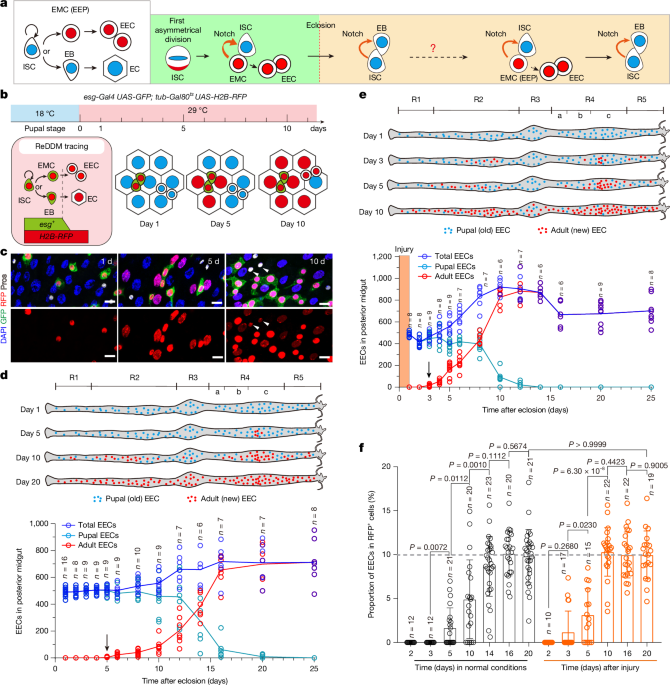
Intestinal stem cells count self-renewal divisions to switch multipotency

Intestinal stem cells count self-renewal divisions to switch multipotency

Advertisement