



If a scientific innovation can address one of our most pressing environmental problems, it’s a fantastic achievement. If it can help solve two – even better.
A new study details a method for converting three of the most commonly used plastics into hydrogen, a fuel that has the potential to be a clean and abundant energy source of the future.
Not only that, but the method works without any sorting of plastics required – an expensive and time-consuming step in the recycling chain that partly explains why only 9 percent of plastics currently get recycled.
“We are solving two urgent global problems at the same time,” says Ah-Hyung Park, a chemical and biomolecular engineer at the University of California, Los Angeles (UCLA) who co-led the study along with researchers in South Korea.
“Plastic waste is accumulating at alarming rates, and clean hydrogen is essential for decarbonizing energy. This technology tackles both of these challenges in a creative and scalable way.”
The process is called alkaline thermal treatment (ATT), previously developed by some of the same researchers to convert seaweed into high-purity hydrogen.
It uses the chemical sodium hydroxide and heat to drive hydrogen production.
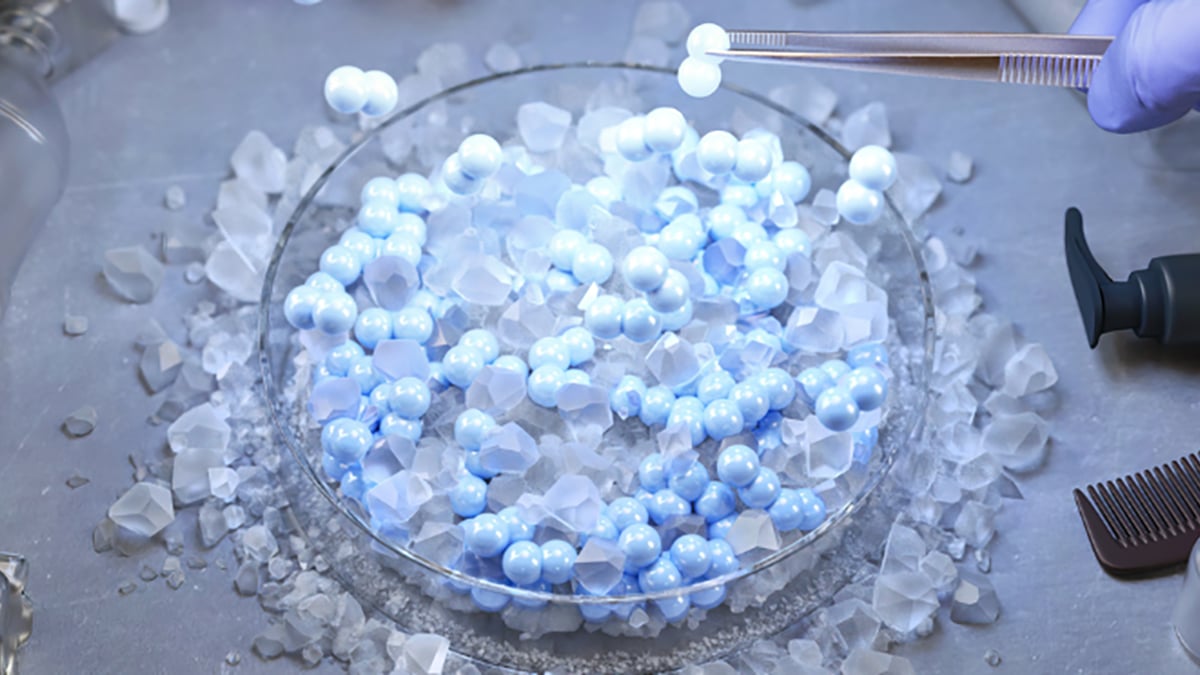
When tested on a mix of plastic waste, including polyethylene terephthalate (PET), polyethylene (PE), and polypropylene (PP), ATT produced hydrogen gas at purities above 90 percent, without any sorting required.
There were two crucial benefits compared to current hydrogen production methods: It worked at temperatures some 300-400 °C (572-752 °F) cooler than alternative approaches; it also captured most (75 percent) of the carbon byproducts as a solid rather than releasing that carbon into the air as carbon dioxide.
“The significant reduction in direct CO2 emissions suggests that ATT-based hydrogen production may provide environmental competitiveness relative to conventional processes,” write the researchers in their published paper.

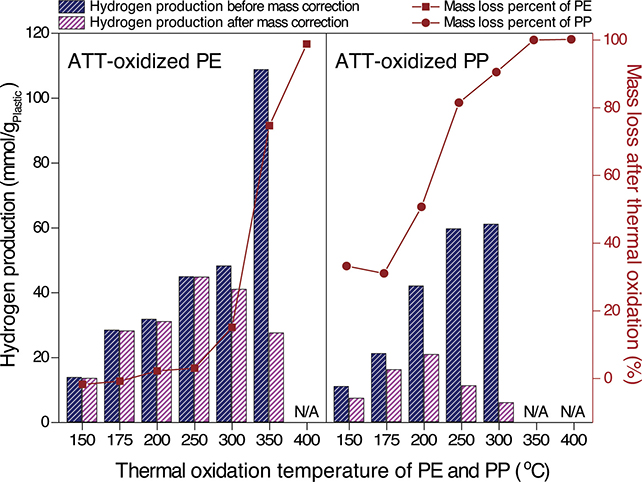
To improve their yields, the team pre-treated the PE and PP plastics, heating and oxidizing them. This step inserted oxygen into the polymer chains of the plastics so they became more reactive.
The lack of oxygen in PE and PP typically makes them resistant to chemical processing, and is another reason why existing technologies struggle to convert mixed, unsorted plastics.
“By combining lower-temperature operation, carbon capture capability, and advantages of mixed plastics, the ATT offers a practical pathway to upcycle plastic waste into clean hydrogen fuel,” write the researchers in their published paper.
It’s an incredibly promising new approach, but there’s still work to do before it can be used commercially.
The biggest job now is getting this scaled up so it can operate beyond the confines of a lab setting (only very tiny samples were used here).
To reach that goal, the researchers say further work is needed to optimize the ATT process to increase hydrogen yields, minimize carbon emissions, and keep temperatures relatively low.
The plastics tested in the study include those used in straws, bags, containers, and drink bottles, so we’re talking about materials that are widely used, made from crude oil – and major contributors to our plastic pollution crisis.
This research also gets us closer to finding sustainable sources of hydrogen.
 frameborder=”0″ allow=”accelerometer; autoplay; clipboard-write; encrypted-media; gyroscope; picture-in-picture; web-share” referrerpolicy=”strict-origin-when-cross-origin” allowfullscreen>
While often touted as a ‘clean’ fuel because it releases only water vapor, hydrogen’s climate credentials depend on how it is made. Most hydrogen is currently made using natural gas, a fossil fuel, in an energy-intensive process that emits large amounts of CO2, but researchers have been devising other ways.
By using plastics, capturing the carbon, and producing hydrogen, the ATT method, if scalable, could be a strong contender to help reduce our reliance on fossil fuels.
Related: These Engineers Have Invented an Entirely New Approach to Recycling Plastic
“By reducing the sorting costs and process complexity that have been major barriers to commercialization, this technology has the potential to become a next-generation core technology that supports both the hydrogen economy and the circular economy,” says chemical engineer and materials scientist Woo-Jae Kim, from Ewha Womans University in South Korea.
The research has been published in PNAS.
This article was fact-checked by Rachel Garner and edited by Clare Watson. While we pride ourselves on our process, we are only human. If you spot a mistake, please let us know.