

The UN’s new special rapporteur on toxics and human rights has classified per- and polyfluoroalkyl substances (PFAS) as a systemic threat to ‘many, if not all, human rights’, and is officially urging an immediate international phase-out and ban on all non-essential uses.
‘PFAS impair rights, including the right to life, health, a healthy environment, a safe and healthy working environment and access to information, justice and remedy,’ Bethanie Carney Almroth, an ecotoxicologist at the University of Gothenburg in Sweden, told the UN Human Rights Council on 14 September. She emphasised that some of this family of synthetic chemicals – estimated to be in the thousands – have been linked to dysfunctions of the hormonal, liver and immune systems, among other serious health problems like cancers.
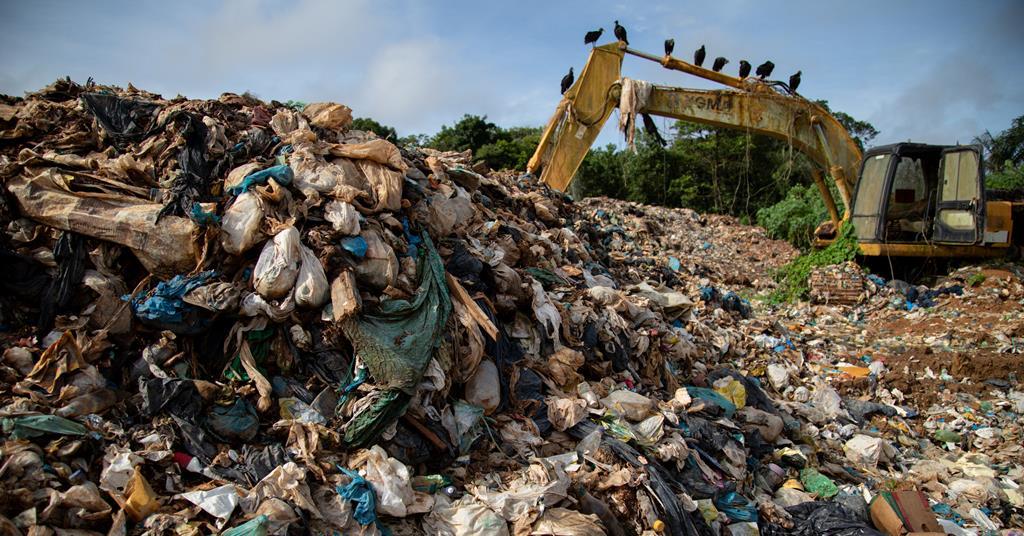
‘These are largely manufactured in industrial states and spread globally through emissions – through transboundary movements of waste laden with PFAS,’ stated Carney Almroth, whose research focuses on the environmental effects of plastics and plastic-associated chemicals. Once released, the strength of the carbon–fluorine bond means that these chemicals can remain in the environment for centuries and there are currently no effective and scalable technologies capable of removing them from contaminated ecosystems, she added.
What are PFAS?
PFAS – also known as ‘forever chemicals’ – are a family of an estimated 15,000 synthetic chemicals that have been widely used in consumer products globally since the 1950s. They are a class of chemicals that contain at least one perfluorinated methyl (–CF3) or methylene (–CF2 –) group. They do not degrade easily in the environment because the carbon–fluorine bond is among the strongest in existence. The unique properties of these substances confer characteristics like repellence to oil, grease and water, as well as temperature resistance and friction reduction. This helps to create products that are non-stick and stain-resistant, for example.
However, PFAS are also highly mobile in the environment and they bioaccumulate, as well as biomagnify, up the food chain. PFOA and PFOS – the best studied of these substances – have been linked to serious health conditions like reproductive and developmental disorders, reduced immune function and certain types of cancer.
During the UN Human Rights Council meeting, Carney Almroth presented a recent UN report that urged an immediate ban on all non-essential uses of PFAS. The report also called for ‘comprehensive national laws, regulations, policies and plans’ to effectively control and phase out PFAS as a class of chemicals.
‘The class of PFAS illustrates the promises and perils of technological innovation, in many ways,’ the report concludes. ‘Chemists have delivered novel, synthetic substances that have reconfigured the material fulcrum around which the world’s economies revolve.’
Major PFAS manufacturers plan to expand production
In February 2024, nine UN human rights advisers issued a statement accusing DuPont and Chemours of discharging dangerous PFAS into the environment along the lower Cape Fear River in North Carolina, US. This followed a formal request by a local community action group for the UN to investigate multiple alleged human rights violations related to Chemours’ release of PFAS from one of its nearby plants into the river.
Meanwhile, most of the world’s largest PFAS manufacturers are planning to expand their production to meet growing demand for AI and data-centre infrastructure, semiconductor manufacturing and lithium-ion battery materials, according to ChemSec. The conclusion is based on the environmental organisation’s survey of the world’s largest PFAS producers, including Chemours, Arkema and Daikin Chemicals.
‘These companies’ expansion plans show that, unless governments and regulators insist on a rapid phase-out, we will face a new tidal wave of forever chemicals,’ warned Anne-Sofie Bäckar, ChemSec’s executive director. The organisation states that the only clear exceptions to this trend is the Swiss company Archroma, which is actively marketing PFAS-free alternatives, and German multinational BASF, which has said it will exit PFAS production by 2028.