






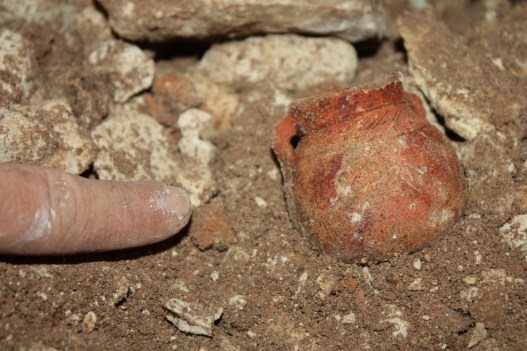
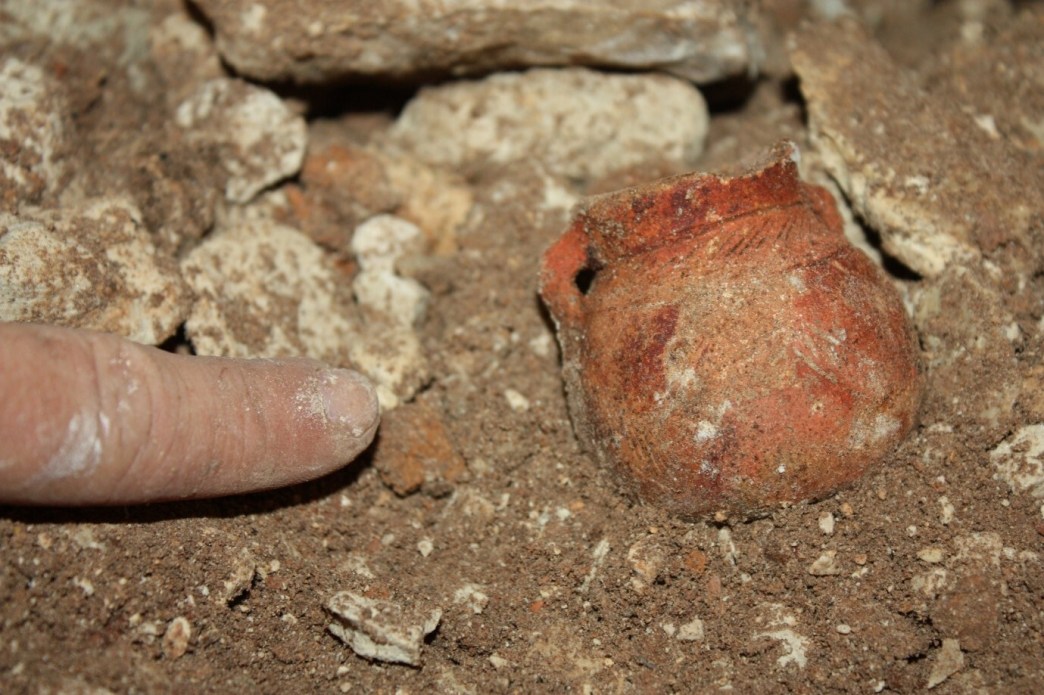
Pottery is one of the most important early technological innovations in human history. Combining clay with fire allowed Neolithic people to create water-carrying vessels, cooking pots, storage containers, and more. Unfortunately, the prehistoric prodigies behind this technological marvel didn’t leave a record of their notes behind, so it’s left to scientists to piece together their work. Now one such scientist is out with an intriguing theory of what sparked the invention of pottery: wildfires.
According to a new study published in Geomorphology, Stone Age humans living in the Levant may have gotten the idea for using fire to harden clay into ceramic by witnessing the process take place after naturally occurring wildfires. “A wildfire is normally seen only as a catastrophe, but environmental disruption can also expose people to new materials and new possibilities,” study author Amos Frumkin of The Hebrew University of Jerusalem explained in a statement. “If so, one of humanity’s most important technologies may have emerged partly from people learning to imitate what they had already seen nature do.”
Read more: “Ancient Math Hidden in Oldest Known Floral Pottery”
Frumkin came to the conclusion—which he calls the “natural kiln hypothesis”—after studying two distinct periods in the Jordan Rift Valley, one 129,00-116,000 years ago and one 11,000-7,000 years ago. During both periods, wildfires devastated vegetation in the area. With the plants gone, heavy rains swept clay-rich terra rossa soil into the valley below and Neolithic communities settled on the fertile land there.
Pottery also started appearing in the area around the same time the later fires and landslides peaked. Per Frumkin, the prehistoric people living there may have witnessed hardened clay washing down and been struck with the inspiration to use fire to bend the earth to their will. “Neolithic communities in the Jordan Valley may have watched fire transform the clay beneath and around their settlements and realized that this process could be reproduced deliberately,” Frumkin said.
So why didn’t the earlier period of fires kickstart the pottery revolution?
Frumkin likens this period to a “natural control experiment.” While all of the natural conditions were present to lead to a pottery boom, the more primitive groups living there at the time may have lacked the advanced social structure, agricultural lifestyle, and technological know-how to produce pottery at the time.
If that sounds speculative to you, that’s because it is. But Frumkin stresses that his natural kiln hypothesis is at least somewhat testable. For example, if pottery fragments are discovered that predate the intense wildfire activity, he could be off the mark. Additionally, there are other theories of pottery development that involve prehistoric peoples accidentally discovering the technology after leaving baskets waterproofed with clay too close to a fire.
Of course, pottery doesn’t necessarily need a single origin theory. It’s entirely possible Neolithic humans in the Levant were inspired by disaster while other civilizations came by the innovation accidentally. The beauty of human creativity and diversity is that different groups of people come up with different solutions—all on their own.
Enjoying Nautilus? Subscribe to our free newsletter.
Lead Image: Boaz Zissu et al., 2014


