

In this episode of C&EN Uncovered, host Craig Bettenhausen speaks with C&EN associate editor Matt Blois about mining rare earths and the efforts in Brazil to find a better way. Matt and Craig talk about injecting chemicals into hillsides, switching to centralized mud-processing plants, and the difficult dynamics created by China’s current dominance in the rare earth element and rare earth magnet market. You can find the link to the article here.
Subscribe to Stereo Chemistry now on Apple Podcasts, Spotify, or wherever you listen to podcasts.
Executive producer: David Anderson
Host: Craig Bettenhausen
Reporter: Matt Blois
Video and audio producers: David Anderson, Jeremy Barr
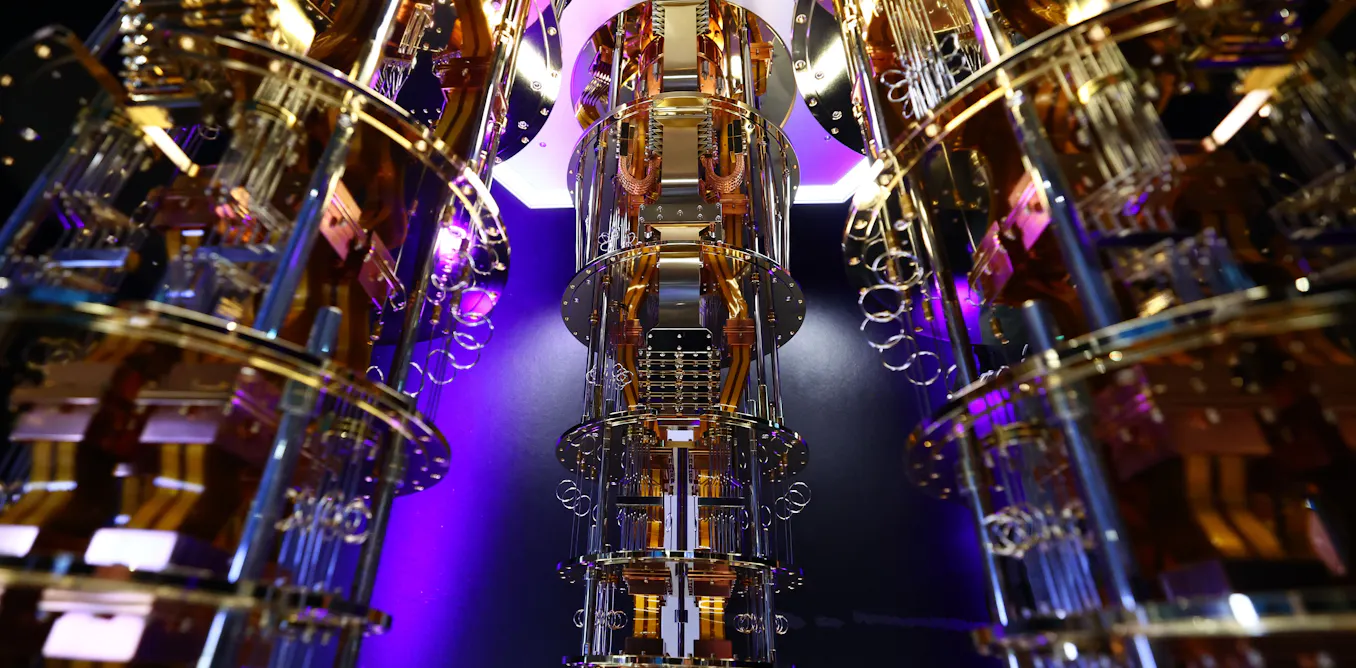
Episode artwork: Oak Ridge National Laboratory
Music: Commercial Flow, Shutterstock
Contact Stereo Chemistry: Contact us on social media at @cenmag, or email [email protected].
The following is a transcript of the episode. Interviews have been edited for length and clarity.
Craig Bettenhausen: Welcome to C&EN Uncovered. I’m Craig Bettenhausen. C&EN Uncovered is a podcast series from Stereo Chemistry. In each episode, we’ll take another look at a recent story in Chemical & Engineering News and hear from C&EN reporters about striking moments from their reporting, their biggest takeaways, and what got left on the cutting-room floor. This episode will be taking a deeper look into heavy rare earths, specifically in Brazil, where some mining companies are claiming to have reached a breakthrough in sustainability. If the methods pan out, they could mark a significant shift in the way we approach green technologies and the way we mine for the heavy rare earths needed for them. We’re here with C&EN reporter Matt Blois, who wrote the article. We’ll put a link in the show notes along with the episode credits. Hi, Matt.
Matt Blois: Hi, Craig.
Craig: So, for folks that haven’t had a chance to read the article yet, can you tell us a little bit about what’s in it?
Matt: Yeah, so this story needs a little bit of exposition. I mean, first thing to know is, What are rare earths? And basically these are a bunch of metals, bottom of the periodic table, and you can put them together to make really powerful magnets. And then you put the magnets, they’ll go to basically electric motors, wind turbines, electric vehicles. They go into a bunch of other stuff too. They’re known to go into some missiles. They’re sort of separated into two groups. You have light rare earths, and you have heavy rare earths, and we get those different elements from different places. So if you go to one mine, it’ll be, sort of, the proportion of light rare earths [to] the heavy rare earths will vary one way or the other. As I’ve been talking to people about rare earths over the last couple of years, the thing that has come up over and over again is the thing that really matters about rare earth supply chains is the processing component.
Because if you look at the processing component, it’s totally dominated by China. Really, really large portion of our rare earths are going to China, getting processed and then turned into magnets over there. We actually get the heavy rare earths mostly from Asia right now—and previously almost entirely from China. The trouble with heavy rare earths is, one, is the geographic concentration because they’re essentially all coming from Southeast Asia. And even if you’re in Myanmar, it’s mostly Chinese-owned companies mining in Myanmar and then sending the heavy rare earths back to China for processing. When you look at heavy rare earths specifically, it’s not only processing; it’s also the mining part. We’re really getting the minerals from China or neighboring countries that send it straight back to China. So that’s one of the issues people are concerned about. And then the other issue that I thought was really powerful to read about was some of these NGOs [nongovernmental organizations]—Global Witness was a big one, and there’s a couple other ones that are sort of specifically focused on Southeast Asia—started looking into like, OK, well, what’s going on in these mines?
And it turned out to be really, really bad. When you get heavy rare earths out of clay, it’s a totally different process. So in China, what they’re doing primarily in China and Myanmar is what’s called an in situ leaching process. And so basically they are going to a hill, OK, this hill has rare earths in it. We’re going to drill a hole on the ground. And then they pour in a solution with ammonium sulfate, and the ammonium sulfate just drips through the hill. And then it collects as much as they can at the bottom in these big pools, and they precipitate it out, and they send it further on for separation. And so you’re just dumping chemicals into a hill. The hope is that you have some bedrock that’s sort of containing it on the bottom. Obviously you want to collect as much as you can because that’s what your product is, but it is sort of inherently not completely controllable.
And so you get some pretty bad pollution issues. And it’s interesting with this one because they use ammonium sulfate, both of those components can be an issue. You can have the ammonium part—it’s essentially a nitrogen fertilizer, so you get eutrophication, you get ammonium, nitrogen going out into the environment. You can also get sulfate pollution too. And then in addition, the other concern is that it’s leaching rare earths, but it can also leach out other metals that don’t get captured and disposed of properly. And some of those can be pretty bad. It could be sort of some basic metals, but it can also be mercury or arsenic or lead or things that, if it gets into your water, you’re really, really concerned about.
Craig: Do those companies have—and do they share—the numbers about the volumes, like how much they collect versus how much they inject?
Matt: One company that I’m aware of is trying to do this process in Brazil, and they, if I remember correctly, were recovering 90% of their leachate. And they use magnesium sulfate, and I believe they were recovering 90% of the magnesium, which then they can recycle. But the thing to know about Myanmar, especially right now, is that the political situation in Myanmar has a big effect on how these mines are run. In 2021, Myanmar had a coup. And so there’s a military group that took over the Myanmar government, so that sort of put mining regulation into a weird place. Because you have sort of this government that took over by force, and in the specific region where they’re mining, there’s also sort of this local autonomy group. It’s a local militia that wants autonomy for the region that they are in, and they want to be autonomous from both the previous government and the new military government.
So there’s a lot of groups fighting with each other for power. It’s not super clear who’s in charge of mining regulations. And what that does is, it just means that if you are a company and you’re setting up shop in Myanmar, you pay whoever shows up to say that they’re the regulator and say, Hey, I would like to start mining here. They’re like, Great, I’ve got a war going on, so I’ll take that revenue and run. Hopefully you don’t mess it up too bad. But there’s not much accountability. We had talked to a chemist who is part of a group that did some water monitoring around these mines, and he was saying they get the rare earths out of the ponds. They have this big chemical pool, and they just dump it in the creeks. The numbers are pretty startling too. I mean the pH of the river right where, pretty close to where they’re dumping the mine tailings into the creek was a pH of 3 or something. It was super acidic, and that wasn’t even the worst part because acidity eventually attenuates, but he seemed to be mostly concerned about the heavy metal concentration. It was pretty bad on heavy metals and, I think, some radioactivity too. So there’s really not very much accountability. They’re doing a lot of damage to the environment.
Craig: Who’s bankrolling? Are these international companies that shareholders could hold accountable or is it just—
Matt: Well, the simple answer is that they’re almost all Chinese companies who know how to do this. And the history there is that China, a story that I just told you about Myanmar used to be true in China. It’s, you know, same thing, really bad, a lot of illegal mining operations that were not doing things the right way. And then in 2016, the Chinese government came in and said, We’re not going to do this anymore. This is really bad for our environment. You guys got to clean up your act. And now there’s basically one state-owned company in China that does all the heavy rare earth mining. In China now, post 2016, and it’s gotten better even since then, it’s a lot more controlled. The process could be argued is pretty inherently risky because it’s still kind of going out into the environment, but at least when it gets to the tailing ponds, they’re not just dumping the tailing ponds into the water.
As far as I understand it, China has much higher standards now. But what that has done is then it just pushed all the illegal miners over the border, where there’s even less accountability. It used to be that China was the top producer of the heavy rare earth ore, and now I think Myanmar is exactly equal. It’s about 35% Myanmar, 35% from China. The companies that are set up in Myanmar are mostly Chinese. They sell back to processors in China that turn it into rare earth oxides and then magnets, and then the magnets do eventually go into international companies that might be more easy to hold accountable. I thought Global Witness did a good job of tracing some of the supply chain stuff on this.
Craig: So what’s happening in Brazil that’s different from this really troubling supply chain?
Matt: Yes, so this is what’s going on in Brazil. So Brazil is the, I believe, the second largest reserves of rare earth elements in the world, after China. China has a ton. Brazil has a ton of these elements. They’ve done a lot of mining in the past. And so at some point, people started getting the bright idea like, OK, if we want to have sort of supply chains that avoid China, avoid these problems with Myanmar, Brazil is probably a good place to do it. They have these clays. And I should mention also the clays, the chemistry of these clays is super fascinating too. Because you can get heavy rare earths from hard rock mines, but it’s way easier to get these ionic adsorption clays because basically what happens is you have this really, really old granite rock that gets weathered over time, and the rare earths get weathered out of the granite as ions. Basically you have clays with exactly the rare earth ions that you want sitting right there on the surface. So the chemistry of it is quite attractive.
That’s what they have in Brazil. First thing I think of when I think of Brazil is Amazon Rainforest, supersensitive biodiversity. So you might be concerned like, Oh, I hope they don’t do what they did in Myanmar. The idea there to make it sustainable is, instead of just dumping chemicals into the hill hoping that you collect them at the end, their plan is, We’re going to go dig up the clays, bring it to a centralized facility, and then use the same chemistry. It gets mixed with the same things: ammonium sulfate, usually. The ammonium sulfate does an ion exchange. So you have basically the ammonium switching places with the rare earth ions. You can sort of squeeze out the rare earth ion solution that comes out and then process that and turn it into magnets and everything else that you want. So that’s the hope, is that you’re making it more controlled because when you have in situ leaching, it’s not quite possible to say exactly where every bit of your leachate is going to go. And if you have it inside of a big tank, you can say all of the leachate went in, all of the leachate came out, and you can recycle it. So there’s some advantages there in terms of the recycle, stuff like that. But the main thing is, you’re just putting fewer chemicals into the environment.
Craig: And then to get it from that water-soluble state to then precipitating out to the pH change or another ion-exchange-type process, right?
Matt: Yeah, so I’ll give you an example from the company I had the most detail from is—they’re a company called Aclara [Resources]. And they have a mine in Brazil, and so they do the steps I just described. They separate the liquids from the solids, basically. You get this solution that has rare earths in it. You change the pH to get rid of some of the impurities too, and then you do another precipitation. I think they used ammonium bicarbonate. You can always use oxalic acid. And both of those things will precipitate out the rare earths. And then from there, then you have sort of a mixture of rare earths that then have to be separated into their individual elements.
Craig: So this new process in Brazil: it sounds like a lot more environmentally friendly, but I know it’s also going to have some extra expenses involved, both because of regional things and also because of process things. How much extra cost are magnet makers looking at if they switch to this Brazil process as a source for their heavy rare earth elements?
Matt: So I’ll start with the worst-sounding number. Benchmark Mineral Intelligence told me that they’re anticipating that in Brazil, if you do this sort of centralized processing method, it could cost, like, five to seven times more to operate the mine than, like, a site in Southeast Asia where you’re dumping chemicals into the ground, poisoning the environment, and not doing any cleanup. The bottom line message is it’s a lot more. It’s because of a lot of things. You have to build this physical facility, whereas the in situ process, you don’t have to build anything, you just drill into the ground and let it go. And there are some interesting ideas about how to make that process more sustainable as well. So yeah, it’s going to be way more expensive to do it that way, in Brazil, with the centralized processing facility.
Here’s the less scary number: So the rare earth magnets can’t be expensive when you buy it by the ton, but also these things are going into super expensive products. The thing that it goes into is an electric vehicle that costs $30,000, it costs $50,000, it might cost $100,000. The magnets in there might be a couple hundred bucks or something because you’re not using very much. The batteries, most of the car. But these magnets, they’re super important. The car cannot move, the motors do not work, if you don’t have these magnets. But because the ultimate cost of the product that they go into is so high, even a pretty significant jump in the price of a rare earth magnet does not have a huge impact on the end customer. At scale, it does become something that you’re concerned about. So that’s what some of these analysts have told me is that, one, the comparative cost of the magnet versus the end product—the car or the wind turbine—is really tiny. And if you’re buying reliability by paying that premium, then it’s, probably for carmakers, that’s probably going to be worth it. So I think the expectation is—green premium is not usually a word that business people like to hear. They usually tell me that it won’t happen. But this is one of the first stories I’ve done where people were like, Yeah, I think people will probably pay a premium. A lot of it has to do with just sort of, like, they’re willing to pay for the reliability. It’s worth it.
Craig: So you’ve talked about why it’s somewhere been difficult and impossible to really monitor pollution from the conventional methods, but what are the monitoring needs for this new approach? And are they being met?
Matt: Just from a common sense perspective, I buy the claim that there’s less to worry about from a pollution aspect, at least from the chemical pollution. You do have to dig up the ground. In some ways, I’ve seen the in situ miners brag about this, that like, yeah, there’s some deforestation involved, the digging up of the actual clay, although the companies, a lot of these companies say, We’re going to bring the clay back, put it back in the ground.
I think the thing to talk about here actually is this is a new process. There’s only one mine in Brazil right now that is doing this. The only company outside of Asia that is doing mining of these ion adsorption clays, Serra Verde, they’re doing this process. They’ve only just started. They’re not even at full scale yet. So what are the risks of that process? I think from a common sense perspective, low, but it’s also early days. So keep an eye on it, come see if they put the trees back in the ground as they actually said they were going to.
And there’s always a little bit of hedging too. Sometimes you see on the picture like, oh, we’re going to put trees on the ground, and then I’ll ask them. They’re like, No, actually we’re just going to have big piles of dirt that stay next to the processing facility. Which is pretty different. So lots of questions to be answered about this. The accountability remains to be seen.
The other thing is Brazil has certainly tighter regulations than you’re going to see in Myanmar. They care about this stuff. But the company that was fascinating to me is this company called Brazilian Critical Minerals, and this is the one company that is trying to do in situ leaching outside of Asia. And they’re the only company that’s trying to do this. So they’ve got a couple of things that they’re trying to do. So the big one that they’re doing, and I think they’re starting to do some of this in China as well, but there’s been some research into, Can you use a different leachate? Because one of the big problems is you have ammonium sulfate; ammonium gets out; you have nitrogen pollution. You can switch it to magnesium sulfate, and then magnesium—well, it still could get released into the environment—is a lot less of a pollutant of concern because you don’t have—you know, nitrogen specifically has these eutrophication issues associated with it. When you do the ion-exchange process, basically the ammonia pollution could make the soil more acidic.
So the ammonium goes in there, and I forget the exact pathway that leads to acidification, but when you have ammonium ions in the soil, it can make the soil more acidic. So you have soil acidity problems, you have eutrophication problems, and you can have the heavy metal problems too. Magnesium becomes better on that side of things because you aren’t going to have the eutrophication situation.
I think the second thing is just that, the fact that they are doing it in Brazil versus Myanmar, so there is a level of accountability. They’re going to the Brazilian regulators, they’ve already gotten permission to do a test of this. So they’ve done small-scale tests and said, We can do it. They put the magnesium sulfate in and then they wash it out with water. By their own field testing, they are saying, We can help the pH return back to normal. We can clear out the magnesium solution. It’s quite different from what’s happening in Myanmar. Ultimately, the process is still letting chemicals out loose into the environment on purpose, and I think there are questions to be raised about that, but it is quite a different picture than is what is happening in Myanmar, partially because they’re doing these specific things, switching up the chemicals, and partially because somebody really is going to be looking over their shoulder.
Craig: So in the existing regime, where most of it’s in Myanmar and China, it’s not that China just has the feedstock; China also has all the refining capabilities.
Matt: Yes.
Craig: You wrote about some companies that want to build refining plants outside of China, but how far off, away from that? And in the meantime, would these raw, mixed rare earths from Brazil still end up going to China for a few years, or how would that work?
Matt: So each company has sort of a different way of dealing with this. Serra Verde was, in sort of a splashy announcement, is in the process of being acquired by a company called USA Rare Earth. USA Rare Earth is this start-up, basically, I think, founded in 2019, got a ton of support from the government over the last couple of years, and their whole thing is, like, We’re just kind of going out and acquiring all of the pieces of the supply chain to be able to do this. They have a very, very early, not very high-quality, developed mine for rare earths in Texas. They now are acquiring this mine in Brazil. Then they have a big investment in a company called Carester, which is a French company. A lot of the engineers there came from Solvay, which has historically done rare earth processing. So that’s the thought, is there’s a connection between Serra Verde and Carester through USA Rare Earth, so that could be a place where you get processing there, in Europe.
Aclara would like to build their own processing facility in Louisiana, so you mine it in Brazil. One of the other companies that I talked to, Viridis [Mining & Minerals], just after I published the story, like a few days afterwards, they announced that they have a deal to send some of their ore to Solvay, in France. So there are options. That’s a list of places that could work to do this.
I think the thing that keep in mind with all of this though is volumes. So the reality is that right now, 80-something percent, 86, 87% of the heavy rare earths is mined in China or China-controlled regions like Myanmar, and then something like 97% is processed into separated oxides in China just for heavy rare earths. The volume is very large. These mines that are opening up in Brazil are not tiny, but it’s just China has such a long head start that it’s a little bit of a drop in the bucket. And I think for the processing outside of China too, also a little bit of a drop in the bucket.
I mean, to be able to create a complete supply chain for rare earths that it has any meaningful volume at all is significant. So even if it’s 5% of China, even if it’s 10% of China, that’s kind of a big deal. And I do think we’re heading to there, and I put in the story some numbers of what Benchmark Mineral Intelligence is expecting on this, but I think they’re expecting the processing to go from virtually total dominance by China, like 97% today to, by 2030, somewhere around, I think I want to say it was, like, 79%. Still very heavily focused on China, but not nothing outside of China.
Craig: So what’s next? What do they do to build on the work that you wrote about?
Matt: So the thing that kept bugging me about what’s next is, What happens in Myanmar? To me, what’s next is, How do you fix what’s going on? How do you stop the worst stuff from happening? People had a lot of trouble answering this question. I think it’s pretty complicated. You do have new mines opening up in Brazil. They’re going to be more sustainable. But it’s a totally separate supply chain, and the volume is small. And because people are just going to keep wanting to buy more and more cars, it may not do anything to help Myanmar, because it’s like, Well, now the Myanmar stuff is not—instead of going abroad, they’re just going to use it to make electric cars in China, which is a massive market.
This is kind of a personal opinion. I think the people that could make an impact, it’s China. Because China did do this. They really cleaned up their act quite a bit. I mean, still, in situ may be not the most perfect process, but they went from really bad illegal mining with superbad consequences to much more controlled process, albeit a process that may be risky in itself. Can it pressure the companies that are operating in Myanmar to do kind of the same thing? Again, this is—it’s cheaper to do it in Myanmar, but you’re still doing it quite cheaply, even if you’re just putting the most basic measures in place. Because I think that’s the low-hanging fruit. It’s not to switch every single mine to this new process. We have this centralized facility that’s going to be way, way huge environmental improvement. It’s sort of like, Can we get the ones that are really out of line to come into a more regulated situation? One of the things that’s going to be interesting is that Global Witness had reached out to some of the wind turbine companies and some of the electric motor companies and said, Hey, it looks like some of your metals are coming from Myanmar. What are you going to do about that?
And it’s like, Well, because 97% is processed in China and everything kind of flows into these processing steps, and then it gets mixed, and then who’s to say which molecule is from a more sustainable Chinese mine and which one is from a less sustainable Myanmar mine? It becomes very hard. It’s like, Well, we can’t—it’s almost like you can’t, you have no other option. We either, and some of the times they’ll say, Oh, we only, we ask them to only use recycled material. Which is a little bit of a cop-out because the recycled material is probably also from Myanmar. It’s really just moving you one step further away. But if you do have an alternative supply chain, it at least allows the companies to go to their Chinese suppliers and say, Hey, can you prove to us that the mines that these are coming from are at least some level of responsible?
If there’s another option, they can go and say, OK, well, then I’m going to go with the more expensive ones that are coming out France, that are coming out of Louisiana, these ones that are originating from Brazil. There may not be a huge volume of that, but at least it’s—I would hope that it would give companies the ability to talk to the suppliers in their supply chain and go and do that because it seems like it has to come from that side, and I think Chinese regulators could pressure Chinese companies to do that. I think car manufacturers, wind turbine manufacturers could start talking about that with their suppliers, but the conversation changes once you do have a second option because you can at least say, I’m going to go with the other guy.
Craig: Well, Matt, thanks for diving deep on this with us.
Matt: Yes, thank you, Craig.
Craig: Listeners can find me on social media as @Craigofwaffles in most places. Matt, how can listeners get in touch with you?
Matt: I think I’m just Matt Blois on social media. Blois is an uncommon-enough name. I pretty much always get Matt Blois.
Craig: Well, you can find Matt’s story about the road to sustainable rare earth mining on C&EN’s website. We put a link in the show notes along with the episode credits. We’d love to know what you think of C&EN Uncovered. You can share your feedback with us by emailing [email protected]. This has been C&EN Uncovered, a series from C&EN’s Stereo Chemistry. Chemical & Engineering News is an independent news outlet published by the American Chemical Society. Thanks for listening.